• Home
  • Latest
  • Fortune 500
  • Finance
  • Tech
  • Leadership
  • Lifestyle
  • Rankings
  • Multimedia
China

Why China’s Stimulus Package Was a Big Mistake

By
Chris Matthews
Down Arrow Button Icon
By
Chris Matthews
Down Arrow Button Icon
January 15, 2016, 12:33 PM ET
CHINA--STOCKS-NOON
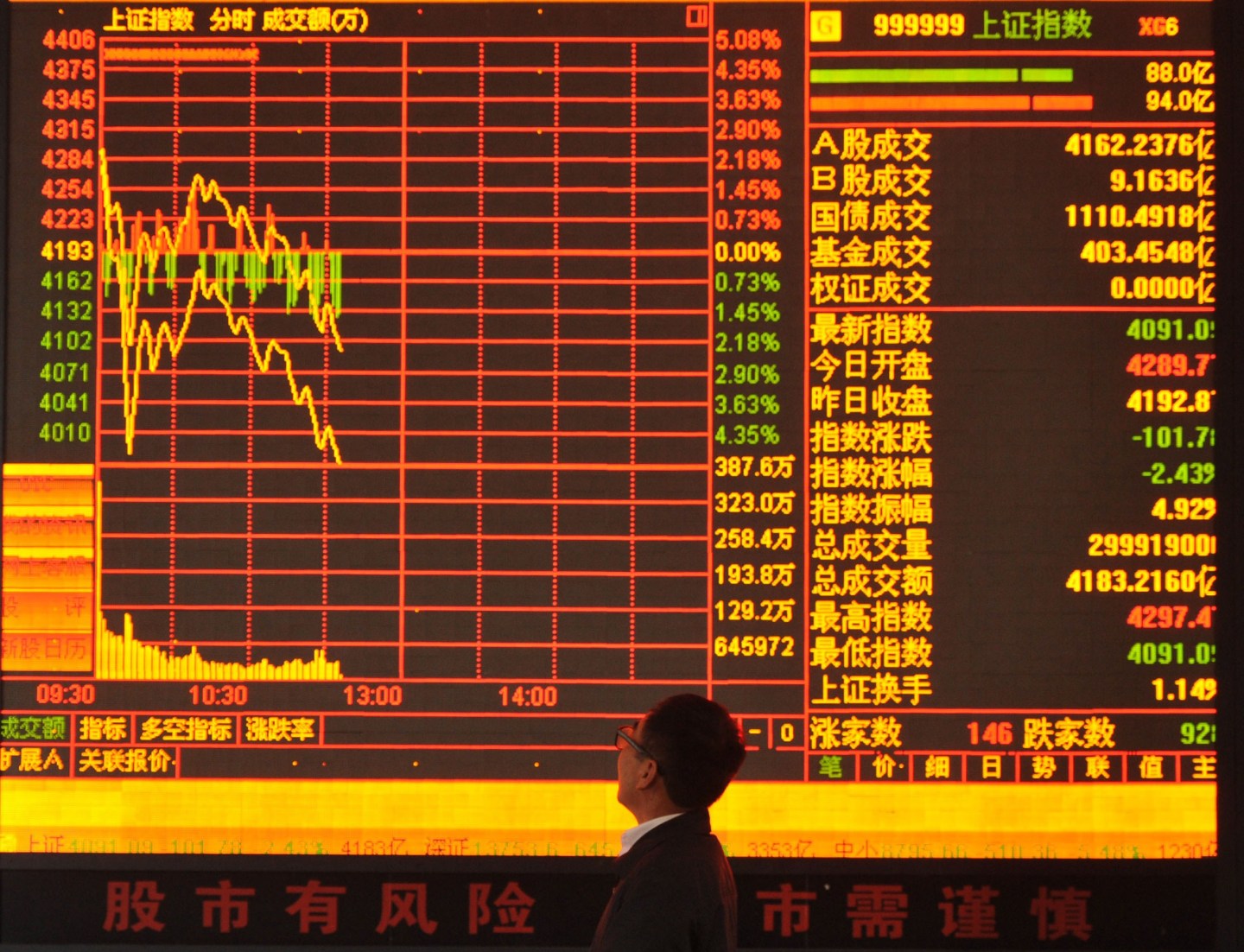
An investors checks share prices in a stock firm in Fuyang, east China's Anhui province on June 29, 2015. Chinese shares plunged in morning trading on June 29, extending losses from the past two weeks despite a surprise interest rate cut at the weekend. AFP PHOTO CHINA OUT (Photo credit should read STR/AFP/Getty Images)Photograph by Getty Images

On Friday, China’s stock market fell yet again, pushing it into bear market territory.

More than a few economists these days are starting to say there are deep problems in China’s economy, but back in 2010, China was the darling of the economic left.

Both China and the U.S. had embarked on stimulus efforts in late 2008 and 2009. A year later, though, China’s economy seemed to be back on track, while the U.S. was still stuck. Left leaning economists, like Paul Krugman, said the reason was size. The U.S.’s stimulus effort had been too small. As Krugman wrote back in 2010, “Korea and China both engaged in much more aggressive stimulus than any Western nation—and it has worked out well.”

As recently as last year, the Federal Reserve Bank of St. Louis published a research paper that contemplated the divergent performances of the Chinese economy with those in the developed west. The economists Yi Wen and Jing Wu argued that that China performed so much better because:

China implemented bold, decisive fiscal stimulus programs that no other major nations dared to adopt. In particular, the Chinese government cleverly used its state-owned enterprises (SOEs) as a fiscal instrument to implement its aggressive stimulus programs in 2009, consistent with the very Keynesian notion of aggregate demand management through increased government spending

In the light of recent events, however, it might be time to rethink this analysis. The Shanghai stock market is down roughly 20% since December, and much more since its peak last June, while analysts and the Chinese government have been sharply revising their estimates for economic growth.

This dynamic puts into sharp relief the flaw of China’s outstanding economic performance over the past decade: It’s been been based on an unsustainable build up of capital and growth in exports. We’ve seen this story before, be it the Soviet Union in the 1950s, Brazil in the 1970s, or Japan in the 1980s. In each of these cases the governments pursued policies that encouraged investment—like capping interest rates so that businesses could take advantage of cheap loans, and artificially cheapening the currency to promote exports. Such policies make it profitable for businesses to invest, even when these investments don’t make economic sense.

And in each of these cases, the long economic boom was followed by a painful bust. Brazil was plagued for years by inflation, slow growth, and political instability following the collapse of their economy in the early 1980s. The Japanese suffered from a financial crisis in the early 1990s from which they’ve never really recovered. And China may be at the beginning of their own lost decade (or two) today.


The economists who praised China’s stimulus package for its relative size in 2009 were likely not considering that it doubled down on this flawed growth model, encouraging more investment by state-owned enterprises. After China’s stimulus package, the share of GDP that came from investment, much of it spurred by the government, soared to above 50%—an unheard of level in recent economic history.

Taken in this light, China’s stimulus was less about making up for the lack of demand in the economy, and more about encouraging businesses to create supply regardless of whether there was demand for the end product. We’re seeing the effects of this approach today, with collapsing commodity prices and a global downturn in the manufacturing industry, as the world produces far too much than is needed to meet global demand.

The United States likely could have used a longer and more sustained stimulus effort from the federal government, taking into account how large the recession ended up being. But that doesn’t mean that China’s stimulus was wise. Given the imbalances in the Chinese system, a large stimulus without a commitment to reforms to reverse those imbalances amounted to just kicking the can down the road. Now China, and the world, is dealing with the consequences.


About the Author
By Chris Matthews
See full bioRight Arrow Button Icon
0

Most Popular

Finance
Lorem ipsum dolor sit amet, consectetur adipiscing elit, sed do eiusmod tempor incididunt ut labore et dolore magna aliqua. Ut enim ad minim veniam
By Fortune Editors
October 20, 2025
Finance
Lorem ipsum dolor sit amet, consectetur adipiscing elit, sed do eiusmod tempor incididunt ut labore et dolore magna aliqua. Ut enim ad minim veniam
By Fortune Editors
October 20, 2025
Finance
Lorem ipsum dolor sit amet, consectetur adipiscing elit, sed do eiusmod tempor incididunt ut labore et dolore magna aliqua. Ut enim ad minim veniam
By Fortune Editors
October 20, 2025
Finance
Lorem ipsum dolor sit amet, consectetur adipiscing elit, sed do eiusmod tempor incididunt ut labore et dolore magna aliqua. Ut enim ad minim veniam
By Fortune Editors
October 20, 2025
Finance
Lorem ipsum dolor sit amet, consectetur adipiscing elit, sed do eiusmod tempor incididunt ut labore et dolore magna aliqua. Ut enim ad minim veniam
By Fortune Editors
October 20, 2025
Finance
Lorem ipsum dolor sit amet, consectetur adipiscing elit, sed do eiusmod tempor incididunt ut labore et dolore magna aliqua. Ut enim ad minim veniam
By Fortune Editors
October 20, 2025
Rankings
  • 100 Best Companies
  • Fortune 500
  • Global 500
  • Fortune 500 Europe
  • Most Powerful Women
  • Future 50
  • World’s Most Admired Companies
  • See All Rankings
Sections
  • Finance
  • Leadership
  • Success
  • Tech
  • Asia
  • Europe
  • Environment
  • Fortune Crypto
  • Health
  • Retail
  • Lifestyle
  • Politics
  • Newsletters
  • Magazine
  • Features
  • Commentary
  • Mpw
  • CEO Initiative
  • Conferences
  • Personal Finance
  • Education
Customer Support
  • Frequently Asked Questions
  • Customer Service Portal
  • Privacy Policy
  • Terms Of Use
  • Single Issues For Purchase
  • International Print
Commercial Services
  • Advertising
  • Fortune Brand Studio
  • Fortune Analytics
  • Fortune Conferences
  • Business Development
About Us
  • About Us
  • Editorial Calendar
  • Press Center
  • Work At Fortune
  • Diversity And Inclusion
  • Terms And Conditions
  • Site Map

Most Popular

placeholder alt text
Economy
The $38 trillion national debt is to blame for over $1 trillion in annual interest payments from here on out, CRFB says
By Nick LichtenbergDecember 17, 2025
2 days ago
placeholder alt text
AI
'Robots are going to be amongst us': Qualcomm exec says buckle up for the next 5 years. Your car is going to be the first shoe to drop
By Nino PaoliDecember 17, 2025
2 days ago
placeholder alt text
C-Suite
Red Lobster CEO Damola Adamolekun says the key to being a better leader is being a better person: ‘Leadership is self-improvement’
By Sydney LakeDecember 17, 2025
2 days ago
placeholder alt text
Success
As millions of Gen Zers face unemployment, McDonald's CEO dishes out some tough love career advice for navigating the market: ‘You've got to make things happen for yourself’
By Preston ForeDecember 16, 2025
3 days ago
placeholder alt text
Success
Britain’s defense chief calls on Gen Z grads leaving university to skip corporate jobs and join the military as war with Russia becomes a growing risk
By Emma BurleighDecember 17, 2025
2 days ago
placeholder alt text
Future of Work
LinkedIn CEO says it's 'outdated' to have a five-year career plan: It's a 'little bit foolish' considering the pace AI is changing the workplace
By Sydney LakeDecember 18, 2025
15 hours ago

© 2025 Fortune Media IP Limited. All Rights Reserved. Use of this site constitutes acceptance of our Terms of Use and Privacy Policy | CA Notice at Collection and Privacy Notice | Do Not Sell/Share My Personal Information
FORTUNE is a trademark of Fortune Media IP Limited, registered in the U.S. and other countries. FORTUNE may receive compensation for some links to products and services on this website. Offers may be subject to change without notice.