We’ve all heard of the glass ceiling, but the glass cliff phenomenon has been bubbling under the surface for years. University of Exeter research has found that businesses are more likely to hire women to lead during times of detrimental crisis. And while women executives are more likely to lead with compassion, honesty, and organization—all of which are important during times of crisis—taking on the top position during a corporate issue is a great risk for a leader, who then has a bigger chance of being met by criticism—even failure.
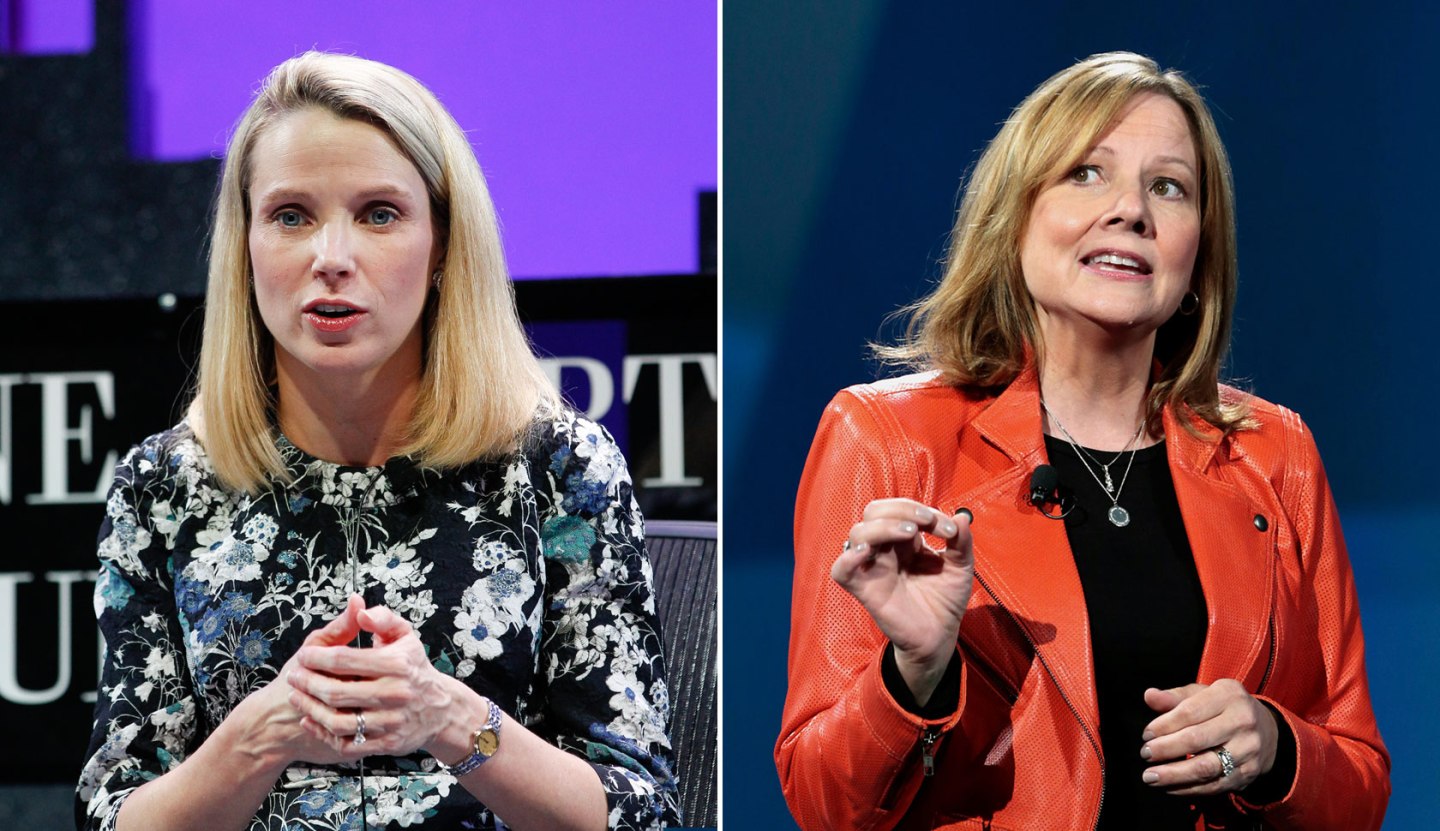
Just look at Yahoo’s Marissa Mayer. Yahoo (YHOO)—on a several-year decline and in the news again as employees brace for more layoffs—had six different CEOs in five years. It took courage for her to take the position, and she immediately came under intense scrutiny, despite the obvious challenges of the job. The most important actions leaders can take during a crisis are changing direction, communicating strategy and vision for where the business is headed, building brand advocates across influential audiences—employees, analysts, investors, and partners—and allowing time to repair and evolve the business.
Women leaders score higher on their abilities to inspire action and change direction, according to McKinsey. Companies lead by women score higher on important organization priorities like motivation, accountability, coordination, control, work environment, and values. During times of uncertainty, these soft leadership skills are vital for turning a business around. Further, a significant leadership change can demonstrate a change in direction, and that itself can reassure analysts and investors and inspire employees.
Some of our greatest female leaders today face make-or-break corporate challenges. Meg Whitman is tackling the launch of a new business model for HP (HP), now broken into two companies. Ursula Burns continues to reinvent Xerox (XRX). Indra Nooyi has successfully guided PepsiCo (PEP) through turbulent waters of shareholder activism and changing consumer demands toward soft drinks. In today’s environment, crises of business model shifts are impacting almost every industry.
Yahoo’s board was hopeful that Mayer could lead the company into the most notable turnaround in tech, but three years into her role, Yahoo’s core business is faltering, revenues declining, senior executives departing, and analysts, investors and media buzzing about the major uncertainty around Yahoo’s future as employees brace for continued layoffs. Businesses don’t turn around overnight, but such high expectations for a legacy business in need of modernizing proved a challenge from the outset. Mayer’s efforts to bring in startups and revamp the portfolio through its Mavens strategy—focus on growing mobile, video, native, and social—were read as too slow-growing.
The question today still lingers: Can Marissa turn it around? In order to be successful, Mayer should draw upon the qualities that make leaders great: honesty, compassion, and transparency. She must engage in issues head on and expand the dialogue from beyond her earnings calls to build support for her growth strategy from her most important audiences. She’s made tremendous moves to turn the business around through the acquisition of Tumblr, innovative partnerships, and bringing in new talent, but needs to make more noise in order to get the credit she deserves and the time it takes to restart a business in a complex and rapidly changing market environment.
GM (GM) CEO Mary Barra, on the other hand, was referred to as “Crisis Manager of the Year” by Fortune when she took over the company during “the most challenging time in the automaker’s 106-year history” in early 2014. In the wake of mass recalls and settlements with families who lost loved ones due to flaws in GM’s automobiles, Barra told The New York Times that “It was clearly a tragedy, and it was deeply troubling… but we quickly acknowledged our shortcomings and set about addressing them.” She acted fast and maintained transparency and honesty, both with employees and external stakeholders. In a company memo, she told employees that GM’s reputation wouldn’t be dependent on the recall itself, but on how the company handled it. She engaged with all stakeholders—customers, investors, partners, and employees—on her promise to take a tougher stance on mistakes at GM. She transformed the culture to focus on honesty and integrity and built in a no-excuses mentality that not only allowed her to improve quality, but also brought employees together to help better serve customers.
Managing crises as a leader is a difficult challenge. There are special leadership qualities that are needed during intense times of change. Women leaders are often more heavily watched and criticized for missteps, but we need to set more female CEOs up for success and empower them to lead companies to the next level. Women leaders are good for business and good for our global economy, as McKinsey states that advancing women in the work world has the potential to add $12 trillion to our global economy. Yet, expanding female leadership is not on the corporate agenda of one-third of businesses worldwide. As we face another year of global economic slowdown, can we really afford to miss out on the power that can be unlocked from women leadership?
Kathy Bloomgarden is the CEO of Ruder Finn.