• Home
  • Latest
  • Fortune 500
  • Finance
  • Tech
  • Leadership
  • Lifestyle
  • Rankings
  • Multimedia
TechBionic eye

This Bionic Eye Could Help the Blind See—From the Back of Their Head

By
Hilary Brueck
Hilary Brueck
Down Arrow Button Icon
By
Hilary Brueck
Hilary Brueck
Down Arrow Button Icon
January 6, 2016, 12:24 PM ET
Monash Art, Design and Architecture

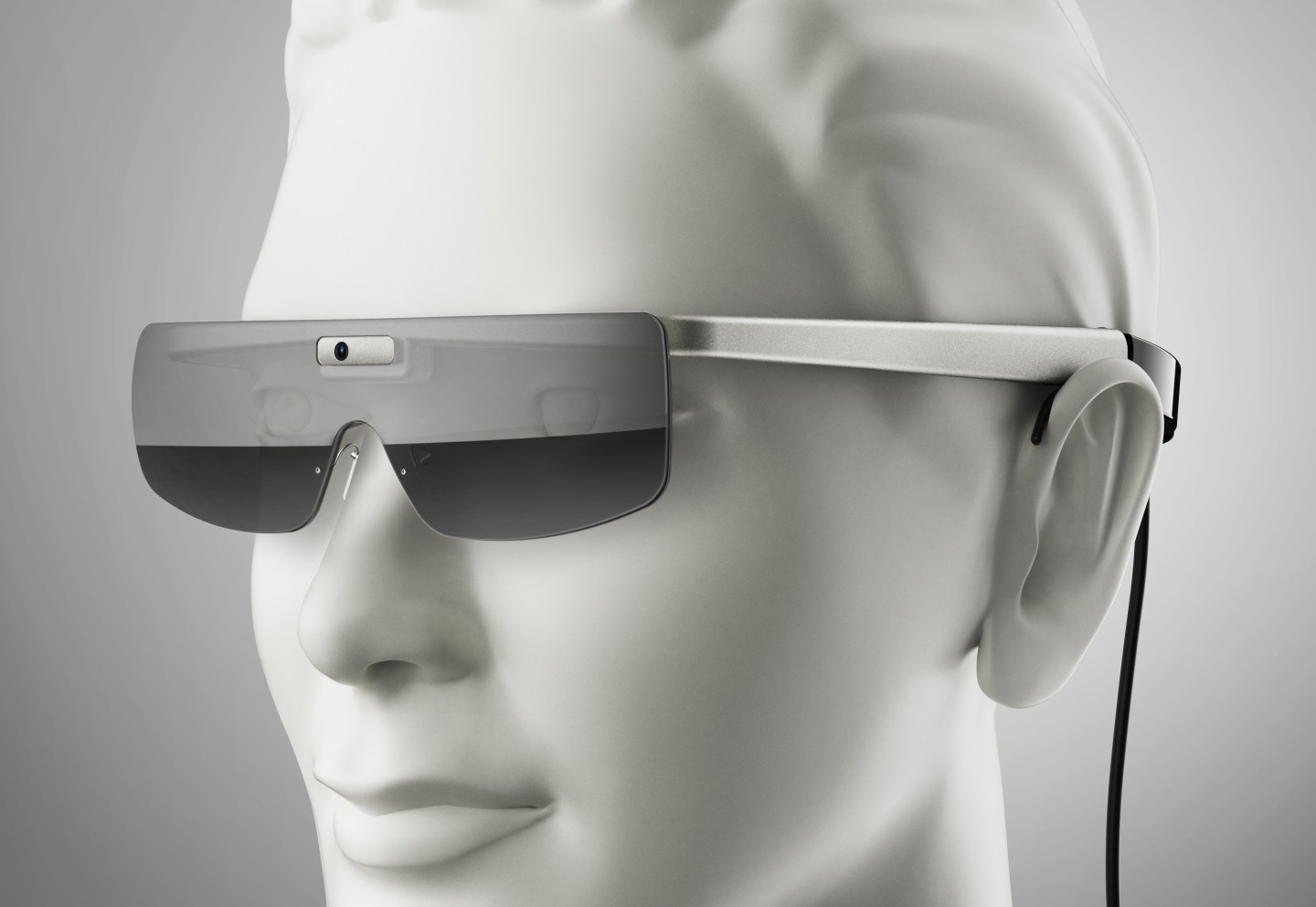
This year in Australia, researchers will implant a world-first bionic eye that can restore sight to the blind—no eyeball necessary.

While bionic eyes might sound futuristic, there are already a few retinal implants on the market. U.S.-based Second Sight, the FDA-approved industry leader, has put at least 150 of their $145,000 systems in retinas around the world.

But what electrical engineer Arthur Lowery and his team plan to do in 2016 is different. Because even if a patient’s eyeball is damaged or they’re completely eyeless, his new glasses could help them see. Not a picture-perfect view of the world, but instead, the image will be more like a couple hundred dots configured to help guide a patient’s way.

The system, developed in Australia at Monash University, inputs data directly from a glasses-mounted camera into the brain. And Lowery thinks it could help more than 80% of clinically blind people see their way around better.

SIGN UP: Get Data Sheet, Fortune’s daily newsletter about the business of technology.

That’s because the system is based on a front-mounted cell-phone sized camera that’s hooked up to the brain’s vision system not through the eyes, but at the back of the head, in a one-inch area just above where the neck ends. It’s here where the brain processes vision. Hook up a few electrode push pins into the grey matter under the skin, and it’s thought that the pulses could create ‘dotty’ images seen by the brain.

An implantable tile of 43 electrodes would send electrical pulses to the brain through the visual cortex, creating a vision of representative 'dots' for patients who can't see.
An implantable tile of 43 electrodes would send electrical pulses to the brain through the visual cortex, creating a vision of representative ‘dots’ for patients who can’t see.MiniFAB Pty Ltd
MiniFAB Pty Ltd

“We think it’s going to be initially perceived as dots of various sizes in the distance,” Lowery says. The dots could then be programmed, not just to see images, but also to help: Lighting up the clearest pathways out of a room, recognizing household objects, or even turning a room full of blurry colleagues dotted at a conference table into a cast of distinct computer-programmed emojis, so the patient can sort out who’s who. “It’s just the beginning, really, of a deeper understanding of learning how to work with human perception,” Lowery says.

He developed the system with an Australian army surgeon who’d seen a lot of traumatic eye damage and wanted a fix. But they aren’t the only researchers who’ve hacked into the brain’s vision system from behind.

WATCH: See Apple’s Medical Research App:

A scientist named Giles Brindley did it first while working at Cambridge in the 1960s. In those days, “you needed a bookcase full of equipment to have the electronics with the transmitters,” Lowery says, and the tech wasn’t practical for everyday use. Then in the 1970s American William Dobelle headed to Portugal to test out his own vision system for the blind, adding in an actual camera. But still, the technology wasn’t quite there: Wires connected to the back of the head had to be fed through the skin, a sometimes leaky system.

Today Lowery and his group can use pea-sized smartphone cameras and tiny computer processing technology, the same that’s in tablets and mobile phones. The team has spent roughly $20 million researching the tech, and is manufacturing batches of the devices now. They will need to get the device approved for Australian hospital trials from a research ethics committee before they can tap into their first patient. But in late 2016, they hope to be able to open up a patient’s cranium and slip in about four of those teeny electrode tiles. As they push them into the cellophane-like covering of the brain, connecting the tech up to human grey matter, they’ll be slowly learning how to bring up the lights for someone who’s lost their sight.


About the Author
By Hilary Brueck
See full bioRight Arrow Button Icon

Latest in Tech

Finance
Lorem ipsum dolor sit amet, consectetur adipiscing elit, sed do eiusmod tempor incididunt ut labore et dolore magna aliqua. Ut enim ad minim veniam
By Fortune Editors
October 20, 2025
Finance
Lorem ipsum dolor sit amet, consectetur adipiscing elit, sed do eiusmod tempor incididunt ut labore et dolore magna aliqua. Ut enim ad minim veniam
By Fortune Editors
October 20, 2025
Finance
Lorem ipsum dolor sit amet, consectetur adipiscing elit, sed do eiusmod tempor incididunt ut labore et dolore magna aliqua. Ut enim ad minim veniam
By Fortune Editors
October 20, 2025
Finance
Lorem ipsum dolor sit amet, consectetur adipiscing elit, sed do eiusmod tempor incididunt ut labore et dolore magna aliqua. Ut enim ad minim veniam
By Fortune Editors
October 20, 2025
Finance
Lorem ipsum dolor sit amet, consectetur adipiscing elit, sed do eiusmod tempor incididunt ut labore et dolore magna aliqua. Ut enim ad minim veniam
By Fortune Editors
October 20, 2025
Finance
Lorem ipsum dolor sit amet, consectetur adipiscing elit, sed do eiusmod tempor incididunt ut labore et dolore magna aliqua. Ut enim ad minim veniam
By Fortune Editors
October 20, 2025

Most Popular

Finance
Lorem ipsum dolor sit amet, consectetur adipiscing elit, sed do eiusmod tempor incididunt ut labore et dolore magna aliqua. Ut enim ad minim veniam
By Fortune Editors
October 20, 2025
Finance
Lorem ipsum dolor sit amet, consectetur adipiscing elit, sed do eiusmod tempor incididunt ut labore et dolore magna aliqua. Ut enim ad minim veniam
By Fortune Editors
October 20, 2025
Finance
Lorem ipsum dolor sit amet, consectetur adipiscing elit, sed do eiusmod tempor incididunt ut labore et dolore magna aliqua. Ut enim ad minim veniam
By Fortune Editors
October 20, 2025
Finance
Lorem ipsum dolor sit amet, consectetur adipiscing elit, sed do eiusmod tempor incididunt ut labore et dolore magna aliqua. Ut enim ad minim veniam
By Fortune Editors
October 20, 2025
Finance
Lorem ipsum dolor sit amet, consectetur adipiscing elit, sed do eiusmod tempor incididunt ut labore et dolore magna aliqua. Ut enim ad minim veniam
By Fortune Editors
October 20, 2025
Finance
Lorem ipsum dolor sit amet, consectetur adipiscing elit, sed do eiusmod tempor incididunt ut labore et dolore magna aliqua. Ut enim ad minim veniam
By Fortune Editors
October 20, 2025
Fortune Secondary Logo
Rankings
  • 100 Best Companies
  • Fortune 500
  • Global 500
  • Fortune 500 Europe
  • Most Powerful Women
  • Future 50
  • World’s Most Admired Companies
  • See All Rankings
Sections
  • Finance
  • Fortune Crypto
  • Features
  • Leadership
  • Health
  • Commentary
  • Success
  • Retail
  • Mpw
  • Tech
  • Lifestyle
  • CEO Initiative
  • Asia
  • Politics
  • Conferences
  • Europe
  • Newsletters
  • Personal Finance
  • Environment
  • Magazine
  • Education
Customer Support
  • Frequently Asked Questions
  • Customer Service Portal
  • Privacy Policy
  • Terms Of Use
  • Single Issues For Purchase
  • International Print
Commercial Services
  • Advertising
  • Fortune Brand Studio
  • Fortune Analytics
  • Fortune Conferences
  • Business Development
About Us
  • About Us
  • Editorial Calendar
  • Press Center
  • Work At Fortune
  • Diversity And Inclusion
  • Terms And Conditions
  • Site Map
Fortune Secondary Logo
  • About Us
  • Editorial Calendar
  • Press Center
  • Work At Fortune
  • Diversity And Inclusion
  • Terms And Conditions
  • Site Map
  • Facebook icon
  • Twitter icon
  • LinkedIn icon
  • Instagram icon
  • Pinterest icon

Latest in Tech

A veiled Iranian woman holds her cellphone displaying a portrait of Iran's Supreme Leader, Ayatollah Ali Khamenei,
CybersecuritySecurity
Cyber retaliation from Iran is a problem for U.S. companies — ‘It’s in the hands of a 19-year-old hacker in a Telegram room,’ ex-NSA operative says
By Amanda GerutMarch 1, 2026
5 hours ago
Two girls look at a white laptop placed on a desk.
AIEducation
American schools weren’t broken until Silicon Valley used a lie to convince them they were—now reading and math scores are plummeting
By Sasha RogelbergMarch 1, 2026
6 hours ago
Big TechSocial Media
YouTube’s cofounder and former tech boss doesn’t want his kids to watch short videos, warning short-form content ‘equates to shorter attention spans’
By Marco Quiroz-GutierrezMarch 1, 2026
10 hours ago
Slack cofounder Stewart Butterfield
SuccessProductivity
Slack cofounder says workers and CEOs can get stuck doing ‘fake’ work like pre-meetings and slide shows
By Emma BurleighMarch 1, 2026
10 hours ago
heitmann
CommentaryEntrepreneurship
Here’s how to build something that lasts, from the founder of a $300 million bootstrapped company that’s been growing for 28 years straight
By Tim HeitmannMarch 1, 2026
16 hours ago
U.S. President Donald Trump delivers the State of the Union address during a joint session of Congress in the House Chamber at the Capitol on February 24, 2026 in Washington, D.C.
EnergyData centers
Your utility bills keep going up. Here’s everyone you can blame—AI data centers included
By Jordan BlumMarch 1, 2026
19 hours ago

Most Popular

placeholder alt text
Economy
Your grandparents are the reason the U.S. isn't in a recession right now. That won't last forever
By Eleanor PringleMarch 1, 2026
16 hours ago
placeholder alt text
Success
MacKenzie Scott's close relationship with Toni Morrison long before Amazon put her on the path give more than $1 billion to HBCUs
By Sasha RogelbergMarch 1, 2026
10 hours ago
placeholder alt text
Personal Finance
Trump's universal 401(k) architect on why lower-income people distrust retirement accounts: 'they want to know what the catch is'
By Jacqueline MunisFebruary 28, 2026
2 days ago
placeholder alt text
AI
The week the AI scare turned real and America realized maybe it isn't ready for what's coming
By Nick LichtenbergFebruary 28, 2026
2 days ago
placeholder alt text
Success
Japanese companies are paying older workers to sit by a window and do nothing—while Western CEOs demand super-AI productivity just to keep your job
By Orianna Rosa RoyleFebruary 27, 2026
2 days ago
placeholder alt text
Success
Walmart exec says U.S. workforces needs to take inspiration from China where ‘5 year-olds are learning DeepSeek’
By Preston ForeFebruary 27, 2026
3 days ago

© 2026 Fortune Media IP Limited. All Rights Reserved. Use of this site constitutes acceptance of our Terms of Use and Privacy Policy | CA Notice at Collection and Privacy Notice | Do Not Sell/Share My Personal Information
FORTUNE is a trademark of Fortune Media IP Limited, registered in the U.S. and other countries. FORTUNE may receive compensation for some links to products and services on this website. Offers may be subject to change without notice.