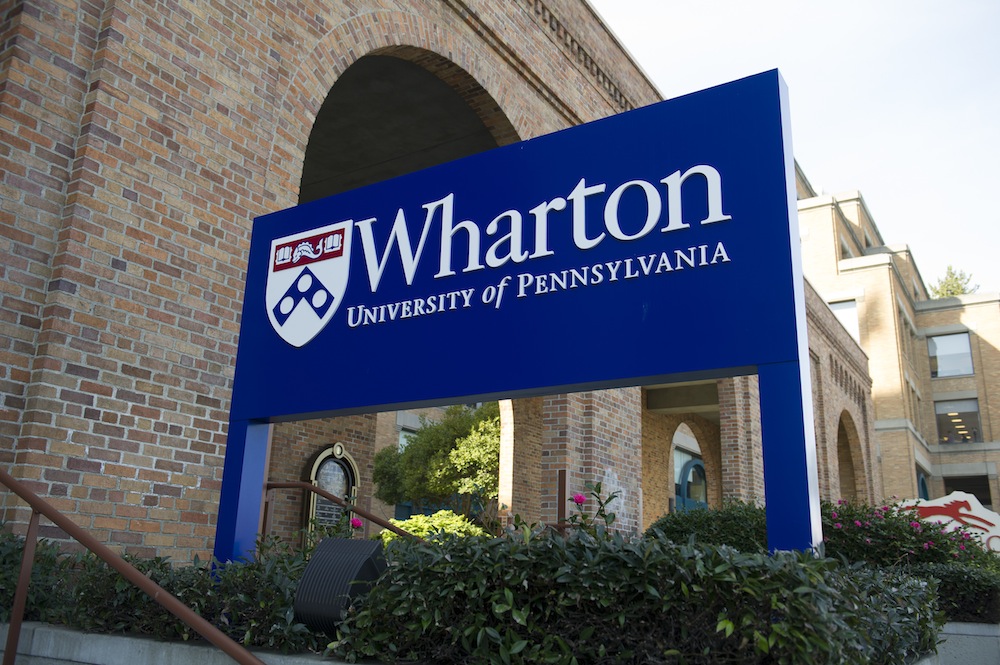
When marketing professor Peter Fader was asked to be one of three professors to build one of the first online classes at Wharton in 2012, he was marched to the corner of Second and South Streets in Philadelphia and told to face the lens of a video camera instead of students for the first time in his life.
“They turned the camera on and said ‘Let’s do a MOOC,” he laughs. “I had no idea what I was doing. There were no precedents. No one else was doing this.”
Looking to avoid a dull class filled with 101 marketing concepts, he cherry picked material from Wharton’s elective courses in marketing. At the time, Fader could not even imagine who would want to take the online course, an Introduction to Marketing, one of the first MOOCs Wharton would offer.
“My first impression was that the only people who would want this were senior citizens, housewives, or somebody in prison,” he quips.
Contrary to Faber’s initial expectations, MOOC learners turned out to be an impressive bunch. More than 90% have some college and most have a bachelor’s degree or higher. The age of learners tends to range from 25 to 44, and the vast majority are employed full time.
When Fader’s first course went live in 2013, he was amazed to get emails from engineers and managers all over the world. “These people are every bit the caliber of our MBA students,” he says. “I’d get an email from an engineer in Pakistan and lots of other people who would never have had the chance to come to Wharton.”
More from Poets&Quants: The Most Innovative Business School Ideas of 2015
Three years later, more than 300,000 people have taken Wharton’s Intro to Marketing course, one of the top 10 business MOOCs on the Coursera platform this year. Nearly 100,000 more have completed his second MOOC on Consumer Analytics. Fader also has piloted an eight-week-long executive education MOOC offering called the Strategic Value of Customer Relationships, which includes weekly “Pete Casts,” essentially hour-long office hours for the 20 to 30 students who have enrolled in the $3,700 course It will be offered for a fifth time this spring.
Since 2012, some 2.7 million people have enrolled in Wharton’s 18 MOOC courses. More importantly, the school has awarded 54,000 verified certificates since 2012 and 32,000 verified certificates in specialization courses since April of this year. What started as something of an online experiment will bring an additional $5 million in revenue to Wharton in 2015.
Through it all, Wharton has firmly established itself as the leading business purveyor of MOOCs. It was the first business school to offer a MOOC, the first to offer a specialization, or series of related courses, on Coursera, and can boasts one of the highest MOOC enrollments of any business school in the world.
No less crucial, the school is now doubling down on its bet on MOOCs. Over the next 12 months, Wharton plans to launch at least two dozen new online offerings, including its first three SPOCs (small private online courses) on digital marketing, gamification, and advanced product design. They will all be offered on the EdX platform, the non-profit education startup founded by Harvard and MIT, at significantly higher price points than the $95 certificates for its single MOOC courses on Coursera.
Wharton also will bump up the number of specializations from two to five through July of next year. The school is hoping that its MOOC revenues will double next year, to at least $10 million.
The big bet is being placed by Wharton’s new Dean, Geoffrey Garrett, who views the initiative as a way to further extend the school’s brand around the world; reach users who would never be able to get to the school’s Philadelphia campus; get faculty more comfortable using technology to teach; and transform how faculty and students engage in the classroom.
“Coming into the job, I had two conjectures about it that have been borne out,” says Garrett, an Australia-born political scientist who became dean in July of 2014. “One, there is a real market for a taste of Wharton education for lots of people who can’t be on campus,” he says. “And second, we now know how to smartly integrate technology in the on-campus courses.”
More than 10% of our faculty have now had experience building and running online classes, he says. That translates into more than 30 professors who have been involved in Wharton’s MOOC efforts. Specializations involve multiple faculty working together to create a set of courses, with each professor contributing anywhere between one and three weeks worth of material. Wharton’s business analytics specialization, for example, represents the combined effort of 12 different faculty members.
More from Poets&Quants: From Goldman Sachs To Homeless To Harvard Business School
Garrett says that he has since discovered that MOOCs can be used to identify talent that may ultimately come to campus for the school’s MBA program, and that the content Wharton has been developing can be a viable alternative to non-degree education, long the province of the school’s on-campus executive education programming.
“If it helps a person advance his or her career, it’s a bottom-up credential,” he says. “Non-degree education will increase pretty dramatically for those who find that the tuition and opportunity costs of either a degree or traditional executive education don’t make sense.”
While the early MOOCs were entirely free, including a statement of completion, Wharton is fast moving into a place where its portfolio of online offerings can become a substantial source of revenue for the school. Wharton led all schools on Coursera last April when it raised the cost for a verified certificate from$49 to $95.
“There was six weeks of anxiety over that decision,” says Anne Trumbore, director of Wharton’s online learning initiative. “But since then we’ve had 32,000 people pay for verified certificates. That is more than $3 million in gross revenue alone.”
The school’s specializations in business fundamentals and business analytics, composed of four courses plus a capstone project, cost $595 each.
Wharton also took its Global Strategy course, originally distributed on Coursera, and moved it to the EdX platform last month in a pilot at a cost of $149. “We got enrollment numbers that were just as good as Coursera,” says Don Huesman, managing director of Wharton’s innovation group, who believes the school can further raise prices in the future. “After all,” he says, “a used corporate finance textbook on Amazon goes for $200! We’re already making money hand over fist. This is Wharton!”
This strategic focus has not only made Wharton the business school leader in producing MOOCs and reaching a massive audience with them. Wharton also has become one of the major players in mastering the use of the technology to spread its knowledge and brand across the world. Two-thirds of the learners who have taken Wharton’s courses are outside North America, with heavy representation from India, China, Russia, and Latin America.
“The stats on how many people already have degrees and are outside the U.S. just hits us in the eyes,” says Garrett. “We are reaching learners we never would have reached. The pure marketing value of having millions of people sampling your education cannot be undervalued.”
One thing’s for sure: Wharton’s pioneering efforts have paid off in some important lessons. “Our efforts were product-centric and our original MOOCs were six-to-12 weeks long,” says Huesman. “We didn’t even think that a lot of people have busy lives with demanding schedules. Today, we’re being more customer-centric and asking what people need. They want the learning squished down into four weeks.”
Besides the shorter cycles, Wharton gained insight was what learners hoped to get out of a particular course. “We honed in on the concept of literacy in a business topic,” Huesman says. “If you are a general manager and don’t know a lot about customer analytics, you might want to binge learn this so you can go to a meeting and knowledgeably participate in the discussion.”
More from Poets&Quants: Ten Business Schools To Watch in 2016
Wharton believes its experience thus far proves that students prefer so-called asynchronous online learning that they can tap into at any time, no matter where they are in the world. “The market doesn’t require synchronous learning,” says Huesman. “If you re in Beijing and I’m in Philadelphia, there is no good time to get together.”
Another crucial lesson was that MOOCs were not about fame, despite the nearly instant celebrity status a MOOC might provide a faculty member. “This stuff is not about teaching,” insists Huesman. “It’s about learning. You don’t invest money to make faculty think they are Oprah Winfrey in the 21st Century.”
Ironically, perhaps, the greatest as-yet unrealized benefit of Wharton’s MOOC strategy may well be seen in old bricks-and-mortar classrooms.
“What we’re doing is using technology to get the low value, one way transmission of knowledge outside of the classroom,” says Huesman. “It is dumb to have a faculty member stand up in front of a class and deliver a lecture today. If we get that out of the classroom, all kinds of interesting things can happen in class.”
Less time devoted to that kind of rote teaching, Huesman says, would free up faculty to spend more time heading dynamic discussions at Wharton’s San Francisco campus or leading teams of students on experiential learning opportunities far afield from its Philadelphia campus.
“It can free up faulty time so they can craft learning experiences with students that are truly life changing,” says Huesman. “MOOCs are raising the bar for face-to-face education.”
Garrett agrees. “Ultimately, we want to use online content to provide a better experience for our students in the classroom,” he says. “We want class to be more interactive, team oriented and focused on problem solving. We tend to be in the learning-by-studying moment, but I think we are going to have to balance that with learning-by-doing.”
Editor’s note: A previous version of this story incorrectly stated that Wharton’s Introduction to Marketing MOOC debuted on Coursera in 2002. In fact, the course launched on Coursera in 2013.