• Home
  • News
  • Fortune 500
  • Tech
  • Finance
  • Leadership
  • Lifestyle
  • Rankings
  • Multimedia
FinanceInvestors Guide

Banks May Be Forced to Raise $1.2 Trillion

By
Stephen Gandel
Stephen Gandel
Down Arrow Button Icon
By
Stephen Gandel
Stephen Gandel
Down Arrow Button Icon
November 9, 2015, 12:48 PM ET
Bank Of England Governor Mark Carney Exclusive Interview
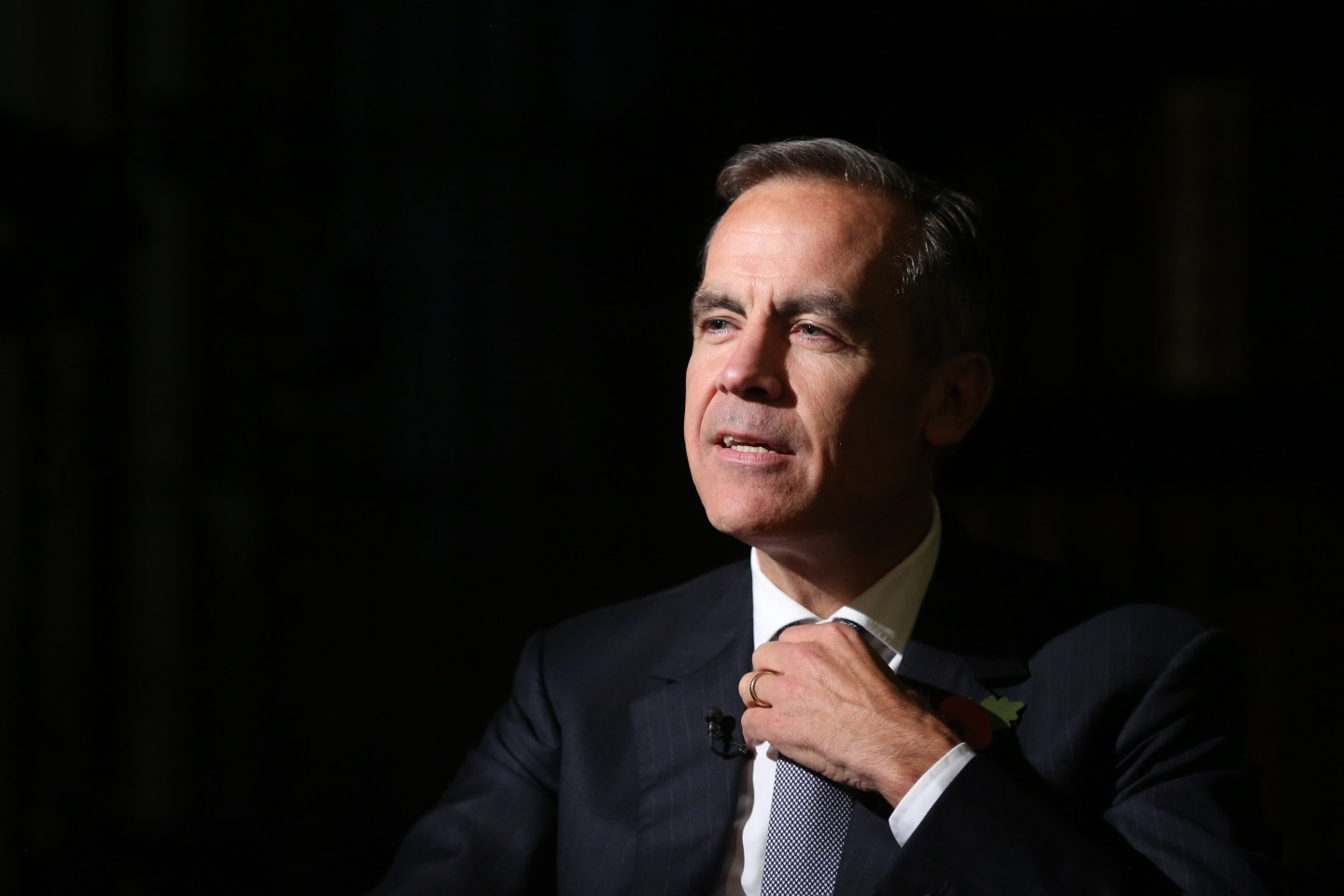
Mark Carney, governor of the Bank of England (BOE), adjusts his tie during a Bloomberg Television interview following the release of the bank's final inflation report at the Bank of England in the City of London, U.K., on Thursday, Nov. 5, 2015. The Bank of England trimmed its growth and inflation forecasts for this year and next and indicated it remains on a cautious footing on the timing of the first interest-rate increase. Photographer: Chris Ratcliffe/Bloomberg via Getty ImagesPhotograph by Chris Ratcliffe — Bloomberg via Getty Images

The answer to too big to fail, it appears, is more debt.

On Monday, global financial regulators proposed a new rule that they think will protect governments from having to bail out big banks. The rule will require the biggest banks in the world to raise $1.2 trillion in a new type of debt that can be used to cover losses or be written down or wiped out if a bank needs to be wound down. The new international rule follows a similar regulation introduced in the U.S. in late October. But the international version appears to be more strict, as it requires big banks to raise more of this new type of debt than the one proposed in the U.S.

The international rule, which was drawn up by the Financial Stability Board in Basel, Switzerland, will be applied to the world’s largest banks, which include JPMorgan Chase, Bank of America, Wells Fargo, and Citigroup, in addition to HSBC, Deutsche Bank. The largest banks in China, like the Industrial & Commercial Bank, may also need to comply with the proposed regulation.

The proposed rules, both the American and international versions, get around a sticky situation that regulators have contended with since the financial crisis. Regulators want banks to have more capital to cover bad loans and other losses they may incur. Typically, banks use equity to cover such losses. Bond holders don’t like to take losses, although that happens sometimes. But when they are forced to take losses, they tend to run in mass, causing problems.

Stock holders are looking for higher returns, and they realize that taking on the risk of losses is part of the deal. The easiest way to get more loss-absorbing capital is to sell more stock. But banks don’t like to do that, because it can hurt their stock price and it’s generally considered an expensive way to raise money.

So regulators have decided to force banks to sell a new type of debt that will explicitly cover losses in a situation where a bank’s equity is wiped out. The buyers of such debt would understand that they too are on the hook and would not run if their debt was written down. The proposed international rule requires banks to have Total Loss Absorbing Capital, or TLAC, equal to 16% of their assets, after adjusting for risk.

Will the new debt securities end big bank bailouts? Bloomberg is skeptical of the plan. It’s a workaround and, like all workarounds, it has flaws. The special debt, because it is riskier than traditional bank debt, will likely have higher interest rates and will thus be more expensive for banks to raise than traditional bank debt. Then again, it will not likely be nearly as expensive as equity. Stock holders will still have to absorb a bank’s losses first.

Regulators were smart to basically ban banks from buying up the loss-absorbing debt of other banks. (They could but it would require them to raise even more of these new securities.) During the financial crisis, banks were often the biggest bond holders of other banks. Still, someone is going to have to take on the risk of these new securities. And during a financial crisis, regulators are often loath to force anyone to take losses for fear of contagion.

Also, there is a concern that the new rules will result in less lending, though there’s not a lot of evidence for that.

Regulators have pushed banks to raise far more equity than they did before the financial crisis. And banks are now much better capitalized than they were before. But it looks like regulators have decided that they have reached their limit in how much straight equity they can get the banks to raise. So they have turned to a new type of debt to do the trick. Is it better than equity? Probably not. Is it better than doing nothing? Probably. Bank regulation, like all regulation, is a mixture of the ideal and the possible.


About the Author
By Stephen Gandel
See full bioRight Arrow Button Icon

Latest in Finance

CryptoBinance
Binance has been proudly nomadic for years. A new announcement suggests it’s finally chosen a headquarters
By Ben WeissDecember 7, 2025
1 hour ago
Big TechOpenAI
OpenAI goes from stock market savior to burden as AI risks mount
By Ryan Vlastelica and BloombergDecember 7, 2025
5 hours ago
InvestingStock
What bubble? Asset managers in risk-on mode stick with stocks
By Julien Ponthus, Natalia Kniazhevich, Abhishek Vishnoi and BloombergDecember 7, 2025
5 hours ago
EconomyTariffs and trade
Macron warns EU may hit China with tariffs over trade surplus
By James Regan and BloombergDecember 7, 2025
6 hours ago
EconomyTariffs and trade
U.S. trade chief says China has complied with terms of trade deals
By Hadriana Lowenkron and BloombergDecember 7, 2025
6 hours ago
PoliticsCongress
Leaders in Congress outperform rank-and-file lawmakers on stock trades by up to 47% a year, researchers say
By Jason MaDecember 7, 2025
6 hours ago

Most Popular

placeholder alt text
Real Estate
The 'Great Housing Reset' is coming: Income growth will outpace home-price growth in 2026, Redfin forecasts
By Nino PaoliDecember 6, 2025
2 days ago
placeholder alt text
AI
Nvidia CEO says data centers take about 3 years to construct in the U.S., while in China 'they can build a hospital in a weekend'
By Nino PaoliDecember 6, 2025
1 day ago
placeholder alt text
Economy
The most likely solution to the U.S. debt crisis is severe austerity triggered by a fiscal calamity, former White House economic adviser says
By Jason MaDecember 6, 2025
1 day ago
placeholder alt text
Big Tech
Mark Zuckerberg rebranded Facebook for the metaverse. Four years and $70 billion in losses later, he’s moving on
By Eva RoytburgDecember 5, 2025
2 days ago
placeholder alt text
Economy
JPMorgan CEO Jamie Dimon says Europe has a 'real problem’
By Katherine Chiglinsky and BloombergDecember 6, 2025
1 day ago
placeholder alt text
Uncategorized
Transforming customer support through intelligent AI operations
By Lauren ChomiukNovember 26, 2025
11 days ago
Rankings
  • 100 Best Companies
  • Fortune 500
  • Global 500
  • Fortune 500 Europe
  • Most Powerful Women
  • Future 50
  • World’s Most Admired Companies
  • See All Rankings
Sections
  • Finance
  • Leadership
  • Success
  • Tech
  • Asia
  • Europe
  • Environment
  • Fortune Crypto
  • Health
  • Retail
  • Lifestyle
  • Politics
  • Newsletters
  • Magazine
  • Features
  • Commentary
  • Mpw
  • CEO Initiative
  • Conferences
  • Personal Finance
  • Education
Customer Support
  • Frequently Asked Questions
  • Customer Service Portal
  • Privacy Policy
  • Terms Of Use
  • Single Issues For Purchase
  • International Print
Commercial Services
  • Advertising
  • Fortune Brand Studio
  • Fortune Analytics
  • Fortune Conferences
  • Business Development
About Us
  • About Us
  • Editorial Calendar
  • Press Center
  • Work At Fortune
  • Diversity And Inclusion
  • Terms And Conditions
  • Site Map

© 2025 Fortune Media IP Limited. All Rights Reserved. Use of this site constitutes acceptance of our Terms of Use and Privacy Policy | CA Notice at Collection and Privacy Notice | Do Not Sell/Share My Personal Information
FORTUNE is a trademark of Fortune Media IP Limited, registered in the U.S. and other countries. FORTUNE may receive compensation for some links to products and services on this website. Offers may be subject to change without notice.