There’s a reason why the tech press often likes to compare Facebook to the Borg — the half-human, half-robot race from Star Trek that is only interested in assimilating everyone into their collective consciousness. For Facebook (FB), however, it isn’t part of some evil sci-fi plot, it’s about pulling more and more content and behavior into the platform in order to keep users as engaged as possible. And for better or worse, media companies make willing partners.
Facebook’s latest offering along these lines is something called Notify, which is expected to launch in the next week or two. Although it isn’t available to the public yet, word about the new feature/app has been leaking out for some time now in a variety of ways. And as with Facebook’s Instant Articles, the new app is likely to fuel debate about who ultimately benefits the most from these kinds of features — media outlets or Facebook?
Business Insider had the first mention of the new feature in August, although it didn’t have a name. Then a site called The Awl came up with some screenshots of what the new app might look like, as part of a larger piece about the risks that media companies face in dealing with proprietary platforms like Facebook. And it had a name: Notify.

As more details filtered out in a number of ways — including in a recent story by the Financial Times — Notify has begun to look somewhat like a Facebook-based version of a Twitter list, or a modernized version of what used to be called an RSS reader, something that was popular back in the days before Twitter, when people wanted to keep up with the latest posts on their favorite blogs.
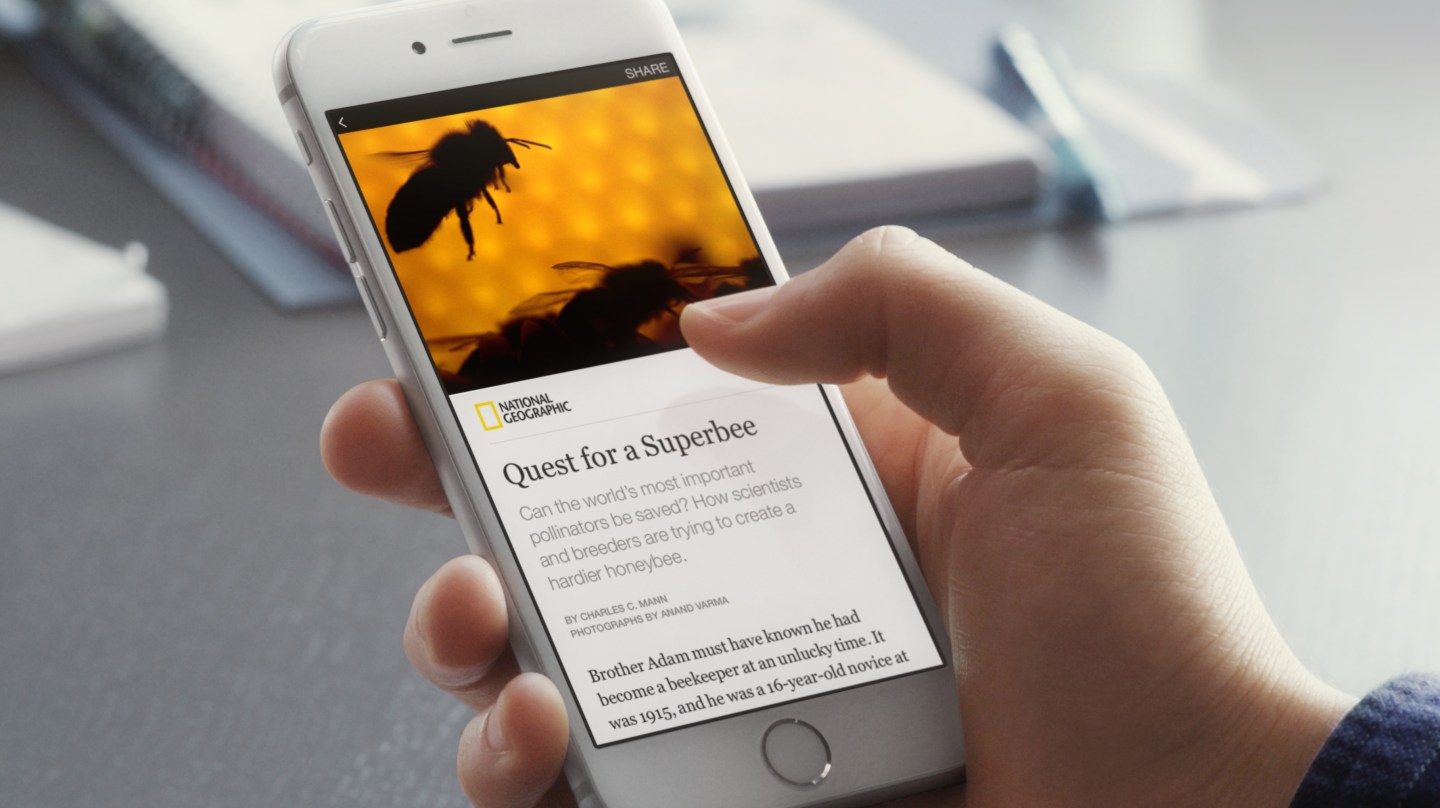
In a nutshell, Notify appears to give media companies and reported partners like Vogue, CBS and The Washington Post an easy way to send readers and potential readers an alert about new stories or other forms of content, and readers can then click and read them (presumably delivered to mobile via Facebook’s Instant Articles project, if the publisher is part of that partnership as well).
Snapchat has a somewhat similar feature in its app called Discover, with partners that include CNN and BuzzFeed, and Apple (AAPL) recently launched a curated-news offering called Apple News with a long list of media outlets as partners. Twitter has also tried to move into this general arena with a new feature called Moments, in which Twitter editors collect tweets about news events.
The name of Facebook’s new feature isn’t a coincidence. For many mobile users — particularly younger ones — the notifications screen of their smartphone has become their home page, the place they turn to in order to find out what they need to know. The New York-based startup incubator Betaworks, which has given birth to startups like Bitly and Chartbeat, recently convened a symposium about how companies should handle notifications, because they have become such a crucial part of the way that many people interact with the web.
Whether Facebook can become a key part of that behavioral shift remains to be seen, but the launch of Notify is a clear attempt to do so, and to deepen the relationship that the social network has with media outlets like The Washington Post and others. But is that relationship an even-handed one, or is Facebook inexorably gaining power while media companies are busy relinquishing it?
FT: Facebook's new 'Notify' app will be made available next week. https://t.co/Xc8oTPAxSh
..and might soon render many news apps obsolete.— Wolfgang Blau (@wblau) November 4, 2015
The appeal of things like Notify and Instant Articles is fairly obvious. Many media companies and publishers don’t seem to have either the time, the resources or the know-how to develop and implement fast-loading, easy-to-read mobile pages — so why not let Facebook take care of all that with Instant Articles, and then share in the advertising revenue? It’s an appealing offer.
In the same way, many media companies may not have the wherewithal to create a mobile app that works properly, or to understand the way that mobile notifications for phones or wristwatches are changing their business. So why not just plug into Facebook’s new Notify feature/app and have that solved in one fell swoop? The clicks go to the publisher’s site, but it plugs them even further into Facebook’s ecosystem.
In addition to getting Facebook to handle the technical side of features like Instant Articles, media outlets get advertising revenue, and even more important they get access to the one billion or so viewers who make up Facebook’s user base. That’s a powerful incentive. But the risk is that these kinds of offers from Facebook ultimately do more to enhance the social network’s profile than they do any individual media outlet.
When a platform is as large as Facebook, you can’t just ignore it as a media company — in effect, you have to play ball whether you want to or not. But in many ways the game is rigged, since Facebook is the one who makes all the rules, including using its algorithm to highlight or de-emphasize whatever content it thinks will produce the most engagement on the part of its users. If that’s not you, then you lose. End of story.
You can follow Mathew Ingram on Twitter at @mathewi, and read all of his posts here or via his RSS feed. And please subscribe to Data Sheet, Fortune’s daily newsletter on the business of technology.