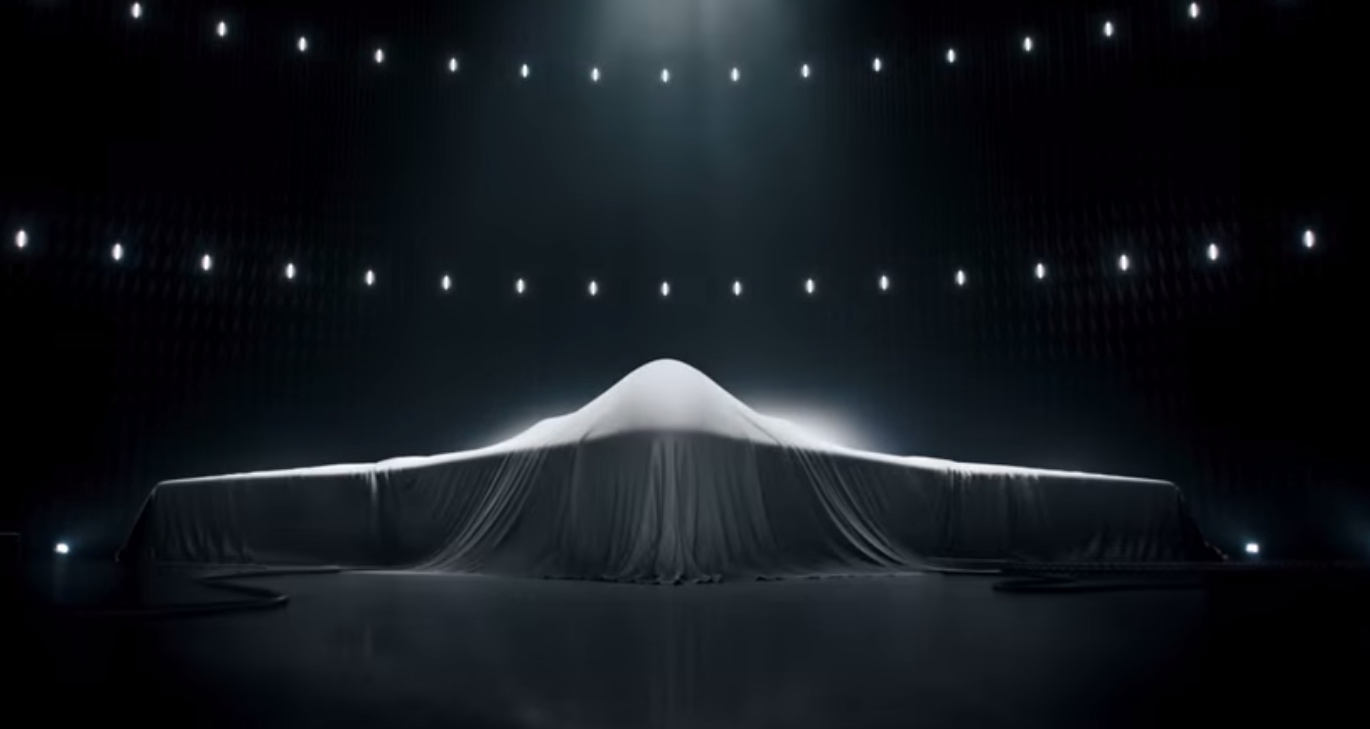
Later today, the U.S. Air Force will choose a contractor to build its next stealth bomber in what is projected to be the Pentagon’s biggest defense project in a decade. The $55 billion (at minimum) Long Range Strike-Bomber program will eventually replace America’s aging fleets of B-52, B-1, and B-2 stealth bombers with 100 new stealthy, cutting-edge strike aircraft built by either Northrop Grumman or a collaboration between Lockheed Martin and Boeing.
But if you’re the Air Force, how do you ensure that your latest combat jet program doesn’t wind up in the acquisition death spiral, beset by cost overruns, development delays, and Congressional inquiries? You tap the USAF’s Rapid Capabilities Office, the secretive 80-person panel that has shaped some of the Air Force’s most ambitious technologies over the past decade.
Created in 2003, the Rapid Capabilities Office is a little known group of officers and experts that is structured to circumvent the Air Force’s traditional acquisition bureaucracy and meld existing technologies with near-term operational needs. In other words, the RCO exists to deliver what the Air Force’s acquisition chief calls “eye-watering capabilities,” and on a shoestring if at all possible.
In theory, at least.
“It’s got our best people there,” William LaPlante, the Air Force’s assistant secretary for acquisition, told reporters at the Pentagon last week. “They love their jobs.”
The RCO functions somewhat differently than other Pentagon technology shops, which often start with a wish list of priorities or capabilities and then work to build technologies around them. While that can produce bleeding-edge weapons, the method is also prone to cost overruns and delays as brand new technologies are prototyped, tested, and refined for the first time. Such programs also often suffer from what’s known as “requirements creep,” in which military planners continue to evolve their technology wish list even as the development program is underway.
Examples of this are not hard to come by. The last time the Air Force built a long range bomber—the B-2 Spirit stealth bomber developed by Northrop Grumman in the 1980s—delays and ballooning costs were later exacerbated by budget cuts as the Cold War ended. Just as the iconic bat-wing B-2 went into production the Pentagon significantly cut the number of aircraft it wanted, sending the cost per aircraft soaring to nearly $2 billion. More recently, Lockheed Martin’s $400 billion F-35 Joint Strike Fighter program has earned the dubious distinction as the world’s most expensive weapon system, as early development delays, design flaws, and technology glitches have driven its price tag skyward.
Made up of Air Force officers, acquisition professionals, and aircraft maintainers, the RCO instead places a premium on moving quickly from concept to reality. It will often rely on existing equipment rather than commissioning something new. The RCO also maintains a direct line to decision-makers in the Pentagon, reporting to a board of directors chaired by the Pentagon’s acquisitions chief and staffed by the secretary of the Air Force, the Air Force chief of staff, and the Air Force assistant secretary for acquisition.
Prior to the 2005 Presidential Inauguration, the RCO developed significant upgrades to the air defense system protecting Washington, D.C., from incoming aerial threats—and did so in just nine months. It also developed a special ground-based beacon system that visually warns pilots that wander into restricted airspace around the capital. Perhaps most notably, the RCO worked with Boeing in developing the secretive X-37B, an unmanned, robotic space shuttle capable of spending more than a year in orbit while performing classified maneuvers.
Those are the things we know about. The RCO reportedly guides a number of secret technology programs of which the latest Long Range Strike-Bomber is likely the most high-profile—a sign that the Air Force is serious about keeping the program on schedule and on budget.
“From the very start, we’ve had secretary of defense guidance on the fundamental capabilities required for the nation and our chief of staff continues to serve as the requirement’s owner,” RCO director Randall Walden told the House Armed Services Committee last month. “Additionally, the program and the user personnel have been working side-by-side in the same office since the very beginning. We drastically slashed the bureaucracy normally involved in getting a program to stable requirements.”
It’s an arrangement more in line with the typical Chief Technology Officer-CEO relationship within a tech company than the Pentagon’s conventional weapons procurement process. And it should bear positive results, Walden insisted. While many big-ticket acquisition programs suffer from overreach as planners at the top of the acquisition hierarchy pile on unrealistic demands, the RCO keeps the program rooted in practicality.
“We put only mature capabilities on LRS-B as opposed to every good idea technology,” Walden promised the House committee, referring to the Long Range Strike-Bomber. “In short, it does not have to be everything for everyone.”
Speaking to reporters last week at the Pentagon, LaPlante seemed optimistic that those mature technologies can be melded into a new airplane—one that out-classes enemy air defenses—without breaking the bank. And just because a technology is mature, he said, doesn’t mean it’s dated or less-than sophisticated.
“Just because they’re existing and mature doesn’t mean that they’re in the open,” LaPlante said. “It doesn’t mean that any of you even know about them.”
The contract award announcement is expected after close of markets today. But it will take years before we know whether the Long Range Strike-Bomber comes in at budget — or is just another Pentagon program run amok.
For more about the Pentagon, watch this Fortune video: