• Home
  • Latest
  • Fortune 500
  • Finance
  • Tech
  • Leadership
  • Lifestyle
  • Rankings
  • Multimedia
Commentary

What the VW scandal says about cheating at work

By
Steve Sims
Steve Sims
and
Bethany Cianciolo
Bethany Cianciolo
Down Arrow Button Icon
By
Steve Sims
Steve Sims
and
Bethany Cianciolo
Bethany Cianciolo
Down Arrow Button Icon
October 19, 2015, 11:10 AM ET
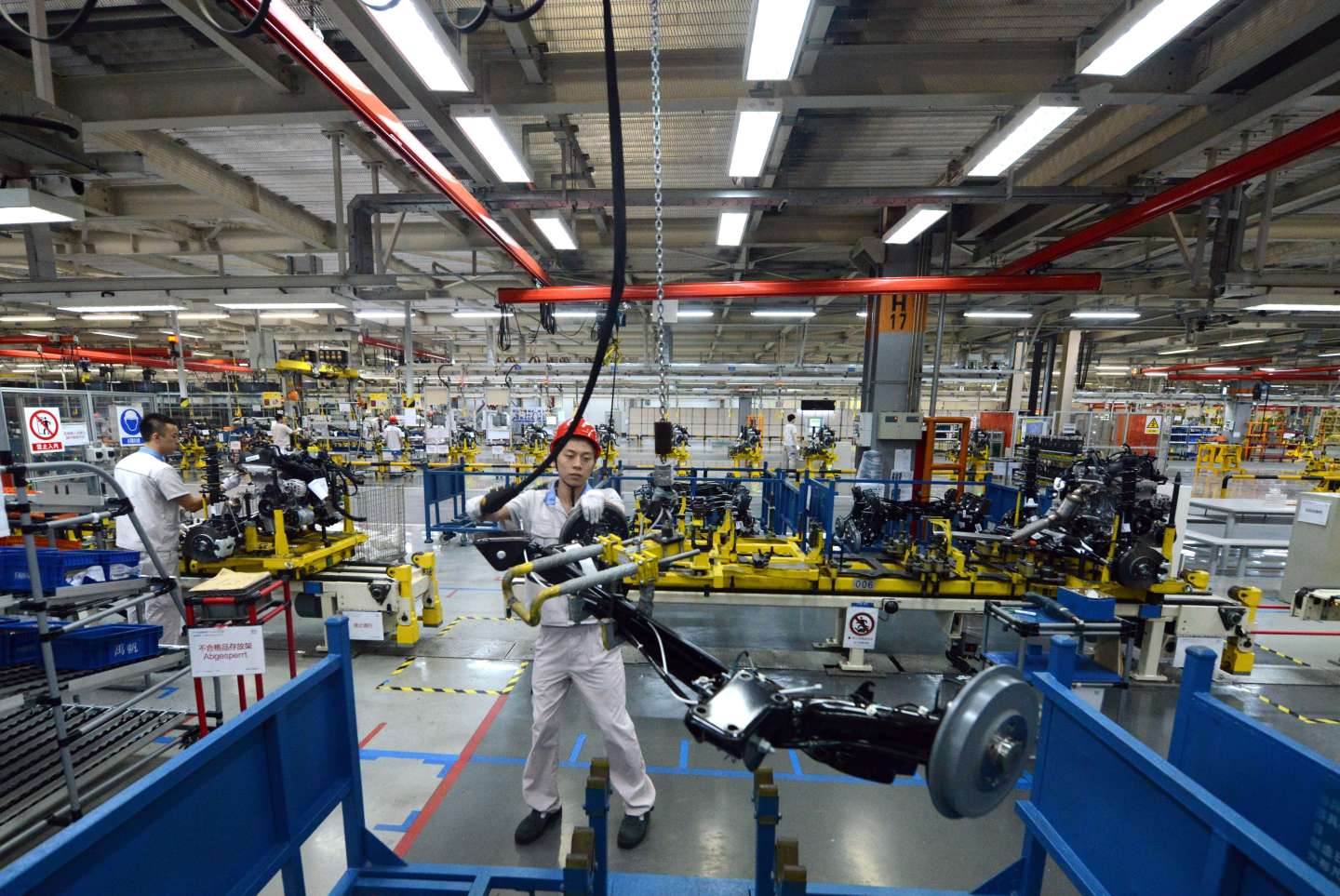
CHINA-GERMANY-AUTO-FAW-VOLKSWAGEN
This picture taken on July 6, 2014 shows Chinese auto workers on the assembly line at the FAW-Volkswagen plant in Chengdu, southwest China's Sichuan province, during the visit of German Chancellor Angela Merkel. The plant, the second one in China, produced its first car in October 2011 and is now operating in full capacity with an expected production of 600,000 vehicles in 2014.. AFP PHOTO/GOH CHAI HIN (Photo credit should read GOH CHAI HIN/AFP/Getty Images)GOH CHAI HIN/AFP--Getty Images

In the wake of the Volkswagen scandal, I can’t help but wonder at what point did Volkswagen decide to create illegal software that defrauds vehicle emissions tests. What was the tipping point in incentives and motivation that drove the decision? And applying this question in a broader way, how often are people incentivized to cheat at work, and what can be done about it?

Dan Ariely, a professor of behavioral economics at Duke University, writes in The Wall Street Journal that everybody has the capacity to be dishonest, but most people are not rotten to the core. But, more often than not, in a tough conflict between self-interest and integrity, even the best of us have the capacity to turn a little rotten; it’s what Professor Ariely refers to as the “Fudge Factor.” As Chief Design Officer of Badgeville, a gamification company, I have witnessed how employees of many companies fudge their performance to earn points and prizes. In my experience, in order to address cheating, you have to tackle two distinct issues. First, how do we recognize and investigate cheating? Second, if people are cheating, what strategies can curb it?

In general, anything is vulnerable to cheating. When you invent any game with rules, whether it be a point system for customer service performance, an emissions test for automobiles, or even a game like football or basketball, you unavoidably create ways to exploit the game or cheat.

The first step is to ask yourself this: does it matter? In Volkswagen’s case, I think we’d all argue yes, it does; the environmental impacts are huge and the company broke its trust with consumers. The impact of cheating can be more ambiguous.

A typical gamification program records and rewards particular desirable workplace behaviors. The opportunity then exists for someone to fake those desired behaviors. For example, if your intent is to promote more workplace conversations in an online collaboration tool, a side-effect may be more non-work conversations as well. But do you necessarily have a problem? On the one hand, you’re rewarding people for discussing off-work subjects at work, but on the other hand, the system as a whole is increasing all conversations, including the desired work-related conversations. Some users may even be getting rewarded for working less, but the net return for the company is more beneficial conversations overall.

The determining factor of whether you should act or not is, are the effects of cheating resulting in poorer performance, lost revenue, or raising accusations of unfairness among the ranks? For example, a salesman entering fake sales call transactions into the company’s CRM, or a services representative creating fake conversation threads in their company’s service community and telling friends about it to get artificial up votes, are examples of the kind of harmful cheating that cost the company money and credibility amongst its other employees.

Once you’ve established your cheating problem is indeed a problem, the second step is to determine why people cheat. What’s the reward? Is it points, privileges, money, prizes? Tangible results are a common cause but don’t underestimate the appeal of bragging rights and prestige. Sometimes, the reward and encouraged behavior aren’t well-balanced. Cheaters will quickly identify these mismatches and take advantage. In cases like this, simply removing the amount of reward may reduce the cheating.

Third, if the problem persists, you’ll need to investigate how people cheat. Do they enter fake data? Do teams of people ‘help each other out’? Are employees neglecting processes or cutting corners to ‘farm’ the tracked behaviors?

In most cases, extreme cheating should be obvious and stand out if you review the numbers. However, more subtle cheating, such as a salesperson who pads their numbers with a few extra calls – maybe to hit a bonus in your gamification system – can be harder to spot and your best source of policing will come from the complaints of coworkers.

Once you’ve confirmed the presence and scope of the cheating, don’t overreact. If you punish the whole company, you might kill your program altogether (and in most cases, if some employees feel compelled to cheat, it means you’re doing something right and likely many more employees are participating appropriately).

To counter the cheating, I recommend using a combination of these six approaches:

1. Limit behavior rates. If people are fabricating an action to obtain a reward, you can reduce the amount of times you will reward a user for that type of action. For instance, on a social media site, if one comment is worth points, you may introduce a ‘cool down’ period for scoring additional points for that behavior. For example, you can only get credit for writing a new comment once every five minutes.

2. Limit the count. Place a cap on how many times employees can earn credit for a behavior. For example, if updating a social media profile generates a reward, configure the game such that employees only get credit the first three times they update their profiles.

3. Crowdsource verification. For certain activities, an outside party can verify the quality of a behavior. For example, if you reward customer service reps based on the volume of questions they answer, they can cheat the system (e.g. rapidly copy-paste a generic answer to every question). However, if you only reward employees when a customer ranks their answers as “Helpful,” then you have essentially put a crowd sourced quality filter on the submitted answers.

4. Moderate verification. While this is more expensive than crowd sourcing, you could give an individual or team the responsibility of confirming behaviors, spot-checking oddities and responding to complaints of unfairness. Even with a handful of irregular spot checks, habitual cheaters will be discovered. Take Volkswagen as an example.

5. Quarantine cheaters. If the cheaters all belong to one team or geographical region, you may choose to manage and monitor them separately, particularly if the cheating is more of a cultural perception or difference in departmental values. This could save you from changing a gamification system that performs great throughout other parts of the population.

6. Remind people of honesty. In his WSJ article, Professor Ariely writes: “…simply being reminded of moral codes has a significant effect on how we view our own behavior.” A physical poster or a regular email about the rules of the game might cue people to be honest.

Within all of us, there is a seed of temptation to cheat. As business leaders, we have the power to reflect on our workplace, system and culture to create systems and environments that bring out the best in our people rather than the worst. Take away the ability to easily cheat and add a social pressure to not cheat, and you’ll significantly curb the incidence of cheating in your gamification programs and your organization as a whole.

Steve Sims is co-founder and Chief Design Officer at Badgeville.
About the Authors
By Steve Sims
See full bioRight Arrow Button Icon
By Bethany Cianciolo
See full bioRight Arrow Button Icon

Latest in Commentary

Finance
Lorem ipsum dolor sit amet, consectetur adipiscing elit, sed do eiusmod tempor incididunt ut labore et dolore magna aliqua. Ut enim ad minim veniam
By Fortune Editors
October 20, 2025
Finance
Lorem ipsum dolor sit amet, consectetur adipiscing elit, sed do eiusmod tempor incididunt ut labore et dolore magna aliqua. Ut enim ad minim veniam
By Fortune Editors
October 20, 2025
Finance
Lorem ipsum dolor sit amet, consectetur adipiscing elit, sed do eiusmod tempor incididunt ut labore et dolore magna aliqua. Ut enim ad minim veniam
By Fortune Editors
October 20, 2025
Finance
Lorem ipsum dolor sit amet, consectetur adipiscing elit, sed do eiusmod tempor incididunt ut labore et dolore magna aliqua. Ut enim ad minim veniam
By Fortune Editors
October 20, 2025
Finance
Lorem ipsum dolor sit amet, consectetur adipiscing elit, sed do eiusmod tempor incididunt ut labore et dolore magna aliqua. Ut enim ad minim veniam
By Fortune Editors
October 20, 2025
Finance
Lorem ipsum dolor sit amet, consectetur adipiscing elit, sed do eiusmod tempor incididunt ut labore et dolore magna aliqua. Ut enim ad minim veniam
By Fortune Editors
October 20, 2025

Most Popular

Finance
Lorem ipsum dolor sit amet, consectetur adipiscing elit, sed do eiusmod tempor incididunt ut labore et dolore magna aliqua. Ut enim ad minim veniam
By Fortune Editors
October 20, 2025
Finance
Lorem ipsum dolor sit amet, consectetur adipiscing elit, sed do eiusmod tempor incididunt ut labore et dolore magna aliqua. Ut enim ad minim veniam
By Fortune Editors
October 20, 2025
Finance
Lorem ipsum dolor sit amet, consectetur adipiscing elit, sed do eiusmod tempor incididunt ut labore et dolore magna aliqua. Ut enim ad minim veniam
By Fortune Editors
October 20, 2025
Finance
Lorem ipsum dolor sit amet, consectetur adipiscing elit, sed do eiusmod tempor incididunt ut labore et dolore magna aliqua. Ut enim ad minim veniam
By Fortune Editors
October 20, 2025
Finance
Lorem ipsum dolor sit amet, consectetur adipiscing elit, sed do eiusmod tempor incididunt ut labore et dolore magna aliqua. Ut enim ad minim veniam
By Fortune Editors
October 20, 2025
Finance
Lorem ipsum dolor sit amet, consectetur adipiscing elit, sed do eiusmod tempor incididunt ut labore et dolore magna aliqua. Ut enim ad minim veniam
By Fortune Editors
October 20, 2025
Rankings
  • 100 Best Companies
  • Fortune 500
  • Global 500
  • Fortune 500 Europe
  • Most Powerful Women
  • Future 50
  • World’s Most Admired Companies
  • See All Rankings
Sections
  • Finance
  • Leadership
  • Success
  • Tech
  • Asia
  • Europe
  • Environment
  • Fortune Crypto
  • Health
  • Retail
  • Lifestyle
  • Politics
  • Newsletters
  • Magazine
  • Features
  • Commentary
  • Mpw
  • CEO Initiative
  • Conferences
  • Personal Finance
  • Education
Customer Support
  • Frequently Asked Questions
  • Customer Service Portal
  • Privacy Policy
  • Terms Of Use
  • Single Issues For Purchase
  • International Print
Commercial Services
  • Advertising
  • Fortune Brand Studio
  • Fortune Analytics
  • Fortune Conferences
  • Business Development
About Us
  • About Us
  • Editorial Calendar
  • Press Center
  • Work At Fortune
  • Diversity And Inclusion
  • Terms And Conditions
  • Site Map
  • Facebook icon
  • Twitter icon
  • LinkedIn icon
  • Instagram icon
  • Pinterest icon

Latest in Commentary

paramount
CommentaryM&A
A cautionary Hollywood tale: the Ellisons’ lose-lose Paramount positioning
By Jeffrey Sonnenfeld and Stephen HenriquesJanuary 12, 2026
10 hours ago
Walken
Commentarybeverages
Molson Coors CEO: We’re doing our part to solve society’s ‘occasion problem’ – and we’re getting some unexpected help
By Rahul GoyalJanuary 12, 2026
10 hours ago
AsiaChina
What global executives need to ask about China in 2026
By Joe Ngai and Jeongmin SeongJanuary 11, 2026
1 day ago
Justin Harlan
Commentaryremote work
I run one of America’s most successful remote work programs and the critics are right. Their solutions are all wrong, though
By Justin HarlanJanuary 11, 2026
1 day ago
Gene Ludwig
Commentaryaffordability
Millions of Americans are grappling with years of declining economic wellbeing and affordability needs a rethink
By Gene Ludwig and Shannon MeyerJanuary 11, 2026
1 day ago
doctor
CommentaryMedicaid
Former White House advisor on the real reason your health care costs are going up: Medicare’s doctor pay gap
By Tomas J. PhilipsonJanuary 9, 2026
3 days ago

Most Popular

placeholder alt text
Economy
‘Sell America’: Investors dump U.S. assets in fear of the end of Fed independence
By Jim EdwardsJanuary 12, 2026
12 hours ago
placeholder alt text
AI
This CEO laid off nearly 80% of his staff because they refused to adopt AI fast enough. 2 years later, he says he'd do it again
By Nick LichtenbergJanuary 11, 2026
1 day ago
placeholder alt text
Economy
A Supreme Court ruling that strikes down Trump's tariffs would be the fastest way to revive the stalling job market, top economist says
By Jason MaJanuary 11, 2026
1 day ago
placeholder alt text
Economy
Trump may be raising your taxes with his tariffs but he could actually cut inflation with them, too, SF Fed says
By Jake AngeloJanuary 6, 2026
6 days ago
placeholder alt text
Success
An exec at $62 billion giant Colgate says Gen Z workers, despite getting flak for being woke and lazy, are actually ‘pushing us to get better’
By Emma BurleighJanuary 10, 2026
3 days ago
placeholder alt text
Economy
Treasury spent $276 billion in interest on the national debt in the final three months of 2025, says the CBO—up $30 billion from a year prior
By Eleanor PringleJanuary 12, 2026
11 hours ago

© 2025 Fortune Media IP Limited. All Rights Reserved. Use of this site constitutes acceptance of our Terms of Use and Privacy Policy | CA Notice at Collection and Privacy Notice | Do Not Sell/Share My Personal Information
FORTUNE is a trademark of Fortune Media IP Limited, registered in the U.S. and other countries. FORTUNE may receive compensation for some links to products and services on this website. Offers may be subject to change without notice.