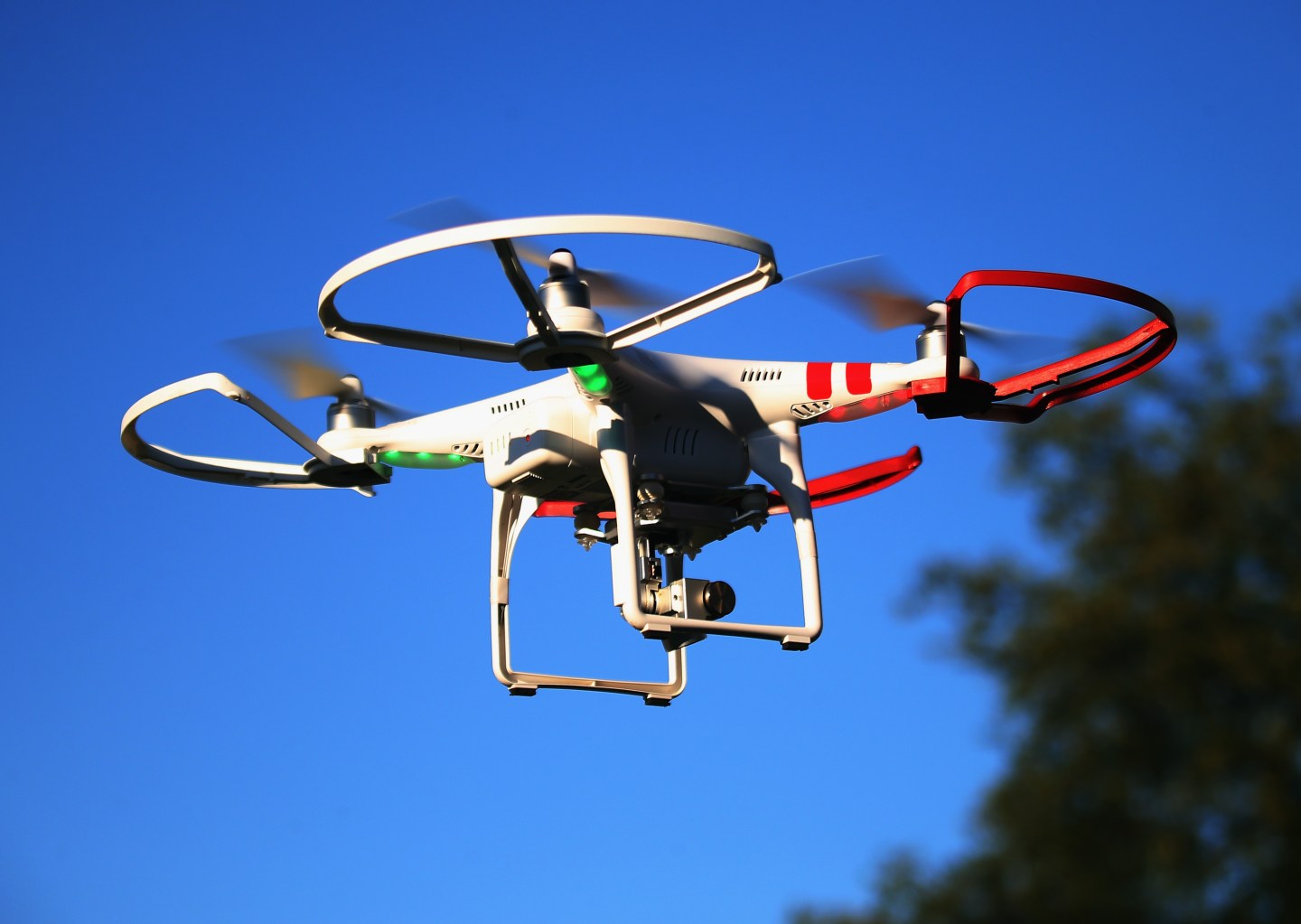
People could soon see more drones in the sky thanks, in part, to leading chip manufacturer Qualcomm (QCOM).
The company recently announced it was launching a new platform called Snapdragon Flight, which will make it easier (and cheaper) for companies to create unmanned aerial vehicles (UAVs). The new technology is based on the Qualcomm Snapdragon 801 processor—commonly found in smartphones and tablets—and provides everything from computing power to other key functions on a single processor. With Snapdragon, companies will now be able to buy a single chip, rather than the several they need to buy now to get a UAV in the air. The result is a much lower upfront cost that could be passed on to consumers. Snapdragon Flight will aim at getting UAVs running on its platform in the first half of 2016.
“The Snapdragon Flight will enable shorter development times, and smaller, light, easier to fly consumer drones with advanced features such as 4K camera, and sophisticated navigation,” said Hugo Swart, Qualcomm senior director and head of Internet of Things consumer electronics. It’s smartphone technologies that “will unlock the drone ecosystem.”
One may argue, however, that a drone revolution is already underway. Mary Meeker, partner at Kleiner Perkins Caufield Byers, believes the consumer drone market will grow 167% year-over-year, while worldwide drone shipments could reach 4.3 million units in 2015, netting total revenue of $1.7 billion by year’s end.
Several tech companies are now vying for control of the market. Sony (SNE) in July announced a collaboration with Japan-based ZMP to start a joint venture called Aerosense. The company will develop a platform for drone technology aimed at enhancing the usability of drones in the corporate world. Earlier this year, GoPro (GPRO), maker of the wildly popular action camera, said that it’s planning to launch a drone outfitted with its camera technology in 2016. In an interview with Fortune, Charlie Anderson, senior research analyst at Dougherty Markets, said that GoPro’s drone business, alone, could help it secure “hundreds of millions of dollars” in new revenue.
Meanwhile, some of the world’s largest technology companies are also investing heavily in drones. Last year, Google (GOOGL) acquired Titan Aerospace, a company that was building drones designed to stay aloft for extremely long periods of time. Titan has since been folded into Google’s Project Loon division, which aims at beaming Internet connectivity to parts of the world where it’s not readily available. A drone could make expedite that effort. Google is also working on a drone-based delivery system, called Project Wing. while tech competitor Amazon (AMZN) is currently testing a similar service, called Prime Air, that would deliver packages to customer homes.
Meanwhile, the market for consumer-flying drones is alive and well. DJI, 3DRobotics, and Yuneec, among others, offer higher-end drones that consumers can buy and fly. Although major technology companies haven’t moved into that space just yet, the Consumer Electronics Association (CEA) said in February that the consumer drone market in the U.S. could grow to over $1 billion by 2018, once major companies join in and government regulators catch up with the growing trend.
The biggest bottleneck (and hindrance to industry growth) in the drone market now may be government regulators. The Federal Aviation Administration (FAA) currently regulates consumer drones under the same laws as model airplanes. Commercial drones, however, are governed by commercial aircraft laws. Several prominent companies, including Google, have lobbied the U.S. government to ease restrictions on drones and make it easier to get UAVs in the air.
“It’s like having two sets of rules, one for using claw hammers and one for operating wrecking balls, and nothing in between,” Forrester Research wrote about U.S. regulations in a recent research note.
While most interested organizations, including companies and the CEA, believe that the FAA will draw up sensible drone rules within the next few years, the risks are high. As Forrester notes, the U.S. has five times more planes in the air on any given day than the next-busiest country. Helicopters add even more air traffic. Within 20 years, the CEA estimates 1 million drones will be in the air each day in the US. Adding drones to the mix, in other words, is cause for concern, and has forced the FAA to take its time and only gently dip its toe in the UAV waters.
Still, technology companies are anxious to take flight. The FAA has recently allowed certain test flights to be run and has loosened some restrictions as it works on rules regarding key aspects of drone safety. One of the sticking points in drone safety is whether operators should be forced to see their drones while it’s in flight. Removing that requirement could quickly grow the drone market. Still, even small moves have encouraged more development in drones.
“Since the FAA has been opening for more exceptions for U.S. companies to test drones, we see increasing interest in development and new products come to the market in a short time frame,” Swart said.
Simply put, a perfect storm is slowly starting to develop. A new platform is available to device makers that want to build drones for consumers at a more cost-effective rate than they’re accustomed to. Meanwhile, major companies are finding ways to bring drones into their product mixes while lobbying the government to move more quickly on adopting regulations that would ultimately allow them to more freely roam the skies. All signs, in other words, point to drones becoming big business in the next few years.
“We think this is just the start for a bigger market,” Swart said.
Sign up for Data Sheet, Fortune’s daily newsletter about the business of technology.
For more about drone technology, check out the following Fortune video: