• Home
  • News
  • Fortune 500
  • Tech
  • Finance
  • Leadership
  • Lifestyle
  • Rankings
  • Multimedia
Techdata science

What if those ads you’re blocking were actually useful?

By
Derrick Harris
Derrick Harris
Down Arrow Button Icon
By
Derrick Harris
Derrick Harris
Down Arrow Button Icon
September 21, 2015, 6:58 PM ET
US-IT-INTERNET-FACEBOOK-MESSENGER
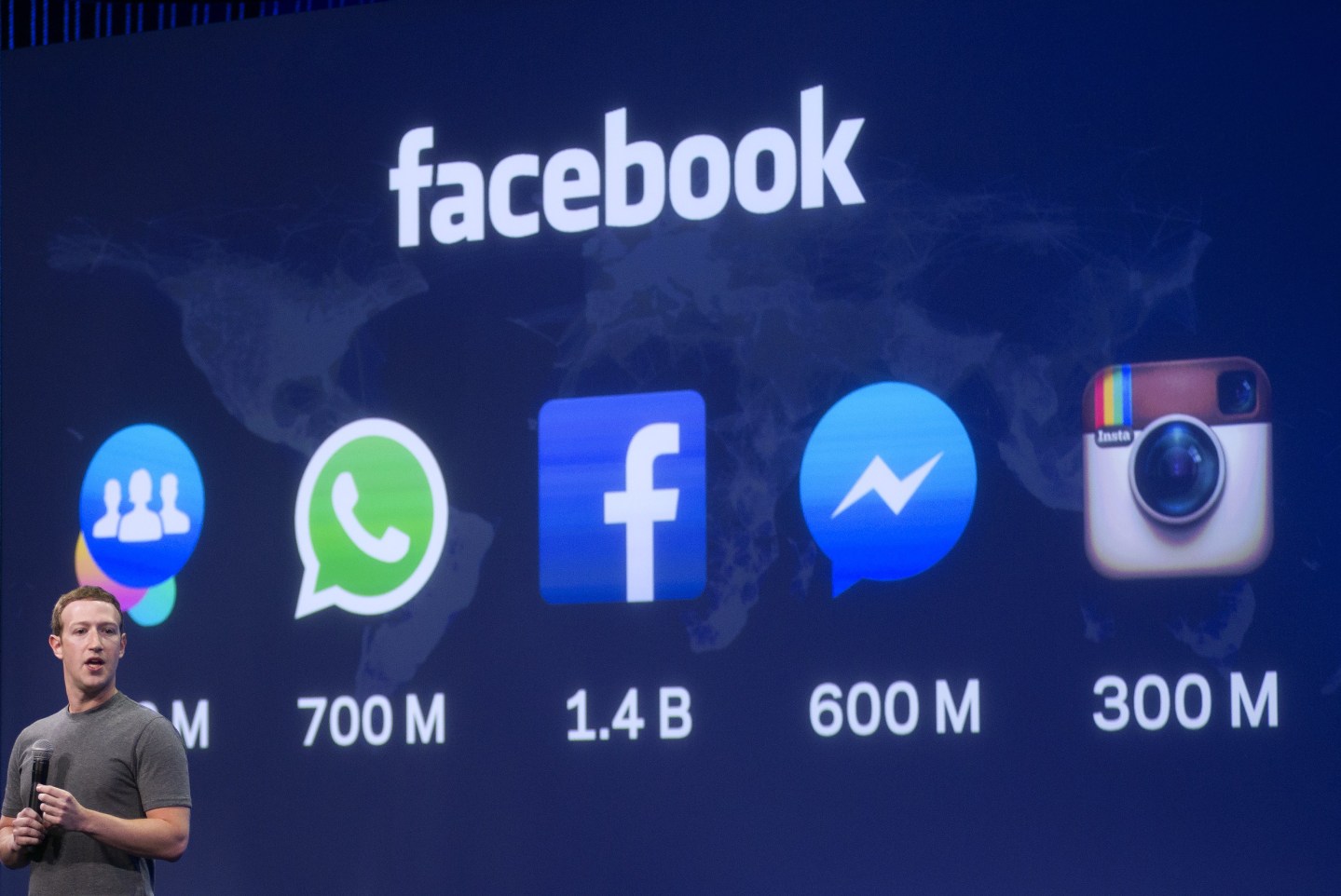
Facebook CEO Mark Zuckerberg speaks at the F8 summit in San Francisco, California, on March 25, 2015. Zuckerberg introduced a new messenger platform at the event. AFP PHOTO/JOSH EDELSON (Photo credit should read Josh Edelson/AFP/Getty Images)Photograph by Josh Edelson — AFP/Getty Images

Some of the world’s most popular websites try hard to show users only ads that interest them, in ways that won’t offend them. A backpacker is more likely to appreciate a sales pitch for hiking boots, for example, and would probably prefer that it not take over the entire web page.

It’s one of the great ironies in the debate over ad-blocking software, which heated up last week after Apple (AAPL) rolled out new ad-blocking features in its latest mobile operating system. And it begs the question: If the ads peppering our favorite sites were actually useful, would we still feel compelled to block them?

An article published Monday in WIRED examines the algorithms powering Facebook’s (FB) ad system, which the company says is designed to show users only the best possible ads. Essentially, the theory goes, if users see relevant ads where and when they’re actually relevant, users will be more likely to click on those ads.

The more natural and more relevant the experience, the more that users click, and the more that Facebook can charge. The virtuous circle is complete.

It’s a web advertising strategy that Google (GOOG) perfected. While there are lots reasons that Google eventually crushed Yahoo (YHOO) in search, Yahoo insiders are quick to point to Google’s algorithmic advertising auctions as a major factor. Rather than just giving ad space next to search results to the highest bidder, Google’s algorithms also factored in how likely users would be to click on them.

Better ads meant happier users and more clicks. Which of course meant more money for Google, and less money for Yahoo.

The challenge for most online advertising exchanges, however, is that they’re not Facebook or Google. They don’t run massive operations that generate their own content. They don’t know everything about what users want because of search queries and wall posts. And most importantly, third-party ad exchanges do not have the power to ensure their ads are displayed on these popular platforms.

For the past few years, though, the practice of optimizing real-time, targeted ad placement has been a major focus for big data practitioners. So-called data scientists have spent untold hours and written God-only-knows-how-many algorithms to try to improve ad relevance and get more people to click on them.

Whether these firms have been successful is open to debate. Typically, I still see untargeted ads for things I don’t want at all, or targeted ads for things I’ve already bought. Often, they make web pages slow to load, blare audio at me, or make me click to get them out of the way so I can actually read the article.

Hopefully publishers, along with the scores of data scientists putting their minds to the problem of advertising, will figure out a way to make ads a more natural experience across the entire web, not just on Facebook and Google. I can’t help but wonder whether the whole experience would be so bothersome to people—and, indeed, whether they’d actually click—if these ads were a little less annoying and a little more relevant.

To learn more about Facebook’s advertising business, watch this Fortune video:

Sign up for Data Sheet, Fortune’s daily newsletter about the business of technology.

About the Author
By Derrick Harris
See full bioRight Arrow Button Icon

Latest in Tech

Big TechStreaming
Trump warns Netflix-Warner deal may pose antitrust ‘problem’
By Hadriana Lowenkron, Se Young Lee and BloombergDecember 7, 2025
6 hours ago
Big TechOpenAI
OpenAI goes from stock market savior to burden as AI risks mount
By Ryan Vlastelica and BloombergDecember 7, 2025
7 hours ago
AIData centers
HP’s chief commercial officer predicts the future will include AI-powered PCs that don’t share data in the cloud
By Nicholas GordonDecember 7, 2025
9 hours ago
Future of WorkJamie Dimon
Jamie Dimon says even though AI will eliminate some jobs ‘maybe one day we’ll be working less hard but having wonderful lives’
By Jason MaDecember 7, 2025
13 hours ago
CryptoCryptocurrency
So much of crypto is not even real—but that’s starting to change
By Pete Najarian and Joe BruzzesiDecember 7, 2025
18 hours ago
Elon Musk
Big TechSpaceX
SpaceX to offer insider shares at record-setting $800 billion valuation
By Edward Ludlow, Loren Grush, Lizette Chapman, Eric Johnson and BloombergDecember 6, 2025
1 day ago

Most Popular

placeholder alt text
Real Estate
The 'Great Housing Reset' is coming: Income growth will outpace home-price growth in 2026, Redfin forecasts
By Nino PaoliDecember 6, 2025
2 days ago
placeholder alt text
AI
Nvidia CEO says data centers take about 3 years to construct in the U.S., while in China 'they can build a hospital in a weekend'
By Nino PaoliDecember 6, 2025
2 days ago
placeholder alt text
Economy
The most likely solution to the U.S. debt crisis is severe austerity triggered by a fiscal calamity, former White House economic adviser says
By Jason MaDecember 6, 2025
1 day ago
placeholder alt text
Economy
JPMorgan CEO Jamie Dimon says Europe has a 'real problem’
By Katherine Chiglinsky and BloombergDecember 6, 2025
1 day ago
placeholder alt text
Big Tech
Mark Zuckerberg rebranded Facebook for the metaverse. Four years and $70 billion in losses later, he’s moving on
By Eva RoytburgDecember 5, 2025
3 days ago
placeholder alt text
Uncategorized
Transforming customer support through intelligent AI operations
By Lauren ChomiukNovember 26, 2025
11 days ago
Rankings
  • 100 Best Companies
  • Fortune 500
  • Global 500
  • Fortune 500 Europe
  • Most Powerful Women
  • Future 50
  • World’s Most Admired Companies
  • See All Rankings
Sections
  • Finance
  • Leadership
  • Success
  • Tech
  • Asia
  • Europe
  • Environment
  • Fortune Crypto
  • Health
  • Retail
  • Lifestyle
  • Politics
  • Newsletters
  • Magazine
  • Features
  • Commentary
  • Mpw
  • CEO Initiative
  • Conferences
  • Personal Finance
  • Education
Customer Support
  • Frequently Asked Questions
  • Customer Service Portal
  • Privacy Policy
  • Terms Of Use
  • Single Issues For Purchase
  • International Print
Commercial Services
  • Advertising
  • Fortune Brand Studio
  • Fortune Analytics
  • Fortune Conferences
  • Business Development
About Us
  • About Us
  • Editorial Calendar
  • Press Center
  • Work At Fortune
  • Diversity And Inclusion
  • Terms And Conditions
  • Site Map

© 2025 Fortune Media IP Limited. All Rights Reserved. Use of this site constitutes acceptance of our Terms of Use and Privacy Policy | CA Notice at Collection and Privacy Notice | Do Not Sell/Share My Personal Information
FORTUNE is a trademark of Fortune Media IP Limited, registered in the U.S. and other countries. FORTUNE may receive compensation for some links to products and services on this website. Offers may be subject to change without notice.