
• Home
  • Latest
  • Fortune 500
  • Finance
  • Tech
  • Leadership
  • Lifestyle
  • Rankings
  • Multimedia
TechFortune 500

Age-old question: Can commercial software succeed in an open-source world?

Barb Darrow
By
Barb Darrow
Barb Darrow
Down Arrow Button Icon
Barb Darrow
By
Barb Darrow
Barb Darrow
Down Arrow Button Icon
September 18, 2015, 9:42 AM ET
Key Speakers At The DreamForce Conference
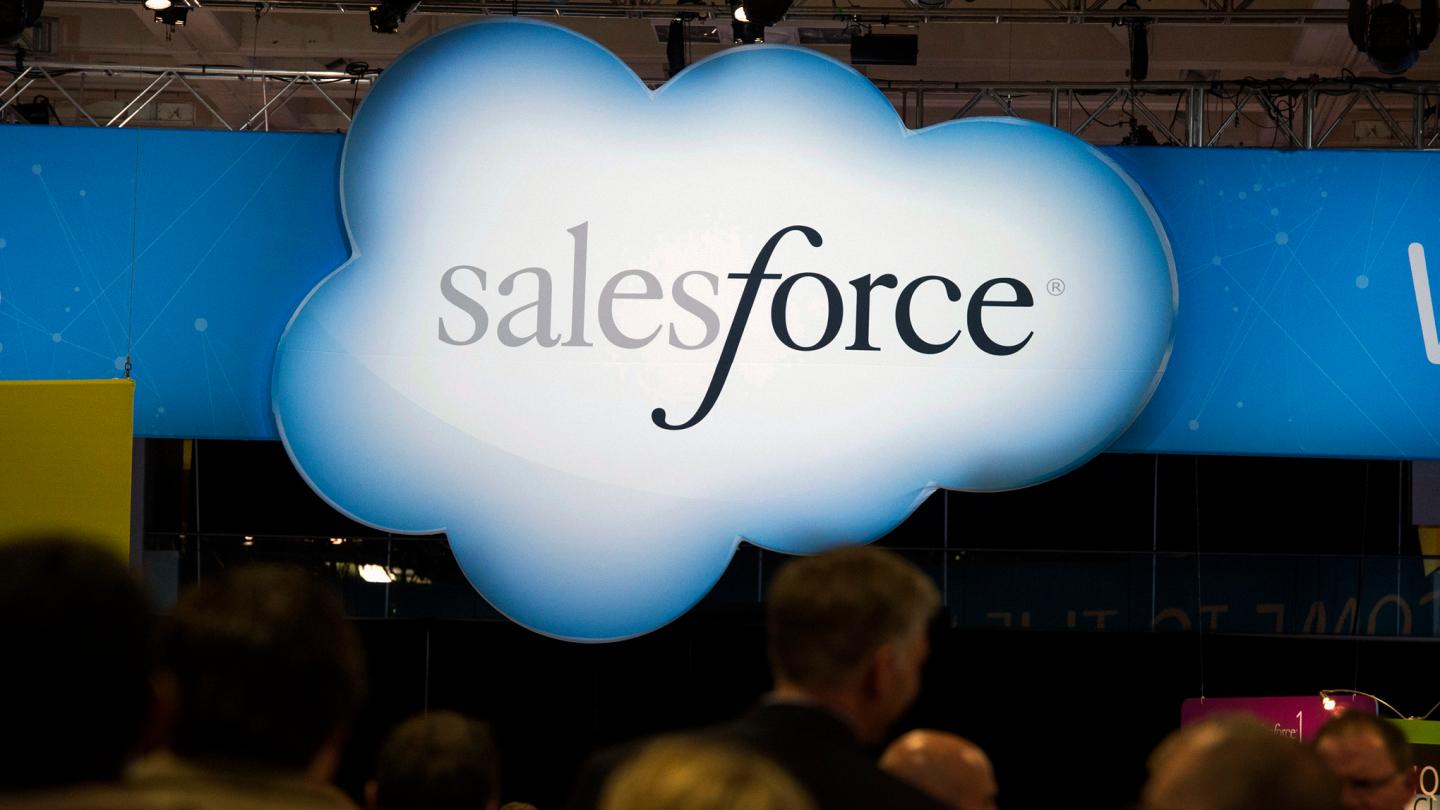
Attendees arrive to the Moscone Center during the DreamForce Conference in San Francisco, California, U.S., on Tuesday, Nov. 19, 2013. Salesforce.com Inc. introduced an overhauled version of its mobile software, seeking to ensure clients and partners will be able to use more features of the company√s sales, marketing and customer service software. Photographer: David Paul Morris/Bloomberg via Getty ImagesPhotograph by David Paul Morris — Bloomberg via Getty Images

Here’s an interesting story about how Salesforce, on center stage this week because of its gigantic Dreamforce conference, is at risk because it relies on technology it did not build and does not own.

The piece argues that Salesforce (CRM), which leads the market in the subscription software that sales people use to track and manage customer accounts, builds largely on other companies’ core technology.

Most notably it relies heavily on Oracle’s database. Oracle (ORCL), by the way, is also a major competitor to Salesforce in this customer relationship management category and other business applications. It’s coopetition at its best.

The author’s argument is that this heavy dependency on third-party players differentiates it from Oracle and Microsoft (MSFT) and SAP (SAP), which all build their own databases and other foundational technology. And all of those companies, unlike Salesforce itself, have very profitable track records.

Now, Salesforce chief executive Marc Benioff’s dream of taking on not just Oracle but SAP in other enterprise software categories puts it at risk, according to the story. That may be why Salesforce is building up its skills in PostgreSQL, an open-source database favored by many companies that are increasingly wary of relying on pricey databases from Oracle, SAP, and even Microsoft.

To step back for a second: Open-source code is built by a worldwide community of developers that span vendors. The resulting code is typically free as long as key alterations are funneled back to the source code.

The beauty of this model is that thousands of programmers write and maintain the software, so theoretically the code will be better and more secure than proprietary code that belongs to a single company. (Although there have been some glitches there.)

Increasingly, commercial software companies, which are used to charging (big) for their software, plus support and service as well, are turning to open-source software. Case in point: IBM (IBM) has backed big open-source projects from the Eclipse development environment for Java applications and the dominance of the Linux operating system. But those companies have other stuff to sell. In IBM’s case, makes money from mainframes and IT services.

Companies like Google (GOOG) and Facebook (FB) that churn out a lot of open-source projects make their money in other businesses, not by selling software per se.

For those companies, releasing technology to open source projects—like the Kubernetes for managing computing containers or the Open Compute Project, which takes the open-source model into the data center hardware realm—is no biggie. For commercial software companies, on the other hand, contending with this raft of free, and highly capable software is an existential threat.

As one data point, note that Red Hat (RHT), which sells support and service for Linux, is arguably the most successful company built on open-source. It became the first $1 billion open source company three years ago and closed its last fiscal year in February at almost $1.8 billion in revenue. That is not chump change, but it’s a far cry from the run rates proprietary software companies tout.

Here’s guessing that the new normal for software companies in the open-source era will look a lot more like Red Hat and a lot less like Oracle, SAP, and Microsoft. And that has to be a sobering thought.

The CTO of one software vendor, who requested anonymity because his company is caught up in this painful transition, recently summed it up: “It’s time to realize that the benefit of open-source software accrues to the users, not to vendors.”

That means profound changes will continue to shake companies working under the old, profitable proprietary software vendors to their very roots.

Companies like, um, Oracle, SAP, and yes, Salesforce.

For more on Salesforce strategy, see the video below.

Subscribe to Data Sheet, Fortune’s daily newsletter on the business of technology.

About the Author
Barb Darrow
By Barb Darrow
See full bioRight Arrow Button Icon

Latest in Tech

Finance
Lorem ipsum dolor sit amet, consectetur adipiscing elit, sed do eiusmod tempor incididunt ut labore et dolore magna aliqua. Ut enim ad minim veniam
By Fortune Editors
October 20, 2025
Finance
Lorem ipsum dolor sit amet, consectetur adipiscing elit, sed do eiusmod tempor incididunt ut labore et dolore magna aliqua. Ut enim ad minim veniam
By Fortune Editors
October 20, 2025
Finance
Lorem ipsum dolor sit amet, consectetur adipiscing elit, sed do eiusmod tempor incididunt ut labore et dolore magna aliqua. Ut enim ad minim veniam
By Fortune Editors
October 20, 2025
Finance
Lorem ipsum dolor sit amet, consectetur adipiscing elit, sed do eiusmod tempor incididunt ut labore et dolore magna aliqua. Ut enim ad minim veniam
By Fortune Editors
October 20, 2025
Finance
Lorem ipsum dolor sit amet, consectetur adipiscing elit, sed do eiusmod tempor incididunt ut labore et dolore magna aliqua. Ut enim ad minim veniam
By Fortune Editors
October 20, 2025
Finance
Lorem ipsum dolor sit amet, consectetur adipiscing elit, sed do eiusmod tempor incididunt ut labore et dolore magna aliqua. Ut enim ad minim veniam
By Fortune Editors
October 20, 2025

Most Popular

Finance
Lorem ipsum dolor sit amet, consectetur adipiscing elit, sed do eiusmod tempor incididunt ut labore et dolore magna aliqua. Ut enim ad minim veniam
By Fortune Editors
October 20, 2025
Finance
Lorem ipsum dolor sit amet, consectetur adipiscing elit, sed do eiusmod tempor incididunt ut labore et dolore magna aliqua. Ut enim ad minim veniam
By Fortune Editors
October 20, 2025
Finance
Lorem ipsum dolor sit amet, consectetur adipiscing elit, sed do eiusmod tempor incididunt ut labore et dolore magna aliqua. Ut enim ad minim veniam
By Fortune Editors
October 20, 2025
Finance
Lorem ipsum dolor sit amet, consectetur adipiscing elit, sed do eiusmod tempor incididunt ut labore et dolore magna aliqua. Ut enim ad minim veniam
By Fortune Editors
October 20, 2025
Finance
Lorem ipsum dolor sit amet, consectetur adipiscing elit, sed do eiusmod tempor incididunt ut labore et dolore magna aliqua. Ut enim ad minim veniam
By Fortune Editors
October 20, 2025
Finance
Lorem ipsum dolor sit amet, consectetur adipiscing elit, sed do eiusmod tempor incididunt ut labore et dolore magna aliqua. Ut enim ad minim veniam
By Fortune Editors
October 20, 2025
Fortune Secondary Logo
Rankings
  • 100 Best Companies
  • Fortune 500
  • Global 500
  • Fortune 500 Europe
  • Most Powerful Women
  • World's Most Admired Companies
  • See All Rankings
  • Lists Calendar
Sections
  • Finance
  • Fortune Crypto
  • Features
  • Leadership
  • Health
  • Commentary
  • Success
  • Retail
  • Mpw
  • Tech
  • Lifestyle
  • CEO Initiative
  • Asia
  • Politics
  • Conferences
  • Europe
  • Newsletters
  • Personal Finance
  • Environment
  • Magazine
  • Education
Customer Support
  • Frequently Asked Questions
  • Customer Service Portal
  • Privacy Policy
  • Terms Of Use
  • Single Issues For Purchase
  • International Print
Commercial Services
  • Advertising
  • Fortune Brand Studio
  • Fortune Analytics
  • Fortune Conferences
  • Business Development
  • Group Subscriptions
About Us
  • About Us
  • Press Center
  • Work At Fortune
  • Terms And Conditions
  • Site Map
  • About Us
  • Press Center
  • Work At Fortune
  • Terms And Conditions
  • Site Map
  • Facebook icon
  • Twitter icon
  • LinkedIn icon
  • Instagram icon
  • Pinterest icon

Latest in Tech

Google Cloud revenue is now 18% of Alphabet’s business. Is this the beginning of the end of Google’s search identity?
Big TechGoogle
Google Cloud revenue is now 18% of Alphabet’s business. Is this the beginning of the end of Google’s search identity?
By Alexei OreskovicApril 29, 2026
6 hours ago
Man wearing a suit and tie and glasses
Big TechTech
Microsoft, Meta, and Google just announced billions more in AI spending. Only Google convinced investors it’s paying off
By Amanda GerutApril 29, 2026
7 hours ago
A man in a suit and tie
InvestingMeta
Meta just bumped its 2026 capex forecast up to as much as $145 billion for the AI boom—and investors flinched
By Amanda GerutApril 29, 2026
9 hours ago
How JPMorgan’s CIO is reshaping work at the bank with a $19.8 billion annual tech and AI budget
NewslettersCIO Intelligence
How JPMorgan’s CIO is reshaping work at the bank with a $19.8 billion annual tech and AI budget
By John KellApril 29, 2026
14 hours ago
hollywood
CommentaryMarketing
I spent 20 years learning to navigate an industry. Then I built a campaign for the man who’s dismantling it
By Matti YahavApril 29, 2026
18 hours ago
Current price of Ethereum for April 29, 2026
Personal FinanceEthereum
Current price of Ethereum for April 29, 2026
By Joseph HostetlerApril 29, 2026
19 hours ago

Most Popular

Apple cofounder Ronald Wayne—whose stake would be worth up to $400 billion had he not sold it in 1976—says that at 91, he has no regrets
Success
Apple cofounder Ronald Wayne—whose stake would be worth up to $400 billion had he not sold it in 1976—says that at 91, he has no regrets
By Preston ForeApril 27, 2026
3 days ago
‘Take the money and run’: Johns Hopkins economist Steve Hanke on why the UAE quit OPEC
Energy
‘Take the money and run’: Johns Hopkins economist Steve Hanke on why the UAE quit OPEC
By Shawn TullyApril 29, 2026
1 day ago
‘The cost of compute is far beyond the costs of the employees’: Nvidia executive says right now AI is more expensive than paying human workers
AI
‘The cost of compute is far beyond the costs of the employees’: Nvidia executive says right now AI is more expensive than paying human workers
By Sasha RogelbergApril 28, 2026
2 days ago
Jamie Dimon gets candid about national debt: ‘There will be a bond crisis, and then we’ll have to deal with it’
Economy
Jamie Dimon gets candid about national debt: ‘There will be a bond crisis, and then we’ll have to deal with it’
By Eleanor PringleApril 29, 2026
21 hours ago
‘They left me no choice’: Powell isn’t going anywhere—blocking Trump from another Fed appointee
Banking
‘They left me no choice’: Powell isn’t going anywhere—blocking Trump from another Fed appointee
By Eva RoytburgApril 29, 2026
13 hours ago
More than two-thirds of U.S. schools say they’re unable to afford the cost of student free lunch—and MAHA’s dietary guidelines may make it worse
Economy
More than two-thirds of U.S. schools say they’re unable to afford the cost of student free lunch—and MAHA’s dietary guidelines may make it worse
By Sasha RogelbergApril 29, 2026
23 hours ago

© 2026 Fortune Media IP Limited. All Rights Reserved. Use of this site constitutes acceptance of our Terms of Use and Privacy Policy | CA Notice at Collection and Privacy Notice | Do Not Sell/Share My Personal Information
FORTUNE is a trademark of Fortune Media IP Limited, registered in the U.S. and other countries. FORTUNE may receive compensation for some links to products and services on this website. Offers may be subject to change without notice.