• Home
  • News
  • Fortune 500
  • Tech
  • Finance
  • Leadership
  • Lifestyle
  • Rankings
  • Multimedia
LeadershipEducation

Liberal arts programs are feeling the squeeze from Big Education

By
Lauren Silva Laughlin
and
Anne VanderMey
Anne VanderMey
Down Arrow Button Icon
By
Lauren Silva Laughlin
and
Anne VanderMey
Anne VanderMey
Down Arrow Button Icon
September 17, 2015, 10:00 AM ET
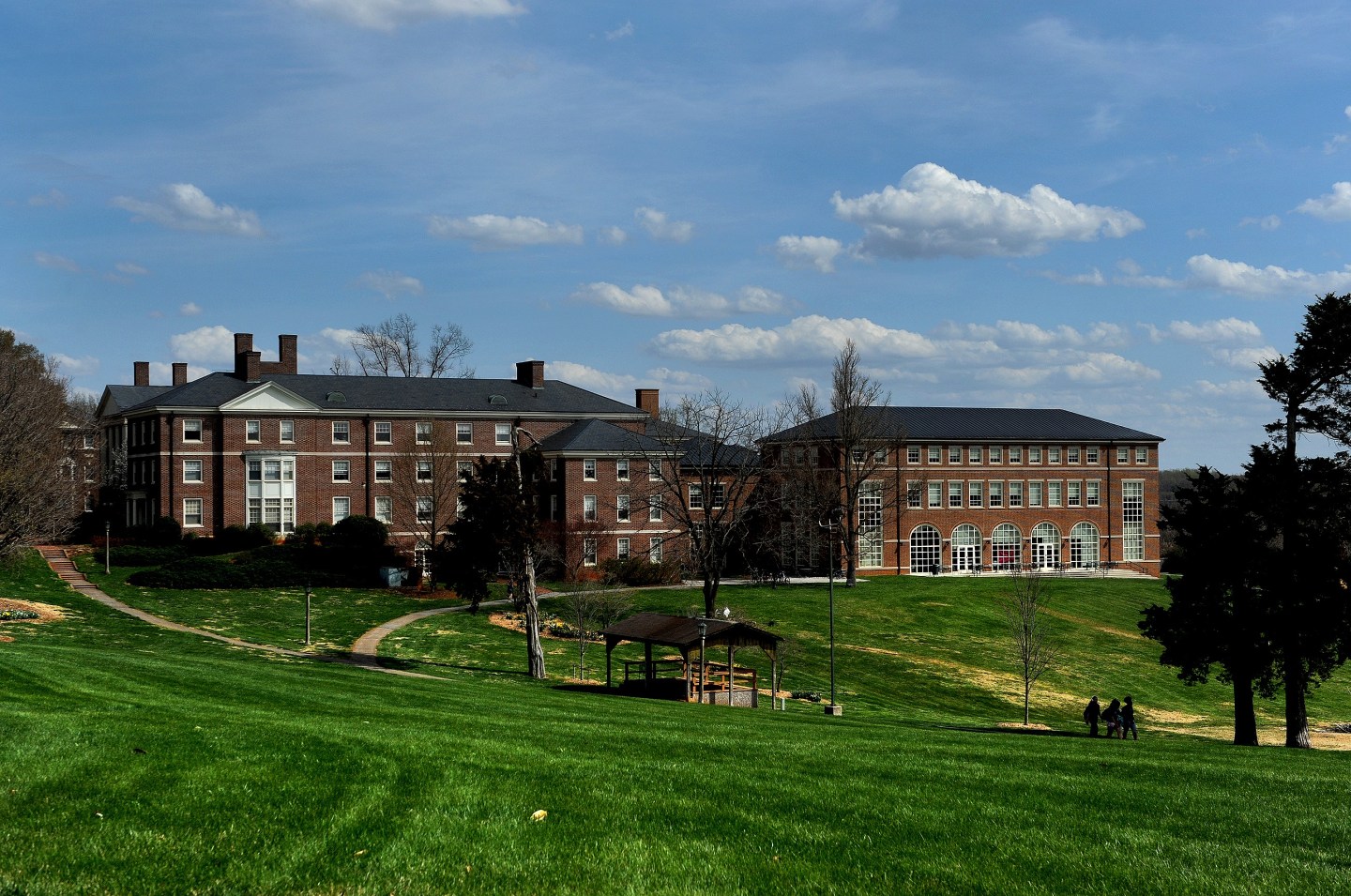
Scenes on the Sweet Briar College Campus
SWEET BRIAR, VIRGINIA - APRIL 06: Scenes taken at Sweet Briar College campus. The college may close and locals and students are concerned. (Photo by Michael S. Williamson/The Washington Post via Getty ImagesPhotograph by Michael S. Williamson — The Washington Post/Getty Images

In May, Sweet Briar College announced it would shut down under financial duress. The move stunned alumni and students, but the financial pressures it faces have become disturbingly common. Moody’s currently ranks 16 U.S. colleges’ bonds as junk, and another 20 on the cusp of junk status, or as “low investment grade.” Sweet Briar probably will not be the last to flirt with closure.

How can colleges claim financial hardship in an era where just one year of tuition runs $31,231? It may not seem like it, but in recent years, the cost of higher education has actually ceased its rapid climb. Moody’s expects revenue, in large part tuition, to go up slightly more than 3% each year for the foreseeable future, after rising 7% on average over the last several years—hardly outpacing inflation. Enrollment, too, is falling after hitting a peak in 2011.

That slowdown is worse news for some programs than others. As the economy has recovered, well-known universities like Harvard and Stanford have bounced back, benefiting disproportionately from deep-pocketed donors. This summer hedge fund manager John Paulson pledged $400 million to Harvard, the school’s largest gift in the university’s history. Charitable giving to higher education reached an all-time high in 2014 at $39 billion, according to Inside Higher Ed. Moody’s recently revised its outlook from negative to stable for the entire university segment.

But big schools’ good fortune has ratcheted up the pressure on smaller colleges. Similar to Walmart in the grocery business, price ceilings at big campuses set the industry’s pace. Some large universities have slowed the pace they increase tuition because of public scrutiny. So if institutions like Harvard don’t increase tuition because they don’t have to, competitors have a hard time justifying their own increases. Costs meanwhile—mostly wages and benefits to professors—continue to rise.

The price pressure is a double whammy for colleges that haven’t built up a fundraising operation or, in analyst parlance, have “failed to diversify.” As their primary revenue driver declines as tuition sinks, schools can’t afford to do things that attract new prospects, like spruce up the dining hall or dorm. Many are losing enrollees. Among the colleges Moody’s says are feeling the squeeze are prestigious Bard College in New York, and Dowling College in Virginia.

Meanwhile, Sweet Briar, which has been around more than 100 years, is a warning sign for the sector, but also possibly a sign of hope. Alumni at the school banded together to pony-up $12 million to keep the doors open. Thanks to the 11th hour bailout from alumni in June, it will keep the lights on for at least another year.

If it succeeds, it may be an indication that comebacks are possible. Many colleges, like Bard, have prestigious alumni that would likely reach deep to keep their alma mater from going under. Says Karen Kedem, vice president and senior credit analyst at Moody’s, “It will be interesting to see what happens in the fall.”

About the Authors
By Lauren Silva Laughlin
See full bioRight Arrow Button Icon
By Anne VanderMey
See full bioRight Arrow Button Icon

Latest in Leadership

CryptoBinance
Binance has been proudly nomadic for years. A new announcement suggests it’s finally chosen a headquarters
By Ben WeissDecember 7, 2025
4 hours ago
Future of WorkJamie Dimon
Jamie Dimon says even though AI will eliminate some jobs ‘maybe one day we’ll be working less hard but having wonderful lives’
By Jason MaDecember 7, 2025
14 hours ago
business
C-Suitechief executive officer (CEO)
Inside the Fortune 500 CEO pressure cooker: surviving is harder than ever and requires an ‘odd combination’ of traits
By Nick LichtenbergDecember 7, 2025
18 hours ago
Alex Amouyel is the President and CEO of Newman’s Own Foundation
Commentaryphilanthropy
Following in Paul Newman and Yvon Chouinard’s footsteps: There are more ways for leaders to give it away in ‘the Great Boomer Fire Sale’ than ever
By Alex AmouyelDecember 7, 2025
18 hours ago
Hank Green sipping tea
SuccessPersonal Finance
Millionaire YouTuber Hank Green tells Gen Z to rethink their Tesla bets—and shares the portfolio changes he’s making to avoid AI-bubble fallout
By Preston ForeDecember 7, 2025
20 hours ago
MagazineWarren Buffett
Warren Buffett: Business titan and cover star
By Indrani SenDecember 7, 2025
21 hours ago

Most Popular

placeholder alt text
Real Estate
The 'Great Housing Reset' is coming: Income growth will outpace home-price growth in 2026, Redfin forecasts
By Nino PaoliDecember 6, 2025
2 days ago
placeholder alt text
AI
Nvidia CEO says data centers take about 3 years to construct in the U.S., while in China 'they can build a hospital in a weekend'
By Nino PaoliDecember 6, 2025
2 days ago
placeholder alt text
Economy
The most likely solution to the U.S. debt crisis is severe austerity triggered by a fiscal calamity, former White House economic adviser says
By Jason MaDecember 6, 2025
1 day ago
placeholder alt text
Economy
JPMorgan CEO Jamie Dimon says Europe has a 'real problem’
By Katherine Chiglinsky and BloombergDecember 6, 2025
1 day ago
placeholder alt text
Big Tech
Mark Zuckerberg rebranded Facebook for the metaverse. Four years and $70 billion in losses later, he’s moving on
By Eva RoytburgDecember 5, 2025
3 days ago
placeholder alt text
Politics
Supreme Court to reconsider a 90-year-old unanimous ruling that limits presidential power on removing heads of independent agencies
By Mark Sherman and The Associated PressDecember 7, 2025
16 hours ago
Rankings
  • 100 Best Companies
  • Fortune 500
  • Global 500
  • Fortune 500 Europe
  • Most Powerful Women
  • Future 50
  • World’s Most Admired Companies
  • See All Rankings
Sections
  • Finance
  • Leadership
  • Success
  • Tech
  • Asia
  • Europe
  • Environment
  • Fortune Crypto
  • Health
  • Retail
  • Lifestyle
  • Politics
  • Newsletters
  • Magazine
  • Features
  • Commentary
  • Mpw
  • CEO Initiative
  • Conferences
  • Personal Finance
  • Education
Customer Support
  • Frequently Asked Questions
  • Customer Service Portal
  • Privacy Policy
  • Terms Of Use
  • Single Issues For Purchase
  • International Print
Commercial Services
  • Advertising
  • Fortune Brand Studio
  • Fortune Analytics
  • Fortune Conferences
  • Business Development
About Us
  • About Us
  • Editorial Calendar
  • Press Center
  • Work At Fortune
  • Diversity And Inclusion
  • Terms And Conditions
  • Site Map

© 2025 Fortune Media IP Limited. All Rights Reserved. Use of this site constitutes acceptance of our Terms of Use and Privacy Policy | CA Notice at Collection and Privacy Notice | Do Not Sell/Share My Personal Information
FORTUNE is a trademark of Fortune Media IP Limited, registered in the U.S. and other countries. FORTUNE may receive compensation for some links to products and services on this website. Offers may be subject to change without notice.