• Home
  • News
  • Fortune 500
  • Tech
  • Finance
  • Leadership
  • Lifestyle
  • Rankings
  • Multimedia
Tech

Facebook’s dilemma: Its filtering algorithms just aren’t smart enough

By
Mathew Ingram
Mathew Ingram
Down Arrow Button Icon
By
Mathew Ingram
Mathew Ingram
Down Arrow Button Icon
September 16, 2015, 5:42 PM ET
US-IT-INTERNET-FACEBOOK-MESSENGER
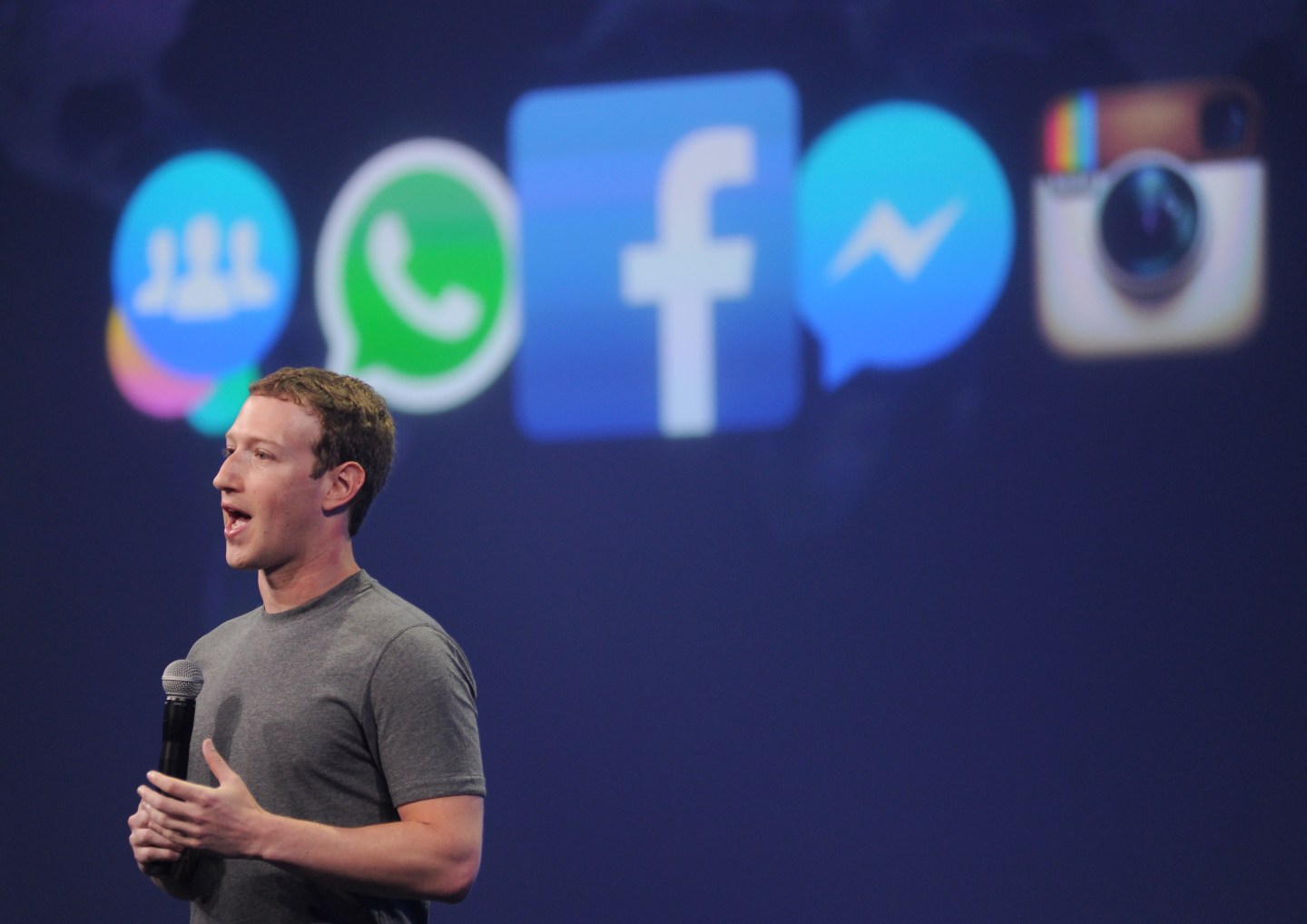
Facebook CEO Mark Zuckerberg speaks at the F8 summit in San Francisco, California, on March 25, 2015. Zuckerberg introduced a new messenger platform at the event. AFP PHOTO/JOSH EDELSON (Photo credit should read Josh Edelson/AFP/Getty Images)Photograph by Josh Edelson — AFP/Getty Images

By now, we’re all pretty used to the idea that Facebook is massive — so massive that it dwarfs any web service most of us would have used in our lifetimes. A billion users in a single day. Close to a billion photos posted every day. Three billion videos viewed every day. And driving all of that is a powerful set of algorithms that determine what we see and when. But is that a good thing or a bad thing? It’s complicated.

Realistically, using algorithms is the only way that an entity like Facebook (FB) could hope to exist, or to get as large as it has. If every post or photo or video had to be looked at by a human being, it would take years to go through what Facebook publishes in a single month, and the company would have to hire millions of employees (it has about 10,000).

Algorithms as a method for filtering content, however, can lead to a number of problems. For example, depending on how the Facebook news-feed is calibrated, and the behavioral signals it is looking at, a person’s feed might be full of light-hearted ice-bucket challenge videos — even though there is a compelling (and disturbing) news event going on at the same time, like the shooting of Michael Brown in Ferguson, Mo.

Or, to take a more recent case, those algorithms (combined with the work of human editors) can result in powerful images of Syrian refugees being removed because they might disturb some users. Similarly, images of terrorist activity may be taken down, even though they are providing an important journalistic record of war crimes.

In some cases, these filters can cause problems in the opposite direction as well. For example, speech that might be racist or hate-filled remains — as some of the discussion about European refugees has, to the point where the German government is asking Facebook for help in removing some of it.

Part of the problem is that Facebook doesn’t have a lot of finely-tuned ways for people to express themselves. There’s mostly just the ubiquitous “like” button, or the comment field. This is why the site has been working on what some have erroneously called the “dislike” button, which is really intended to be a way of expressing more complex emotions, for responding to things like death or a complicated social and political topic like the refugee crisis.

During a recent Q&A at Facebook headquarters, founder and CEO Mark Zuckerberg talked about the difficulties of filtering and fine-tuning the user experience when it comes to content like the photo of a three-year-old Syrian boy lying dead on a beach in Turkey, which triggered a global debate on that kind of imagery recently.

“This is an area where we can certainly do better,” Zuckerberg said. “Under the current system, our community reports content that they don’t like, and then we look at it to see if it violates our polices, and if it does we take it down. But part of the problem with that is by the time we take it down, someone has already seen it and they’ve had a bad experience.”

The promise of artificial intelligence, said the Facebook founder, is that some day computers might be able to filter such content more accurately, and allow people to personalize their news-feed. “But right now, we don’t have computers that can look at a photo and understand it in the way that a person can, and tell kind of basic things about it… is this nudity, is this graphic, what is it,” he said.

Zuckerberg said that in the case of the Syrian child lying dead on the beach, he thought that image was very powerful, because it symbolized a huge problem and crystallized a complex social issue. “I happen to think that was a very important photo in the world, because it raised awareness for this issue,” he said. “It’s easy to describe the stats about refugees, but there’s a way that capturing such a poignant photo has of getting people’s attention.”

The social network is trying to find a way to balance the desire of users to not be offended by such content with the need to show such imagery in certain cases, Zuckerberg said. “It’s an interesting balance in terms of running this community. Where do you fall on that spectrum? Because sometimes it’s important for people to see things even if they disagree with them or are upset by them.”

Unfortunately, with billions of pieces of content uploaded every day, Facebook is still going to get those kinds of decisions wrong a lot of the time — at least, until it develops the kind of super-smart AI that the Facebook founder is talking about. And even then, there will likely be times where it goes astray, if only because human emotions and behavior are so difficult to fathom sometimes. Even people aren’t that good at it.

You can follow Mathew Ingram on Twitter at @mathewi, and read all of his posts here or via his RSS feed. And please subscribe to Data Sheet, Fortune’s daily newsletter on the business of technology.


About the Author
By Mathew Ingram
See full bioRight Arrow Button Icon

Latest in Tech

person
CybersecurityDigital
Dictionaries’ words of the year are trying to tell us something about being online in 2025
By Roger J. KreuzDecember 5, 2025
16 minutes ago
Greg Peters
Big TechMedia
Top analyst says Netflix’s $72 billion bet on Warner Bros. isn’t about the ‘Death of Hollywood’ at all. It’s really about Google
By Nick LichtenbergDecember 5, 2025
2 hours ago
Elon Musk, wearing a suit and in front of a dark blue background, looks to the side and frowns.
Big TechTesla
Elon Musk says Tesla owners will soon be able to text while driving, despite it being illegal in nearly all 50 states
By Sasha RogelbergDecember 5, 2025
2 hours ago
Mark Zuckerberg, chief executive officer of Meta Platforms Inc., during the Meta Connect event in Menlo Park, California, US, on Wednesday, Sept. 27, 2023. Meta Platforms Inc. introduced its latest lineup of head-worn devices, staking fresh claim to the virtual and augmented-reality industry just ahead of Apple Inc. pushing into the market. Photographer: David Paul Morris/Bloomberg via Getty Images
Big TechMeta
Mark Zuckerberg rebranded Facebook for the metaverse. Four years and $70 billion in losses later, he’s moving on
By Eva RoytburgDecember 5, 2025
3 hours ago
Construction workers are getting a salary bump for working on data center projects during the AI boom.
AIU.S. economy
Construction workers are earning up to 30% more and some are nabbing six-figure salaries in the data center boom
By Nino PaoliDecember 5, 2025
4 hours ago
Robert F. Kennedy
PoliticsHealth
Robert F. Kennedy Jr. turns to AI to make America healthy again
By Ali Swenson and The Associated PressDecember 5, 2025
5 hours ago

Most Popular

placeholder alt text
Economy
Two months into the new fiscal year and the U.S. government is already spending more than $10 billion a week servicing national debt
By Eleanor PringleDecember 4, 2025
1 day ago
placeholder alt text
Success
‘Godfather of AI’ says Bill Gates and Elon Musk are right about the future of work—but he predicts mass unemployment is on its way
By Preston ForeDecember 4, 2025
1 day ago
placeholder alt text
Success
Nearly 4 million new manufacturing jobs are coming to America as boomers retire—but it's the one trade job Gen Z doesn't want
By Emma BurleighDecember 4, 2025
1 day ago
placeholder alt text
Success
Nvidia CEO Jensen Huang admits he works 7 days a week, including holidays, in a constant 'state of anxiety' out of fear of going bankrupt
By Jessica CoacciDecember 4, 2025
1 day ago
placeholder alt text
Real Estate
‘There is no Mamdani effect’: Manhattan luxury home sales surge after mayoral election, undercutting predictions of doom and escape to Florida
By Sasha RogelbergDecember 4, 2025
1 day ago
placeholder alt text
Economy
Tariffs and the $38 trillion national debt: Kevin Hassett sees ’big reductions’ in deficit while Scott Bessent sees a ‘shrinking ice cube’
By Nick LichtenbergDecember 4, 2025
1 day ago
Rankings
  • 100 Best Companies
  • Fortune 500
  • Global 500
  • Fortune 500 Europe
  • Most Powerful Women
  • Future 50
  • World’s Most Admired Companies
  • See All Rankings
Sections
  • Finance
  • Leadership
  • Success
  • Tech
  • Asia
  • Europe
  • Environment
  • Fortune Crypto
  • Health
  • Retail
  • Lifestyle
  • Politics
  • Newsletters
  • Magazine
  • Features
  • Commentary
  • Mpw
  • CEO Initiative
  • Conferences
  • Personal Finance
  • Education
Customer Support
  • Frequently Asked Questions
  • Customer Service Portal
  • Privacy Policy
  • Terms Of Use
  • Single Issues For Purchase
  • International Print
Commercial Services
  • Advertising
  • Fortune Brand Studio
  • Fortune Analytics
  • Fortune Conferences
  • Business Development
About Us
  • About Us
  • Editorial Calendar
  • Press Center
  • Work At Fortune
  • Diversity And Inclusion
  • Terms And Conditions
  • Site Map

© 2025 Fortune Media IP Limited. All Rights Reserved. Use of this site constitutes acceptance of our Terms of Use and Privacy Policy | CA Notice at Collection and Privacy Notice | Do Not Sell/Share My Personal Information
FORTUNE is a trademark of Fortune Media IP Limited, registered in the U.S. and other countries. FORTUNE may receive compensation for some links to products and services on this website. Offers may be subject to change without notice.