By George Serafeim
Elections have become a national sport in Greece. The country has had five different prime ministers in the last five years.
My prediction is that this number is not going to change anytime soon.
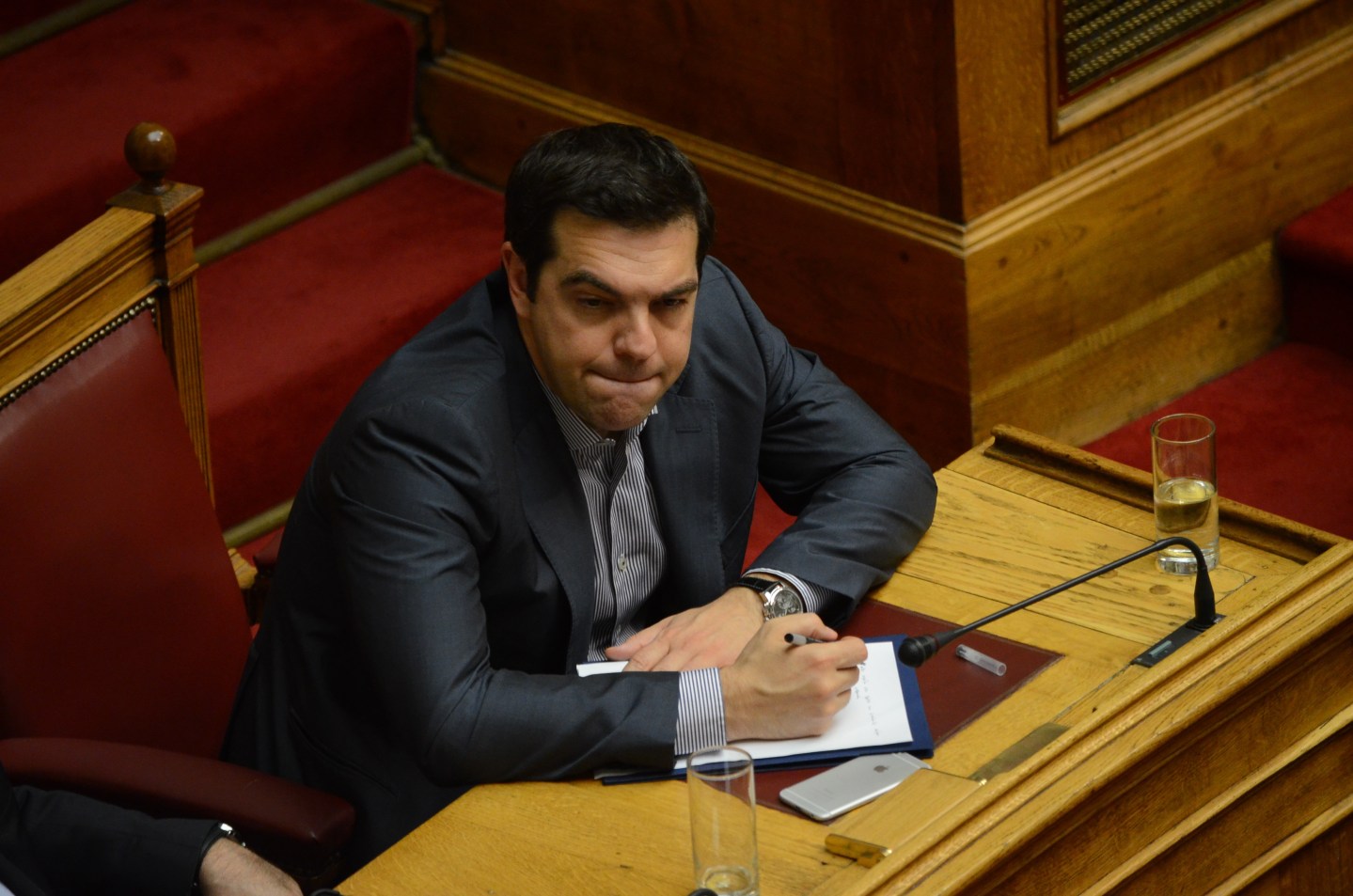
Greek Prime Minister Alexis Tsipras has resigned and called for new elections in a bid to consolidate his power and push through the country’s bailout deal.
Odds are Tsipras will emerge a winner in the elections, expected to take place on September 20. This is not a testament to his leadership skills, but rather due to the vacuum of leadership in Greek politics. Opposition parties, such as New Democracy and PASOK, have been completely discredited because of their disastrous management of the country over the last 40 years.
Only the centrist To Potami party could emerge as a competitor to Syriza. As they say – keep your enemies close. So, if Tsipras does not emerge as a clear winner to form a government on his own, I expect him to form a coalition government with To Potami.
Either way, the new elections give Tsipras another chance to get Greece’s financial house in order.
More: 4 leadership lessons from Greece’s Alexis Tsipras
Seven months ago, I suggested that the Greek government’s actions – or inactions – would destroy an enormous amount of value. Unfortunately, I was right.
My conservative estimate is that the average Greek employee would need to work an additional year and a half to make up for the value in the economy destroyed in the last year.
One can arrive at this conclusion by analyzing data from the Athens Stock Exchange, IMF, Bank of Greece, Eurostat, OECD and European Commission. €30 billion was lost in government bank holdings held in the Hellenic Financial Stability Fund. Another €13 billion was lost in non-bank equity holdings. From the €26 billion recorded by the IMF in non-financial assets held for privatization, about €10 billion of value has been destroyed. The sum is €53 billion in losses.
One also needs to account for opportunity costs due to sources such as lost tax revenue and increases in unemployment benefits. This is difficult to estimate, but one simple calculation for the former would be to assume that a 5% GDP contraction would proportionately contract tax revenues by the ratio of tax revenues to GDP, which in 2013 was close to 33%. Given a GDP of €180 billion this would translate into another €3 billion of losses.
Of course actual tax losses could be much higher if GDP losses persist for multiple years. Even ignoring this loss as well as increases in unemployment benefits and any potential losses from the new bank recapitalization, €56 billion of losses have been incurred.
More: Greek Prime Minister Alexis Tsipras rolls the dice on a reelection
This amounts to €16,000 per each of Greece’s approximately 3.5m workers. With an average net wage close to €900 this amounts to a full 18 months of hard work.
This value destruction can be reversed if Greece changes its focus. Greece needs a turnaround and with any turnaround strategy focus is key. Where milk or bread is sold or whether stores will open on Sundays is not going to put Greece in a trajectory of growth. The IMF and the European partners are dead wrong, in my view, to focus on these issues instead of the elephant in the room.
The elephant in the room is the public sector which has a budget of close to €80 billion and 650,000 employees.
Increasing accountability and improving governance in the public sector could have massive economic consequences because it could restore confidence and trust in the country.
Here is one 100-day plan on how to achieve this:
- The Greek government can increase the transparency and management of its assets and liabilities by reporting an up-to-date balance sheet of its accounts (which is currently does not). Thus, it should adopt accrual accounting and International Public Sector Accounting Standards. Within 30 days the government should then report its net debt position under international standards. This is much lower than the frequently reported gross debt number that uses nominal value. The former is lower than 50% of GDP while the latter is close to 180%.
- The government should then relentlessly educate credit rating agencies that its net debt does not justify such a low credit rating. Having secured European Stability Mechanism financing and having such a low net debt number justifies a better credit rating. A BB credit rating would be perfectly possible within 100 days.
- The government should do whatever is necessary for Greek government bonds to be included in the European Central Bank’s quantitative easing program. This will improve liquidity and set the foundation for economic growth.
- With a commitment to transparency, a better credit rating, and being part of ECB’s quantitative easing, my estimate is that 10-year Greek government bonds could trade close to 3% yield within 100 days. Now they trade close to 10%. This would open the doors for Greece to tap the market and issue a bond.
- Within this sequence of events it would not be unrealistic to expect a 50% increase in the Athens Stock Exchange index leading to a gain of approximately €15 billion.
Greece used to have GDP-per-capita levels almost double that of the poorest countries in the European Union. Now it has just 20% higher than them. New elections will give Tsipras a second opportunity to reverse that trend. Let’s hope he does not waste it again.
is Jakurski Family Associate Professor of Business Administration at Harvard Business School. This article originally appeared in The Conversation.

Subscribe to Fortune Daily to get essential business stories straight to your inbox each morning.











