• Home
  • Latest
  • Fortune 500
  • Finance
  • Tech
  • Leadership
  • Lifestyle
  • Rankings
  • Multimedia
Commentary

July jobs report: here’s what the Fed should do next

By
The Conversation
The Conversation
Down Arrow Button Icon
By
The Conversation
The Conversation
Down Arrow Button Icon
August 7, 2015, 3:15 PM ET
Pace Of Job Growth Slows Down, 7.8 Unemployment Rate Remains Unchanged
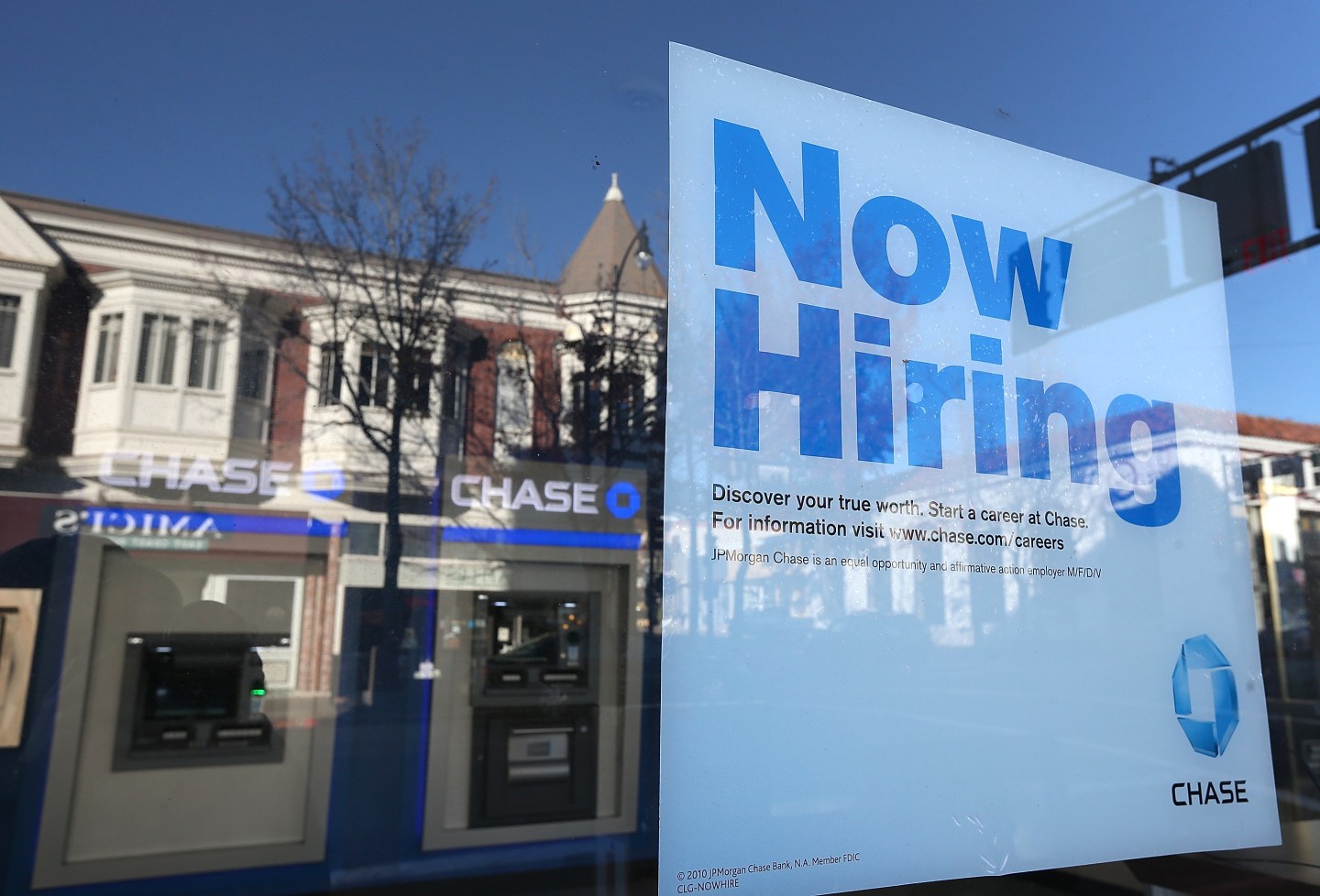
SAN RAFAEL, CA - JANUARY 04: A "now hiring" sign is posted in the window of a Chase bank branch on January 4, 2013 in San Rafael, California. According to a Labor Department December jobs report, the U.S. unemployment remained the same from November at 7.8% as employers added 155,000 jobs in December. (Photo by Justin Sullivan/Getty Images)Photograph by Justin Sullivan—Getty Images

By Thomas Kochan

On Friday, the Bureau of Labor Statistics reported that in July, the economy created 215,000 jobs, the unemployment rate remained unchanged at 5.3% and hourly wages over the past 12 months grew by 2.1%. Meanwhile, consumer prices are up only 0.2% from a year ago.

These figures, when taken in context of trends developing throughout the year, have special significance because the Federal Reserve’s Open Market Committee will be weighing them in the coming months as it decides whether or not to start raising interest rates in September, as many observers expect they will.

While at first blush the July job gains appear bullish, the underlying trends remain worrying. Those suggesting the data make a September rate cut more likely, and desirable, should think again.

In making its decision, the Fed will be looking at the progress, or lack thereof, on two dimensions of the jobs crisis America has been experiencing:

  1. Progress in closing the jobs gap (that is, the number of jobs lost during the Great Recession of 2007 to 2009, plus the number needed to keep up with labor force growth) and
  2. Progress in reversing 35 years of stagnant wages and rising income inequality.

Taken together, the Fed’s decision should be easy: stay the course and don’t take any actions that would prematurely slow down the economy and dim hopes for progress in closing the gap and boosting wages. Inflation, another factor the Fed considers, is still barely existent, which means there is very little reason to lift rates just yet.

More importantly, I’m hoping the lack of progress on the second point finally helps jumpstart a national debate on whether the Fed should have an explicit wage growth target, just as it sets optimal rates for employment and inflation. Without significant and steady progress on the pay front, the American dream is in peril.

Let’s take a closer look at the July numbers with both dimensions in mind.

What will Fed Chair Janet Yellen learn from today’s report? Americans have been patiently waiting since the end of the Great Recession for more robust growth in the number of jobs.

From the end of the recession in January 2010 to mid-2013, jobs growth was anemic, ranging from a low of 88,000, on average, in 2010 to a high of 194,000 in 2013. If that pace had continued, it would have taken until 2020 or later to close the jobs gap. Fortunately, things began picking up in July 2013, with the number of new jobs averaging 245,000 per month from then through December 2014.

But recently the growth has slowed somewhat, averaging 235,000 in the last three months. According to the Brookings Institution’s Hamilton Project, the economy is still 3.3 million jobs short of closing the job gap. If the recent rate continues, we won’t manage to close the gap until early- to mid-2017 – about a decade after the start of the Great Recession!

The slowdown in jobs growth alone should be enough to give Fed policymakers concern. But there are other reasons to urge caution. Long-term unemployment (those out of work for 26 weeks or longer) remains stuck at about 27% of those without a job. The labor force participation rate refuses to recover, remaining steady at 63%, nearly four percentage points below where it was before the recession.

The number of discouraged workers who have given up looking for a job remains stubbornly high. And underemployment – a measure of whether workers are able to find full-time jobs that take advantage of their education and skills – continues to be a significant problem for young workers trying to start their careers.

Taken together, these data indicate the economy has a long way yet to go before it can provide the number and quality of jobs needed by the American workforce.

The wage side of the employment report deserves equal attention from policymakers, including the Fed.

The 2.1% growth in wages over the past 12 months hardly makes a dent in the stagnant wages and rising inequality that have plagued the US economy and workforce for 35 years, as chronicled by the Economic Policy Institute think tank.

This suggests the growing chorus of voices that “America needs a raise” will continue. Indeed, as others have suggested, it is high time that we elevate the policy discussion on wages by setting a target or “norm” for wage growth.

We had such a norm before wages started stagnating in the 1980s. Before that, unions used collective bargaining to create and sustain an implicit social contract: wages should rise in tandem with increases in the cost of living and aggregate productivity growth.

This came out of the so-called “Treaty of Detroit” in a deal negotiated between the United Auto Workers and General Motors, which then spread through collective bargaining agreements across other industries. Unfortunately, unions no longer have the same influence they once did, one of the reasons wages have stagnated.

If we applied such a norm today, wages should be rising 3.5% to 4% a year. That’s based on the Fed’s optimal inflation rate of 2% and recent productivity growth of 1.4% to 2.6% (the latter took a big hit in the first half of 2015, probably reflecting the effects of the tough winter).

With that in mind, the Fed should definitely stay the course and avoid actions such as a premature rate hike that will end up slowing down the economy and the recovery in jobs.

But we should also start a national discussion over what a fair norm for wage growth should be in today’s economy and then figure out what needs to be done to achieve it.

Thomas Kochan is a professor of management at MIT Sloan School of Management. This article originally appeared in The Conversation.

The Conversation

Subscribe to Fortune Daily to get essential business stories straight to your inbox each morning.

About the Author
By The Conversation
See full bioRight Arrow Button Icon

Latest in Commentary

Finance
Lorem ipsum dolor sit amet, consectetur adipiscing elit, sed do eiusmod tempor incididunt ut labore et dolore magna aliqua. Ut enim ad minim veniam
By Fortune Editors
October 20, 2025
Finance
Lorem ipsum dolor sit amet, consectetur adipiscing elit, sed do eiusmod tempor incididunt ut labore et dolore magna aliqua. Ut enim ad minim veniam
By Fortune Editors
October 20, 2025
Finance
Lorem ipsum dolor sit amet, consectetur adipiscing elit, sed do eiusmod tempor incididunt ut labore et dolore magna aliqua. Ut enim ad minim veniam
By Fortune Editors
October 20, 2025
Finance
Lorem ipsum dolor sit amet, consectetur adipiscing elit, sed do eiusmod tempor incididunt ut labore et dolore magna aliqua. Ut enim ad minim veniam
By Fortune Editors
October 20, 2025
Finance
Lorem ipsum dolor sit amet, consectetur adipiscing elit, sed do eiusmod tempor incididunt ut labore et dolore magna aliqua. Ut enim ad minim veniam
By Fortune Editors
October 20, 2025
Finance
Lorem ipsum dolor sit amet, consectetur adipiscing elit, sed do eiusmod tempor incididunt ut labore et dolore magna aliqua. Ut enim ad minim veniam
By Fortune Editors
October 20, 2025

Most Popular

Finance
Lorem ipsum dolor sit amet, consectetur adipiscing elit, sed do eiusmod tempor incididunt ut labore et dolore magna aliqua. Ut enim ad minim veniam
By Fortune Editors
October 20, 2025
Finance
Lorem ipsum dolor sit amet, consectetur adipiscing elit, sed do eiusmod tempor incididunt ut labore et dolore magna aliqua. Ut enim ad minim veniam
By Fortune Editors
October 20, 2025
Finance
Lorem ipsum dolor sit amet, consectetur adipiscing elit, sed do eiusmod tempor incididunt ut labore et dolore magna aliqua. Ut enim ad minim veniam
By Fortune Editors
October 20, 2025
Finance
Lorem ipsum dolor sit amet, consectetur adipiscing elit, sed do eiusmod tempor incididunt ut labore et dolore magna aliqua. Ut enim ad minim veniam
By Fortune Editors
October 20, 2025
Finance
Lorem ipsum dolor sit amet, consectetur adipiscing elit, sed do eiusmod tempor incididunt ut labore et dolore magna aliqua. Ut enim ad minim veniam
By Fortune Editors
October 20, 2025
Finance
Lorem ipsum dolor sit amet, consectetur adipiscing elit, sed do eiusmod tempor incididunt ut labore et dolore magna aliqua. Ut enim ad minim veniam
By Fortune Editors
October 20, 2025
Fortune Secondary Logo
Rankings
  • 100 Best Companies
  • Fortune 500
  • Global 500
  • Fortune 500 Europe
  • Most Powerful Women
  • Future 50
  • World’s Most Admired Companies
  • See All Rankings
Sections
  • Finance
  • Fortune Crypto
  • Features
  • Leadership
  • Health
  • Commentary
  • Success
  • Retail
  • Mpw
  • Tech
  • Lifestyle
  • CEO Initiative
  • Asia
  • Politics
  • Conferences
  • Europe
  • Newsletters
  • Personal Finance
  • Environment
  • Magazine
  • Education
Customer Support
  • Frequently Asked Questions
  • Customer Service Portal
  • Privacy Policy
  • Terms Of Use
  • Single Issues For Purchase
  • International Print
Commercial Services
  • Advertising
  • Fortune Brand Studio
  • Fortune Analytics
  • Fortune Conferences
  • Business Development
  • Group Subscriptions
About Us
  • About Us
  • Editorial Calendar
  • Press Center
  • Work At Fortune
  • Diversity And Inclusion
  • Terms And Conditions
  • Site Map
  • About Us
  • Editorial Calendar
  • Press Center
  • Work At Fortune
  • Diversity And Inclusion
  • Terms And Conditions
  • Site Map
  • Facebook icon
  • Twitter icon
  • LinkedIn icon
  • Instagram icon
  • Pinterest icon

Latest in Commentary

assis
CommentaryIBM
The digital sovereignty dilemma is a false choice — here’s how enterprises can have both
By Ana Paula AssisApril 9, 2026
22 hours ago
housing
CommentaryHousing
The housing market has been frozen for 3 years. Here’s why this spring could finally change that
By Jessica LautzApril 8, 2026
2 days ago
curtin
CommentaryInfrastructure
TE Connectivity CEO: the real promise of AI is long-term transformation, not short-term efficiency gains
By Terrence CurtinApril 7, 2026
3 days ago
philip
CommentaryEducation
I just became CEO of one of education’s Big 3. Here’s why AI will never replace a great teacher
By Philip MoyerApril 7, 2026
3 days ago
omar
Commentarydisruption
Pearson CEO: the AI job apocalypse is a Silicon Valley story. The data tells a different one
By Omar AbboshApril 6, 2026
4 days ago
no kings
CommentaryLeadership
America’s CEOs have become reluctant guardians of democracy
By Jeffrey Sonnenfeld and Stephen HenriquesApril 6, 2026
4 days ago

Most Popular

The U.S. government is spending $88 billion a month in interest on national debt—equal to spending on defense and education combined
Economy
The U.S. government is spending $88 billion a month in interest on national debt—equal to spending on defense and education combined
By Fortune EditorsApril 9, 2026
20 hours ago
A Meta employee created a dashboard so coworkers can compete to be the company's No. 1 AI token user—and Zuckerberg doesn't even rank in the top 250
AI
A Meta employee created a dashboard so coworkers can compete to be the company's No. 1 AI token user—and Zuckerberg doesn't even rank in the top 250
By Fortune EditorsApril 9, 2026
22 hours ago
Gen Z doesn't want your full-time job. They want several part-time roles, and it's reshaping the entire workforce
Success
Gen Z doesn't want your full-time job. They want several part-time roles, and it's reshaping the entire workforce
By Fortune EditorsApril 9, 2026
23 hours ago
White-collar workers are quietly rebelling against AI as 80% outright refuse adoption mandates
AI
White-collar workers are quietly rebelling against AI as 80% outright refuse adoption mandates
By Fortune EditorsApril 9, 2026
21 hours ago
Gen Z workers are so fearful AI will take their job they’re intentionally sabotaging their company’s AI rollout
AI
Gen Z workers are so fearful AI will take their job they’re intentionally sabotaging their company’s AI rollout
By Fortune EditorsApril 8, 2026
2 days ago
2 years ago, Saudi Arabia quietly canceled the ‘petrodollar’ deal with America that wired the world economy for 50 years. Then war broke out in Iran
Energy
2 years ago, Saudi Arabia quietly canceled the ‘petrodollar’ deal with America that wired the world economy for 50 years. Then war broke out in Iran
By Fortune EditorsApril 7, 2026
2 days ago

© 2026 Fortune Media IP Limited. All Rights Reserved. Use of this site constitutes acceptance of our Terms of Use and Privacy Policy | CA Notice at Collection and Privacy Notice | Do Not Sell/Share My Personal Information
FORTUNE is a trademark of Fortune Media IP Limited, registered in the U.S. and other countries. FORTUNE may receive compensation for some links to products and services on this website. Offers may be subject to change without notice.