• Home
  • News
  • Fortune 500
  • Tech
  • Finance
  • Leadership
  • Lifestyle
  • Rankings
  • Multimedia
FinanceGreece

Greece’s No vote makes it much harder to cut a Euro deal

Shawn Tully
By
Shawn Tully
Shawn Tully
Senior Editor-at-Large
Down Arrow Button Icon
Shawn Tully
By
Shawn Tully
Shawn Tully
Senior Editor-at-Large
Down Arrow Button Icon
July 6, 2015, 12:12 PM ET
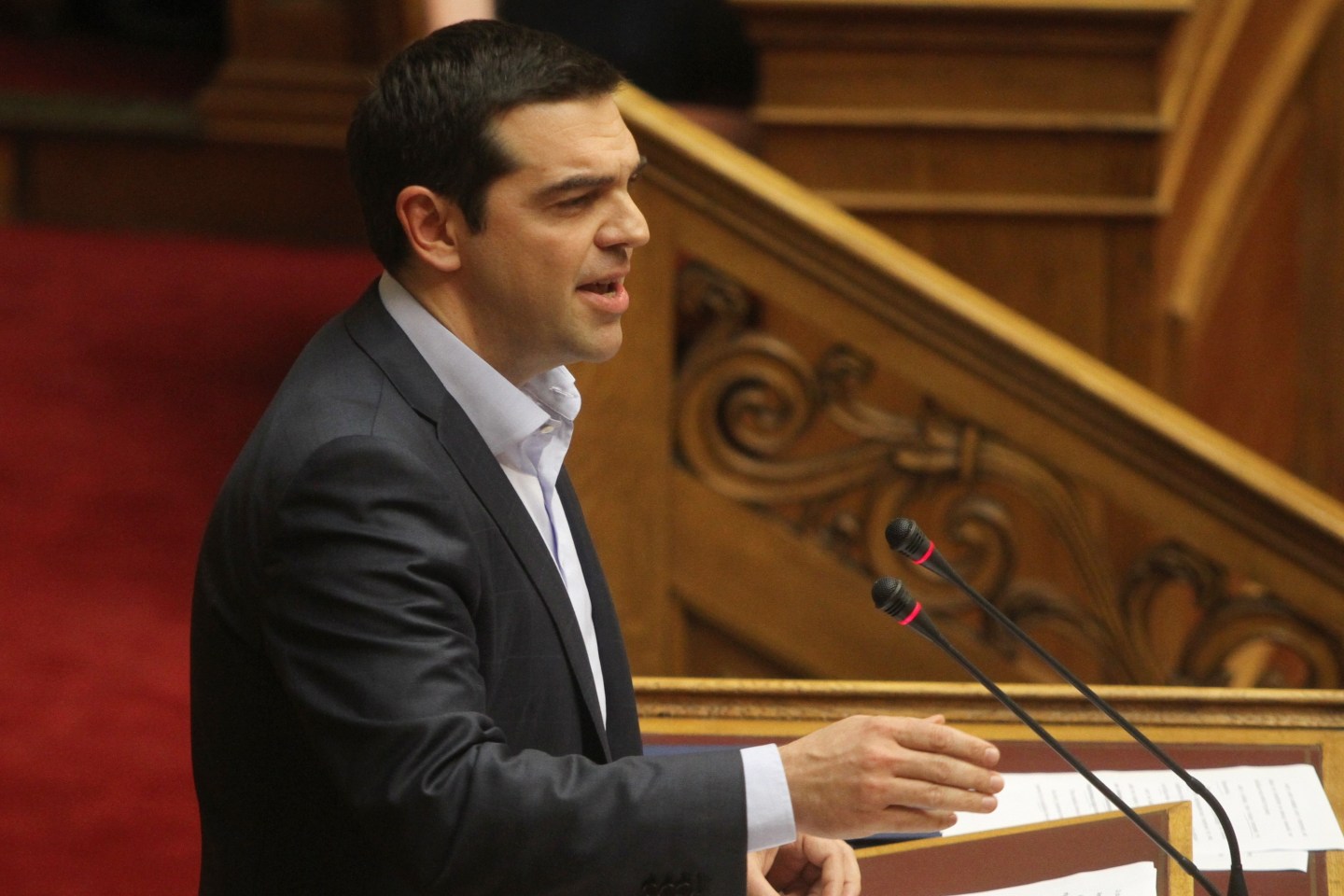
Greek Prime Minister Alexis Tsipras speaks at parliament in Athens
ATHENS, GREECE - MARCH 30: Greek Prime Minister Alexis Tsipras speaks during a parliament session in Athens on March 30, 2015. (Photo by Ayhan Mehmet/Anadolu Agency/Getty Images)Photograph by Ayhan Mehmet — Anadolu Agency/Getty Images

Greek Prime Minister Alexis Tsipras exhorted his citizens to vote “no” in a referendum on Sunday to strengthen his nation’s hand in negotiations with its creditors. Now that they have followed his lead and overwhelmingly rejected the lenders’ demands for reform, Tsipras is triumphantly pledging to clinch a deal in 48 hours.

In truth, Tsipras victory in the historic referendum makes it far more difficult to break the impasse with Greece’s trio of creditors, the IMF, ECB, and European Commission. Just days before the vote, Tsipras caved on almost every single “austerity” measure on the creditors’ wish list. In calling the referendum, Tsipras was really asking Greece’s citizens to spurn the very reforms he’d just agreed to. Now he’ll return to the table with a mandate to refuse the program he was ready to embrace. No wonder the creditors are confused. Germany’s foreign minister denounced the Greek strategy as totally confusing and impossible to “decode.”

“Tsipras wanted a mandate to bargain from a powerful position, but that was never in doubt,” says Hari Tsoukas of Britain’s Warwick Business School. “He was close to a deal, and then invited people to vote no on that deal. That’s why the creditors were put off, and why they’re hardening their stance.”

To restart talks, Tsipras will need to revive his final proposal to his creditors, a blueprint that bows to precisely the kind of austerity his citizens now shun. On June 30, hours before the deadline for an agreement and a big payment to the IMF, Tsipras made a dramatic appeal in a conference call with the Eurozone’s finance ministers. He agreed to almost all the lenders’ conditions. The exceptions were relatively minor, chiefly a request to maintain special, low sales tax rates for the Greek islands that promote tourism.

On the thorny issue of pensions, Athens was willing to raise the retirement age and reduce payouts, as the creditors demanded. The differences were a matter of timing: Rather than act immediately, Tsipras sought to phase in pension reforms over the next two years. “He was pretty close,” says Tsoukas. “He’d agreed on 90% of the lenders’ conditions.”

But Tsipras wanted something in return: a major debt restructuring plan, backed by a big cash infusion. He requested 29 billion euros in additional bailout money, an injection that would fund the government for the next two years. He also asked that the payback periods be extended to 60 or 70 years, and that interest rates on Greece’s borrowings be sharply reduced.

The ministers declined to discuss the plan, even though it delivered most of the reforms they wanted. Instead, Angela Merkel of Germany, along with other heads of state, demanded that Greece cancel its referendum as a condition for considering the Tsipras platform. Now, the lenders say they will not resume talks until Tsipras takes the initiative and presents a new plan.

Any realistic proposal would contain all the concessions Greece made in the June 30 program. But given his anti-austerity mandate, Tsipras is also likely to resume, and perhaps harden, his demands for debt relief. That stance may very well freeze any new talks.

The creditors want to see if Greece enacts the reforms it’s requiring, and that Tsipras has mostly agreed to, before providing more cash and effectively writing down the nation’s debt. They have good reason to be wary. Tsipras has already reneged on conditions imposed in exchange for previous packages, notably by rehiring government workers. “The creditors do not trust the government to do what it promised,” says Tsoukas.

The trust deficit makes it highly unlikely that the lenders will accept a repeat of the June 30 appeal. Still, talks can continue, and perhaps a deal may be reached, as long as Greece’s banks reopen. As this story goes to press on July 6, the ECB board is meeting to decide whether to extend additional emergency funding to the Greek banks and effectively keep Greece in business. Since the bailout has expired, the ECB lacks the authority to provide more funds. That doesn’t mean it won’t happen. On July 7, the finance ministers will debate whether their nations should guarantee the ECB’s 90 billion euros in emergency funding to Greek banks. If a guarantee is forthcoming, the banks can reopen.

But if the ministers decline, Greece’s banks will remain closed, wreaking havoc on the economy. The sole solution will be for Tsipras to drop his demands for debt restructuring and swallow the austerity program. Instead of getting more, he’d need to issue a complete capitulation. It’s not what the Greeks voted for on Sunday, but it may be the only way their nation remains a member in the currency club that most Greeks, and their leader, claim to prize.

About the Author
Shawn Tully
By Shawn TullySenior Editor-at-Large

Shawn Tully is a senior editor-at-large at Fortune, covering the biggest trends in business, aviation, politics, and leadership.

See full bioRight Arrow Button Icon

Latest in Finance

Michael Saylor speaks on stage during Bitcoin Conference 2023 at Miami Beach Convention Center on May 19, 2023.
InvestingBitcoin
Michael Saylor’s Strategy may have BlackRock to thank for the 11% rise in Bitcoin
By Jim EdwardsDecember 4, 2025
10 minutes ago
Personal FinanceSavings accounts
Today’s best high-yield savings account rates on Dec. 4, 2025: Earn up to 5.00% APY
By Glen Luke FlanaganDecember 4, 2025
26 minutes ago
Personal FinanceCertificates of Deposit (CDs)
Invest in CDs now to get up to 4.18% APY. Here are the best CD rates for Dec. 4, 2025
By Glen Luke FlanaganDecember 4, 2025
26 minutes ago
NewslettersTerm Sheet
How Anthropic grew—and what the $183 billion giant faces next
By Allie GarfinkleDecember 4, 2025
28 minutes ago
President Donald Trump attends a cabinet meeting at the White House in Washington, DC on December 2, 2025.
Economynational debt
Two months into the new fiscal year and the U.S. government is already spending more than $10 billion a week servicing national debt
By Eleanor PringleDecember 4, 2025
40 minutes ago
Andrew Ross Sorkin and Alex Karp speak onstage during The New York Times DealBook Summit 2025 at Jazz at Lincoln Center on December 03, 2025 in New York City.
C-Suitepalantir
Palantir CEO Alex Karp defends being an ‘arrogant prick’—and says more CEOs should be, too
By Eva RoytburgDecember 4, 2025
1 hour ago

Most Popular

placeholder alt text
North America
Jeff Bezos and Lauren Sánchez Bezos commit $102.5 million to organizations combating homelessness across the U.S.: ‘This is just the beginning’
By Sydney LakeDecember 2, 2025
2 days ago
placeholder alt text
Economy
Ford workers told their CEO 'none of the young people want to work here.' So Jim Farley took a page out of the founder's playbook
By Sasha RogelbergNovember 28, 2025
6 days ago
placeholder alt text
North America
Anonymous $50 million donation helps cover the next 50 years of tuition for medical lab science students at University of Washington
By The Associated PressDecember 2, 2025
2 days ago
placeholder alt text
C-Suite
MacKenzie Scott's $19 billion donations have turned philanthropy on its head—why her style of giving actually works
By Sydney LakeDecember 2, 2025
2 days ago
placeholder alt text
Innovation
Google CEO Sundar Pichai says we’re just a decade away from a new normal of extraterrestrial data centers
By Sasha RogelbergDecember 1, 2025
3 days ago
placeholder alt text
Economy
Scott Bessent calls the Giving Pledge well-intentioned but ‘very amorphous,’ growing from ‘a panic among the billionaire class’
By Nick LichtenbergDecember 3, 2025
18 hours ago
Rankings
  • 100 Best Companies
  • Fortune 500
  • Global 500
  • Fortune 500 Europe
  • Most Powerful Women
  • Future 50
  • World’s Most Admired Companies
  • See All Rankings
Sections
  • Finance
  • Leadership
  • Success
  • Tech
  • Asia
  • Europe
  • Environment
  • Fortune Crypto
  • Health
  • Retail
  • Lifestyle
  • Politics
  • Newsletters
  • Magazine
  • Features
  • Commentary
  • Mpw
  • CEO Initiative
  • Conferences
  • Personal Finance
  • Education
Customer Support
  • Frequently Asked Questions
  • Customer Service Portal
  • Privacy Policy
  • Terms Of Use
  • Single Issues For Purchase
  • International Print
Commercial Services
  • Advertising
  • Fortune Brand Studio
  • Fortune Analytics
  • Fortune Conferences
  • Business Development
About Us
  • About Us
  • Editorial Calendar
  • Press Center
  • Work At Fortune
  • Diversity And Inclusion
  • Terms And Conditions
  • Site Map

© 2025 Fortune Media IP Limited. All Rights Reserved. Use of this site constitutes acceptance of our Terms of Use and Privacy Policy | CA Notice at Collection and Privacy Notice | Do Not Sell/Share My Personal Information
FORTUNE is a trademark of Fortune Media IP Limited, registered in the U.S. and other countries. FORTUNE may receive compensation for some links to products and services on this website. Offers may be subject to change without notice.