
• Home
  • Latest
  • Fortune 500
  • Finance
  • Tech
  • Leadership
  • Lifestyle
  • Rankings
  • Multimedia
Leadershipchris christie

Chris Christie 2016: Should a bully be president?

Claire Zillman
By
Claire Zillman
Claire Zillman
Editor, Leadership
Down Arrow Button Icon
Claire Zillman
By
Claire Zillman
Claire Zillman
Editor, Leadership
Down Arrow Button Icon
June 30, 2015, 4:23 PM ET
Chris Christie Poised to Announce Presidential Campaign
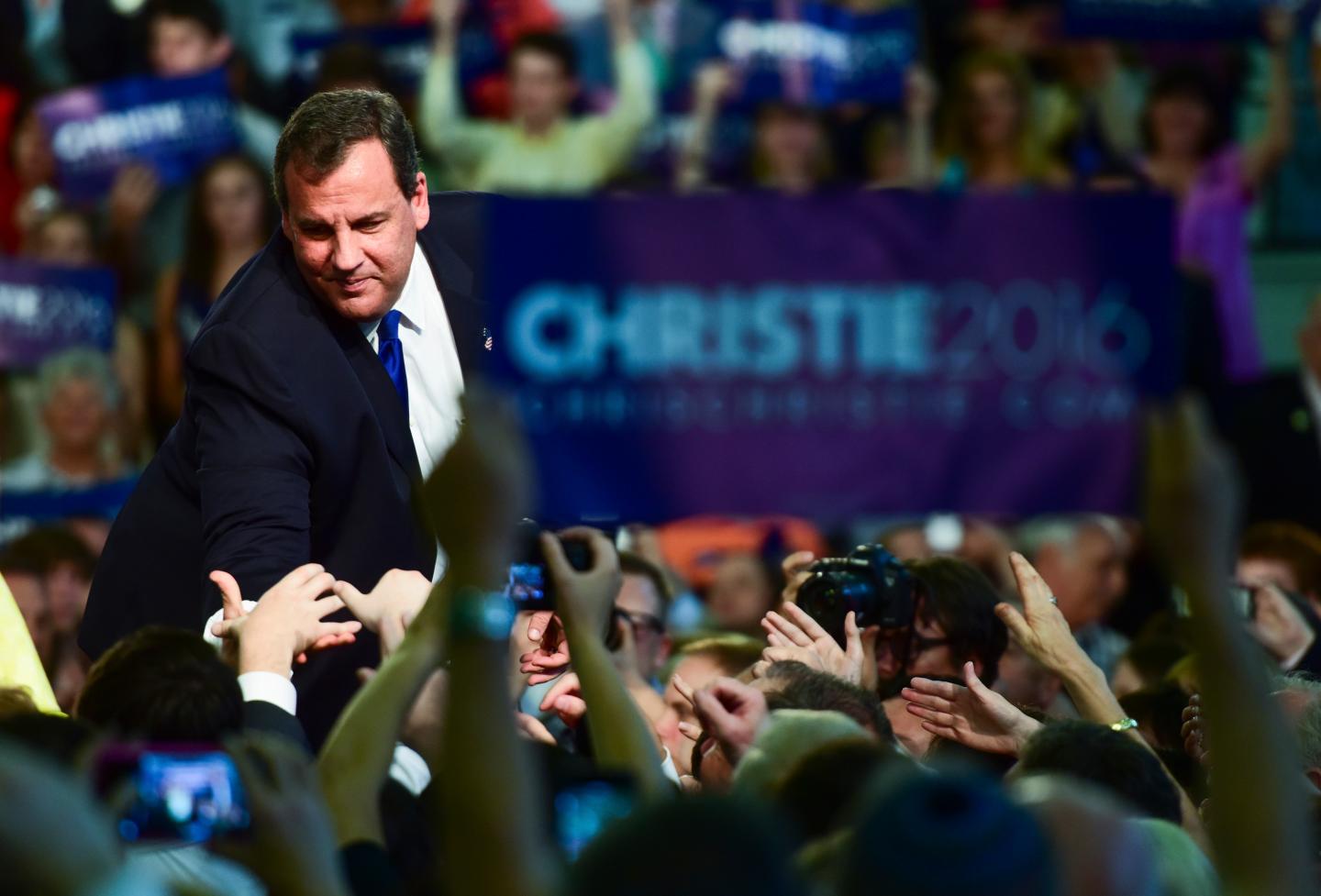
Chris Christie, governor of New Jersey, reaches out to greet a supporter at Livingston High School in Livingston, New Jersey, U.S., on Tuesday, June 30, 2015. Christie, whose brand of Jersey-guy brashness was tarnished by a political-payback scandal, announced he's running for U.S. president, the 14th Republican to join the 2016 primary contest. Photographer: Ron Antonelli/Bloomberg via Getty ImagesPhotograph by Ron Antonelli — Bloomberg via Getty Images

Of all of the printable words used to describe Chris Christie—bold, brash, boisterous—bully might be mentioned the most.

The Republican New Jersey governor has garnered a reputation for being short-fused, with a habit of countering slights with immediate, precise, and perhaps disproportionate retribution.

The New York Times in 2013 published a rundown of incidents in which Christie used his political power to administer payback to his opponents, no matter their prominence.

There were video clips of Christie publicly dressing down teachers who spoke out against his plan to cut public employee benefits. A New Jersey state senator, who’d previously served as governor, lost his security detail after Christie said he delayed a cabinet nominee. An institute run by a Rutgers professor lost funding after the professor sided with New Jersey Democrats on a redistricting plan. Then there were allegations from the mayor of Hoboken, who said Christie’s office threatened to withhold recovery aid for damage due to Hurricane Sandy if she failed to approve a development project. And most notably, investigations into the Bridgegate scandal revealed that Christie’s associates had ordered the closure of lanes on the George Washington Bridge, which caused a mammoth traffic jam, after the mayor of nearby Fort Lee, N.J., declined to endorse the governor for reelection.

At one point, Christie’s unfiltered and flamboyant style catapulted him onto the national stage. He reasserted himself there on Tuesday, announcing his bid for the 2016 Republican presidential nomination. Christie’s trademark combativeness will distinguish him from the crowd of Republican competition, but will it make him a good president?

“Christie may well find that kind of aggressive demeanor to be better attuned to campaigning than governing,” says Cal Jillson, a professor of political science at Southern Methodist University.

Revenge tactics may work at the state level, where a governor is dealing with state legislators who may lack experience and political prowess. There’s a difference between that and—say—a congressman with 25 or 30 years of experience and a committee chairmanship.

For presidents, success is most often achieved not by pummeling opponents into submission but by schmoozing instead.

“As Obama has discovered, not only can’t you push people around and call them out, you have to stroke them, invite them to dinner, ask about their kids, form personal relationships with them, and draw on that when you need it—not just within your own party but across party lines too,” Jillson says.

The modern master of that tactic was President Ronald Reagan, whose relationship with House Speaker Tip O’Neill is considered the model for how political leaders with differing ideologies can work together.

A few presidents have attempted to lead with intimidation tactics. They have largely failed.

Jillson points to Lyndon Johnson, who as a Senate leader effectively rallied Democrats behind Eisenhower’s initiatives. As president, he was effective in pressing his domestic policies in large part because of the wave of emotion following President John F. Kennedy’s assassination. But when he stumbled with the Vietnam War, “Congress realized it no longer had to fold under his pressure,” Jillson said. In 1968, Johnson dropped out of a bid for reelection.

Presidential bullying works when “you’re on a roll,” Jillson says. Once the ride ends, you better have a fallback strategy or hope to be swept up by another round of momentum. The latter is what happened to President Franklin D. Roosevelt, who after successfully pushing his New Deal programs, pressed his prerogative too far, running into Congressional resistance when he tried to increase the Supreme Court roster from nine to 12 justices. As retribution, Roosevelt personally campaigned against conservative Democrats in the 1938 elections but failed to oust them in nearly every instance. “That sort of broke FDR’s political efficacy,” Jillson says. But FDR managed to repair things, thanks to a swell of support prompted by the onset of World War II.

If intimidation tactics rely on momentum for survival, Christie’s fledgling candidacy may already be in crisis. He announced his White House bid at what’s considered a low point in his career: following the Bridgegate scandal, his approval rating in New Jersey is near 30%. The bullying that once gave him national attention—especially during his effort to cut public pensions—has now left him in a rut.

About the Author
Claire Zillman
By Claire ZillmanEditor, Leadership
LinkedIn iconTwitter icon

Claire Zillman is a senior editor at Fortune, overseeing leadership stories. 

See full bioRight Arrow Button Icon

Latest in Leadership

Five panelists seated; two women and five men.
AIBrainstorm AI
The race to deploy an AI workforce faces one important trust gap: What happens when an agent goes rogue?
By Amanda GerutDecember 11, 2025
4 hours ago
InnovationBrainstorm AI
Backflips are easy, stairs are hard: Robots still struggle with simple human movements, experts say
By Nicholas GordonDecember 11, 2025
6 hours ago
Late Apple cofounder Steve Jobs
SuccessCareers
Apple’s Steve Jobs told students to never ‘settle’ in their careers: ‘If you haven’t found it yet, keep looking’
By Emma BurleighDecember 11, 2025
11 hours ago
Joe Lonsdale
SuccessColleges and Universities
Palantir cofounder calls elite college undergrads a ‘loser generation’ as data reveals rise in students seeking support for disabilities, like ADHD
By Preston ForeDecember 11, 2025
11 hours ago
A sign for Time magazine is displayed outside the New York Stock Exchange on Thursday, Dec. 11, 2025 in New York.
AIchief executive officer (CEO)
Time names ‘Architects of AI’ as its 2025 Person of the Year, a year when the tech’s ‘full potential roared into view’
By Mike Catalini and The Associated PressDecember 11, 2025
11 hours ago
Rich couple making a toast with champagne glasses while eating aboard a private jet.
SuccessWealth
What it takes to be wealthy in America: $2.3 million, Charles Schwab says
By Sydney LakeDecember 11, 2025
13 hours ago

Most Popular

placeholder alt text
Success
At 18, doctors gave him three hours to live. He played video games from his hospital bed—and now, he’s built a $10 million-a-year video game studio
By Preston ForeDecember 10, 2025
2 days ago
placeholder alt text
Investing
Baby boomers have now 'gobbled up' nearly one-third of America's wealth share, and they're leaving Gen Z and millennials behind
By Sasha RogelbergDecember 8, 2025
3 days ago
placeholder alt text
Economy
‘Be careful what you wish for’: Top economist warns any additional interest rate cuts after today would signal the economy is slipping into danger
By Eva RoytburgDecember 10, 2025
1 day ago
placeholder alt text
Politics
Exclusive: U.S. businesses are getting throttled by the drop in tourism from Canada: ‘I can count the number of Canadian visitors on one hand’
By Dave SmithDecember 10, 2025
2 days ago
placeholder alt text
Economy
‘We have not seen this rosy picture’: ADP’s chief economist warns the real economy is pretty different from Wall Street’s bullish outlook
By Eleanor PringleDecember 11, 2025
16 hours ago
placeholder alt text
Success
Netflix–Paramount bidding wars are pushing Warner Bros CEO David Zaslav toward billionaire status—he has one rule for success: ‘Never be outworked’
By Preston ForeDecember 10, 2025
1 day ago
Rankings
  • 100 Best Companies
  • Fortune 500
  • Global 500
  • Fortune 500 Europe
  • Most Powerful Women
  • Future 50
  • World’s Most Admired Companies
  • See All Rankings
Sections
  • Finance
  • Leadership
  • Success
  • Tech
  • Asia
  • Europe
  • Environment
  • Fortune Crypto
  • Health
  • Retail
  • Lifestyle
  • Politics
  • Newsletters
  • Magazine
  • Features
  • Commentary
  • Mpw
  • CEO Initiative
  • Conferences
  • Personal Finance
  • Education
Customer Support
  • Frequently Asked Questions
  • Customer Service Portal
  • Privacy Policy
  • Terms Of Use
  • Single Issues For Purchase
  • International Print
Commercial Services
  • Advertising
  • Fortune Brand Studio
  • Fortune Analytics
  • Fortune Conferences
  • Business Development
About Us
  • About Us
  • Editorial Calendar
  • Press Center
  • Work At Fortune
  • Diversity And Inclusion
  • Terms And Conditions
  • Site Map

© 2025 Fortune Media IP Limited. All Rights Reserved. Use of this site constitutes acceptance of our Terms of Use and Privacy Policy | CA Notice at Collection and Privacy Notice | Do Not Sell/Share My Personal Information
FORTUNE is a trademark of Fortune Media IP Limited, registered in the U.S. and other countries. FORTUNE may receive compensation for some links to products and services on this website. Offers may be subject to change without notice.