• Home
  • Latest
  • Fortune 500
  • Finance
  • Tech
  • Leadership
  • Lifestyle
  • Rankings
  • Multimedia
TechFortune 500

Forget killer apps, start thinking about killer context

By
Stacey Higginbotham
Stacey Higginbotham
Down Arrow Button Icon
By
Stacey Higginbotham
Stacey Higginbotham
Down Arrow Button Icon
June 17, 2015, 2:41 PM ET
Netatmo

During the Internet’s early days, email is what got many people online. It became the first “killer app” of the era and an inspiration for companies looking to develop the next must-use service for everything from mobile phones to super-fast broadband.

The smart home is no exception. I constantly hear marketing VPs bemoan the lack of a killer app for the new generation of sci-fi ovens, door locks, security cameras that can be controlled remotely from a smart phone as a convenience.

Often the marketers just throw up their hands and say that there’s no killer app because the home is so personal or because it’s a place shared by entire families that makes it impossible to build a service that will appeal to everyone.

These are both true. But instead of casting for a compelling sales pitch, these marketing executives may be looking for the wrong thing. In the age of smarter machines, where data is everywhere and connections between services can be mediated in the cloud, the challenge isn’t creating the killer app, it’s creating killer context.

From apps to services
From early on, computing has evolved to become increasingly personal. Today, everything from the powerful smartphones we carry to the cloud services that handle so many digital chores create an environment that’s ripe for highly individualized and niche services. It’s as if computing and apps have graduated from the 1950s era model of everyone watching one of three TV shows to today’s reality of hundreds of obscure cable channels and a nearly limitless number of clips on YouTube.

Given the trend toward personalized services, companies that want to succeed should think hard about the problems such personalization and ubiquitous computing brings. And for that, you only need to see where Apple, Google and other big name companies are heading. At its developer conference earlier this month, Apple said that its Siri digital assistant for mobile phones would get smarter by using more insight and context. For example, Siri would tailor its responses on whether users were in a car or at home. It would also infer a user’s intentions by looking which apps on the phone are open.

Google (GOOG), with its Siri rival, Google Now, has been heading this way for a while. Earlier this week, it updated Maps so that it will warn users if they ask for directions to a store or restaurant that has closed.

These kinds of services all have one thing in common. They value derives from context of knowing where you are and understanding what you are doing to deduce the appropriate response at the right time.

Going beyond the phone

When it comes to providing context, your phone is a powerful tool. But connected devices in the home like thermostats can multiply the amount of data and potential context tremendously. Gadget makers, especially startups, that realize that fact could see their value rise in the smart home ecosystem. So the challenge for them is to provide a great user experience as well as context.

In some cases like Density, a San Francisco startup that installs sensors in doorways of bars and restaurants to count the number of people going inside, the customer service is provided to one audience and the context to another. Density offers a free app that shows consumers when their favorite coffee shops are full based on the Density sensors installed in the shops, but its paying customers are actually different businesses who use the data about the coffee shops’ crowds to provide their customers a better service.

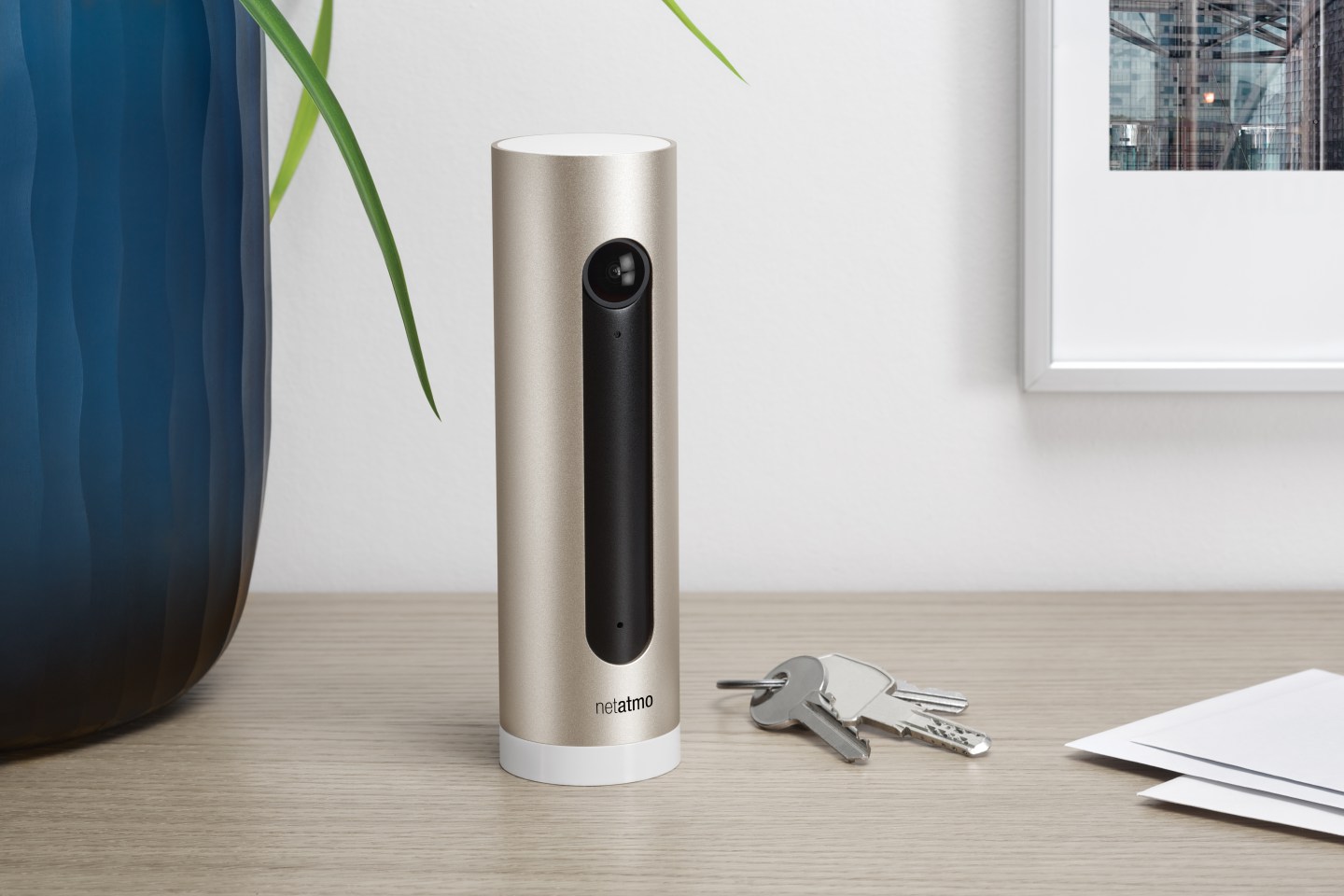
Another example is the newly introduced Netatmo Welcome camera, which is like many other connected security cameras for the home except that it recognizes the people it films. As the Netatmo CEO Fred Potter explains it, the idea in using facial recognition was not only to cut down on random movements setting off the motion sensor present in most of these cameras, (the motion sensor usually triggers a recording) it was also added to help reduce the useless alerts about friends and family instead of intruders.

He said that the ability to recognize faces means that the camera’s notifications about seeing a person in the room are more useful. Instead of the camera saying, “I’ve detected motion,” and sending a video the homeowner must open, the Netamo notification reads, “Stacey was seen.” This may provide enough information that the use doesn’t even need to open the app.

From engagement to context

It’s a subtle shift from getting people to engage with an app as much as possible to delivering only essential pieces of information that don’t require users to stop what they are doing. That’s one way Potter aims to differentiate the camera for users.

The camera’s other value is that it can share the information it collects with other companies that can use that context to improve their services. Because the Netatmo camera uses facial recognition it can convey information about people in homes who aren’t carrying cell phones (a common way to recognize people is by using the cell phone or a Bluetooth wearable) to give a more accurate picture of what’s going on inside. This offers a more accurate “Away” function that can lock doors, lower temperatures or close blinds, as well as the potential for personalized services. For example, when I walk into the house the Netatmo’s ability to recognize my face means my Hue light bulbs could turn to my preferred shade of pinkish light.

This level of context opens up new services for users and for others companies in the connected home ecosystem, making the overall experience more valuable for all. That’s what will drive consumer and business adoption of smart home appliances and services built on them. The killer app is a product of a different world, where people interacted with a device or piece of software. But when everything is connected to everything else, it’s the services that matter. And context is king when it comes to delivering the right service at the right time.

Subscribe to Data Sheet, Fortune’s daily newsletter on the business of technology.
About the Author
By Stacey Higginbotham
See full bioRight Arrow Button Icon

Latest in Tech

Finance
Lorem ipsum dolor sit amet, consectetur adipiscing elit, sed do eiusmod tempor incididunt ut labore et dolore magna aliqua. Ut enim ad minim veniam
By Fortune Editors
October 20, 2025
Finance
Lorem ipsum dolor sit amet, consectetur adipiscing elit, sed do eiusmod tempor incididunt ut labore et dolore magna aliqua. Ut enim ad minim veniam
By Fortune Editors
October 20, 2025
Finance
Lorem ipsum dolor sit amet, consectetur adipiscing elit, sed do eiusmod tempor incididunt ut labore et dolore magna aliqua. Ut enim ad minim veniam
By Fortune Editors
October 20, 2025
Finance
Lorem ipsum dolor sit amet, consectetur adipiscing elit, sed do eiusmod tempor incididunt ut labore et dolore magna aliqua. Ut enim ad minim veniam
By Fortune Editors
October 20, 2025
Finance
Lorem ipsum dolor sit amet, consectetur adipiscing elit, sed do eiusmod tempor incididunt ut labore et dolore magna aliqua. Ut enim ad minim veniam
By Fortune Editors
October 20, 2025
Finance
Lorem ipsum dolor sit amet, consectetur adipiscing elit, sed do eiusmod tempor incididunt ut labore et dolore magna aliqua. Ut enim ad minim veniam
By Fortune Editors
October 20, 2025

Most Popular

Finance
Lorem ipsum dolor sit amet, consectetur adipiscing elit, sed do eiusmod tempor incididunt ut labore et dolore magna aliqua. Ut enim ad minim veniam
By Fortune Editors
October 20, 2025
Finance
Lorem ipsum dolor sit amet, consectetur adipiscing elit, sed do eiusmod tempor incididunt ut labore et dolore magna aliqua. Ut enim ad minim veniam
By Fortune Editors
October 20, 2025
Finance
Lorem ipsum dolor sit amet, consectetur adipiscing elit, sed do eiusmod tempor incididunt ut labore et dolore magna aliqua. Ut enim ad minim veniam
By Fortune Editors
October 20, 2025
Finance
Lorem ipsum dolor sit amet, consectetur adipiscing elit, sed do eiusmod tempor incididunt ut labore et dolore magna aliqua. Ut enim ad minim veniam
By Fortune Editors
October 20, 2025
Finance
Lorem ipsum dolor sit amet, consectetur adipiscing elit, sed do eiusmod tempor incididunt ut labore et dolore magna aliqua. Ut enim ad minim veniam
By Fortune Editors
October 20, 2025
Finance
Lorem ipsum dolor sit amet, consectetur adipiscing elit, sed do eiusmod tempor incididunt ut labore et dolore magna aliqua. Ut enim ad minim veniam
By Fortune Editors
October 20, 2025
Rankings
  • 100 Best Companies
  • Fortune 500
  • Global 500
  • Fortune 500 Europe
  • Most Powerful Women
  • Future 50
  • World’s Most Admired Companies
  • See All Rankings
Sections
  • Finance
  • Leadership
  • Success
  • Tech
  • Asia
  • Europe
  • Environment
  • Fortune Crypto
  • Health
  • Retail
  • Lifestyle
  • Politics
  • Newsletters
  • Magazine
  • Features
  • Commentary
  • Mpw
  • CEO Initiative
  • Conferences
  • Personal Finance
  • Education
Customer Support
  • Frequently Asked Questions
  • Customer Service Portal
  • Privacy Policy
  • Terms Of Use
  • Single Issues For Purchase
  • International Print
Commercial Services
  • Advertising
  • Fortune Brand Studio
  • Fortune Analytics
  • Fortune Conferences
  • Business Development
About Us
  • About Us
  • Editorial Calendar
  • Press Center
  • Work At Fortune
  • Diversity And Inclusion
  • Terms And Conditions
  • Site Map
  • Facebook icon
  • Twitter icon
  • LinkedIn icon
  • Instagram icon
  • Pinterest icon

Latest in Tech

Elon Musk, wearing all black and in front of a blue background, presses his hands together.
Big TechDavos
Elon Musk makes the case for why his $2.2 trillion tech empire is the only way to save humanity as the only intelligent life in the universe
By Sasha RogelbergJanuary 22, 2026
11 hours ago
sternfels
CommentaryConsulting
AI makes human intelligence more important, not less 
By Bob Sternfels and Lucy PerezJanuary 22, 2026
15 hours ago
Building with a Deloitte company sign
Future of WorkConsulting
Deloitte to scrap traditional job titles as AI ushers in a ‘modernization’ of the Big Four
By Jake AngeloJanuary 22, 2026
15 hours ago
NewslettersEye on AI
OpenAI’s former head of sales is entering VC. She still calls herself an ‘AGI sherpa’
By Sharon GoldmanJanuary 22, 2026
16 hours ago
David Sacks gestures during a speech outside the White House
AITech
America could ‘lose the AI race’ because of too much ‘pessimism,’ White House AI czar David Sacks says
By Tristan BoveJanuary 22, 2026
16 hours ago
Elon Musk, in front of a blue "World Economic Forum" background, puts his hand to his mouth.
EnergyDavos
Elon Musk warns the U.S. could soon be producing more chips than we can turn on. And China doesn’t have the same issue
By Sasha RogelbergJanuary 22, 2026
16 hours ago

Most Popular

placeholder alt text
Economy
'Some form of crisis is almost inevitable': The $38 trillion national debt will soon be growing faster than the U.S. economy itself, watchdog warns
By Nick LichtenbergJanuary 22, 2026
16 hours ago
placeholder alt text
Success
Nvidia CEO Jensen Huang says ‘a lot’ of six-figure jobs in plumbing and construction are about to be unlocked because someone needs to build all these new AI centers
By Preston ForeJanuary 21, 2026
2 days ago
placeholder alt text
Politics
Jamie Dimon tells Davos: ‘You didn’t do a particularly good job making the world a better place’
By Eleanor PringleJanuary 21, 2026
2 days ago
placeholder alt text
Energy
Elon Musk warns the U.S. could soon be producing more chips than we can turn on. And China doesn’t have the same issue
By Sasha RogelbergJanuary 22, 2026
16 hours ago
placeholder alt text
Economy
Jamie Dimon says he’d have no issue paying higher taxes if it actually went to people who need it. Right now it just goes to the Washington ‘swamp’
By Eleanor PringleJanuary 21, 2026
2 days ago
placeholder alt text
AI
Elon Musk says that in 10 to 20 years, work will be optional and money will be irrelevant thanks to AI and robotics
By Sasha RogelbergJanuary 19, 2026
4 days ago

© 2026 Fortune Media IP Limited. All Rights Reserved. Use of this site constitutes acceptance of our Terms of Use and Privacy Policy | CA Notice at Collection and Privacy Notice | Do Not Sell/Share My Personal Information
FORTUNE is a trademark of Fortune Media IP Limited, registered in the U.S. and other countries. FORTUNE may receive compensation for some links to products and services on this website. Offers may be subject to change without notice.