• Home
  • Latest
  • Fortune 500
  • Finance
  • Tech
  • Leadership
  • Lifestyle
  • Rankings
  • Multimedia
FinanceCatholic Church

The Vatican bank sees its future, and it’s all about managing money

Shawn Tully
By
Shawn Tully
Shawn Tully
Senior Editor-at-Large
Down Arrow Button Icon
Shawn Tully
By
Shawn Tully
Shawn Tully
Senior Editor-at-Large
Down Arrow Button Icon
June 4, 2015, 10:45 AM ET
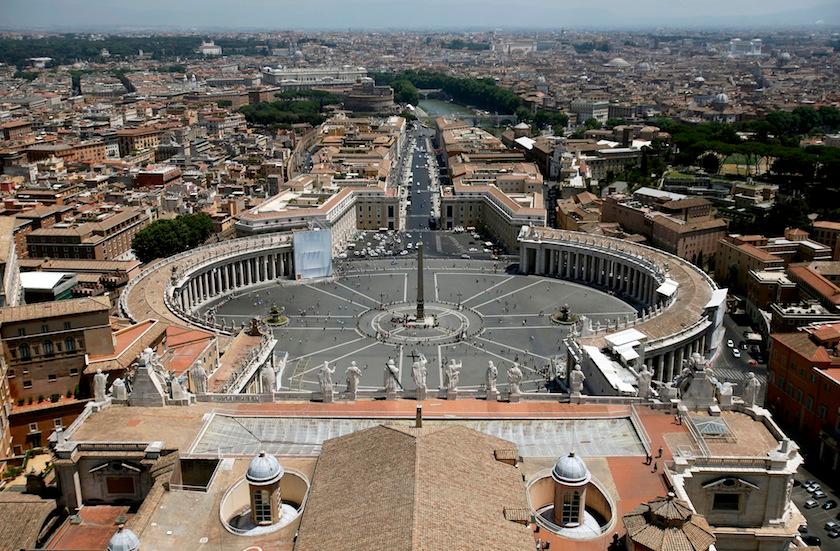
St Peter's Basilica As Vatican Bank Commits to Fight Money Laundering
St. Peter's square stands at the Vatican, on Thursday, July 5, 2012. Photographer: Alessia Pierdomenico/BloombergPhoto by Alessia Pierdomenico—Bloomberg via Getty Images

For decades, the Institute for Religious Works embarrassed the Vatican with a legion of alleged sins––rampant money-laundering, thwarting Italian authorities by concealing the identity of its depositors, and an arrogance that might be best expressed by the phrase, “God’s bankers do their own thing. The rest of the banking world can do theirs.” Even bank offices in a medieval prison tower commissioned by Pope Sixtus V deepened the dark legend.

But since early 2013, the IOR, informally called the Vatican Bank, has modernized its operations and rescued its reputation. Today, the IOR is tightly regulated by the Vatican’s SEC, the Department of Financial Intelligence. It regularly exchanges tax and other information on its depositors with the Italian government. It publishes richly detailed annual reports, which are audited by Deloitte.

Now, IOR’s president, Jean-Baptiste de Franssu, wants to transform the bank’s business model. Appointed last July, de Franssu is the IOR’s second professional leader, and the former European chief of Invesco, the $800 billion-plus mutual fund colossus based in Atlanta.

For de Franssu, the IOR of the future should progress from chiefly handling deposits to his specialty, managing money. As a fund manager, he says, the IOR would deliver a bigger, more reliable stream of income to his boss, Pope Francis. It’s a daring idea. The IOR’s problems with making good money, and making it consistently, suggest that asset management may very well be the righteous path.

The IOR published its 2014 annual report on May 25, and the numbers illustrate its challenge. The Vatican Bank’s income is crucial to the Catholic Church’s financial health. Its profits go directly to support the budget of the Holy See, the branch that comprises the congregations, councils, and media organs that spread the Pope’s message to the world’s 1.2 billion Catholics. This year, the Bank will contribute $62 million to the Holy See, accounting for one-quarter of its $235 million budget.

Most years, the Holy See operates on the edge, running small surpluses or, more frequently, large deficits. When funds from the Bank and investments dwindled, past Pontiffs have been forced to use donations intended for charity, including the “Peter’s Pence” collected on a Sunday in the spring from parishioners around the world, to cover operating expenses. Pope Francis doesn’t want that to happen again. He’s effectively ordering the IOR to ensure that its cash flows are both big and reliable.

Today, the IOR’s model fails to consistently meet that standard. Its biggest regular source of revenue is the “spread income” between what it pays depositors and the interest it receives on the securities that back those deposits, mainly short-term government and corporate bonds. The IOR does not make loans. Traditionally, it has handled accounts for Vatican employees and religious orders and, served religious orders transferring funds to missionaries in remote parts of the globe to fund schools and construct churches.

Because interest rates are so low, the IOR’s spread income is modest, and shrinking. Last year, it totaled $57 million, down from $60 million in 2013. The IOR did manage to post earnings of $77 million for 2014, but that was only because it generated a huge windfall when declining rates boosted the value of its bond portfolio. In 2013, rising rates delivered the opposite effect: they saddled the IOR with a steep loss on those fixed-income holdings. That lowered its profits to just $3.2 million. So it was obligated to raid its capital to pay a $62 million dividend to the Pope.

Here’s the rub: If the value of the IOR’s bonds had remained flat in 2014, it would have earned just $37 million, far below the dividend of over $60 million and rising that it effectively promises the Holy See.

De Franssu wants to smooth those peaks and valleys. In his annual letter, he endorsed a strategy “that will allow the IOR to sustain and grow its annual contribution to the Holy See,” adding that the key lever is expanding the institution’s asset management franchise.

In reality, managing portfolios for clients is already a big business for the IOR. Since 2008, deposits have shrunk from $3.6 billion to $2.4 billion, while assets under management and custody for clients have expanded by 40%, to $3.8 billion. The IOR invests most of those funds for religious orders, a category that includes the Franciscans, Jesuits, and Carmelite Sisters. A smaller portion comes from dioceses around the globe and the offices of the Holy See. The IOR is clearly following its customers, who want to park funds in relatively high-paying portfolios as opposed to IOR bank accounts that pay 0.4%.

Despite its sizable scale and rapid growth, asset management doesn’t make much money. The IOR manages those portfolios exclusively in-house, remarkably deploying a staff of no more than 15. None of the portfolios is outsourced, and the IOR staff appears to pick the securities. As stated in the annual report, “Investment decisions are taken by the IOR on the basis of a portfolio management agreement signed by customers.”

Those agreements have produced less than stellar results. For 2014, asset management and custody services—essentially holding, but not choosing, securities for customers—generated $16.6 million in revenue. That’s around 0.4% of the $3.8 billion in customer assets, a fee that’s typical for a large index fund, but far below the figure of well over 1% for most actively managed portfolios.

It’s uncertain if de Franssu plans to raise those modest fees. Even if they do rise a bit, he’ll have to attract many additional billions in funds to give the IOR steady income of well over $60 million, year after year. De Franssu clearly perceives that religious orders and dioceses have many billions sitting in local banks or parked with asset managers. The view is that they’d like nothing more than to hand those funds over to a super-competent manager with the Vatican’s imprimatur.

Outside the IOR, the Vatican views asset management as a big potential moneymaker. Last July, Pope Francis appointed the tough-talking Cardinal George Pell of Sydney, Australia, as head of the newly created Secretariat of the Economy, a supremely powerful organization overseeing all of the Vatican’s financial branches, including the IOR. At his first press conference, Pell announced his plans to form Vatican Asset Management, or VAM, a centralized investment office that would manage all of the Vatican’s capital, and hopefully, billions of euros, pesos, and dollars flowing in from dioceses and religious orders. The idea was for the IOR, under professional asset manager de Franssu, to incubate VAM, then decide if the organization should remain part of the IOR or become independent.

As it turned out, Pell is getting stiff resistance to the VAM concept from the Vatican’s traditional money managers. They mainly work for an organization called APSA, which oversees the Vatican’s investment portfolio of less than $1 billion and has been entrenched for decades. So far, the VAM idea hasn’t advanced. So the leading pioneers in asset management are de Franssu and the IOR. He’s showing that a once tradition-bound, formerly scandal-plagued institution can learn a new trade. You can be sure that Pope Francis, who covets cash for charity, not for bureaucracy, is granting that strategy his special benediction.

About the Author
Shawn Tully
By Shawn TullySenior Editor-at-Large

Shawn Tully is a senior editor-at-large at Fortune, covering the biggest trends in business, aviation, politics, and leadership.

See full bioRight Arrow Button Icon

Latest in Finance

Finance
Lorem ipsum dolor sit amet, consectetur adipiscing elit, sed do eiusmod tempor incididunt ut labore et dolore magna aliqua. Ut enim ad minim veniam
By Fortune Editors
October 20, 2025
Finance
Lorem ipsum dolor sit amet, consectetur adipiscing elit, sed do eiusmod tempor incididunt ut labore et dolore magna aliqua. Ut enim ad minim veniam
By Fortune Editors
October 20, 2025
Finance
Lorem ipsum dolor sit amet, consectetur adipiscing elit, sed do eiusmod tempor incididunt ut labore et dolore magna aliqua. Ut enim ad minim veniam
By Fortune Editors
October 20, 2025
Finance
Lorem ipsum dolor sit amet, consectetur adipiscing elit, sed do eiusmod tempor incididunt ut labore et dolore magna aliqua. Ut enim ad minim veniam
By Fortune Editors
October 20, 2025
Finance
Lorem ipsum dolor sit amet, consectetur adipiscing elit, sed do eiusmod tempor incididunt ut labore et dolore magna aliqua. Ut enim ad minim veniam
By Fortune Editors
October 20, 2025
Finance
Lorem ipsum dolor sit amet, consectetur adipiscing elit, sed do eiusmod tempor incididunt ut labore et dolore magna aliqua. Ut enim ad minim veniam
By Fortune Editors
October 20, 2025

Most Popular

Finance
Lorem ipsum dolor sit amet, consectetur adipiscing elit, sed do eiusmod tempor incididunt ut labore et dolore magna aliqua. Ut enim ad minim veniam
By Fortune Editors
October 20, 2025
Finance
Lorem ipsum dolor sit amet, consectetur adipiscing elit, sed do eiusmod tempor incididunt ut labore et dolore magna aliqua. Ut enim ad minim veniam
By Fortune Editors
October 20, 2025
Finance
Lorem ipsum dolor sit amet, consectetur adipiscing elit, sed do eiusmod tempor incididunt ut labore et dolore magna aliqua. Ut enim ad minim veniam
By Fortune Editors
October 20, 2025
Finance
Lorem ipsum dolor sit amet, consectetur adipiscing elit, sed do eiusmod tempor incididunt ut labore et dolore magna aliqua. Ut enim ad minim veniam
By Fortune Editors
October 20, 2025
Finance
Lorem ipsum dolor sit amet, consectetur adipiscing elit, sed do eiusmod tempor incididunt ut labore et dolore magna aliqua. Ut enim ad minim veniam
By Fortune Editors
October 20, 2025
Finance
Lorem ipsum dolor sit amet, consectetur adipiscing elit, sed do eiusmod tempor incididunt ut labore et dolore magna aliqua. Ut enim ad minim veniam
By Fortune Editors
October 20, 2025
Fortune Secondary Logo
Rankings
  • 100 Best Companies
  • Fortune 500
  • Global 500
  • Fortune 500 Europe
  • Most Powerful Women
  • World's Most Admired Companies
  • See All Rankings
  • Lists Calendar
Sections
  • Finance
  • Fortune Crypto
  • Features
  • Leadership
  • Health
  • Commentary
  • Success
  • Retail
  • Mpw
  • Tech
  • Lifestyle
  • CEO Initiative
  • Asia
  • Politics
  • Conferences
  • Europe
  • Newsletters
  • Personal Finance
  • Environment
  • Magazine
  • Education
Customer Support
  • Frequently Asked Questions
  • Customer Service Portal
  • Privacy Policy
  • Terms Of Use
  • Single Issues For Purchase
  • International Print
Commercial Services
  • Advertising
  • Fortune Brand Studio
  • Fortune Analytics
  • Fortune Conferences
  • Business Development
  • Group Subscriptions
About Us
  • About Us
  • Press Center
  • Work At Fortune
  • Terms And Conditions
  • Site Map
  • About Us
  • Press Center
  • Work At Fortune
  • Terms And Conditions
  • Site Map
  • Facebook icon
  • Twitter icon
  • LinkedIn icon
  • Instagram icon
  • Pinterest icon

Latest in Finance

ExxonMobil CEO Darren Woods, far right, listens as U.S. President Donald Trump,left, speaks during a meeting with oil company executives in the East Room of the White House on Jan. 9. President Trump is aiming to convince oil executives to support his plans in Venezuela, a country whose energy resources he says he expects to control for years to come. US forces seized Venezuelan president Nicolas Maduro in a sweeping military operation on January 3, with Trump making no secret that control of Venezuela's oil was at the heart of his actions.
EnergyIran
Exxon Mobil CEO sees ‘more to come’ on price spikes from Iran war as Exxon, Chevron beat on earnings despite plunging profits
By Jordan BlumMay 1, 2026
17 minutes ago
trump
PoliticsIran
Trump on Iran: ‘They want to make a deal, I’m not satisfied with it, so we’ll see what happens’
By Toqa Ezzidin, Munir Ahmed, Collin Binkley and The Associated PressMay 1, 2026
2 hours ago
infantino
North AmericaWorld Cup
Fifa’s Infantino predicted sellouts and ‘1,000 years of World Cups at once,’ but fans aren’t biting
By James Robson and The Associated PressMay 1, 2026
2 hours ago
cox
C-SuiteWealth
Billionaires have a problem money can’t solve: They don’t know how to talk to their kids
By Nick LichtenbergMay 1, 2026
2 hours ago
trump
EconomyTariffs
Trump says he’ll hike EU auto tariffs to 25%, jolting a world economy that really didn’t need it
By Josh Boak and The Associated PressMay 1, 2026
3 hours ago
male engineer working under pylon
EnergyElectricity
Utility CEOs pocket $626 million as American energy bills hit record highs
By Tristan BoveMay 1, 2026
3 hours ago

Most Popular

China dominates the world's lithium supply. The U.S. just found 328 years' worth in its own backyard
North America
China dominates the world's lithium supply. The U.S. just found 328 years' worth in its own backyard
By Jake AngeloApril 30, 2026
1 day ago
Scott Bessent on financial literacy: 'it drives me crazy' to see young men in blue-collar construction jobs playing the lottery
Personal Finance
Scott Bessent on financial literacy: 'it drives me crazy' to see young men in blue-collar construction jobs playing the lottery
By Fatima Hussein and The Associated PressMay 1, 2026
8 hours ago
The U.S. economy is booming — just not where 50 million Americans live
Commentary
The U.S. economy is booming — just not where 50 million Americans live
By Derek KilmerMay 1, 2026
12 hours ago
Accenture's Julie Sweet blew up 50 years of company history. She says the hardest part is still ahead
Conferences
Accenture's Julie Sweet blew up 50 years of company history. She says the hardest part is still ahead
By Nick LichtenbergApril 29, 2026
2 days ago
Apple cofounder Ronald Wayne—whose stake would be worth up to $400 billion had he not sold it in 1976—says that at 91, he has no regrets
Success
Apple cofounder Ronald Wayne—whose stake would be worth up to $400 billion had he not sold it in 1976—says that at 91, he has no regrets
By Preston ForeApril 27, 2026
4 days ago
Exclusive: America's largest Black-owned bank launches podcast with mission to unlock hidden shame holding back generational wealth
Banking
Exclusive: America's largest Black-owned bank launches podcast with mission to unlock hidden shame holding back generational wealth
By Nick LichtenbergApril 29, 2026
2 days ago

© 2026 Fortune Media IP Limited. All Rights Reserved. Use of this site constitutes acceptance of our Terms of Use and Privacy Policy | CA Notice at Collection and Privacy Notice | Do Not Sell/Share My Personal Information
FORTUNE is a trademark of Fortune Media IP Limited, registered in the U.S. and other countries. FORTUNE may receive compensation for some links to products and services on this website. Offers may be subject to change without notice.