
• Home
  • Latest
  • Fortune 500
  • Finance
  • Tech
  • Leadership
  • Lifestyle
  • Rankings
  • Multimedia

Trendingnow

1

Analysts expected oil to surge above $200 but China has quietly kept prices half of that—and can’t for much longer

2

Pentagon accuses Alibaba, Baidu and BYD, three of China's biggest companies, of supporting the Chinese military

3

Current price of oil as of June 10, 2026

1

Analysts expected oil to surge above $200 but China has quietly kept prices half of that—and can’t for much longer

2

Pentagon accuses Alibaba, Baidu and BYD, three of China's biggest companies, of supporting the Chinese military

3

Current price of oil as of June 10, 2026
Future of Workdisruption

Top economist Tyler Cowen on the biggest problem of the AI age: not mass unemployment but adjusting to a new reality

Nick Lichtenberg
By
Nick Lichtenberg
Nick Lichtenberg
Business Editor
Down Arrow Button Icon
Nick Lichtenberg
By
Nick Lichtenberg
Nick Lichtenberg
Business Editor
Down Arrow Button Icon
May 22, 2026, 3:05 AM ET
cowen
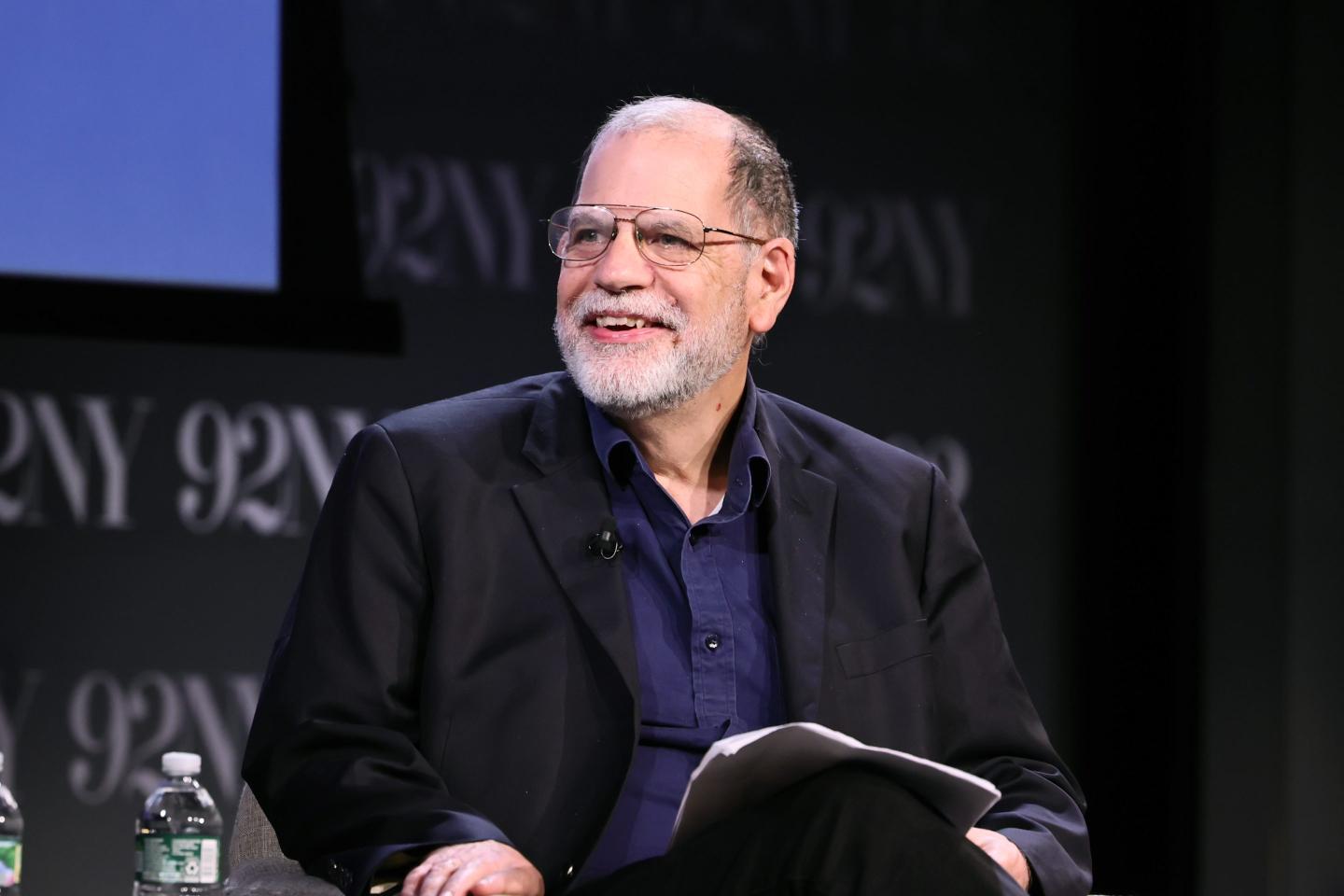
Tyler Cowen attends Conversations With Tyler: Tyler Cowen with Special Guest Craig Newmark at 92NY on April 14, 2026 in New York City.Theo Wargo/Getty Images

The dystopian scenario has become familiar: artificial intelligence sweeps through the economy, machines take the jobs, and workers are left behind. Tyler Cowen doesn’t buy it — but his alternative isn’t exactly reassuring.

Recommended Video

“AI will not bring mass unemployment,” the George Mason University economist and Bloomberg columnist said during a keynote at the Sana AI summit at the New York Public Library in New York City. “But it will change most jobs.” For Cowen, that distinction matters enormously. And it points to a problem that may be harder to solve than unemployment: the psychological, social, and institutional cost of adjustment.

The adjustment won’t be uniform. The economist, who has blogged nearly every day since 2003 at his outpost Marginal Revolution, laid out a striking inversion of conventional wisdom about who wins and who loses. The people most at risk, in his telling, aren’t truck drivers or factory workers — they’re the Manhattan lawyers, strategy consultants, and finance partners who spent decades mastering a set of elite credentials and playing by the rules. “Those are actually the people who might lose,” he said. “The people who will win are the people who are best at taking initiative, figuring out how AI works, figuring out how agents work, doing something different,” including, Cowen suggested, workers in the developing world and immigrants who never had access to those rules in the first place.

The psychological stakes are high. Cowen was blunt about why that inversion will be so painful. “When some people go up in status, and some go down in status, I will tell you, those who lose suffer more psychologically than those who gain.” Status loss, he argued, hits harder than income loss — and for a professional class that has built its identity around intellectual mastery and institutional prestige, watching AI commoditize that mastery is an identity crisis, not just a career one.

The reason why is simple, Cowen said. Our lives have been pretty boring up until now. “No one in this room is old enough to have lived through a radical technological revolution,” Cowen said. His grandmother, born in 1905, lived to see “the birth of consumer society, automobiles, airplanes, radio, television, so much in the first 50 years of her life.” But it hasn’t been like that since the mid-20th century. “Our lives have not really been disrupted. But what is coming is that virtually all of us will, in a radical way, have jobs that are very different from the jobs we expected.”

‘How much of society is really efficient?’

He pointed to higher education as a case study in the pathology of non-adjustment. “How much of our society is really efficient?” he asked the crowd, one of the many times he generated laughter. “How well are we [teachers] adapting to the AI world? We sit around, we bitch about cheating. ‘Oh, the students are cheating. We gotta stop them from cheating.'” Universities are failing to reckon with the fact that the tasks students are using AI to shortcut are the same tasks those students won’t be doing in two or three years anyway, he argued: “The cheating is a signal that the whole system is screwed up. Don’t blame the cheaters.”

Cowen estimated that roughly 40% to 50% of U.S. GDP — government, higher education, healthcare, nonprofits — will be “very slow to adjust,” an institutional drag that explains why he forecasts AI lifting growth from 2% to 2.5% rather than the 20% or 40% some in Silicon Valley claim. But that’s still a big deal, he said, pointing to the $39 trillion national debt: “If you do budget calculations, you all know about the U.S. debt, right? Like you feel, we’re screwed. My kids are screwed. Grandkids are screwed.” But if our economy can grow at 2.5% because of AI, “rather than exploding and making us the next Greece, that debt actually converges to a manageable level.”

The AI world will feel more normal to most Americans

In the meantime, Cowen’s advice for individuals amounts to a reorientation away from purely intellectual capital. He argued that being physically present, interpersonally skilled, and human in ways AI cannot replicate will be the new premium skills in the AI economy. “Being in the world and being human and being physical will be more the thing. It will be more what our lives are about.”

People like the tech professionals listening to him at the NYPL will be more uncomfortable, he said, but it will be a relief to everybody else. “I think for the vast majority of Americans, it will actually feel more normal, maybe happier. Oh, there’s too much screen time? Just have your AI agent manage it for you,” he said, provoking more laughter, “and tell you once every two days when there’s something in your WhatsApp chat that you actually care about.”

Cowen noted that he himself has reallocated two-thirds of his own time — doing more mentoring, more public speaking, more human-facing work, and less writing. “Charisma will matter more. How you look will matter more. The egghead class, I think, will take a tumble in status.” He mused that “it will be a very weird, strange world.”

Fortune talked to Cowen backstage at the event, and noted similarities between his arguments and those of Alex Imas, the University of Chicago behavioral economist who believes the “relational aspect” of work will become scarce and therefore more valuable. “He’s very good,” Cowen said, adding that Imas is “right about many things.” Cowen said that, in the AI age, you can choose either to join the disruption or be disrupted by it, and that many people “hate AI because it’s too good.”

Cowen wrote a book arguing that commercial culture, including pop music and the attendant countercultures that often accompany it, is actually a byproduct of capitalism and economic progress. He agreed with Fortune’s question that several recent innovations, such as rap music, have similarities to AI. “Yes, sampling is like AI,” he said, although he wasn’t sure whether the genre of punk rock also qualified. A noted basketball fan, Cowen also said that watching the 7’4″ phenomenon Victor Wembanyama was a bit like how the AI revolution is playing out: hard to comprehend. (He predicted an NBA finals of Oklahoma City and New York, but he said the current Western Conference matchup is “the real finals.”)

Cowen acknowledged onstage that none of his predictions are an easy sell to a professional class that has been reassured about the great jobs and professions they would have for a generation. AI polls worst with young people for this reason, he argued, noting the booing of commencement speakers such as Eric Schmidt. “It will feel bad for a while.”

His long-run view remains genuinely optimistic: longer lives, better medicine, a wealthier society. But he’s careful not to let that optimism paper over the turbulence in between. “We will live through one of the most fantastic chapters of human history ever,” he said. “We will live much longer and fix many things that go wrong with our bodies and maybe our minds and along the way, feel disoriented and sometimes demoralized.”

The Fortune 500 Innovation Forum will convene Fortune 500 executives, U.S. policy officials, top founders, and thought leaders to help define what’s next for the American economy, Nov. 16-17 in Detroit. Apply here.
About the Author
Nick Lichtenberg
By Nick LichtenbergBusiness Editor
LinkedIn icon

Nick Lichtenberg is business editor and was formerly Fortune's executive editor of global news.

See full bioRight Arrow Button Icon

Latest in Future of Work

Finance
Lorem ipsum dolor sit amet, consectetur adipiscing elit, sed do eiusmod tempor incididunt ut labore et dolore magna aliqua. Ut enim ad minim veniam
By Fortune Editors
October 20, 2025
Finance
Lorem ipsum dolor sit amet, consectetur adipiscing elit, sed do eiusmod tempor incididunt ut labore et dolore magna aliqua. Ut enim ad minim veniam
By Fortune Editors
October 20, 2025
Finance
Lorem ipsum dolor sit amet, consectetur adipiscing elit, sed do eiusmod tempor incididunt ut labore et dolore magna aliqua. Ut enim ad minim veniam
By Fortune Editors
October 20, 2025
Finance
Lorem ipsum dolor sit amet, consectetur adipiscing elit, sed do eiusmod tempor incididunt ut labore et dolore magna aliqua. Ut enim ad minim veniam
By Fortune Editors
October 20, 2025
Finance
Lorem ipsum dolor sit amet, consectetur adipiscing elit, sed do eiusmod tempor incididunt ut labore et dolore magna aliqua. Ut enim ad minim veniam
By Fortune Editors
October 20, 2025
Finance
Lorem ipsum dolor sit amet, consectetur adipiscing elit, sed do eiusmod tempor incididunt ut labore et dolore magna aliqua. Ut enim ad minim veniam
By Fortune Editors
October 20, 2025

Most Popular

Finance
Lorem ipsum dolor sit amet, consectetur adipiscing elit, sed do eiusmod tempor incididunt ut labore et dolore magna aliqua. Ut enim ad minim veniam
By Fortune Editors
October 20, 2025
Finance
Lorem ipsum dolor sit amet, consectetur adipiscing elit, sed do eiusmod tempor incididunt ut labore et dolore magna aliqua. Ut enim ad minim veniam
By Fortune Editors
October 20, 2025
Finance
Lorem ipsum dolor sit amet, consectetur adipiscing elit, sed do eiusmod tempor incididunt ut labore et dolore magna aliqua. Ut enim ad minim veniam
By Fortune Editors
October 20, 2025
Finance
Lorem ipsum dolor sit amet, consectetur adipiscing elit, sed do eiusmod tempor incididunt ut labore et dolore magna aliqua. Ut enim ad minim veniam
By Fortune Editors
October 20, 2025
Finance
Lorem ipsum dolor sit amet, consectetur adipiscing elit, sed do eiusmod tempor incididunt ut labore et dolore magna aliqua. Ut enim ad minim veniam
By Fortune Editors
October 20, 2025
Finance
Lorem ipsum dolor sit amet, consectetur adipiscing elit, sed do eiusmod tempor incididunt ut labore et dolore magna aliqua. Ut enim ad minim veniam
By Fortune Editors
October 20, 2025
Fortune Secondary Logo
Rankings
  • 100 Best Companies
  • Fortune 500
  • Global 500
  • Fortune 500 Europe
  • Most Powerful Women
  • World's Most Admired Companies
  • See All Rankings
  • Lists Calendar
Sections
  • Finance
  • Fortune Crypto
  • Features
  • Leadership
  • Health
  • Commentary
  • Success
  • Retail
  • Mpw
  • Tech
  • Lifestyle
  • CEO Initiative
  • Asia
  • Politics
  • Conferences
  • Europe
  • Newsletters
  • Personal Finance
  • Environment
  • Magazine
  • Education
Customer Support
  • Frequently Asked Questions
  • Customer Service Portal
  • Privacy Policy
  • Terms Of Use
  • Single Issues For Purchase
  • International Print
Commercial Services
  • Advertising
  • Fortune Brand Studio
  • Fortune Analytics
  • Fortune Conferences
  • Business Development
  • Group Subscriptions
About Us
  • About Us
  • Press Center
  • Work At Fortune
  • Terms And Conditions
  • Site Map
  • About Us
  • Press Center
  • Work At Fortune
  • Terms And Conditions
  • Site Map
  • Facebook icon
  • Twitter icon
  • LinkedIn icon
  • Instagram icon
  • Pinterest icon

Latest in Future of Work

dario
AIAnthropic
Anthropic just proposed taxing itself to pay for the jobs its AI destroys
By Kaitlyn Huamani and The Associated PressJune 11, 2026
46 minutes ago
gordon
CommentaryVenture Capital
Gordon Ritter: I predicted AI’s learning loop a decade ago. The doomers are still measuring the wrong thing
By Gordon RitterJune 11, 2026
2 hours ago
Anthropic accused of ‘secret sabotage’ as Claude Fable 5 silently limits capabilities for AI researchers and developers
AIAnthropic
Anthropic accused of ‘secret sabotage’ as Claude Fable 5 silently limits capabilities for AI researchers and developers
By Sharon GoldmanJune 10, 2026
21 hours ago
A 5-week course and a guaranteed job: Meta commits $115 million to solve the skilled-trades shortage stalling its AI build-out
Future of WorkMeta
A 5-week course and a guaranteed job: Meta commits $115 million to solve the skilled-trades shortage stalling its AI build-out
By Jacqueline MunisJune 10, 2026
21 hours ago
Boris Cherny, Head of Claude Code
SuccessHiring
The architect behind Claude Code reveals the three things Anthropic looks for in a good hire—and why people with low ego are a must
By Emma BurleighJune 10, 2026
24 hours ago
Man in a white shirt and jacket.
InnovationBrainstorm Tech
Marc Lore’s robots make 500 burrito bowls an hour. A human can make 45
By Amanda GerutJune 9, 2026
2 days ago

Most Popular

Analysts expected oil to surge above $200 but China has quietly kept prices half of that—and can’t for much longer
Energy
Analysts expected oil to surge above $200 but China has quietly kept prices half of that—and can’t for much longer
By Sasha RogelbergJune 10, 2026
20 hours ago
Pentagon accuses Alibaba, Baidu and BYD, three of China's biggest companies, of supporting the Chinese military
Asia
Pentagon accuses Alibaba, Baidu and BYD, three of China's biggest companies, of supporting the Chinese military
By Kate O'Keeffe and BloombergJune 8, 2026
3 days ago
Current price of oil as of June 10, 2026
Personal Finance
Current price of oil as of June 10, 2026
By Joseph HostetlerJune 10, 2026
1 day ago
Costco CEO Ron Vachris rose from forklift driver to the C-suite without a college degree: ‘Don’t chase a title’ is the career advice that got him there
Success
Costco CEO Ron Vachris rose from forklift driver to the C-suite without a college degree: ‘Don’t chase a title’ is the career advice that got him there
By Preston ForeJune 8, 2026
3 days ago
Marc Lore’s robots make 500 burrito bowls an hour. A human can make 45
Innovation
Marc Lore’s robots make 500 burrito bowls an hour. A human can make 45
By Amanda GerutJune 9, 2026
2 days ago
A ‘MAGA Warrior’ Texas ag chief is publicly blasting the USDA over a flesh-eating pest threatening America's beef supply
North America
A ‘MAGA Warrior’ Texas ag chief is publicly blasting the USDA over a flesh-eating pest threatening America's beef supply
By Marco Quiroz-GutierrezJune 10, 2026
1 day ago

© 2026 Fortune Media IP Limited. All Rights Reserved. Use of this site constitutes acceptance of our Terms of Use and Privacy Policy | CA Notice at Collection and Privacy Notice | Do Not Sell/Share My Personal Information
FORTUNE is a trademark of Fortune Media IP Limited, registered in the U.S. and other countries. FORTUNE may receive compensation for some links to products and services on this website. Offers may be subject to change without notice.