• Home
  • Latest
  • Fortune 500
  • Finance
  • Tech
  • Leadership
  • Lifestyle
  • Rankings
  • Multimedia

Trendingnow

1

Susan Collins’ Maine concession could leave New England without a Republican in Congress for the first time since the 1850s

2

Billionaire Vivek Ramaswamy’s millions and Greg Abbott’s $106 million war chest couldn’t stop Democrats from flipping Texas and Ohio

3

OpenAI’s hiring of former Army Secretary just 2 months after Pentagon resignation is part of a 'trend' of it pivoting resources to defense projects

This stat is one big reason the recovery has been so weak

By
Chris Matthews
Chris Matthews
Down Arrow Button Icon
By
Chris Matthews
Chris Matthews
Down Arrow Button Icon
May 29, 2015, 11:13 AM ET
Views From A Job Fair As U.S. Added 238,000 Jobs In December
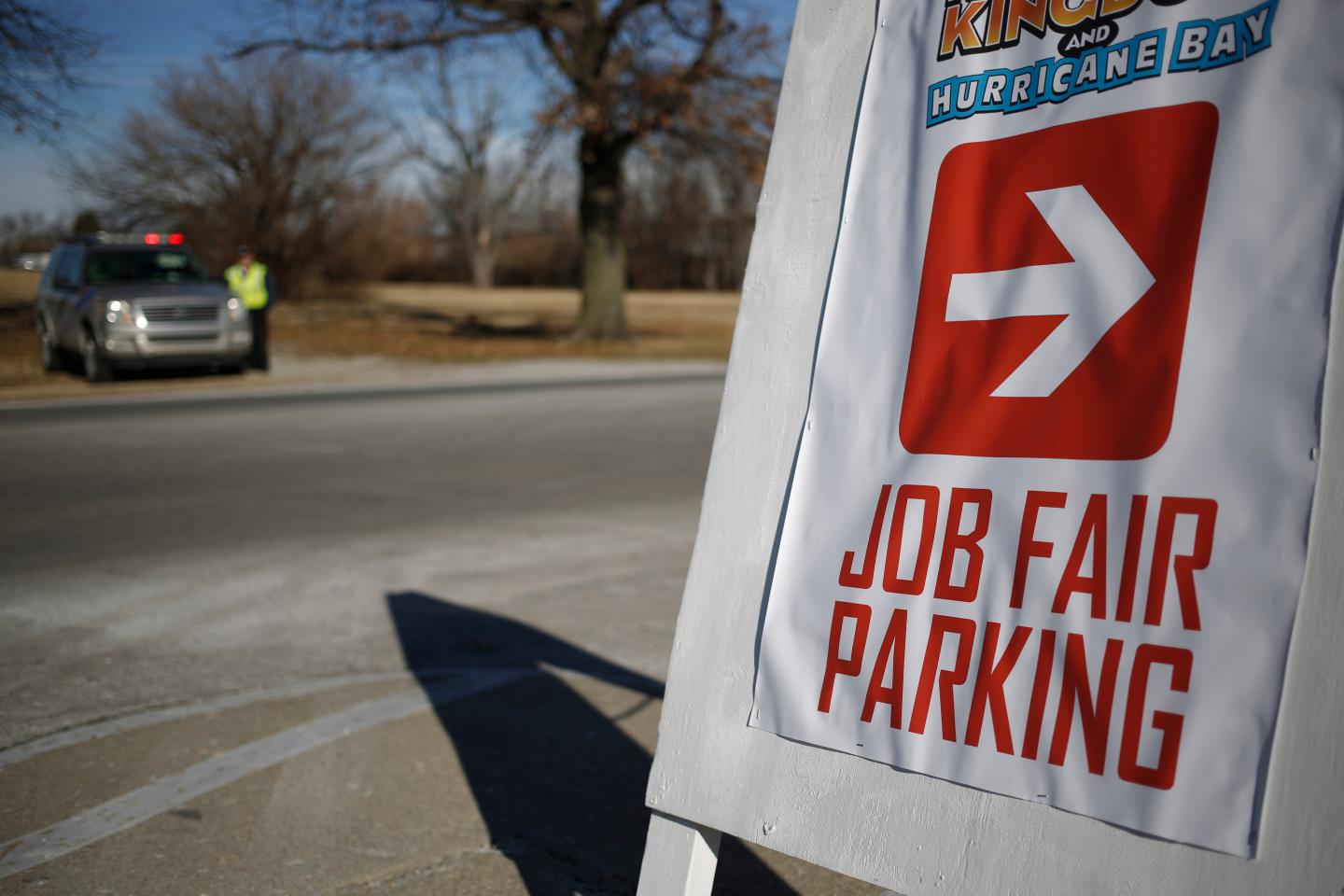
An arrow points to parking for a job fair held by Kentucky Kingdom amusement park to hire seasonal summer workers in Louisville, Kentucky, U.S. on Saturday, Jan. 4, 2014. Companies added more workers than projected in December as U.S. employers grew more optimistic about the prospects for demand, a private report based on payrolls showed Jan. 8. Photographer: Luke Sharrett/Bloomberg via Getty ImagesBloomberg Bloomberg via Getty Images
Google source logo
Add Fortune on Google for similar content.

The Commerce Department’s announcement Friday that GDP growth was negative in the first quarter of this year, has analysts scratching their heads, searching for reasons the economic expansion, now in its sixth year, hasn’t yet reached escape velocity.

One explanation? The jobs recovery has been historically weak, both in terms of the pace of job growth and the quality of jobs that have been added.

A report released last week by the Government Accountability Office underscores this point. According to the GAO, a whopping 40.4% of U.S. workers are contingent as of the most recent available data in 2010 — meaning they work some in some other arrangement besides a standard full-time job.

Reads the report:

We found that compared to standard full-time workers, core contingent workers are more likely to be younger, Hispanic, have no high school degree, and have low family income. These contingent workers are also more likely than standard workers to experience job instability, and to be less satisfied with their benefits and employment arrangements than standard full-time workers. Because contingent work can be unstable, or may afford fewer worker protections depending on a worker’s particular employment arrangement, it tends to lead to lower earnings, fewer benefits, and a greater reliance on public assistance than standard work.

This rise of part-time, contract, and other sorts of non-permanent work arrangements has caused our current economic recovery to be dominated by consumers who are wary of spending — or simply aren’t being paid enough to power our consumer-driven economy.

This is why many economists, like Vice President Biden’s former Chief Economist Jared Bernstein, have stressed the importance of policies that would lead to full employment, like higher infrastructure spending, work-sharing programs during downturns, and loose monetary policy.

In an environment of full employment, competition for workers would require employers to offer higher pay and better conditions in order to retain their workforce. One of the few times the U.S. economy reached full employment was in the late 1990s, and it was also one of the few periods in past forty years where the median American worker saw significant and sustained growth in his or her wages.

About the Author
By Chris Matthews
See full bioRight Arrow Button Icon

Latest in Careers


Most Popular

Fortune Secondary Logo
Rankings
  • 100 Best Companies
  • Fortune 500
  • Global 500
  • Fortune 500 Europe
  • Most Powerful Women
  • World's Most Admired Companies
  • See All Rankings
  • Lists Calendar
Sections
  • Finance
  • Fortune Crypto
  • Features
  • Leadership
  • Health
  • Commentary
  • Success
  • Retail
  • Mpw
  • Tech
  • Lifestyle
  • CEO Initiative
  • Asia
  • Politics
  • Conferences
  • Europe
  • Newsletters
  • Personal Finance
  • Environment
  • Magazine
  • Education
Customer Support
  • Frequently Asked Questions
  • Customer Service Portal
  • Privacy Policy
  • Terms Of Use
  • Single Issues For Purchase
  • International Print
Commercial Services
  • Advertising
  • Fortune Brand Studio
  • Fortune Analytics
  • Fortune Conferences
  • Business Development
  • Group Subscriptions
About Us
  • About Us
  • Press Center
  • Work At Fortune
  • Terms And Conditions
  • Site Map
  • About Us
  • Press Center
  • Work At Fortune
  • Terms And Conditions
  • Site Map
  • Facebook icon
  • Twitter icon
  • LinkedIn icon
  • Instagram icon
  • TikTok icon
  • YouTube icon

    Recommended For You

    © 2026 Fortune Media IP Limited. All Rights Reserved. Use of this site constitutes acceptance of our Terms of Use and Privacy Policy | CA Notice at Collection and Privacy Notice | Do Not Sell/Share My Personal Information
    FORTUNE is a trademark of Fortune Media IP Limited, registered in the U.S. and other countries. FORTUNE may receive compensation for some links to products and services on this website. Offers may be subject to change without notice.