• Home
  • News
  • Fortune 500
  • Tech
  • Finance
  • Leadership
  • Lifestyle
  • Rankings
  • Multimedia
Finance

Income inequality: Blame your mediocre company

By
Stephen Gandel
Stephen Gandel
Down Arrow Button Icon
By
Stephen Gandel
Stephen Gandel
Down Arrow Button Icon
May 27, 2015, 2:42 PM ET
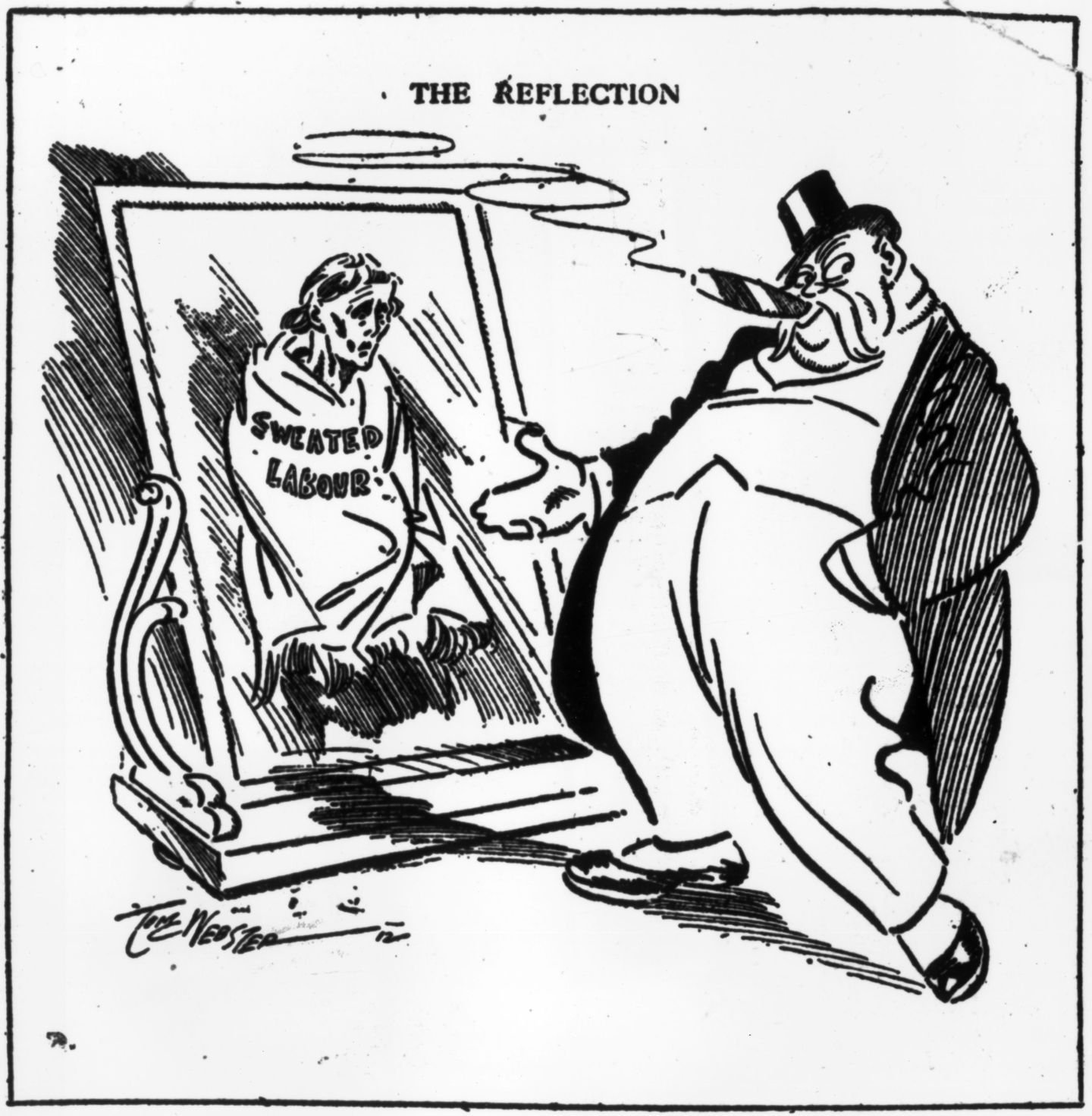
Sweated Labour
1913: The wealthy man profits from the sweat of the worker. The cartoon is titled 'The Reflection' and the capitalist exclaims 'I'm a self-made man, look at me'. (Photo by Hulton Archive/Getty Images)Photograph by Hulton Archive/Getty Images

The reason you make less than your brother-in-law isn’t because he’s a CEO and you’re only an executive VP. It’s because he works for a great company, and your company is just okay.

That’s one conclusion you can draw from a new research study, titled “Firming up Inequality,” published this week by the National Bureau of Economic Research.

The authors of the study—two professors from Stanford, one from the University of Minnesota, and an economist at the Social Security Administration—describe it more dryly. They say income inequality is rising because of a growing disparity between what different companies pay their workers, not a difference in what individual companies pay. It’s a problem of inter-company, not intra-company pay. Put another way, income inequality is not rising because the average worker at a company makes a lot less than her boss but instead because the gap between what bosses, and workers, at different firms are making is rising. And the authors of the study say the trend holds across industries, areas of the country, and firm size.

That, of course, runs counter to all the energy income inequality advocates exert talking about CEO pay. In fact, the authors of the study, who looked at wage data covering all U.S. companies from 1978 to 2012, found that the wage gap between the average worker at individual companies and the highest ranking executives (CEOs and other C-suiters) at those firms had only grown by a “small amount” in the past three-and-a-half decades. The Securities and Exchange Commission’s effort, mandated by Dodd-Frank, to get companies to publish their ratio of CEO-to-average-worker pay may not have much of an impact on income inequality.

The logic of the NBER study is in keeping with how other economists have explained the rise in income inequality in the past. Cornell professor and economist Robert Frank, who wrote a book in the 1990s titled The Winner-Take-All Society: Why the Few at the Top Get So Much More Than the Rest of Us, made popular the belief that a big portion of the increase in the income gap has to do with the way a global market values its best performers, be they CEOs or athletes or actual performers. In a global market, superstars have a bigger reach, and will suck up more of the pay.

It looks like the winner-take-all explanation can be applied to firms as well. Last year, the 20 most profitable companies in the country accounted for nearly 37% of the total profits of the entire Fortune 500. That’s up from 30% two decades ago. Apple is not just a player in the smartphone business, it’s the dominant player. So it’s not just that employees in the phone divisions of Samsung or Blackberry or Motorola get paid less. They get paid a lot less, especially in the case of Motorola, where they are likely out of a job. And that’s true in all of the markets Apple competes in. The fact that many employees get stock compensation only accentuates the difference in pay between firms.

Another reason for the growing firm-to-firm pay gap, according to the authors of the study, could be that in the modern economy companies have become so specialized and lean that some attract high-skilled workers and others mostly lower skilled ones. But that doesn’t explain why the pay gap between rivals in the same industries is growing.


About the Author
By Stephen Gandel
See full bioRight Arrow Button Icon

Latest in Finance

Personal Financemortgages
Home equity loan vs. home equity line of credit (HELOC)
By Joseph HostetlerDecember 3, 2025
3 hours ago
picture of two bitcoins
CryptoBitcoin
Bitcoin bounces back more than 10% after brutal week
By Carlos GarciaDecember 3, 2025
4 hours ago
Rich woman lounging on boat
SuccessWealth
The wealthy 1% are turning to new status symbols that can’t be bought—and it’s hurting Dior, Versace, and Burberry
By Emma BurleighDecember 3, 2025
4 hours ago
Greg Abbott and Sundar Pichai sit next to each other at a red table.
AITech Bubble
Bank of America predicts an ‘air pocket,’ not an AI bubble, fueled by mountains of debt piling up from the data center rush
By Sasha RogelbergDecember 3, 2025
5 hours ago
Dell
Personal FinanceWhite House
Why the government is really going to give your baby $1,000, collecting interest until they turn 18
By Moriah Balingit and The Associated PressDecember 3, 2025
7 hours ago
Bessent
BankingFederal Reserve
‘We’re going to veto them’: Bessent backs new rules to give White House more power over Federal Reserve
By Christopher Rugaber and The Associated PressDecember 3, 2025
7 hours ago

Most Popular

placeholder alt text
North America
Jeff Bezos and Lauren Sánchez Bezos commit $102.5 million to organizations combating homelessness across the U.S.: ‘This is just the beginning’
By Sydney LakeDecember 2, 2025
1 day ago
placeholder alt text
Economy
Ford workers told their CEO 'none of the young people want to work here.' So Jim Farley took a page out of the founder's playbook
By Sasha RogelbergNovember 28, 2025
5 days ago
placeholder alt text
North America
Anonymous $50 million donation helps cover the next 50 years of tuition for medical lab science students at University of Washington
By The Associated PressDecember 2, 2025
1 day ago
placeholder alt text
C-Suite
MacKenzie Scott's $19 billion donations have turned philanthropy on its head—why her style of giving actually works
By Sydney LakeDecember 2, 2025
2 days ago
placeholder alt text
Innovation
Google CEO Sundar Pichai says we’re just a decade away from a new normal of extraterrestrial data centers
By Sasha RogelbergDecember 1, 2025
2 days ago
placeholder alt text
Law
Netflix gave him $11 million to make his dream show. Instead, prosecutors say he spent it on Rolls-Royces, a Ferrari, and wildly expensive mattresses
By Dave SmithDecember 2, 2025
1 day ago
Rankings
  • 100 Best Companies
  • Fortune 500
  • Global 500
  • Fortune 500 Europe
  • Most Powerful Women
  • Future 50
  • World’s Most Admired Companies
  • See All Rankings
Sections
  • Finance
  • Leadership
  • Success
  • Tech
  • Asia
  • Europe
  • Environment
  • Fortune Crypto
  • Health
  • Retail
  • Lifestyle
  • Politics
  • Newsletters
  • Magazine
  • Features
  • Commentary
  • Mpw
  • CEO Initiative
  • Conferences
  • Personal Finance
  • Education
Customer Support
  • Frequently Asked Questions
  • Customer Service Portal
  • Privacy Policy
  • Terms Of Use
  • Single Issues For Purchase
  • International Print
Commercial Services
  • Advertising
  • Fortune Brand Studio
  • Fortune Analytics
  • Fortune Conferences
  • Business Development
About Us
  • About Us
  • Editorial Calendar
  • Press Center
  • Work At Fortune
  • Diversity And Inclusion
  • Terms And Conditions
  • Site Map

© 2025 Fortune Media IP Limited. All Rights Reserved. Use of this site constitutes acceptance of our Terms of Use and Privacy Policy | CA Notice at Collection and Privacy Notice | Do Not Sell/Share My Personal Information
FORTUNE is a trademark of Fortune Media IP Limited, registered in the U.S. and other countries. FORTUNE may receive compensation for some links to products and services on this website. Offers may be subject to change without notice.