• Home
  • Latest
  • Fortune 500
  • Finance
  • Tech
  • Leadership
  • Lifestyle
  • Rankings
  • Multimedia
FinanceChina

China’s economy: Caught in a vicious, stubborn cycle

By
Minxin Pei
Minxin Pei
Down Arrow Button Icon
By
Minxin Pei
Minxin Pei
Down Arrow Button Icon
March 13, 2015, 7:00 AM ET
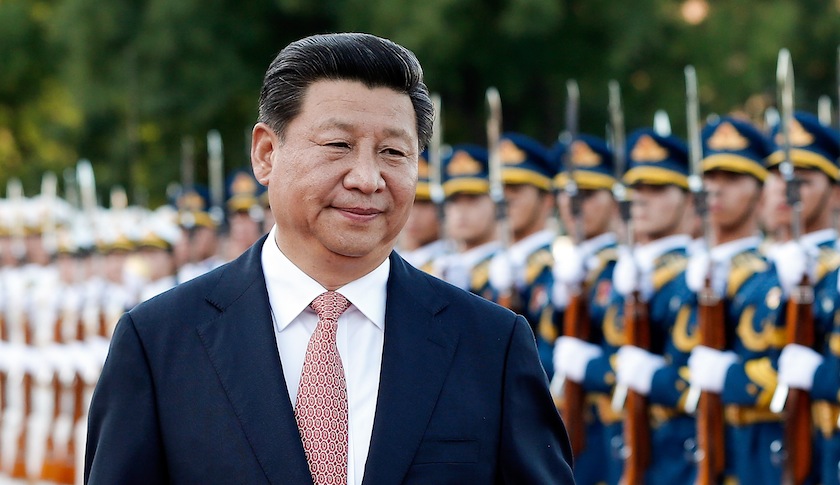
Chinese President Xi Jinping
Chinese President Xi JinpingPhotograph by Lintao Zhang—Getty Images

Beijing in early March is supposed to be a cheery place. March is when the country’s rubber-stamp parliament, the National People’s Congress (NPC), holds its annual session. But this year’s festivities were dampened by a slew of gloomy economic data.

Chinese industrial production grew only 6.8% in January and February, the slowest since 2008. Real estate sales plunged 15.8% in value. Fixed-asset investment, the principal driver of Chinese growth, recorded anemic growth at 1.05% and 1.03% in January and February, respectively (compared with 1.49% and 1.42% in the same period last year).

Acknowledging this unpleasant reality, Chinese premier Li Keqiang told the attendees of the NPC that China’s GDP growth will be “around 7%” this year.

But achieving growth of 7% may be a tall order. China is currently caught in a vicious cycle of excessive debt, overcapacity, and a lack of new sources of growth. This cycle was partly caused by the explosion of credit in the wake of the 2008 global financial crisis. In a panicked move to revive growth, Beijing opened the spigot of bank loans and, as a result, companies and local governments went on a borrowing binge that nearly doubled China’s total debt within five years. In 2008, China’s debt-to-GDP ratio was around 150%. Today, according to the most recent estimates by McKinsey, the figure is 282%, the highest among all emerging-market economies.

Besides inflating the largest real estate bubble in world history, this massive infusion of debt also financed many white elephant projects, such as useless infrastructure and excess steel, automobile, and cement factories.

Today, China is paying a heavy price for its debt binge. Many reckless borrowers, in particular real estate developers, local governments, and state-owned enterprises, cannot repay their loans because they have wasted their original investments on unprofitable projects. In the meantime, China’s traditional, investment-driven growth model is plunging the country into a downward spiral of debt and overcapacity. Weak domestic consumption simply is not generating the necessary demand to absorb added manufacturing capacity created by ever-rising investments.

To its credit, Beijing has long recognized the investment-consumption imbalance in its economy. Unfortunately, so far it has taken no effective steps to correct this imbalance. As long as low domestic consumption (currently in the range of 40-50% of GDP, based on varying estimates) continues to constrain demand, Chinese growth is unlikely to pick up speed anytime soon.

Optimists believe that the Chinese government can stimulate growth by cutting interest rates and making loans more widely available. The People’s Bank of China, the central bank, has already cut interest rates twice in the last four months and reduced banks’ reserve ratio (requiring banks to hold less cash in reserves). It is expected to trim rates even further this year.

Such a move is unlikely to have a real impact because the main problem with China’s economy is a lack of demand, not a lack of liquidity. Any increase in liquidity will simply go to over-leveraged borrowers so they can service their loans, not to finance new, productive projects. Sinking more money into the ground will not address China’s underlying economic maladies.

Persistent subpar growth will present a serious challenge to the Chinese leadership, particularly President Xi Jinping.

In the short-term, the risks Xi faces originate mostly inside the regime itself. The likelihood of social unrest caused by deteriorating growth is small because, so far, poor growth has not yet resulted in rising unemployment. The pains are concentrated mostly in two sectors: heavy industry and real estate. And the Chinese Communist Party is highly capable of repressing social unrest.

But near-term economic deterioration will certainly exacerbate tensions inside the party. Because the spoils from growth are dwindling, competition for these spoils will grow more fierce among government officials and provinces. Various bureaucracies and local governments will likely demand assistance from Beijing to increase investment allocations and cut their debt. Making things even worse is Xi’s two-year-long anti-corruption campaign, which has both terrorized and alienated the vast Chinese bureaucracy.

Looking at China’s political calendar, Xi must be concerned about the next Communist Party Congress, which is scheduled for late 2017. His leadership record will be under review. If the Chinese economy maintains its downward spiral at its current rate (roughly half a percentage point per year), the growth rate for 2017 would be around 6%. That’s certainly not a report card that any top Chinese leader would want to present to a resentful constituency gathered to reaffirm his leadership.

Minxin Pei is the Tom and Margot Pritzker ’72 Professor of Government and a non-resident senior fellow of the German Marshall Fund of the United States


About the Author
By Minxin Pei
See full bioRight Arrow Button Icon

Latest in Finance

Finance
Lorem ipsum dolor sit amet, consectetur adipiscing elit, sed do eiusmod tempor incididunt ut labore et dolore magna aliqua. Ut enim ad minim veniam
By Fortune Editors
October 20, 2025
Finance
Lorem ipsum dolor sit amet, consectetur adipiscing elit, sed do eiusmod tempor incididunt ut labore et dolore magna aliqua. Ut enim ad minim veniam
By Fortune Editors
October 20, 2025
Finance
Lorem ipsum dolor sit amet, consectetur adipiscing elit, sed do eiusmod tempor incididunt ut labore et dolore magna aliqua. Ut enim ad minim veniam
By Fortune Editors
October 20, 2025
Finance
Lorem ipsum dolor sit amet, consectetur adipiscing elit, sed do eiusmod tempor incididunt ut labore et dolore magna aliqua. Ut enim ad minim veniam
By Fortune Editors
October 20, 2025
Finance
Lorem ipsum dolor sit amet, consectetur adipiscing elit, sed do eiusmod tempor incididunt ut labore et dolore magna aliqua. Ut enim ad minim veniam
By Fortune Editors
October 20, 2025
Finance
Lorem ipsum dolor sit amet, consectetur adipiscing elit, sed do eiusmod tempor incididunt ut labore et dolore magna aliqua. Ut enim ad minim veniam
By Fortune Editors
October 20, 2025

Most Popular

Finance
Lorem ipsum dolor sit amet, consectetur adipiscing elit, sed do eiusmod tempor incididunt ut labore et dolore magna aliqua. Ut enim ad minim veniam
By Fortune Editors
October 20, 2025
Finance
Lorem ipsum dolor sit amet, consectetur adipiscing elit, sed do eiusmod tempor incididunt ut labore et dolore magna aliqua. Ut enim ad minim veniam
By Fortune Editors
October 20, 2025
Finance
Lorem ipsum dolor sit amet, consectetur adipiscing elit, sed do eiusmod tempor incididunt ut labore et dolore magna aliqua. Ut enim ad minim veniam
By Fortune Editors
October 20, 2025
Finance
Lorem ipsum dolor sit amet, consectetur adipiscing elit, sed do eiusmod tempor incididunt ut labore et dolore magna aliqua. Ut enim ad minim veniam
By Fortune Editors
October 20, 2025
Finance
Lorem ipsum dolor sit amet, consectetur adipiscing elit, sed do eiusmod tempor incididunt ut labore et dolore magna aliqua. Ut enim ad minim veniam
By Fortune Editors
October 20, 2025
Finance
Lorem ipsum dolor sit amet, consectetur adipiscing elit, sed do eiusmod tempor incididunt ut labore et dolore magna aliqua. Ut enim ad minim veniam
By Fortune Editors
October 20, 2025
Fortune Secondary Logo
Rankings
  • 100 Best Companies
  • Fortune 500
  • Global 500
  • Fortune 500 Europe
  • Most Powerful Women
  • Future 50
  • World’s Most Admired Companies
  • See All Rankings
Sections
  • Finance
  • Fortune Crypto
  • Features
  • Leadership
  • Health
  • Commentary
  • Success
  • Retail
  • Mpw
  • Tech
  • Lifestyle
  • CEO Initiative
  • Asia
  • Politics
  • Conferences
  • Europe
  • Newsletters
  • Personal Finance
  • Environment
  • Magazine
  • Education
Customer Support
  • Frequently Asked Questions
  • Customer Service Portal
  • Privacy Policy
  • Terms Of Use
  • Single Issues For Purchase
  • International Print
Commercial Services
  • Advertising
  • Fortune Brand Studio
  • Fortune Analytics
  • Fortune Conferences
  • Business Development
  • Group Subscriptions
About Us
  • About Us
  • Editorial Calendar
  • Press Center
  • Work At Fortune
  • Diversity And Inclusion
  • Terms And Conditions
  • Site Map
  • About Us
  • Editorial Calendar
  • Press Center
  • Work At Fortune
  • Diversity And Inclusion
  • Terms And Conditions
  • Site Map
  • Facebook icon
  • Twitter icon
  • LinkedIn icon
  • Instagram icon
  • Pinterest icon

Latest in Finance

LawElon Musk
Musk misled Twitter investors before 2022 buyout, jury says
By Isaiah Poritz, Jef Feeley and BloombergMarch 20, 2026
6 hours ago
Economygeopolitics
Tariffs were already squeezing small businesses. Now the Iran conflict is pushing them to the brink as rising oil prices boost shipping costs
By Marco Quiroz-GutierrezMarch 20, 2026
7 hours ago
PoliticsIran
Trump says U.S. considers ‘winding down’ Iran military effort
By Jeff Mason, Courtney Subramanian and BloombergMarch 20, 2026
7 hours ago
bespectacled man scratches the back of his head during congressional hearing
CryptoCryptocurrency
Kalshi locks in $22 billion valuation, gaining slight edge over its rival Polymarket
By Carlos GarciaMarch 20, 2026
9 hours ago
Middle EastIran
It’s looking like Trump’s war created a private oil lane for China and other countries willing to play ball with Iran
By Jason MaMarch 20, 2026
9 hours ago
bessent
Politicsstudent loans and debt
Scott Bessent’s Treasury Department will start overseeing the $180 billion of student loans that are in default
By Collin Binkley, Nick Lichtenberg and The Associated PressMarch 20, 2026
10 hours ago

© 2026 Fortune Media IP Limited. All Rights Reserved. Use of this site constitutes acceptance of our Terms of Use and Privacy Policy | CA Notice at Collection and Privacy Notice | Do Not Sell/Share My Personal Information
FORTUNE is a trademark of Fortune Media IP Limited, registered in the U.S. and other countries. FORTUNE may receive compensation for some links to products and services on this website. Offers may be subject to change without notice.