
• Home
  • Latest
  • Fortune 500
  • Finance
  • Tech
  • Leadership
  • Lifestyle
  • Rankings
  • Multimedia

Trendingnow

1

MacKenzie Scott alone accounted for one-third of America's $19.2 billion in megagifts last year

2

Now worth $200 million, Sarah Jessica Parker credits being ‘one of eight kids that struggled financially’ for her hunger, ambition, and work ethic

3

Ray Dalio says the U.S. just had its 'Suez moment'—and history says what comes next could end an empire

1

MacKenzie Scott alone accounted for one-third of America's $19.2 billion in megagifts last year

2

Now worth $200 million, Sarah Jessica Parker credits being ‘one of eight kids that struggled financially’ for her hunger, ambition, and work ethic

3

Ray Dalio says the U.S. just had its 'Suez moment'—and history says what comes next could end an empire
LeadershipDisney

A candid conversation with Pixar’s philosopher-king, Ed Catmull

Michal Lev-Ram
By
Michal Lev-Ram
Michal Lev-Ram
Special Correspondent
Down Arrow Button Icon
Michal Lev-Ram
By
Michal Lev-Ram
Michal Lev-Ram
Special Correspondent
Down Arrow Button Icon
December 31, 2014, 7:00 AM ET
Video Poster
Add Fortune on Google for similar content.

Every Tuesday morning, Pixar co-founders Ed Catmull and John Lasseter fly down to Walt Disney Co. headquarters in Burbank. The following day, they catch a flight back to their offices in Emeryville, Calif., where Pixar is based. The two execs have been at the helm of Disney’s entire animation division since CEO Bob Iger acquired the smaller animation house for $7.4 billion back in 2006 (a sale that turned the late Steve Jobs, who helped start Pixar, into Disney’s largest shareholder at the time). Lasseter, famous for his colorful shirts, is known as the creative whiz who helped bring iconic movies like Toy Story to life (a new installment in the popular franchise is currently in the making). Catmull, meanwhile, is a former computer scientist who dreamed of creating a fully-computer generated animated film decades ago, well before it was possible.

In addition to a steady stream of successful movie franchises, the acquisition has given Iger two strong leaders (Lasseter and Catmull are credited with turning around Disney’s animation division), an army of engineers and animators in the Bay Area and a fresh breath of cultural and technological energy—which, like Iger’s relationship with Jobs, has helped the Disney CEO infuse technology throughout the company’s other businesses. For our recent cover story on Disney, I sat down with Catmull at Pixar headquarters. Here is an edited excerpt from our conversation in October, which ranged from Pixar’s rocky beginnings to Disney’s use of technology to the late Jobs.

FORTUNE: How are the cultures within Disney’s brands different?

CATMULL: At a product level they’re similar. We, of course, grew out of Lucasfilm and they remain fairly close. Lucasfilm has always had an openness to technology. There’s a difference here in that we’ve always owned all of our films. The same thing is true down at Disney Animation: that studio owns everything from top to bottom. By the way, keeping the two studios separate wasn’t just an accidental thing, it was a conscious thing. Basically there were three motivations for doing so. One reason for keeping Disney animation separate from Pixar was that by solving their own problems when they finished a film, Disney could say, “Nobody bailed us out, we did it.” And it’s a very important social thing for them to do that. I do think that combining them would have resulted in a loss of discipline because it’s too easy to then say, “I’ll give work to somebody else.” The second one is culture. And the third one is that I believe it has given us greater diversity—both technical diversity and artistic diversity.

PIXAR DISNEY IGER JOBS CATMULL LASSETER
From left to right: Ed Catmull, Steve Jobs, Robert Iger, and John Lasseter share a moment at Pixar headquarters in Emeryville, Calif., Jan. 24, 2006.Photograph by Paul Sakuma — AP
Photograph by Paul Sakuma — AP

What’s an example of how technologies are shared across the groups?

At a technical level they solve problems differently in terms of lighting, hair and other physical simulations. So we share ideas. The fundamental underlying pipeline is different so some things you can give and some you can’t. So a lot of the sharing is actually of ideas that can be implemented in different places. So I know that there are things we do better at Pixar than we do down at Disney, and vice versa. And they know that. We’ve reached a point where, artistically and creatively, we look at each other as peers. And we recognize that the technology they have in some areas is better. So we send people back and forth between the places to explain things and give seminars.

Can you tell us a little bit about Inside Out [a new Pixar film that will be out next year]?

It’s probably one of the most abstract things that we’ve done, because it’s inside the head. They don’t even have clear boundaries around the characters, so there’s a fair amount of experimentation. There’s kind of a glow in them. So that group has to solve the problem for how they make that work, and how you do exaggeration and carry the emotions with those kinds of characters. Every film has new technical problems that we have to solve.

What happened in the early days of Disney is that Walt Disney used all of the new technologies as they came out. When matting came out, they adopted it. They adopted sound and color and xerography. Walt did that. And then, when he died, people began to think that this is just about making films so they stopped bringing in new technologies. And it stayed at the same level for many years. The outside world tends to look and write about the artistic part of [that era] without realizing the impact of technological innovations, which provided energy to the movie-making. (For more, see Catmull’s 2014 book on the innovation process, Creativity, Inc.).

When Pixar was formed, it was his nephew, Roy Disney Jr., who wanted to revitalize animation. He was the one that wanted to bring the technology component back in, so he came up and visited me just before we spun out [from Lucasfilm, where Pixar started as a division]. He saw what we had and that led to a contract. There was a financial analysis that said that if they did that it would not improve financials for the film. So Roy said to them, you’re missing the point, we’re going to bring in technology because it adds some artistic energy. The very first film to use it [computer-generated graphics] was the Little Mermaid, but it was just one shot, the ending scene where you look out and there were a lot of characters. The next film was Rescuers Down Under. It was the first movie anywhere, in history, where every frame went through the computer. And there were a lot of comments on how good it looked, but it was not a big commercial film. But they [Disney] recognized that they had a very valuable tool for making things look good. The next film they did was Beauty and the Beast, which came out in 1991. That was a gigantic success. The same year Terminator 2 came out. So these were the two big financial successes of the year, and they both used computer technology. It completely changed the industry. It was like the overnight success that took 20 years. We entered into contract [with Disney] to make Toy Story that same year.

Pixar went on to have a rocky relationship with Disney. What was it about Bob that you think convinced Steve Jobs to change his mind and re-enter the partnership?

The thing that the general public has missed is that there is a perception of “bad boy Steve” when he was younger and that that behavior led to this giant success at Apple. But while Pixar was going through its rocky beginnings, the reality is that Steve was learning and changing dramatically. About 15 years ago he figured out things and we saw the change in the person. He became very empathetic and changed the way he worked with people. And after that point everybody that was with Steve stayed with him for the rest of his life. It was the changed Steve that made Apple great, not that guy. It’s like the classic hero’s journey, except people didn’t know that. So at that time Steve appreciated and believed in strong partnerships, and what he recognized in Bob is that with Bob he actually had a partner. They both thought of each other as true partners. And that’s what he wanted, it’s what he had previously. Because our 50/50 partnership with Disney wasn’t leading to a true partnership. And when Bob came in, he thought here is a partner I can work with. And that’s what we saw in them and that’s what they saw in each other.

For more on this remarkable relationship—and about the sharing of technological innovation across all of Disney’s divisions—see our January 2015 cover story.

About the Author
Michal Lev-Ram
By Michal Lev-RamSpecial Correspondent
Twitter icon

Michal Lev-Ram is a special correspondent covering the technology and entertainment sectors for Fortune, writing analysis and longform reporting.

See full bioRight Arrow Button Icon
Add Fortune on Google for similar content.

Latest in Leadership

Finance
Lorem ipsum dolor sit amet, consectetur adipiscing elit, sed do eiusmod tempor incididunt ut labore et dolore magna aliqua. Ut enim ad minim veniam
By Fortune Editors
October 20, 2025
Finance
Lorem ipsum dolor sit amet, consectetur adipiscing elit, sed do eiusmod tempor incididunt ut labore et dolore magna aliqua. Ut enim ad minim veniam
By Fortune Editors
October 20, 2025
Finance
Lorem ipsum dolor sit amet, consectetur adipiscing elit, sed do eiusmod tempor incididunt ut labore et dolore magna aliqua. Ut enim ad minim veniam
By Fortune Editors
October 20, 2025
Finance
Lorem ipsum dolor sit amet, consectetur adipiscing elit, sed do eiusmod tempor incididunt ut labore et dolore magna aliqua. Ut enim ad minim veniam
By Fortune Editors
October 20, 2025
Finance
Lorem ipsum dolor sit amet, consectetur adipiscing elit, sed do eiusmod tempor incididunt ut labore et dolore magna aliqua. Ut enim ad minim veniam
By Fortune Editors
October 20, 2025
Finance
Lorem ipsum dolor sit amet, consectetur adipiscing elit, sed do eiusmod tempor incididunt ut labore et dolore magna aliqua. Ut enim ad minim veniam
By Fortune Editors
October 20, 2025

Most Popular

Finance
Lorem ipsum dolor sit amet, consectetur adipiscing elit, sed do eiusmod tempor incididunt ut labore et dolore magna aliqua. Ut enim ad minim veniam
By Fortune Editors
October 20, 2025
Finance
Lorem ipsum dolor sit amet, consectetur adipiscing elit, sed do eiusmod tempor incididunt ut labore et dolore magna aliqua. Ut enim ad minim veniam
By Fortune Editors
October 20, 2025
Finance
Lorem ipsum dolor sit amet, consectetur adipiscing elit, sed do eiusmod tempor incididunt ut labore et dolore magna aliqua. Ut enim ad minim veniam
By Fortune Editors
October 20, 2025
Finance
Lorem ipsum dolor sit amet, consectetur adipiscing elit, sed do eiusmod tempor incididunt ut labore et dolore magna aliqua. Ut enim ad minim veniam
By Fortune Editors
October 20, 2025
Finance
Lorem ipsum dolor sit amet, consectetur adipiscing elit, sed do eiusmod tempor incididunt ut labore et dolore magna aliqua. Ut enim ad minim veniam
By Fortune Editors
October 20, 2025
Finance
Lorem ipsum dolor sit amet, consectetur adipiscing elit, sed do eiusmod tempor incididunt ut labore et dolore magna aliqua. Ut enim ad minim veniam
By Fortune Editors
October 20, 2025
Fortune Secondary Logo
Rankings
  • 100 Best Companies
  • Fortune 500
  • Global 500
  • Fortune 500 Europe
  • Most Powerful Women
  • World's Most Admired Companies
  • See All Rankings
  • Lists Calendar
Sections
  • Finance
  • Fortune Crypto
  • Features
  • Leadership
  • Health
  • Commentary
  • Success
  • Retail
  • Mpw
  • Tech
  • Lifestyle
  • CEO Initiative
  • Asia
  • Politics
  • Conferences
  • Europe
  • Newsletters
  • Personal Finance
  • Environment
  • Magazine
  • Education
Customer Support
  • Frequently Asked Questions
  • Customer Service Portal
  • Privacy Policy
  • Terms Of Use
  • Single Issues For Purchase
  • International Print
Commercial Services
  • Advertising
  • Fortune Brand Studio
  • Fortune Analytics
  • Fortune Conferences
  • Business Development
  • Group Subscriptions
About Us
  • About Us
  • Press Center
  • Work At Fortune
  • Terms And Conditions
  • Site Map
  • About Us
  • Press Center
  • Work At Fortune
  • Terms And Conditions
  • Site Map
  • Facebook icon
  • Twitter icon
  • LinkedIn icon
  • Instagram icon
  • Pinterest icon

Latest in Leadership

lb
PoliticsCongress
Leon Black says Epstein’s network included Elon Musk, Sergey Brin and Peter Thiel, while saying ‘I knew Jekyll. I didn’t know Hyde’
By Joey Cappelletti and The Associated PressJune 26, 2026
11 hours ago
John Collison, president and co-founder of Stripe
SuccessJobs
Stripe cofounder says Gen Z will need two college majors to compete thanks to AI—and investing legend Charlie Munger called it first
By Emma BurleighJune 26, 2026
12 hours ago
young woman looking frustrated while working on her laptop at home
SuccessCareers
Gen Z’s hiring hell is real: 1 in 3 employers admit they’re replacing entry-level roles with AI—and tech and manufacturing jobs are most at risk
By Preston ForeJune 26, 2026
12 hours ago
Fortune 500 Power Moves: Which executives gained and lost power this week
C-SuiteFortune 500 Power Moves
Fortune 500 Power Moves: Which executives gained and lost power this week
By Fortune EditorsJune 26, 2026
14 hours ago
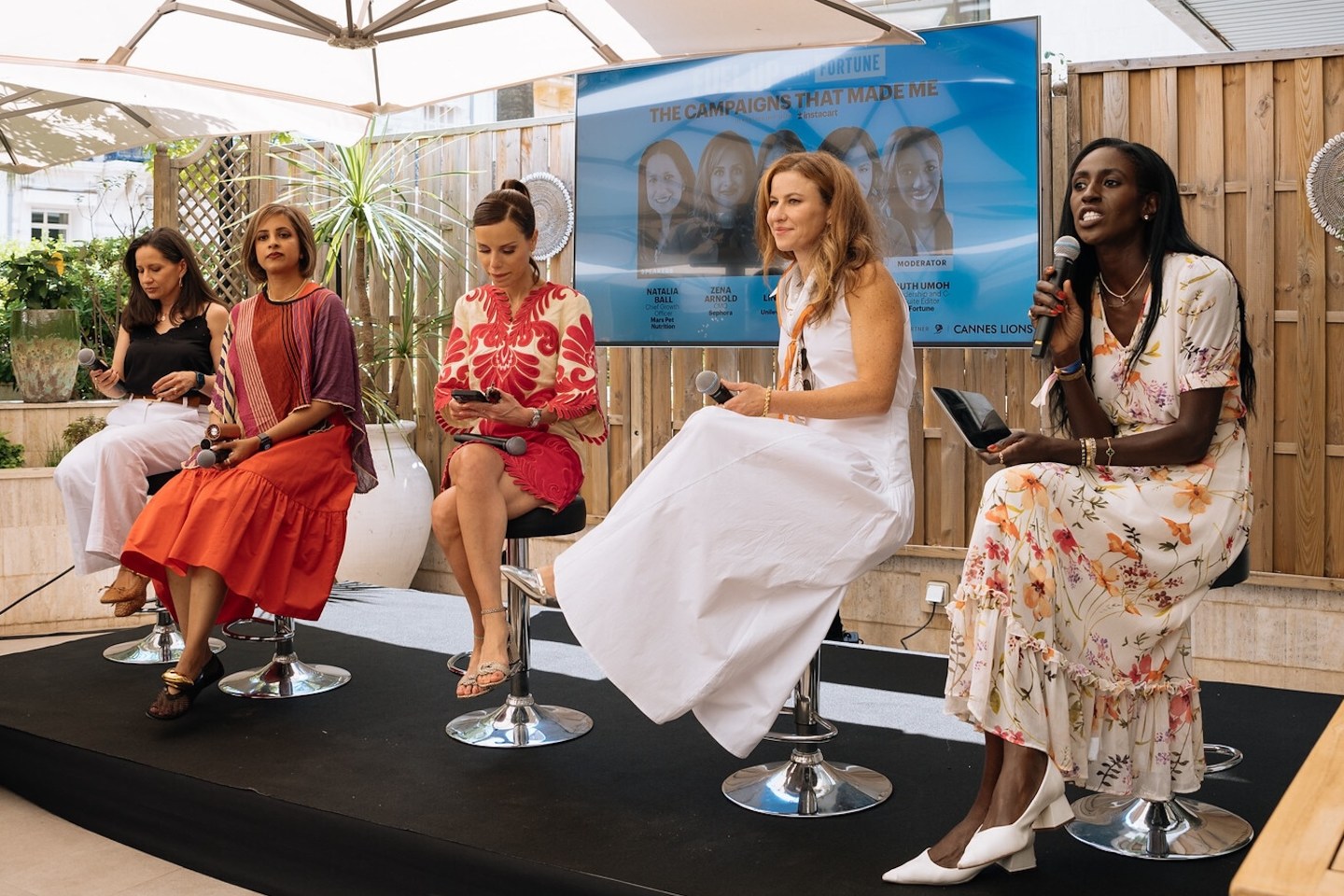
Marketing leaders speak at Fortune's Fuel Up event in Cannes. (L-R) Natalia Ball, Mars Pet Nutrition; Zena Arnold, Sephora; Tati Lindenberg, Unilever; Laura Jones, Instacart; Ruth Umoh, Fortune
RetailCMO
The new CMO playbook: how marketers are balancing broader remits and tighter budgets
By Sam BirchallJune 26, 2026
15 hours ago
mj
CommentarySuccession
Morgan Stanley on life after selling your business: a roadmap for entrepreneurs
By Mark JansenJune 26, 2026
16 hours ago

Most Popular

MacKenzie Scott alone accounted for one-third of America's $19.2 billion in megagifts last year
Success
MacKenzie Scott alone accounted for one-third of America's $19.2 billion in megagifts last year
By Sydney LakeJune 25, 2026
2 days ago
Now worth $200 million, Sarah Jessica Parker credits being ‘one of eight kids that struggled financially’ for her hunger, ambition, and work ethic
Success
Now worth $200 million, Sarah Jessica Parker credits being ‘one of eight kids that struggled financially’ for her hunger, ambition, and work ethic
By Orianna Rosa RoyleJune 24, 2026
3 days ago
Ray Dalio says the U.S. just had its 'Suez moment'—and history says what comes next could end an empire
Economy
Ray Dalio says the U.S. just had its 'Suez moment'—and history says what comes next could end an empire
By Nick LichtenbergJune 26, 2026
20 hours ago
The bond market knows something about the $39 trillion national debt that Washington doesn’t
Economy
The bond market knows something about the $39 trillion national debt that Washington doesn’t
By Eva RoytburgJune 25, 2026
1 day ago
Trump turns on Big Oil donors who spent nearly $100 million to get him elected—now he wants the DOJ to investigate them for price gouging
Economy
Trump turns on Big Oil donors who spent nearly $100 million to get him elected—now he wants the DOJ to investigate them for price gouging
By Tristan BoveJune 25, 2026
1 day ago
Current price of oil as of June 25, 2026
Personal Finance
Current price of oil as of June 25, 2026
By Joseph HostetlerJune 25, 2026
2 days ago

© 2026 Fortune Media IP Limited. All Rights Reserved. Use of this site constitutes acceptance of our Terms of Use and Privacy Policy | CA Notice at Collection and Privacy Notice | Do Not Sell/Share My Personal Information
FORTUNE is a trademark of Fortune Media IP Limited, registered in the U.S. and other countries. FORTUNE may receive compensation for some links to products and services on this website. Offers may be subject to change without notice.