Europe’s elected elite want to break up Google. The technology giant, known for its web search engine but offering many other products and services, can too easily promote its own wares, they say. Yet leading experts and academics say it’s not going to happen, calling it a nuclear option that would have made more sense in larger, prior corporate scandals.
The European Parliament in late October called on Internet companies operating in the region to “unbundle” its search engines from its other commercial properties. Although no companies were named, the motion was aimed squarely at Google (GOOG), the leading search engine by a long shot in Europe with an estimated 90 percent market share.
The non-binding resolution had no legal weight, but sent the strongest signal yet to the European Commission to take action after almost four-years worth of unsuccessful negotiations to settle an ongoing antitrust probe into the company’s business practices. The company has been accused of anti-competitiveness including claims it deliberate buried search results of rival sites and services. The recent motion sought to “prevent any abuse in the marketing of interlinked services by operators of search engines.”
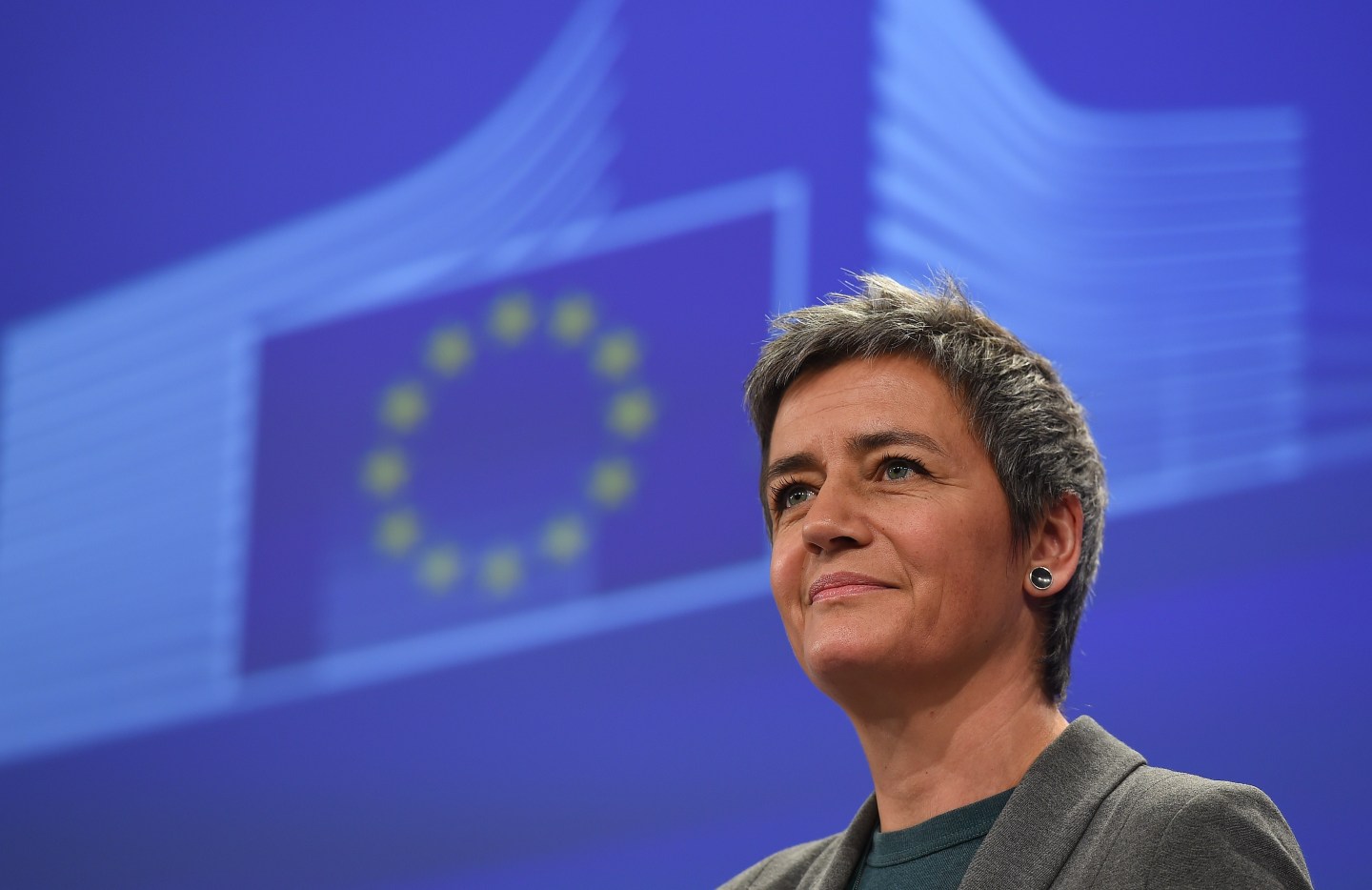
Newly-elected EU competition commissioner Margrethe Vestager said in November that she would “need some time” to review the case, which has been kept open by her predecessor Joaquín Almunia, and talk to complainants before moving forward.
So now what? There are several paths forward, experts say.
“What’s most likely to happen, and what will hopefully happen, is a continuation of the resolution for which Almunia set the framework before he left office,” says David Balto, a former U.S. Justice Department antitrust lawyer.
Politics and pressure behind the scenes from Google’s competitors—including Microsoft (MSFT)—have dragged the case out “to draw as much blood as possible,” Balto argues. Shortly after the parliament’s vote, one unnamed senior EU official told Reuters that the 28-member state bloc had been used as a “battleground” by American companies. After three rounds of settlement negotiations, Balto says Google’s efforts to address the matter have resulted in better competition in the region.
One question is whether the Commission has enough evidence to support moving from seeking a settlement to conducting an infringement procedure. Florian Wagner-von Papp, director of the University College London’s Institute of Global Law, tells Fortune that he wishes the EC would “put up or shut up.” Antitrust officials should either charge the search giant with flouting European antitrust law, he says, or drop the case altogether. The alternative? More settlement negotiations and “political mud-slinging” by Google’s supporters and opponents.
By charging Google with antitrust offenses, the Commission can take any measures it deems necessary to end that infringement. Could that really include a break-up of Google? In theory, yes—the European Commission’s antitrust division has the right to force a company operating in the region to restructure. But Wagner-von Papp is willing to make a big bet that it won’t happen. “The Commission has to date never imposed a structural remedy in an infringement decision,” he says.
Still, a move toward an infringement decision could leave Google facing fines of up to 10 percent of its annual global sales for the affected years, a staggering amount totaling billions of dollars. The reality has been more conservative. The biggest antitrust fine in the region’s history—levied against Intel years ago but later upped by Europe’s top court—barely broke 4 percent.
Splitting up Google by unbundling its search business from its advertising business would leave the company without a way to make money from its search results, Wagner-von Papp says. Such a move is “nonsense,” he says. “The search engine can be free for users only because Google gets its revenue from advertisers and can channel consumers to their vertical search results,” he says, “much like newspapers can be free if it sells ad space for a high price.”
Balto agrees, calling it an “extreme proposal” that few people take seriously. “Google relies on a lot of synergies among products and advertising revenue that works across products to do what they do,” he says. Consumers would actually suffer if Google’s search business was unbundled from its advertising services.
Politics remain a sore point for those involved. The European Parliament’s involvement was unusual without any prior committee inquiry, Brussels-based antitrust solicitor Matthew Hall says, and the parties on each side of Google are pushing for their own resolution to the case.
During his tenure as Europe’s antitrust chief, Almunia made it clear that he would not be swayed by politics. It’s not yet clear which path Vestager plans to take or which cards she will play to get there. Vestager will “decide on how to take the ongoing antitrust investigations into Google’s business practices forward once she has heard what those most directly affected by the practices in question have to say,” a spokesperson for the European Commission says.
Balto is optimistic. “There are good signs that Vestager will not be swayed,” he says. “I don’t think the delay will lead to a rush to judgment.”