• Home
  • News
  • Fortune 500
  • Tech
  • Finance
  • Leadership
  • Lifestyle
  • Rankings
  • Multimedia
Currency

Dollar surges, euro crumbles as Fed, ECB go separate ways

By
Geoffrey Smith
Geoffrey Smith
Down Arrow Button Icon
By
Geoffrey Smith
Geoffrey Smith
Down Arrow Button Icon
September 25, 2014, 6:39 AM ET
145868159
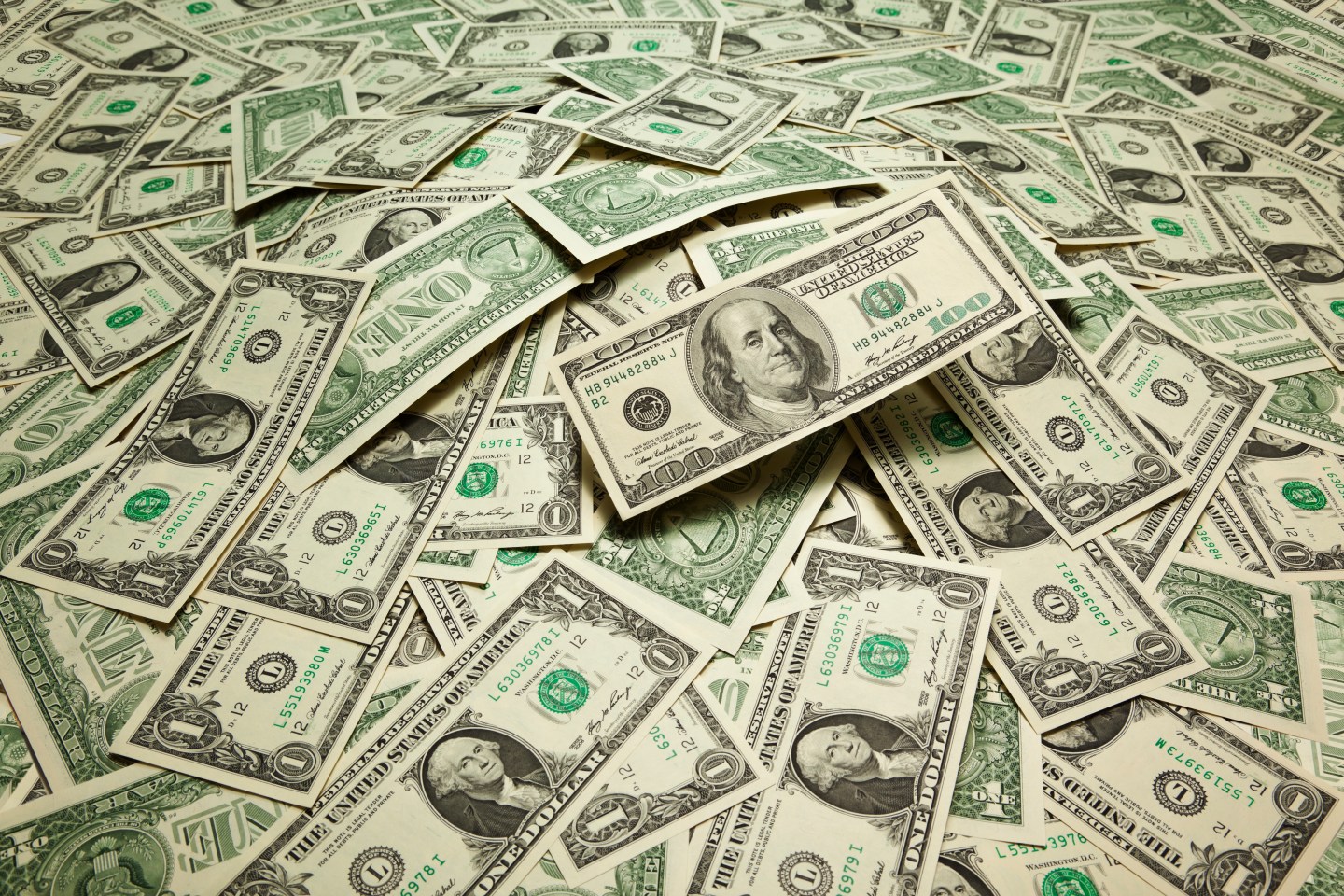
US dollart banknotesYuji Sakai--Getty Images

It’s a long time since anyone referred to ‘the almighty dollar’ anything but ironically, but the greenback is staging its most dramatic rally since in six years.

The U.S. Dollar Index, which measures the buck against six major western currencies but not against emerging market currencies such as China’s yuan, has risen 7.1% in the third quarter, its biggest quarterly rise since the 2008 market panic.

And despite frequent reports of its demise, the world’s premier reserve currency is also at seven-month highs against Brazil’s real and Mexico’s peso, and near a six-month high against India’s rupee. The only major trading partner it isn’t strengthening against is the yuan, partly because of weaker demand for commodities (which are priced in dollars) from a slowing Chinese industrials sector.

But it’s the world most active foreign exchange pairing that is moving the most. The euro hit a new two-year low against the dollar Thursday, after ECB President Mario Draghi repeated in an interview that the bank is prepared to do more to stimulate the economy if need be and is “fully determined” to stop the Eurozone falling into deflation. That followed hot on the heels of figures Wednesday showing that U.S. new home sales soared in August.

A change in perceptions: the euro against the dollar in the last six months. Source: ECB

The reasons for the dollar’s rise are many–not surprising, since the job of foreign exchange markets is to aggregate all the factors relevant in determining the value of one economy relative to another–but there is little doubt about the main one. The Federal Reserve is preparing to raise interest rates, as the remaining doubts about the sustainability of the U.S. economy evaporates, while the European Central Bank is doing everything it can to depress euro rates to stop the Eurozone economy from sliding into a triple-dip recession.

After more than five years of buying bonds to depress market interest rates, the Fed will end its “Quantitative Easing” program in October. On the other side of the Atlantic, the ECB earlier this month announced plans to buy some private bonds, and many analysts now expect it will have to widen its ambitions to the government debt markets to have the effect it wants.

“With geopolitics, commodity prices and medium-term inflation expectations all still pointing to downside price risks, the odds of full-blown sovereign QE from the ECB have risen materially,” Deutsche Bank analyst George Saravelos wrote in a research note earlier this week.

Data out Thursday from Frankfurt did little to change that picture, with the ECB confirming that credit to the private sector was down 0.9% on the year in August. That followed a dismal reading for a key business confidence indicator in Germany Wednesday, a fifth straight monthly drop driven largely by concerns about the hit to Germany’s export sector from the Ukraine crisis and sanctions on Russia, a major trading partner.

The Russian ruble, meanwhile, hit a new all-time low against the dollar on Monday, after reports suggesting that up to $120 billion could leave the country in capital flight this year.


About the Author
By Geoffrey Smith
See full bioRight Arrow Button Icon
0

Most Popular

placeholder alt text
Real Estate
The 'Great Housing Reset' is coming: Income growth will outpace home-price growth in 2026, Redfin forecasts
By Nino PaoliDecember 6, 2025
2 days ago
placeholder alt text
AI
Nvidia CEO says data centers take about 3 years to construct in the U.S., while in China 'they can build a hospital in a weekend'
By Nino PaoliDecember 6, 2025
2 days ago
placeholder alt text
Economy
The most likely solution to the U.S. debt crisis is severe austerity triggered by a fiscal calamity, former White House economic adviser says
By Jason MaDecember 6, 2025
1 day ago
placeholder alt text
Economy
JPMorgan CEO Jamie Dimon says Europe has a 'real problem’
By Katherine Chiglinsky and BloombergDecember 6, 2025
1 day ago
placeholder alt text
Big Tech
Mark Zuckerberg rebranded Facebook for the metaverse. Four years and $70 billion in losses later, he’s moving on
By Eva RoytburgDecember 5, 2025
3 days ago
placeholder alt text
Politics
Supreme Court to reconsider a 90-year-old unanimous ruling that limits presidential power on removing heads of independent agencies
By Mark Sherman and The Associated PressDecember 7, 2025
17 hours ago
Rankings
  • 100 Best Companies
  • Fortune 500
  • Global 500
  • Fortune 500 Europe
  • Most Powerful Women
  • Future 50
  • World’s Most Admired Companies
  • See All Rankings
Sections
  • Finance
  • Leadership
  • Success
  • Tech
  • Asia
  • Europe
  • Environment
  • Fortune Crypto
  • Health
  • Retail
  • Lifestyle
  • Politics
  • Newsletters
  • Magazine
  • Features
  • Commentary
  • Mpw
  • CEO Initiative
  • Conferences
  • Personal Finance
  • Education
Customer Support
  • Frequently Asked Questions
  • Customer Service Portal
  • Privacy Policy
  • Terms Of Use
  • Single Issues For Purchase
  • International Print
Commercial Services
  • Advertising
  • Fortune Brand Studio
  • Fortune Analytics
  • Fortune Conferences
  • Business Development
About Us
  • About Us
  • Editorial Calendar
  • Press Center
  • Work At Fortune
  • Diversity And Inclusion
  • Terms And Conditions
  • Site Map

© 2025 Fortune Media IP Limited. All Rights Reserved. Use of this site constitutes acceptance of our Terms of Use and Privacy Policy | CA Notice at Collection and Privacy Notice | Do Not Sell/Share My Personal Information
FORTUNE is a trademark of Fortune Media IP Limited, registered in the U.S. and other countries. FORTUNE may receive compensation for some links to products and services on this website. Offers may be subject to change without notice.