• Home
  • News
  • Fortune 500
  • Tech
  • Finance
  • Leadership
  • Lifestyle
  • Rankings
  • Multimedia
RetailUrban Outfitters

Is controversial apparel really good for business?

By
Benjamin Snyder
Benjamin Snyder
Managing Editor
Down Arrow Button Icon
By
Benjamin Snyder
Benjamin Snyder
Managing Editor
Down Arrow Button Icon
September 16, 2014, 3:32 PM ET

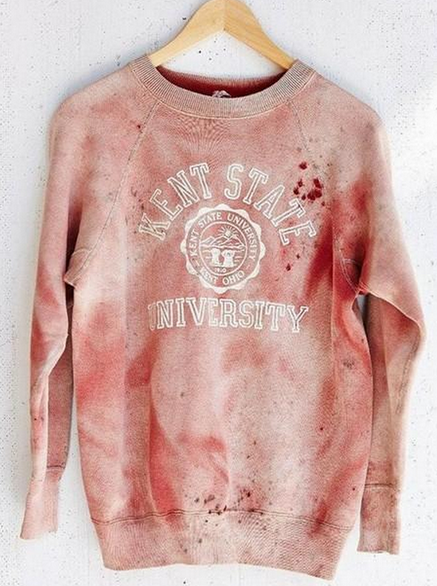
Urban Outfitters has found itself at the nexus of a social media storm after a bloodstained sweatshirt appeared for sale on its website. The sweatshirt appeared to be from Kent State University, which is famous for a student massacre in 1970.

Other retailers have made similar gaffes. Just a couple weeks ago, Zara was condemned by consumers for releasing a pair of pajamas that looked like concentration camp uniforms. The list of other off-color apparel sold over the years by Urban Outfitters and other retailers includes the infamous “Eat Less” t-shirt, the “Depression” t-shirt, and apparel featuring apparently racist images.

Is such repeated controversy good for business, especially among millennial consumers, the target demographic for these stores?

Brian Sozzi, a chief equities strategist at Belus Capital Advisors, said that selling such unsavory products may have helped businesses in the past, but not anymore.

“The first impression is that it’s good and that it drives free publicity, but that’s increasingly coming to not be the case,” said Sozzi. That’s due to the popularity of social media, including Twitter and Facebook — platforms on which consumers can “constantly grade” brands and offer their opinions instantly.

“This type of marketing and apparel is not positively impacting sales, it’s hurting sales,” he added. Sozzi pointed out that this comes on the heels of some tough quarters for Urban Outfitters, too. In fact, sales have declined for four consecutive quarters even with founder Richard Hayne returning as CEO at the start of 2012.

Robin Lewis, author of the recently published book The New Rules of Retail, said that the controversial products sold by these retailers are “outrageous.” He added: “If they can’t think of any other kind of PR ploy than this kind of sensationalism, they probably have to fire their marketing officer.” Lewis continued that putting the sweatshirt for sale probably didn’t get through to top management until it was too late, as it wouldn’t have been approved otherwise.

“I was quite shocked,” said Lewis.

Lewis adds that he doesn’t believe such repeated controversy helps when hawking a product. “I think it’s a huge marketing misstep,” he said.

Lewis said that Urban Outfitters selling the sweatshirt panders to younger generations’ insensitivity to violence.

“There may be some young people out there who this appeals to in some kind of sick way,” he said. “I mean, we do have a culture that enjoys violent video games.”

But while Scozzi and Lewis decried Urban’s misstep this week and in the past, Edward Hertzman, a millennial and the publisher of Sourcing Journal, a publication that focuses on the retail apparel and textile industry, had another thought. At first, he believed selling the product was simply a “disaster,” but then realized it may have been a “very bad coincidence.” The person “responsible for sourcing the sweatshirt” could have “had no idea what [he or she] was buying,” said Hertzman. Buyers are typically in their 20s or early 30s, meaning the person may simply have been unaware of Kent State’s history. As a result, the item could’ve been added to the online catalogue (there was just one available) without a second’s thought.

And with social media’s help, the controversy blew up before management had the chance to temper the flare, Hertzman added.

“Even if [brands] don’t intentionally put themselves out there, every consumer has become a brand ambassador,” he said. Of course, repeated offenses are no good for a brand either. “Everyone needs to think before they act,” he added.

About the Author
By Benjamin SnyderManaging Editor
LinkedIn iconTwitter icon

Benjamin Snyder is Fortune's managing editor, leading operations for the newsroom.

Prior to rejoining Fortune, he was a managing editor at Business Insider and has worked as an editor for Bloomberg, LinkedIn and CNBC, covering leadership stories, sports business, careers and business news. He started his career as a breaking news reporter at Fortune in 2014.

See full bioRight Arrow Button Icon

Latest in Retail

Bambas
LawSocial Media
22-year-old Australian TikToker raises $1.7 million for 88-year-old Michigan grocer after chance encounter weeks earlier
By Ed White and The Associated PressDecember 6, 2025
13 hours ago
RetailConsumer Spending
U.S. consumers are so financially strained they put more than $1 billion on buy-now, pay later services during Black Friday and Cyber Monday
By Jeena Sharma and Retail BrewDecember 5, 2025
1 day ago
Best vegan meal delivery
Healthmeal delivery
Best Vegan Meal Delivery Services of 2025: Tasted and Reviewed
By Christina SnyderDecember 5, 2025
1 day ago
Retailmeal delivery
Best Prepared Meal Delivery Services of 2025: RD Approved
By Christina SnyderDecember 5, 2025
1 day ago
Steve Milton is the CEO of Chain, a culinary-led pop-culture experience company founded by B.J. Novak and backed by Studio Ramsay Global.
CommentaryFood and drink
Affordability isn’t enough. Fast-casual restaurants need a fandom-first approach
By Steve MiltonDecember 5, 2025
2 days ago
Big TechSpotify
Spotify users lamented Wrapped in 2024. This year, the company brought back an old favorite and made it less about AI
By Dave Lozo and Morning BrewDecember 4, 2025
2 days ago

Most Popular

placeholder alt text
Big Tech
Mark Zuckerberg rebranded Facebook for the metaverse. Four years and $70 billion in losses later, he’s moving on
By Eva RoytburgDecember 5, 2025
1 day ago
placeholder alt text
Success
Nvidia CEO Jensen Huang admits he works 7 days a week, including holidays, in a constant 'state of anxiety' out of fear of going bankrupt
By Jessica CoacciDecember 4, 2025
2 days ago
placeholder alt text
AI
Nvidia CEO says data centers take about 3 years to construct in the U.S., while in China 'they can build a hospital in a weekend'
By Nino PaoliDecember 6, 2025
9 hours ago
placeholder alt text
Economy
Two months into the new fiscal year and the U.S. government is already spending more than $10 billion a week servicing national debt
By Eleanor PringleDecember 4, 2025
3 days ago
placeholder alt text
Success
‘Godfather of AI’ says Bill Gates and Elon Musk are right about the future of work—but he predicts mass unemployment is on its way
By Preston ForeDecember 4, 2025
2 days ago
placeholder alt text
Real Estate
The 'Great Housing Reset' is coming: Income growth will outpace home-price growth in 2026, Redfin forecasts
By Nino PaoliDecember 6, 2025
14 hours ago
Rankings
  • 100 Best Companies
  • Fortune 500
  • Global 500
  • Fortune 500 Europe
  • Most Powerful Women
  • Future 50
  • World’s Most Admired Companies
  • See All Rankings
Sections
  • Finance
  • Leadership
  • Success
  • Tech
  • Asia
  • Europe
  • Environment
  • Fortune Crypto
  • Health
  • Retail
  • Lifestyle
  • Politics
  • Newsletters
  • Magazine
  • Features
  • Commentary
  • Mpw
  • CEO Initiative
  • Conferences
  • Personal Finance
  • Education
Customer Support
  • Frequently Asked Questions
  • Customer Service Portal
  • Privacy Policy
  • Terms Of Use
  • Single Issues For Purchase
  • International Print
Commercial Services
  • Advertising
  • Fortune Brand Studio
  • Fortune Analytics
  • Fortune Conferences
  • Business Development
About Us
  • About Us
  • Editorial Calendar
  • Press Center
  • Work At Fortune
  • Diversity And Inclusion
  • Terms And Conditions
  • Site Map

© 2025 Fortune Media IP Limited. All Rights Reserved. Use of this site constitutes acceptance of our Terms of Use and Privacy Policy | CA Notice at Collection and Privacy Notice | Do Not Sell/Share My Personal Information
FORTUNE is a trademark of Fortune Media IP Limited, registered in the U.S. and other countries. FORTUNE may receive compensation for some links to products and services on this website. Offers may be subject to change without notice.