• Home
  • News
  • Fortune 500
  • Tech
  • Finance
  • Leadership
  • Lifestyle
  • Rankings
  • Multimedia
FinanceInflation

Misguided inflation fear-mongers come out of the woodwork, yet again

By
Chris Matthews
Chris Matthews
Down Arrow Button Icon
By
Chris Matthews
Chris Matthews
Down Arrow Button Icon
June 19, 2014, 1:29 PM ET
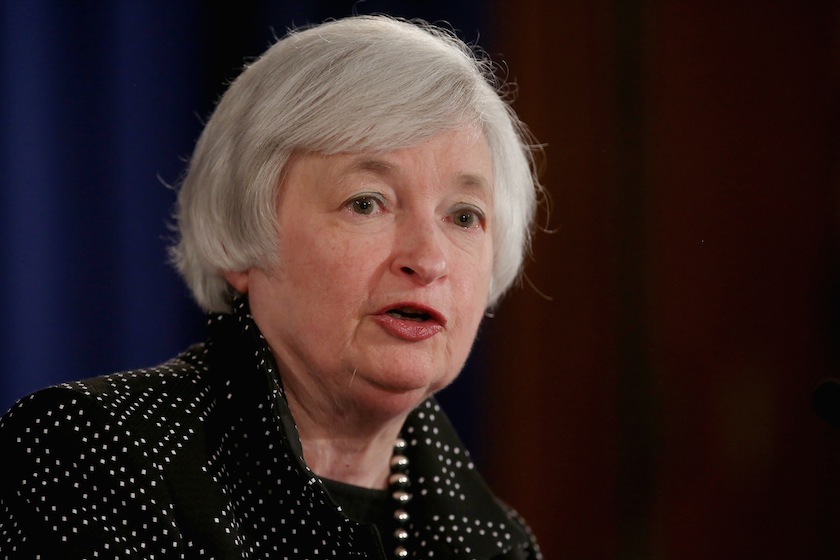
Federal Reserve Chairwoman Janet Yellen speaks during a news conference at Fed headquarters
Federal Reserve Chairwoman Janet Yellen speaks during a news conference at Fed headquartersPhotograph by Chip Somodevilla—Getty Images

One of the more vigorous species in market punditry today is the inflationista: those who believe that inflation, as opposed to slow growth, is somehow the primary problem the economy is facing.

Given the fact that yearly price increases have stayed below the Fed’s 2% goal for the 24 months prior to its most recent reading of 2.1%, it’s confusing that inflationistas are taking pot shots at the Fed.

Here’s the Guardian’s Heidi Moore writing yesterday about rising food prices:

It all comes down to inflation: the measure of rising prices that we all experience in our daily lives. And inflation is rising – fast, much faster than the Fed anticipates. Meat prices are rocketing at plus-7.7% in 2014, and dairy is up 4.2%, a considerable hit to family shopping budgets. Shelter – either mortgages or rent costs – are rising at about 3%, while car insurance is up 5%, and tuition costs and public transportation are both up more than 3%.
This means consumers are surrounded by rising prices on all sides – paying higher bills, paying more money at the market, paying more just to get to work. At the same time we’re shelling out more for these necessities, our incomes are stagnant. No more money is coming in.

Moore is perturbed by the fact that while prices for the specific items she mentions are rising above the Fed’s target, Fed Chair Janet Yellen and company seem to be only concerned with other measures of inflation–particularly what is known as “core” inflation, a measure that strips out food and energy prices. Larry Doyle, investment advisor and author, echoed this sentiment this morning on Twitter:

While it’s admirable that these analysts are arguing that Fed should concern itself with the welfare of the average American, these criticisms show a lack of understanding of economics and a tendency to overestimate any central bank’s ability to improve the living standards of the median citizen.

So, what’s wrong with the analysis? A few things:

1. You can’t just look at the prices of a few items and declare that inflation is a problem. Yes, food and housing are staple items that we all need to buy, and when those prices rise, it’s not great for Americans. But economists have spent decades trying to improve measures of inflation that take into account all prices. Americans, for instance, spend more money on transportation than they do on any other item besides housing, and prices for used cars and trucks increased by 0.2% in the past 12 months, far below the median increase in pay of 2.1%.

You can cherry pick just about any number to make a point, but there’s a reason why we have specialists at the Labor Department, who study inflation for a living, working on this problem. It’s so we can have a good overall measure of inflation.

2. There’s also a good reason why economists at the Fed strip out food and energy prices when judging their performance with respect to inflation. Energy and food prices fluctuate greatly due to factors like wars and weather. Would that Janet Yellen could wave a magic wand and stop droughts in California or wars in the Middle East that can lead to big jumps in prices of those items, but she can’t.

What Yellen can do is control the size of the money supply to keep prices stable. But how does the Fed decide whether prices are rising due to the amount of money in the system or due to factors outside its control? One way is to strip out those volatile prices and look at others, like those for apparel or automobiles, that are historically more stable and less susceptible to supply shocks. If those prices are rising too quickly, there’s reason to believe that there’s a money supply problem, rather than a weather or war problem.

3. Since core inflation isn’t rising, it’s not likely that the inflation in food prices we’re seeing is a problem the Fed can address. What it can address, however, is the disappointing amount of GDP and employment growth in the economy right now. The Fed is trying to foment more of that growth by keeping interest rates low. If, instead, the Fed raised interest rates, as the inflationistas seem to want, in order to combat higher food prices, economic and employment growth would almost certainly slow down.

By all means, we should keep the Fed’s feet to the fire. It’s too important of an institution for pundits to give a free pass, but proper analysis of its performance requires a solid understanding of what central banks can — and cannot — do.


About the Author
By Chris Matthews
See full bioRight Arrow Button Icon

Latest in Finance

Man on private jet
SuccessWealth
CEO of $5.6 billion Swiss bank says country is still the ‘No. 1 location’ for wealth after voters reject a tax on the ultra-rich
By Jessica CoacciDecember 2, 2025
36 minutes ago
Elon Musk, standing with his arms crossed, looks down at Donald Trump sitting down at his desk in the Oval Office.
EconomyTariffs and trade
Elon Musk says he warned Trump against tariffs, which U.S. manufacturers blame for a turn to more offshoring and diminishing American factory jobs
By Sasha RogelbergDecember 2, 2025
45 minutes ago
layoffs
EconomyLayoffs
What CEOs say about AI and what they mean about layoffs and job cuts: Goldman Sachs peels the onion
By Nick LichtenbergDecember 2, 2025
47 minutes ago
Carl Erik Rinsch speaks into a microphone on stage
LawNetflix
Netflix gave him $11 million to make his dream show. Instead, prosecutors say he spent it on Rolls-Royces, a Ferrari, and wildly expensive mattresses
By Dave SmithDecember 2, 2025
1 hour ago
Personal FinanceSavings
Best money market accounts of December 2025
By Glen Luke FlanaganDecember 2, 2025
1 hour ago
Ayesha and Stephen Curry (L) and Arndrea Waters King and Martin Luther King III (R), who are behind Eat.Play.Learn and Realize the Dream, respectively.
Commentaryphilanthropy
Why time is becoming the new currency of giving
By Arndrea Waters King and Ayesha CurryDecember 2, 2025
2 hours ago

Most Popular

placeholder alt text
Economy
Ford workers told their CEO 'none of the young people want to work here.' So Jim Farley took a page out of the founder's playbook
By Sasha RogelbergNovember 28, 2025
4 days ago
placeholder alt text
Success
Warren Buffett used to give his family $10,000 each at Christmas—but when he saw how fast they were spending it, he started buying them shares instead
By Eleanor PringleDecember 2, 2025
7 hours ago
placeholder alt text
Success
Forget the four-day workweek, Elon Musk predicts you won't have to work at all in ‘less than 20 years'
By Jessica CoacciDecember 1, 2025
1 day ago
placeholder alt text
Innovation
Google CEO Sundar Pichai says we’re just a decade away from a new normal of extraterrestrial data centers
By Sasha RogelbergDecember 1, 2025
23 hours ago
placeholder alt text
Personal Finance
Current price of gold as of December 1, 2025
By Danny BakstDecember 1, 2025
1 day ago
placeholder alt text
Big Tech
Elon Musk, fresh off securing a $1 trillion pay package, says philanthropy is 'very hard'
By Sydney LakeDecember 1, 2025
1 day ago
Rankings
  • 100 Best Companies
  • Fortune 500
  • Global 500
  • Fortune 500 Europe
  • Most Powerful Women
  • Future 50
  • World’s Most Admired Companies
  • See All Rankings
Sections
  • Finance
  • Leadership
  • Success
  • Tech
  • Asia
  • Europe
  • Environment
  • Fortune Crypto
  • Health
  • Retail
  • Lifestyle
  • Politics
  • Newsletters
  • Magazine
  • Features
  • Commentary
  • Mpw
  • CEO Initiative
  • Conferences
  • Personal Finance
  • Education
Customer Support
  • Frequently Asked Questions
  • Customer Service Portal
  • Privacy Policy
  • Terms Of Use
  • Single Issues For Purchase
  • International Print
Commercial Services
  • Advertising
  • Fortune Brand Studio
  • Fortune Analytics
  • Fortune Conferences
  • Business Development
About Us
  • About Us
  • Editorial Calendar
  • Press Center
  • Work At Fortune
  • Diversity And Inclusion
  • Terms And Conditions
  • Site Map

© 2025 Fortune Media IP Limited. All Rights Reserved. Use of this site constitutes acceptance of our Terms of Use and Privacy Policy | CA Notice at Collection and Privacy Notice | Do Not Sell/Share My Personal Information
FORTUNE is a trademark of Fortune Media IP Limited, registered in the U.S. and other countries. FORTUNE may receive compensation for some links to products and services on this website. Offers may be subject to change without notice.