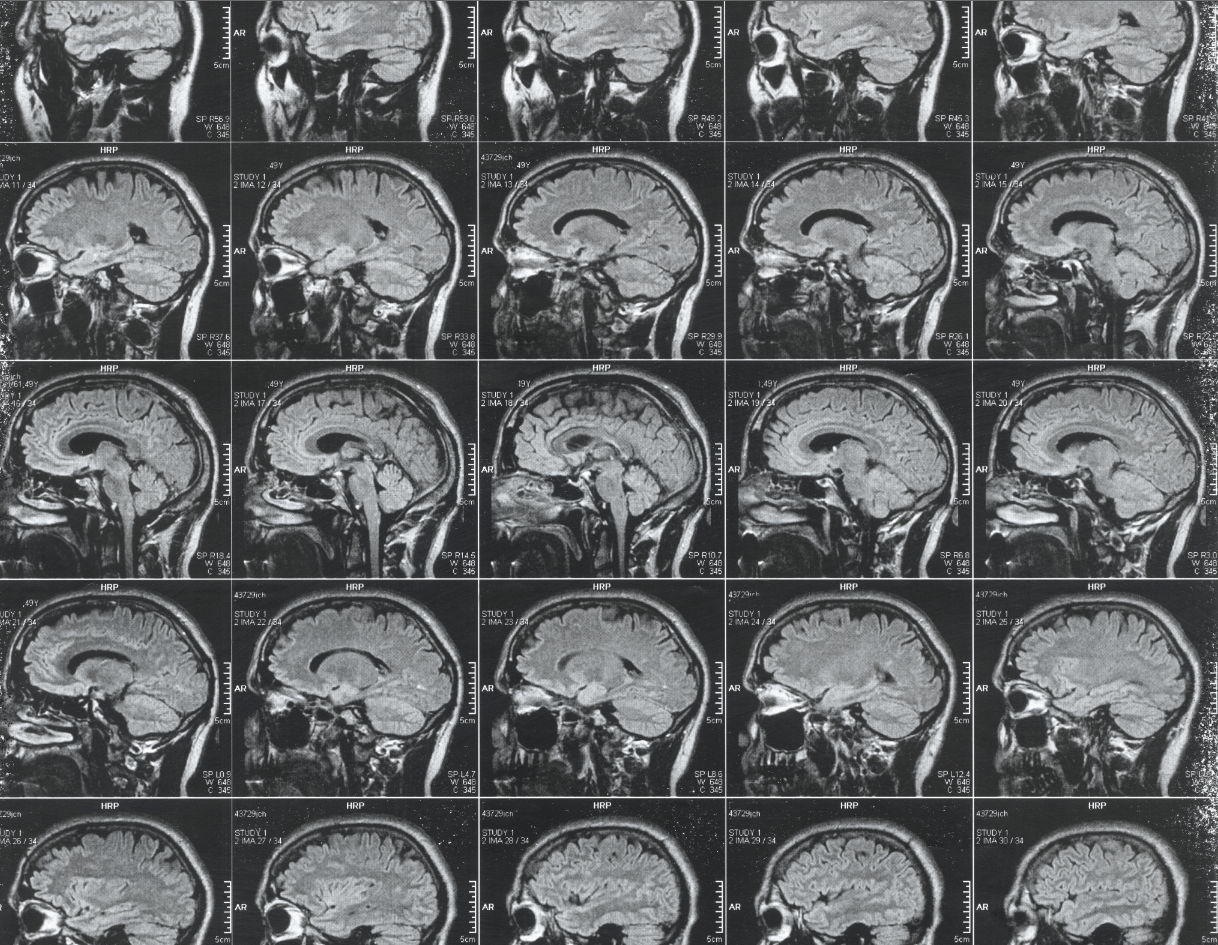
By concentrating acoustic energy into the body, we can heat and destroy tumors caused by cancerous cells.
The technology is called high-intensity focused ultrasound, and it’s a non-invasive procedure that may change the way surgeons treat cancer and much more. We recently wrote about the tech in the June 30, 2014 issue of Fortune magazine; here, five ways it’s changing the field of medicine.
1.) Non-invasive surgery
Sound waves, like light waves, can be focused into a single point such that the concentration of energy heats up. It’s like burning a leaf using nothing more than a magnifying glass and the sun, only a lot more precise, of course. The process of focused ultrasound can be used to safely destroy tumors caused by cancer, and has already shown great promise treating prostate cancer, breast cancer, and tumors in livers and kidneys. There are even initial studies underway to treat brain tumors via focused ultrasound. The technology is already used in brain surgery to ablate—that is, destroy—small bits of brain tissue that cause dyskinesia, or involuntary muscle movements, often associated with Parkinson’s disease.
2) To treat pain, particularly pain caused by bone cancer
When cancer cells spread to other parts of the body and into the bones, pain is the most common, persistent, and severe symptom. Radiation therapy and medication is the usual treatment—yet 30% of all patients with bone metastases either cannot undergo radiation (itself a painful, harmful process) or don’t respond to such treatment. At Thomas Jefferson University in Philadelphia, oncologists ran a trial that proved focused ultrasound could relieve cancer-related bone pain. For the study, 147 patients from the U.S., Canada, Israel, Italy, and Russia received focused ultrasound that heated their tumor tissue to between 65 and 85 degrees Celsius. Days later, two-thirds of the patients reported their pain was reduced, and three months later, most found there was a “significant reduction” in pain. Some even said that they no longer experienced any pain at all.
3) Drug delivery
A bunch of densely packed cells line the brain’s blood vessels. They’re there to protect you; it’s your blood-brain barrier. It’s great that it’s there, this barrier, because it bars misfit particles—which may infect the body—from entry. But sometimes we want to get through the blood-brain barrier—to, say, deliver drugs that might treat a host of diseases that affect our central nervous systems. Most drugs (about 95%) are made up of compounds too large and complex to break through. But engineers in Taiwan, at Chang Gung University, have come up with a focused ultrasound array that is able to temporarily open up the blood brain barrier, as the acoustic shockwave changes the shape of the dense capillaries surrounding our skull. A similar process could be used to burst microbubbles carrying drugs to other, super-targeted parts of the body.
4) Cleaning arteries
Atherosclerosis is what happens when plaque builds up in your arteries and they become blocked. It’s a bad, bad thing, because clots can form, vessels can burst, and heart attacks can happen. There are a bunch of ways to treat atherosclerosis, usually with drugs or angioplasty (wherein surgeons inflate arteries using a small balloon). Both are risky in their own way—the drugs might not work, or their side effects could be hazardous, or something might go awry during the angioplasty surgery. It is, after all, a surgery. A noninvasive technique using focused ultrasound and developed by a team at the University of Minnesota’s College of Science and Engineering might work better. The same way focused ultrasound can disrupt, burn away, denature, and remove tissue, it can rid arteries of plaque. The team found that high-intensity focused ultrasound (HIFU) “shot” for intervals of two to five seconds works best. Between shots, the team used MRI to check their work, making sure they “hit the target correctly”—that is, the plaque.
5) Hypertension treatment
Yes, it’s a mouthful, but renal sympathetic denervation (RDN) is one of the only ways to treat the persistent high blood pressure caused by resistant hypertension. Normally, it works through radiofrequency pulses that disrupt the renal arteries in your abdomen. But, just getting into a patient’s belly requires a catheter, which is invasive. Instead, a system developed in Bellevue, Wash. delivers ultrasound waves through a transducer outside the body, treating the nerves surrounding the blood vessels.
For more, read the magazine article: “This is your brain on … surgical sound waves.”