• Home
  • Latest
  • Fortune 500
  • Finance
  • Tech
  • Leadership
  • Lifestyle
  • Rankings
  • Multimedia
Apple

Apple’s newest product: Complexity

By
Adam Lashinsky
Adam Lashinsky
Down Arrow Button Icon
By
Adam Lashinsky
Adam Lashinsky
Down Arrow Button Icon
June 1, 2014, 6:54 AM ET
Christoph Niemann for Fortune

Recently a friend I consider tech-savvy was trying to figure out how to share an audio file with his colleague. The file, an hour-long recording of a business meeting, was too large to attach to an email or text message, the only options his Apple iPhone presented to him. So he plugged his phone into his laptop, loaded up iTunes, and tried to drag and drop the file from his phone to his desktop. No dice. He right-clicked in search of a “Save to …” or “Export” function and came up empty-handed. After 10 minutes of ducking in and out of labyrinthine menus and byzantine screens in search of — well, anything of relevance — he finally gave up and searched the web. “iTunes automatically syncs voice memos to your iTunes library when you connect iPhone to your computer,” someone cheerily wrote on a message board. Not that anyone would be able to find them. “It was ridiculous,” my friend said. “I’ve been using iTunes for 10 years. It shouldn’t be this hard.”

Historically, Apple (AAPL) products just worked. If you installed a printer, you didn’t need to worry about drivers to make it function. If you wanted to back up your files, you didn’t need to worry about when or how; Time Machine would automate the entire process. And perhaps most important, you didn’t need to read an instruction manual to use an Apple product. A seamless out-of-the-box experience was the company’s signature. Exhibit A: The “Get a Mac” ad campaign in the late 2000s. That simplicity allowed it to charge premiums for devices that largely used the same components as its peers. Apple’s late co-founder and chief executive, Steve Jobs, deserves credit for much of this uniformity. Without his singular vision and autocratic rule Apple might well have devolved into Microsoft-like internecine warfare.

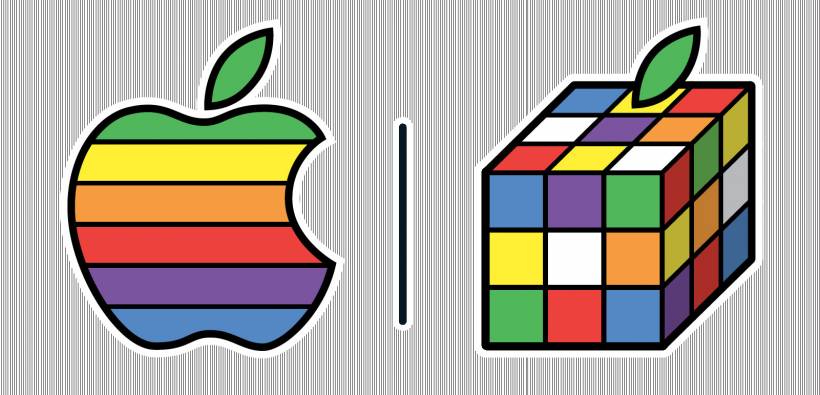
Today Apple still doesn’t include an instruction manual with its devices, and its user interfaces have less clutter than the competition. But its products are beginning to show that they come from one of the largest technology companies in the world, one with 80,000 employees. iTunes, iPhoto, iCloud, and other Apple software and services have grown confusingly complex, woefully outdated, or both. If you try to add a device made by another company to the mix, things can get a little hairy. (Woe to the benighted customers of devices running Google’s Android mobile operating system hoping that their Apple and non-Apple products will happily commingle.) Even Apple’s corporate structures mirror the increased complexity on the user experience side. Though its tax havens in Ireland and treasury operations in Nevada are not new, they now have the sheen of opacity that formerly held the allure of mystery. Apple, once the epitome of simplicity, is becoming the unlikely poster child for complexity.

Trying to understand an Apple product today calls to mind the confusion of using Microsoft’s (MSFT) complicated fare at the height of that company’s popularity. Microsoft’s customers long understood, for example, that Word had far more word-processing features than they would ever use. Apple’s software is a lot like that today.

TEC.06.16.14 itunes then and now

Despite the company’s carefully honed image as the most streamlined of modern corporations, Apple has reached this point once before. In the mid-1990s its product line was a grab bag that included the Newton handheld organizer, printers of various quality levels and price points, and even an early Apple-branded digital camera. Its divisions and factories were spread out across the globe, with multiple fiefdoms, budgets, and strategies. Steve Jobs changed all that with his triumphant return as CEO in 1997, famously slashing the company’s offerings to two desktops and two laptops, closing factories and consolidating the empire into one fief — his.

That Apple would backslide into complexity again is, on some level, understandable. The company now enjoys a market capitalization of half a trillion dollars, making it the most valuable technology company in the world. It is exceedingly global, with 424 brick-and-mortar stores in 16 countries and online sales in 39. It offers apps in more than 150 countries and 40 languages. Because smartphones must work on telecommunications networks the world round, Apple interacts with regulators everywhere — a factor certain to distract even the most focused of companies.

At the same time, Apple remains remarkably straightforward. It currently sells just three models of iPhone and two models of iPad, with limited component customization. Its supply chain, built by current CEO Tim Cook in the 2000s, is revered for its efficiency. And it continues to be the best company in the world at integrating hardware and software.

Online services are another matter. Apple has proved less effective at the services that tie together its devices. Apple never was an Internet company per se. And it shows. In multiple online categories Apple has lost a beat — no pun intended, given the rumors of its intention to acquire popular headphone maker Beats Electronics — to nimbler competitors. Spotify and Pandora (P) captured online music streaming customers that should have been Apple’s birthright, much in the same way Apple’s iPod snatched the market Sony’s (SNE) Walkman owned. And cloud storage company Dropbox has a photo storage service that is widely acknowledged to be superior to Apple’s iPhoto offering. Apple’s ease-of-use is “legendary,” a company spokeswoman said. “We continue to make desktop, mobile, and cloud services work together powerfully and seamlessly for users.”

One conundrum for Apple is that it is grafting new services on top of old. This is the vaunted legacy problem that mature technology companies face: Make existing products more capable yet keep them simple. Bruce Tognazzini, an early Apple employee and a principal at the user-experience firm Nielsen Norman, uses iPhoto as an example. “By two years ago, iPhoto’s functionality was in desperate need of being increased as users collected more and more photos,” he says. “Instead, they tore out key pieces of functionality already there, reducing the program’s usability even further. As a result, people struggle to find workarounds and face insurmountable memory burdens as their photo collections grow larger.”

It’s important to note that Apple’s competition is no less complicated: Google (GOOG), Amazon (AMZN), Samsung, and Microsoft each grapple with complexity. All are enormous companies at which it is difficult for a chief executive to shun delegation and actively manage product development from the top. But none of those companies have equated their brand with simplicity quite like Apple. It is not supposed to be an Apple product if it doesn’t just work.

Will Apple become less complicated? Doubtful. It still does what it does so much better than everyone else, and makes so much money doing it, that it’s impossible to say Apple’s complexity represents a crisis. Not yet, anyway.

This story is from the June 16, 2014 issue of Fortune.

About the Author
By Adam Lashinsky
See full bioRight Arrow Button Icon

Latest in

Finance
Lorem ipsum dolor sit amet, consectetur adipiscing elit, sed do eiusmod tempor incididunt ut labore et dolore magna aliqua. Ut enim ad minim veniam
By Fortune Editors
October 20, 2025
Finance
Lorem ipsum dolor sit amet, consectetur adipiscing elit, sed do eiusmod tempor incididunt ut labore et dolore magna aliqua. Ut enim ad minim veniam
By Fortune Editors
October 20, 2025
Finance
Lorem ipsum dolor sit amet, consectetur adipiscing elit, sed do eiusmod tempor incididunt ut labore et dolore magna aliqua. Ut enim ad minim veniam
By Fortune Editors
October 20, 2025
Finance
Lorem ipsum dolor sit amet, consectetur adipiscing elit, sed do eiusmod tempor incididunt ut labore et dolore magna aliqua. Ut enim ad minim veniam
By Fortune Editors
October 20, 2025
Finance
Lorem ipsum dolor sit amet, consectetur adipiscing elit, sed do eiusmod tempor incididunt ut labore et dolore magna aliqua. Ut enim ad minim veniam
By Fortune Editors
October 20, 2025
Finance
Lorem ipsum dolor sit amet, consectetur adipiscing elit, sed do eiusmod tempor incididunt ut labore et dolore magna aliqua. Ut enim ad minim veniam
By Fortune Editors
October 20, 2025

Most Popular

Finance
Lorem ipsum dolor sit amet, consectetur adipiscing elit, sed do eiusmod tempor incididunt ut labore et dolore magna aliqua. Ut enim ad minim veniam
By Fortune Editors
October 20, 2025
Finance
Lorem ipsum dolor sit amet, consectetur adipiscing elit, sed do eiusmod tempor incididunt ut labore et dolore magna aliqua. Ut enim ad minim veniam
By Fortune Editors
October 20, 2025
Finance
Lorem ipsum dolor sit amet, consectetur adipiscing elit, sed do eiusmod tempor incididunt ut labore et dolore magna aliqua. Ut enim ad minim veniam
By Fortune Editors
October 20, 2025
Finance
Lorem ipsum dolor sit amet, consectetur adipiscing elit, sed do eiusmod tempor incididunt ut labore et dolore magna aliqua. Ut enim ad minim veniam
By Fortune Editors
October 20, 2025
Finance
Lorem ipsum dolor sit amet, consectetur adipiscing elit, sed do eiusmod tempor incididunt ut labore et dolore magna aliqua. Ut enim ad minim veniam
By Fortune Editors
October 20, 2025
Finance
Lorem ipsum dolor sit amet, consectetur adipiscing elit, sed do eiusmod tempor incididunt ut labore et dolore magna aliqua. Ut enim ad minim veniam
By Fortune Editors
October 20, 2025
Fortune Secondary Logo
Rankings
  • 100 Best Companies
  • Fortune 500
  • Global 500
  • Fortune 500 Europe
  • Most Powerful Women
  • Future 50
  • World’s Most Admired Companies
  • See All Rankings
Sections
  • Finance
  • Fortune Crypto
  • Features
  • Leadership
  • Health
  • Commentary
  • Success
  • Retail
  • Mpw
  • Tech
  • Lifestyle
  • CEO Initiative
  • Asia
  • Politics
  • Conferences
  • Europe
  • Newsletters
  • Personal Finance
  • Environment
  • Magazine
  • Education
Customer Support
  • Frequently Asked Questions
  • Customer Service Portal
  • Privacy Policy
  • Terms Of Use
  • Single Issues For Purchase
  • International Print
Commercial Services
  • Advertising
  • Fortune Brand Studio
  • Fortune Analytics
  • Fortune Conferences
  • Business Development
  • Group Subscriptions
About Us
  • About Us
  • Editorial Calendar
  • Press Center
  • Work At Fortune
  • Diversity And Inclusion
  • Terms And Conditions
  • Site Map
  • About Us
  • Editorial Calendar
  • Press Center
  • Work At Fortune
  • Diversity And Inclusion
  • Terms And Conditions
  • Site Map
  • Facebook icon
  • Twitter icon
  • LinkedIn icon
  • Instagram icon
  • Pinterest icon

Latest in

evs
EconomyChina
Trump’s gift to China: a booming market for cheap, state-of-the-art EVs amid the Iran War
By Chan Ho-Him and The Associated PressApril 10, 2026
58 minutes ago
takaichi
Arts & EntertainmentJapan
Japan’s Prime Minister welcomes Deep Purple, capping 50-year love affair with heavy metal: ‘You’re my god’
By Mari Yamaguchi and The Associated PressApril 10, 2026
1 hour ago
gen z
Arts & EntertainmentChina
Seeking to save Gen Z from foreign influence, China has quietly banned K-Pop for a full decade
By Ken Moritsugu, Juwon Park and The Associated PressApril 10, 2026
1 hour ago
chick-fil-a
North AmericaImmigration
Why Chinese immigrants to America love Chick-fil-A so much
By Fu Ting and The Associated PressApril 10, 2026
1 hour ago
rex
LawCrime
The smoking crust: how reluctance to finish pizza slices captured a serial killer at large for 30 years
By Michael R. Sisak and The Associated PressApril 10, 2026
1 hour ago
melania
PoliticsWhite House
Melania Trump in unusual White House statement: ‘the lies linking me with the disgraceful Jeffrey Epstein need to end today’
By Collin Binkley, Will Weissert and The Associated PressApril 10, 2026
1 hour ago

Most Popular

The U.S. government is spending $88 billion a month in interest on national debt—equal to spending on defense and education combined
Economy
The U.S. government is spending $88 billion a month in interest on national debt—equal to spending on defense and education combined
By Fortune EditorsApril 9, 2026
1 day ago
A Meta employee created a dashboard so coworkers can compete to be the company's No. 1 AI token user—and Zuckerberg doesn't even rank in the top 250
AI
A Meta employee created a dashboard so coworkers can compete to be the company's No. 1 AI token user—and Zuckerberg doesn't even rank in the top 250
By Fortune EditorsApril 9, 2026
1 day ago
Mark Cuban admits he made a mistake letting go of the Mavericks: 'I don't regret selling. I regret who I sold to'
Investing
Mark Cuban admits he made a mistake letting go of the Mavericks: 'I don't regret selling. I regret who I sold to'
By Fortune EditorsApril 9, 2026
1 day ago
'I hate working 5 days': Zoom CEO says traditional work schedules are becoming obsolete—and predicts a 3-day workweek by 2031
Success
'I hate working 5 days': Zoom CEO says traditional work schedules are becoming obsolete—and predicts a 3-day workweek by 2031
By Fortune EditorsApril 9, 2026
1 day ago
Gen Z doesn't want your full-time job. They want several part-time roles, and it's reshaping the entire workforce
Success
Gen Z doesn't want your full-time job. They want several part-time roles, and it's reshaping the entire workforce
By Fortune EditorsApril 9, 2026
1 day ago
Current price of oil as of April 9, 2026
Personal Finance
Current price of oil as of April 9, 2026
By Fortune EditorsApril 9, 2026
1 day ago

© 2026 Fortune Media IP Limited. All Rights Reserved. Use of this site constitutes acceptance of our Terms of Use and Privacy Policy | CA Notice at Collection and Privacy Notice | Do Not Sell/Share My Personal Information
FORTUNE is a trademark of Fortune Media IP Limited, registered in the U.S. and other countries. FORTUNE may receive compensation for some links to products and services on this website. Offers may be subject to change without notice.