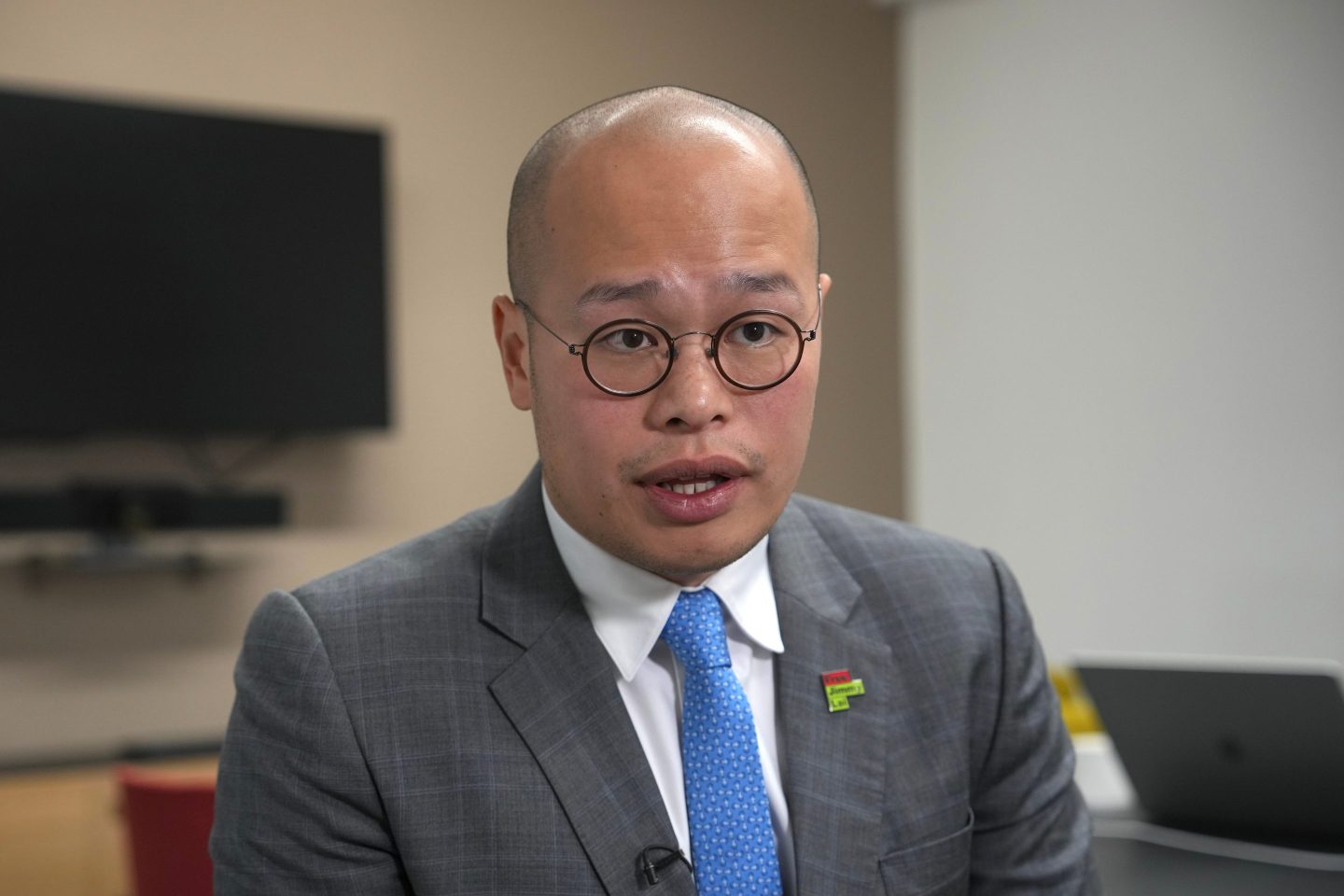
FORTUNE — “It’s the economy, stupid,” Vali Nasr, dean of Johns Hopkins School of Advanced International Studies, tells a Washington dinner party. Nasr isn’t applying that familiar bromide to U.S. politics. Egypt is the topic of this gathering, sponsored by Bridges of Understanding, a U.S.-Arab cultural exchange forum. Nasr is forcibly driving home a point largely lost in the conversation about renewed political turmoil: Only a stable private sector can bring lasting peace, stability, and a functioning democracy.
“Let’s not think of Egypt as an Arab-Muslim nation,” Nasr tells me later. “Let’s look at it as a large, bloated, public-sector-dominated state. Democracy only succeeds with a thriving free market and private sector.”
The problem is that turning around this bloated state — one facing plummeting foreign investment alongside rising unemployment and poverty rates — starts with the political. And the enormous economic costs of Egyptian President Mohamed Morsi’s power grab in late November are only beginning to come to light. A $4.8 billion IMF loan that could have eased the country’s balance-of-payments crisis and calmed foreign investors is on hold — as is a $450 million emergency cash infusion, now waylaid in Congress.
MORE: Building a new Egypt – where we are today
But the damage goes much deeper. Just months ago Morsi was wooing foreign investors. Key U.S. lawmakers, including Senators John Kerry and John McCain, traveled to Egypt after the fall of Hosni Mubarak to promote global business investment. Last February a suppliers’ conference in Cairo attracted an overflow of U.S. executives eager to partner with local firms.
In the spring the State Department launched a $60 million “enterprise fund” to seed small and medium-size businesses. And by the summer some influential voices were calling for a U.S.-Egypt free-trade agreement to cement the American influence in the region.
Even last fall, after mobs attacked the U.S. embassy in Cairo, Kerry and McCain stood by Morsi’s struggling democracy, helping to quash an effort by Senate conservatives to block future military and economic aid (the cutoff would have also applied to Libya and Pakistan).
MORE:
Globalism goes backward
By putting his decisions above judicial review, Morsi has effectively blunted that emerging American enthusiasm for commercial engagement with the Arab region’s second-largest economy. McCain is among those in Congress warning that Morsi’s authoritarian bent is jeopardizing not only its $1.5 billion in U.S. military assistance, but also its future economic aid.
None of this has changed the fact that the Muslim Brotherhood’s survival as the ruling party depends on restoring some luster to the country’s rusting economy. The prospect of more commercial engagement with the U.S. can still be an enticing carrot — for both economic and political reform. William Brock, a former senator and U.S. Trade Representative, says that carrot should come in the form of a strings-attached free-trade agreement. “We need to tie his interests to ours, and trade is far and away the best assurance of that goal,” he says.
MORE: The real revolution in the Middle East- women in business
Over the past 20 years, with the U.S. taking the lead in promoting economic and political freedom, countries such as Mexico and Poland have seen free markets and international trade sustain their fledgling democracies. In smaller economies, such as Ghana and Mongolia, the U.S., through the Millennium Challenge Corp., has tied huge development grants to progress made on promoting transparent, rule-based free markets. (Egypt scores poorly on corruption and a host of other MCC standards.)
The U.S. can truly influence the course of events in Cairo and the rest of the region by treating Egypt not as an economic-aid ward of Washington but as a strategically valuable trading partner — one that needs to follow the rule of law. “Egypt’s on a hair trigger not only because Morsi abused power,” Nasr says. “It’s also because there are too many hungry, angry people without a future.” That sounds like an opportunity for leadership from a capitalist world power that has filled that void many times before.
This story is from the January 14, 2013 issue of Fortune.