• Home
  • News
  • Fortune 500
  • Tech
  • Finance
  • Leadership
  • Lifestyle
  • Rankings
  • Multimedia

SOPA supporters don’t want to compromise

By
Dan Mitchell
Dan Mitchell
Down Arrow Button Icon
By
Dan Mitchell
Dan Mitchell
Down Arrow Button Icon
December 9, 2011, 4:04 PM ET

FORTUNE — A reasonable alternative to a pair of widely-reviled proposed anti-piracy laws isn’t good enough for the media industry and its congressional benefactors.

The Online Protection and Enforcement Act (OPEN) is sponsored by a bipartisan group of House members hoping to reach a compromise with the bipartisan supporters of SOPA, the Stop Online Privacy Act (this is one of the few issues on Capitol Hill these days not being fought along strict partisan lines).

OPEN would avoid the bizarrely extra-constitutional and technically dangerous measures contained in SOPA. But SOPA supporters are making up reasons why OPEN won’t work.

OPEN would simply build on existing laws and enforcement regimes to target particular sites operated in foreign countries that make available illicit goods such as pirated movies and knockoff merchandise.

SOPA, on the other hand, would make innocent third parties, such as Google, responsible for the actions of rogue operators who happen to use their services. Internet service providers would be forced to monitor their own networks, threatening privacy. And they would have to block domain names — something engineers say could disrupt the operations of the Internet. Hence Silicon Valley’s vehement opposition to a measure being pushed by Hollywood (and few others.) It’s a sledgehammer-blunt, panicky, clueless approach that would likely cause more problems than it would solve.

OPEN, by contrast, would allow rights holders to ask the U.S. International Trade Commission to enforce current laws by targeting the actual law-breakers. The ITC could, for example, demand that payment processors and ad networks cease doing business with particular pirates, once they have been identified. It comports not only with the First Amendment, but also with the Digital Millennium Copyright Act of 1998, which allows rights holders to ask sites to remove pirated material when they come across it rather than holding those sites accountable for “allowing” such material to be there in the first place. That’s why you no longer see episodes of “The Simpsons” on YouTube, for example.

Such measures are also contained in both SOPA and its Senate counterpart, Protect IP, but in those cases, enforcement would be left to the private sector or to the Justice Department — which could act arbitrarily based on the mere allegation of an infringement. Due process, a cornerstone of the American legal system, is absent. OPEN would allow challenges to complaints filed with the ITC, but would also allow for expedited review — for example, in cases where a new movie is being illicitly distributed. For enforcement to take place, it must be shown that a site is devoted solely or mostly to piracy. That would prevent a blog-hosting company from having its whole business put at risk thanks to a lone pirate using its services.

This is the ITC’s job — to enforce U.S. trade laws. OPEN would give it more power to do so largely by allowing it to cut off flows of money to pirates.

SOPA supporters argue that the ITC doesn’t have the resources for such enforcement, and that giving it those resources would be too expensive. Even before the details of OPEN were released, one congressional staffer circulated an email alleging that empowering the ITC with enforcement responsibilities would amount to “a dramatic and costly expansion of the federal bureaucracy.”

The OPEN bill doesn’t include any provisions for expanding the ITC and SOPA supporters haven’t presented any evidence that such expansion would be needed, or if it is, how expensive it might be.

Nevertheless, the proponents of a bill that would stomp all over the rights of Internet users, effectively censor content, and create new responsibilities for private companies to enforce U.S. law are making the “big government” argument.

About the Author
By Dan Mitchell
See full bioRight Arrow Button Icon

Latest in

AITech
Nvidia’s CEO says AI adoption will be gradual, but when it does hit, we may all end up making robot clothing
By Marco Quiroz-GutierrezDecember 6, 2025
1 hour ago
Timm Chiusano
Successcreator economy
After he ‘fired himself’ from a Fortune 100 job that paid up to $800k, the ‘Mister Rogers’ of Corporate America shows Gen Z how to handle toxic bosses
By Jessica CoacciDecember 6, 2025
2 hours ago
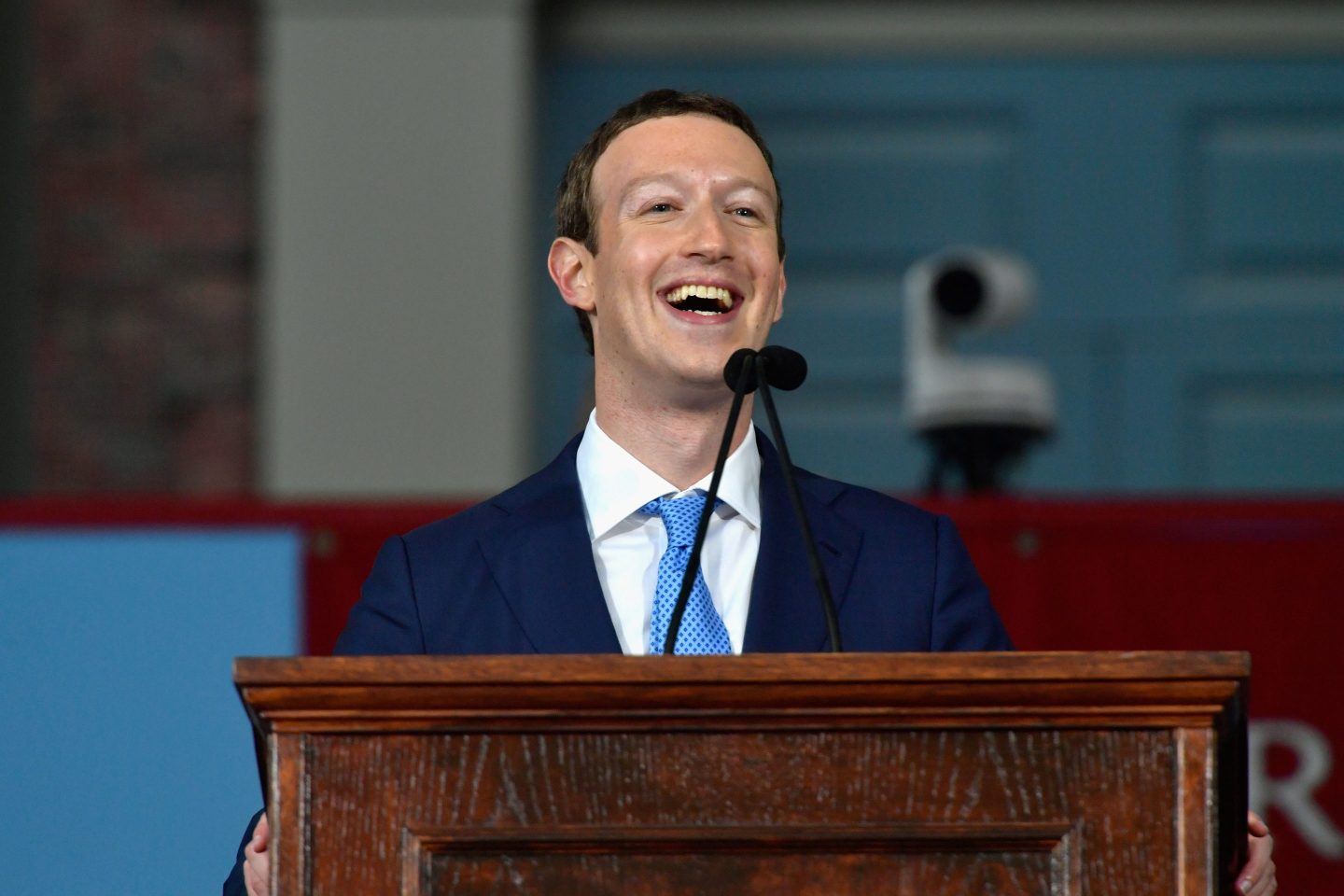
Mark Zuckerberg laughs during his 2017 Harvard commencement speech
SuccessMark Zuckerberg
Mark Zuckerberg says the ‘most important thing’ he built at Harvard was a prank website: ‘Without Facemash I wouldn’t have met Priscilla’
By Dave SmithDecember 6, 2025
3 hours ago
AIMeta
It’s ‘kind of jarring’: AI labs like Meta, Deepseek, and Xai earned some of the worst grades possible on an existential safety index
By Patrick Kulp and Tech BrewDecember 5, 2025
15 hours ago
RetailConsumer Spending
U.S. consumers are so financially strained they put more than $1 billion on buy-now, pay later services during Black Friday and Cyber Monday
By Jeena Sharma and Retail BrewDecember 5, 2025
15 hours ago
Elon Musk
Big TechSpaceX
Musk’s SpaceX discusses record valuation, IPO as soon as 2026
By Edward Ludlow, Loren Grush, Lizette Chapman, Eric Johnson and BloombergDecember 5, 2025
15 hours ago

Most Popular

placeholder alt text
Economy
Two months into the new fiscal year and the U.S. government is already spending more than $10 billion a week servicing national debt
By Eleanor PringleDecember 4, 2025
2 days ago
placeholder alt text
Success
‘Godfather of AI’ says Bill Gates and Elon Musk are right about the future of work—but he predicts mass unemployment is on its way
By Preston ForeDecember 4, 2025
2 days ago
placeholder alt text
Success
Nearly 4 million new manufacturing jobs are coming to America as boomers retire—but it's the one trade job Gen Z doesn't want
By Emma BurleighDecember 4, 2025
2 days ago
placeholder alt text
Success
Nvidia CEO Jensen Huang admits he works 7 days a week, including holidays, in a constant 'state of anxiety' out of fear of going bankrupt
By Jessica CoacciDecember 4, 2025
2 days ago
placeholder alt text
Big Tech
Mark Zuckerberg rebranded Facebook for the metaverse. Four years and $70 billion in losses later, he’s moving on
By Eva RoytburgDecember 5, 2025
20 hours ago
placeholder alt text
Real Estate
‘There is no Mamdani effect’: Manhattan luxury home sales surge after mayoral election, undercutting predictions of doom and escape to Florida
By Sasha RogelbergDecember 4, 2025
2 days ago
Rankings
  • 100 Best Companies
  • Fortune 500
  • Global 500
  • Fortune 500 Europe
  • Most Powerful Women
  • Future 50
  • World’s Most Admired Companies
  • See All Rankings
Sections
  • Finance
  • Leadership
  • Success
  • Tech
  • Asia
  • Europe
  • Environment
  • Fortune Crypto
  • Health
  • Retail
  • Lifestyle
  • Politics
  • Newsletters
  • Magazine
  • Features
  • Commentary
  • Mpw
  • CEO Initiative
  • Conferences
  • Personal Finance
  • Education
Customer Support
  • Frequently Asked Questions
  • Customer Service Portal
  • Privacy Policy
  • Terms Of Use
  • Single Issues For Purchase
  • International Print
Commercial Services
  • Advertising
  • Fortune Brand Studio
  • Fortune Analytics
  • Fortune Conferences
  • Business Development
About Us
  • About Us
  • Editorial Calendar
  • Press Center
  • Work At Fortune
  • Diversity And Inclusion
  • Terms And Conditions
  • Site Map

© 2025 Fortune Media IP Limited. All Rights Reserved. Use of this site constitutes acceptance of our Terms of Use and Privacy Policy | CA Notice at Collection and Privacy Notice | Do Not Sell/Share My Personal Information
FORTUNE is a trademark of Fortune Media IP Limited, registered in the U.S. and other countries. FORTUNE may receive compensation for some links to products and services on this website. Offers may be subject to change without notice.