
How a reliable grid can trump cheap wages.
By Vishesh Kumar, contributor
FORTUNE — Rapidly rising wages in booming countries like China are setting the stage for a revival in American manufacturing. As labor costs outpace productivity abroad, companies find the U.S. to be increasingly competitive.

But the massive energy demand that results from the blistering growth in emerging economies may be compounding the impact of rising wages abroad as well.
As energy demands soar in emerging markets, the advantage of more efficient and reliable American energy infrastructure is becoming increasingly important. And spiking global oil demand thanks to rapid industrialization and consumer affluence now make transport costs – a minor point a decade ago when oil was $20 a barrel – a major factor.
The best example is China, where the industrial boom that catapulted the economy over the last decade has also put a heavy toll on the country’s creaky energy infrastructure. Rolling blackouts are frequent, and average electricity costs have soared to 11.6 cents per kilowatt hour from 6.1 when the country joined the World Trade Organization in 2001 says Trevor Houser, a partner at economic research firm The Rhodium Group. By comparison, U.S. prices have risen to 6.7 cents per kilowatt hour from 4.73 over the same time frame.
A labyrinthine domestic supply chain makes it hard for the country to keep up with booming energy demand. Coal, which accounts for 70% of energy production, tends to be mined in the northwest of the country where it costs $20 to $30 a ton, Houser says. By the time it reaches manufacturing hubs in the Yangtze and Pearl River Deltas, prices inflate to $80 to $100 a ton.
Energy concerns have become so great that bureaucrats find themselves making decisions based on power rather than benefit. “Beijing is trying to slow the growth of the most energy intensive industries because their energy needs threaten the country’s entire growth model,” Houser says.
Despite plenty of calls for the U.S. to upgrade its grid, the country is – by comparison – an energy nirvana. Some low U.S. states already poised to recapture manufacturing jobs are even more compelling to companies because they offer cheap, reliable energy.
The Tennessee Valley Authority (TVA), a federally-owned corporation, uses energy sources ranging from fossil, nuclear, to renewable to offer power to parts of seven southeastern states including Tennessee, Kentucky, Georgia and Alabama at industrial rates 19% below the national average.
The region has been popular for energy-intensive businesses like data centers and a growing number of manufacturers are locating plants there. too. In recent months, parts maker Sequa Automotive Group, component maker Mitsubishi Electric Power Products, and home appliance maker Electrolux (ELUXY) have opened facilities in areas served by the TVA.
Automakers, in particular have been paying attention, says John Bradley, senior vice president of economic development at the TVA. The TVA has been preparing for an influx of auto manufacturers to the southeast and he notes that energy reliability is a top priority for manufacturers. “The quality of energy is very critical for industrial and manufacturing products because it costs so much more if there is a shutdown.”
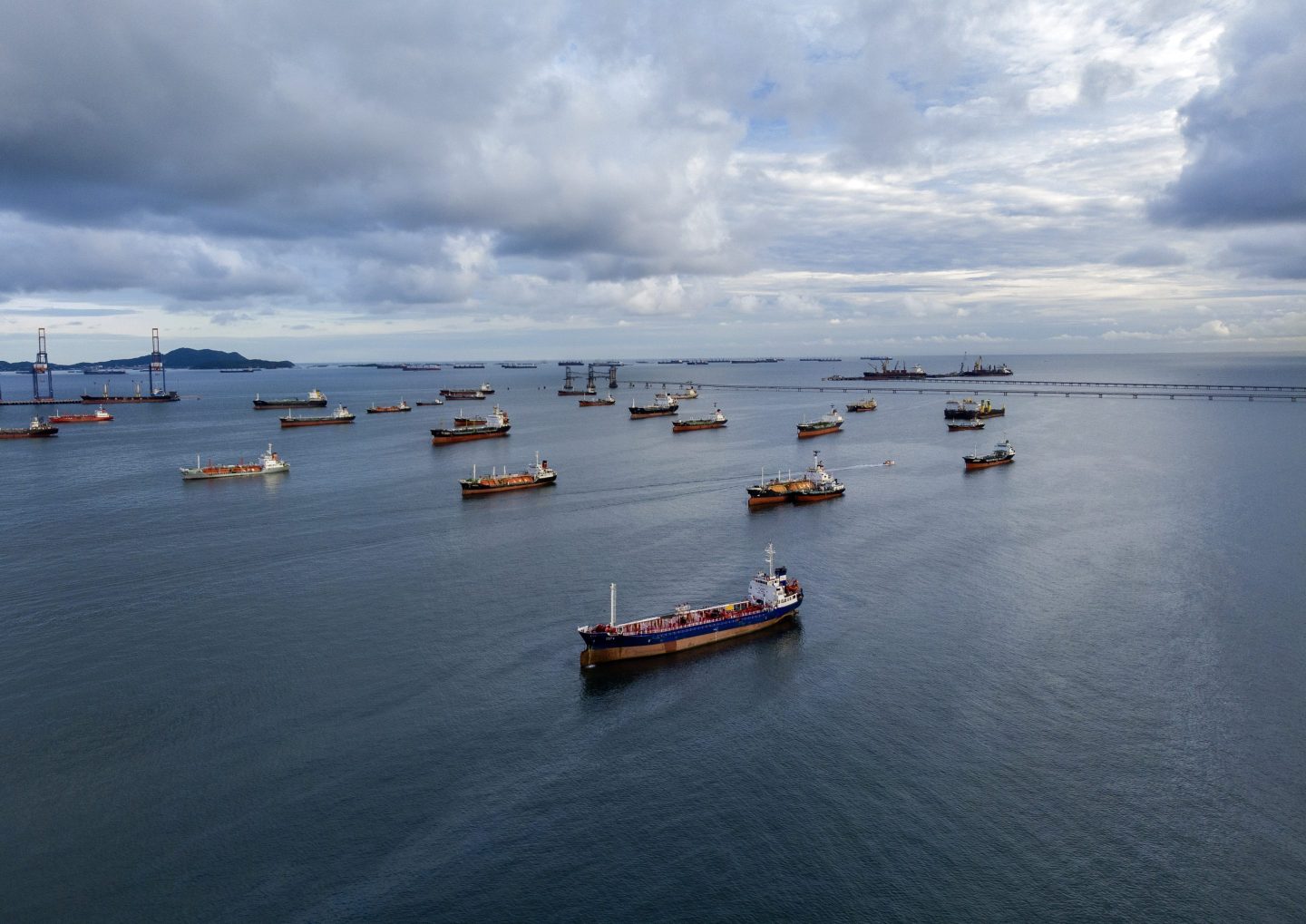
The rapid growth in emerging markets and its demand on world oil supplies has also sent prices soaring. And what many see as a new, higher plateau for oil prices imperils much of the logic that underpinned far-flung supply chains.
During the last run up in oil prices prior to the financial crisis in 2008, investment bank CIBC calculated that a $1 rise in world oil prices translated to a 1% rise in transport costs.
With oil above $120 a barrel then, the cost of shipping a 40-foot container from Shanghai to the U.S. Eastern seaboard had jumped to $8,000 from $3,000 in 2000.
At $20 a barrel for oil, transport costs were equivalent to U.S. tariffs of just 3% CIBC wrote. But $150 barrel oil implies tariffs of 11%, harkening back to the average tariff rates during the 1970s.
“Converting transport costs into tariff-equivalent rates provides a poignant perspective on just how trade disrupting soaring energy costs have become,” CIBC analysts wrote.
The recent run up in oil prices has also forced some manufacturers to rethink where to locate their facilities.
Global Sticks, a manufacturer of wooden sticks used in foods like ice cream and corn dogs, turned heads recently by relocating its plant back to Canada from China.
Along with factors like the abundance of high quality timber in Canada, Global Sticks president Reggie Nukovic says seeing his ocean freight bill climb to $8,000 from $4,300 the year before played a major role in the relocation.
But Nukovic says having manufacturing done in China has grown less attractive for other reasons as well. While quality, worker reliability and food safety remain major issues, exporters who have grown wealthier have become less responsive over time. Orders lacking major volume can get neglected and coordinating freight delivery has become more of a hassle.
Most are an offshoot of the rapid rise in living standards and not surprising to Nukovic, who set up business in China in 1999. “I remember thinking, ‘it’s just a matter of time before people here aren’t going to be happy working for these kinds of wages anymore.’”
Read more from this Fortune.com special report:
Made (again) in the USA: The return of American manufacturing
Lost in a sea of troubling economic data is one bright spot: America is once again competing for — and winning — factories and manufacturing operations.
Why we left our factories in China
Fed up with the poor quality of having their products made in China, American businesses like Sleek Audio are moving production back home.
Investors pile into the bet against China
Manufacturing jobs are leaving China and returning to the U.S. But many investors are betting that that may actually be the least of China’s problems.
How to train U.S. workers back into manufacturing jobs
Despite gloomy job prospects, many American manufacturers are on the prowl for top talent, but say that not enough workers are trained for the tasks.