• Home
  • Latest
  • Fortune 500
  • Finance
  • Tech
  • Leadership
  • Lifestyle
  • Rankings
  • Multimedia

Wall Street’s great enablers: Pension funds and endowments

By
Heidi N. Moore
Heidi N. Moore
Down Arrow Button Icon
By
Heidi N. Moore
Heidi N. Moore
Down Arrow Button Icon
July 8, 2010, 8:25 PM ET

Are pension funds getting off too easy in their responsibility for the crisis?

By Heidi N. Moore, contributor

It is one of the great ironies of university education that, while students are known for their wild ways, no one ever expects the people in the finance office of throwing any (metaphorical) keggers. Maybe that should change.

While banks have been beaten up during the financial reform regulation process (and well before, and deservedly so) there has been remarkably little attention paid to the travails of what one investment banker told us he calls “The Great Enablers” — university endowments and pension funds that were all too happy to squeeze more and more risk into their portfolios for the promise of fat returns.

Now, it seems, endowments and pensions may even be in danger of being canonized for their imagined virtue. Michael Azlen, chief executive of Frontier Capital Management, has written an op-ed piece for the Financial Times, ominously headlined, Everyone can learn from U.S. endowments.

Azlen, a hedge fund manager, talks his book a little: He applauds endowments for embracing alternative investments — like, yes, hedge funds.

Noting that Harvard and Yale hold about two-thirds of their portfolios in alternative asset classes including hedge funds, private equity and real estate, Azlen notes: “Through this approach to investing and their exposure to alternative asset classes, prior to 2008 they had consistently achieved high double-digit annual returns with relatively low volatility. ”

The operative word there, we think, is “prior to 2008.”

Azlen concedes: “The bear market of 2008/09 took its toll on the endowments: Harvard and Yale returned -27.3% and -24.6% respectively for the fiscal year to June 2009, with other large endowments seeing similar results. Despite this setback, the endowments remain among the best performing investors over five to 10-year periods, and the case for their investment philosophy is still compelling.”

And here we have to seriously ask: What’s so compelling about it? Harvard and Yale have hardly covered themselves in glory during their forays into alternative investments, and in fact have done themselves enormous harm by taking on such risky assets that they could barely withstand the losses. CalPERS, which manages money for California state employees, has similarly fallen on hard times due to its fatal love for things like unrated CDOs, real estate and commodities. Many endowment managers are, if not completely unfazed, then certainly unchastened by the credit crisis — the problem is the stock market, not their own investing style, they may blithely tell you.

As early 90s diet guru Susan Powter would have said: Stop the insanity.

No one would begrudge Harvard students their hot breakfasts or Yale students their comfortable thermostats — well, except for recently — but there should be an acknowledgment that the Yale model of endowment investing, copied by Harvard, has done enormous damage not just to their own schools, but to society and the financial markets at large. They are not the only ones to blame, but they deserve a far bigger share than they currently get.

Harvard, for instance, took so much risk and lost so much money in its endowment that it couldn’t afford to finish a suburban science complex, which led to a massive rat infestation in the area as the rodents took over. (Any “Rats of NIMH” jokes probably won’t go over too well with beleaguered residents).

Beyond local concerns, however, there is a real reason that endowments and pension funds should be regarded more skeptically: They provided the demand for risky products and high returns that pushed Wall Street to create more supply. With everyone focused on returns — rather than on boring things like underwriting standards and sustainable profits — the Street had permission to go wild.

It’s worth recognizing that Wall Street would not have created its highly leveraged, risky products if there were not enormous demand for them from pension funds and endowments, which drive enormous amounts of money into the markets.

Hedge funds, for instance, played a big role in increasing the level of risk in the financial system because of their freedom to move into different asset classes quickly and take on leverage. Hedge funds used to be much smaller. Now, some of them, like Citadel, are close to taking on Goldman Sachs (GS) in scope. And the reason that hedge funds swelled was because of the Yale model of investing — because pension funds and endowments poured money into them, giving the imprimatur of safety and respect to some pretty risky, highly leveraged businesses. And those hedge funds were not just passive recipients of endowment money. Knowing that their investors — pensions and endowments — wanted big returns, they pushed the envelope. They created demand for more things like CDOs from banks, which were happy to provide them — and as demand intensified, the churn was such that quality was left behind. The pensions and endowments put this all into motion.

After the crisis, those pensions and endowments made more of an effort to get involved in doing due diligence on their investments and getting directly involved. Much of it, of course, was too little, too late. They have big problems now — but because of their investing strategy, so do we.

–Heidi Moore is Sweeping the Street while Colin Barr is on vacation.
About the Author
By Heidi N. Moore
See full bioRight Arrow Button Icon

Latest in

Finance
Lorem ipsum dolor sit amet, consectetur adipiscing elit, sed do eiusmod tempor incididunt ut labore et dolore magna aliqua. Ut enim ad minim veniam
By Fortune Editors
October 20, 2025
Finance
Lorem ipsum dolor sit amet, consectetur adipiscing elit, sed do eiusmod tempor incididunt ut labore et dolore magna aliqua. Ut enim ad minim veniam
By Fortune Editors
October 20, 2025
Finance
Lorem ipsum dolor sit amet, consectetur adipiscing elit, sed do eiusmod tempor incididunt ut labore et dolore magna aliqua. Ut enim ad minim veniam
By Fortune Editors
October 20, 2025
Finance
Lorem ipsum dolor sit amet, consectetur adipiscing elit, sed do eiusmod tempor incididunt ut labore et dolore magna aliqua. Ut enim ad minim veniam
By Fortune Editors
October 20, 2025
Finance
Lorem ipsum dolor sit amet, consectetur adipiscing elit, sed do eiusmod tempor incididunt ut labore et dolore magna aliqua. Ut enim ad minim veniam
By Fortune Editors
October 20, 2025
Finance
Lorem ipsum dolor sit amet, consectetur adipiscing elit, sed do eiusmod tempor incididunt ut labore et dolore magna aliqua. Ut enim ad minim veniam
By Fortune Editors
October 20, 2025

Most Popular

Finance
Lorem ipsum dolor sit amet, consectetur adipiscing elit, sed do eiusmod tempor incididunt ut labore et dolore magna aliqua. Ut enim ad minim veniam
By Fortune Editors
October 20, 2025
Finance
Lorem ipsum dolor sit amet, consectetur adipiscing elit, sed do eiusmod tempor incididunt ut labore et dolore magna aliqua. Ut enim ad minim veniam
By Fortune Editors
October 20, 2025
Finance
Lorem ipsum dolor sit amet, consectetur adipiscing elit, sed do eiusmod tempor incididunt ut labore et dolore magna aliqua. Ut enim ad minim veniam
By Fortune Editors
October 20, 2025
Finance
Lorem ipsum dolor sit amet, consectetur adipiscing elit, sed do eiusmod tempor incididunt ut labore et dolore magna aliqua. Ut enim ad minim veniam
By Fortune Editors
October 20, 2025
Finance
Lorem ipsum dolor sit amet, consectetur adipiscing elit, sed do eiusmod tempor incididunt ut labore et dolore magna aliqua. Ut enim ad minim veniam
By Fortune Editors
October 20, 2025
Finance
Lorem ipsum dolor sit amet, consectetur adipiscing elit, sed do eiusmod tempor incididunt ut labore et dolore magna aliqua. Ut enim ad minim veniam
By Fortune Editors
October 20, 2025
Fortune Secondary Logo
Rankings
  • 100 Best Companies
  • Fortune 500
  • Global 500
  • Fortune 500 Europe
  • Most Powerful Women
  • Future 50
  • World’s Most Admired Companies
  • See All Rankings
Sections
  • Finance
  • Fortune Crypto
  • Features
  • Leadership
  • Health
  • Commentary
  • Success
  • Retail
  • Mpw
  • Tech
  • Lifestyle
  • CEO Initiative
  • Asia
  • Politics
  • Conferences
  • Europe
  • Newsletters
  • Personal Finance
  • Environment
  • Magazine
  • Education
Customer Support
  • Frequently Asked Questions
  • Customer Service Portal
  • Privacy Policy
  • Terms Of Use
  • Single Issues For Purchase
  • International Print
Commercial Services
  • Advertising
  • Fortune Brand Studio
  • Fortune Analytics
  • Fortune Conferences
  • Business Development
  • Group Subscriptions
About Us
  • About Us
  • Editorial Calendar
  • Press Center
  • Work At Fortune
  • Diversity And Inclusion
  • Terms And Conditions
  • Site Map
  • About Us
  • Editorial Calendar
  • Press Center
  • Work At Fortune
  • Diversity And Inclusion
  • Terms And Conditions
  • Site Map
  • Facebook icon
  • Twitter icon
  • LinkedIn icon
  • Instagram icon
  • Pinterest icon

Latest in

Big TechSocial Media
A court just ruled that tech addiction is real—and dangerous. It could be Meta and YouTube’s Big Tobacco moment
By Kristin StollerMarch 25, 2026
24 minutes ago
C-SuiteFood and drink
‘I didn’t want anybody shooting me’: Five Guys CEO gave away $1.5 million bonus to employees over botched BOGO burger birthday celebration
By Catherina GioinoMarch 25, 2026
36 minutes ago
EconomyHiring
‘Don’t leave’: the remote work guru who nailed the labor market during the Great Resignation offers job advice for 2026
By Marco Quiroz-GutierrezMarch 25, 2026
49 minutes ago
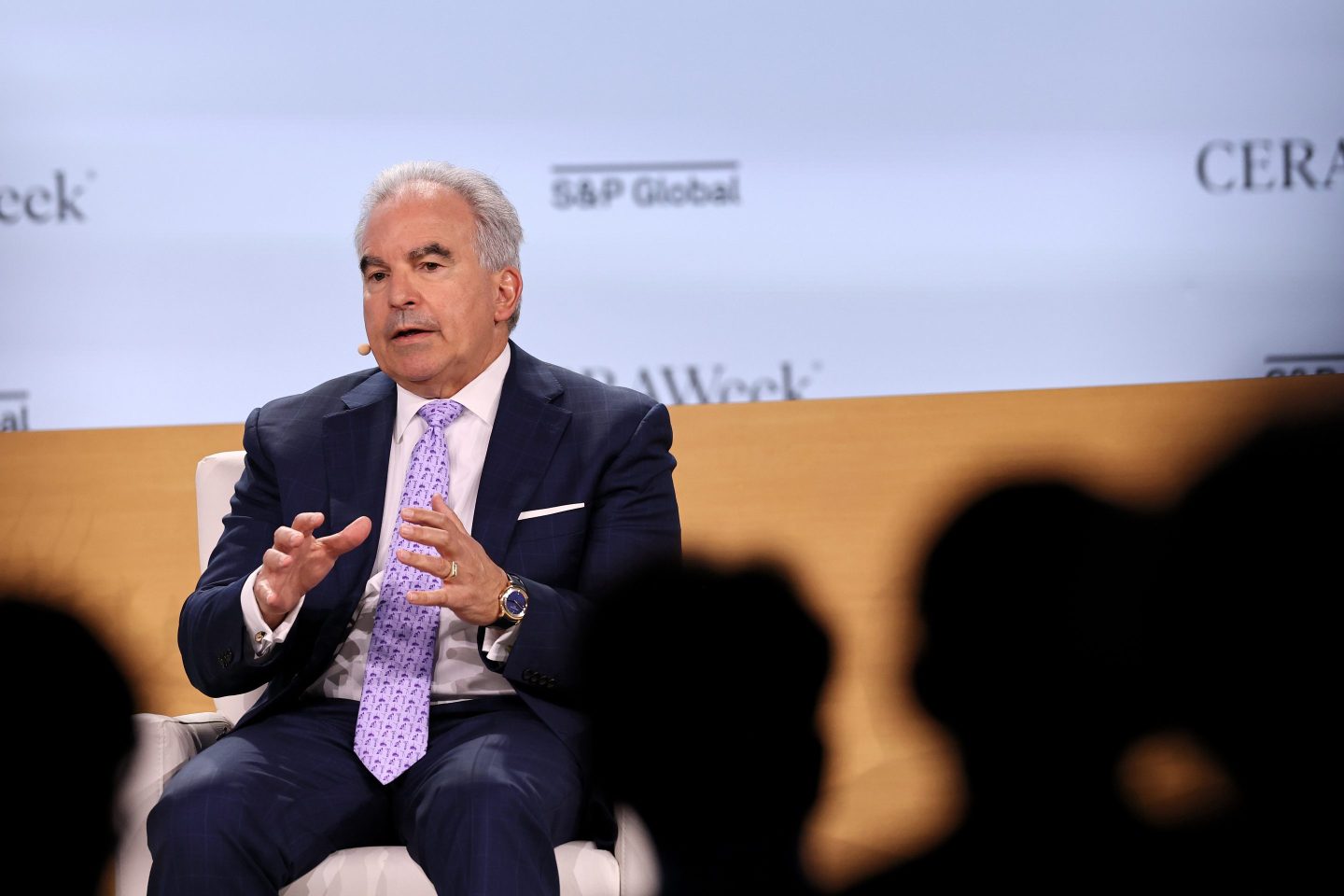
Jack Fusco, chief executive officer of Cheniere Energy, at the CERAWeek by S&P Global conference in Houston.
Energyliquified natural gas
U.S. natural gas exporters literally answer Asia’s calls for ‘help’ from the Iran war, but aid can’t come overnight
By Jordan BlumMarch 25, 2026
49 minutes ago
BankingSoFi
A notorious short-seller unloaded on SoFi. The stock shrugged it off
By Jeff John RobertsMarch 25, 2026
50 minutes ago
Warner gestures
AIAmerican Politics
New college grad unemployment will spike to 35% in 2 years, senator warns, forcing ‘Dario, Sam’ to quit AI fear-mongering
By Jacqueline MunisMarch 25, 2026
2 hours ago

Most Popular

Magazine
The youngest-ever female CEO of a Fortune 500 company is fighting Trump's cuts to keep Medicaid strong
By Fortune EditorsMarch 24, 2026
1 day ago
Commentary
The Treasury just declared the U.S. insolvent. The media missed it
By Fortune EditorsMarch 23, 2026
2 days ago
Success
Palantir’s billionaire CEO says only two kinds of people will succeed in the AI era: trade workers — ‘or you’re neurodivergent’
By Fortune EditorsMarch 24, 2026
1 day ago
Energy
Nobel laureate Paul Krugman calls it 'treason': $580 million in suspicious oil futures traded minutes before Trump's Iran reversal
By Fortune EditorsMarch 24, 2026
1 day ago
Success
The job market is so bad that ‘reverse recruiters’ are charging $1,500 a month just to help people look for jobs
By Fortune EditorsMarch 25, 2026
13 hours ago
Success
JPMorgan has started monitoring the keystrokes, video calls, and meetings of its junior investment bankers—and they say it's for employee well-being
By Fortune EditorsMarch 24, 2026
1 day ago

© 2026 Fortune Media IP Limited. All Rights Reserved. Use of this site constitutes acceptance of our Terms of Use and Privacy Policy | CA Notice at Collection and Privacy Notice | Do Not Sell/Share My Personal Information
FORTUNE is a trademark of Fortune Media IP Limited, registered in the U.S. and other countries. FORTUNE may receive compensation for some links to products and services on this website. Offers may be subject to change without notice.