The graying of the U.S. workforce is gaining momentum.
A Pew Research survey found nearly a fifth of Americans age 65 and older were employed in 2023, nearly double the three decades prior. Employees 55 and older will constitute over a quarter of the global workforce by 2031, according to an analysis from Bain & Co. last year.
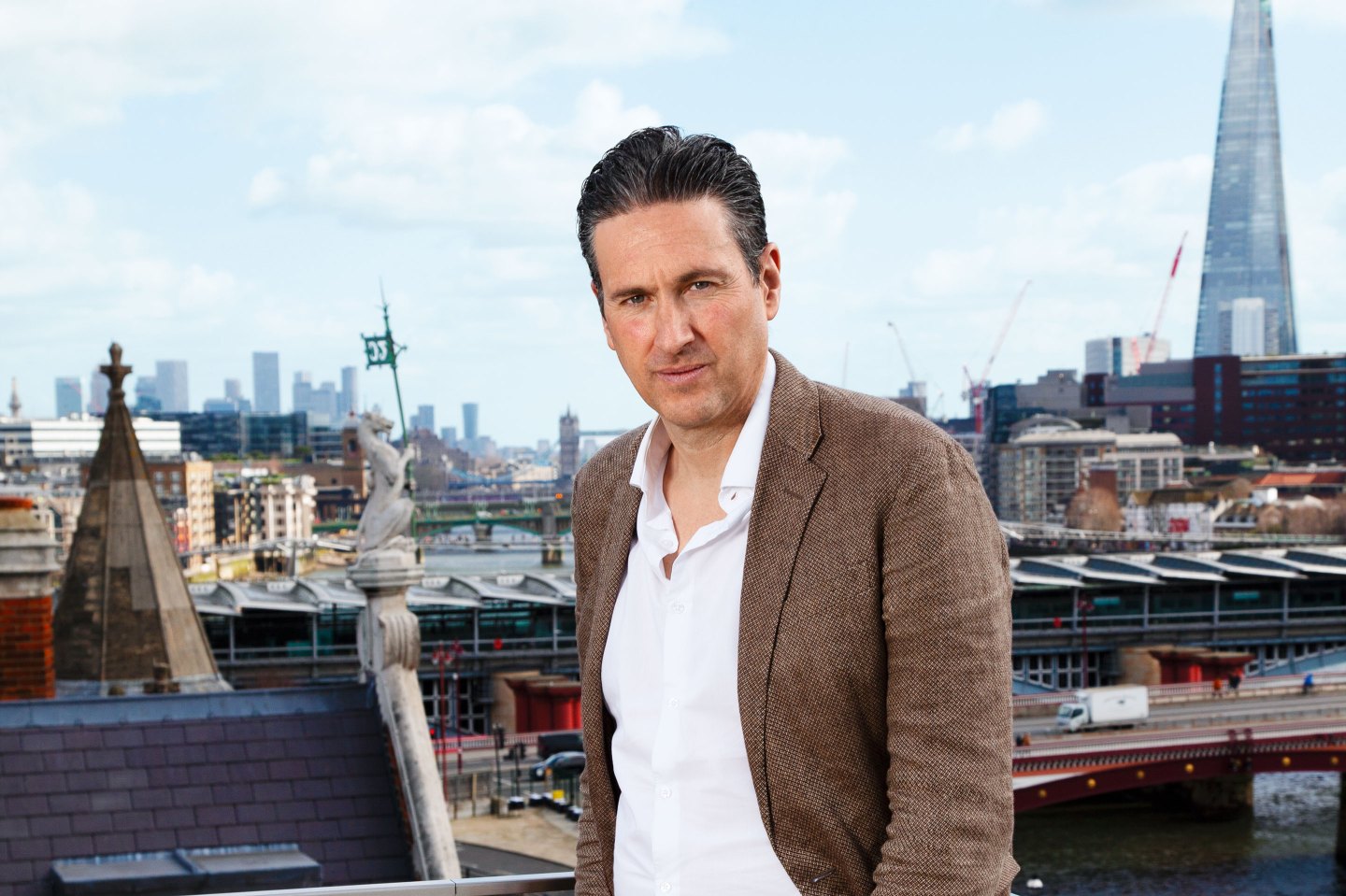
Finding ways to capitalize on an increasingly intergenerational workforce is top of mind for Jason LaRue, national managing partner of talent and culture at KPMG, who supports the firm’s 36,000 U.S. partners and professionals.
“We’re absolutely going to have to be able to attract workers across a wide set of generations, including people who have had longer careers already,” LaRue tells Fortune. “There’s no magic about, ‘I turned X age, and therefore I am capable or not capable of doing something else.’ ”
This marks an unprecedented time for most workplaces, where the presence of retirement-age workers used to be rare. However, given the current U.S. labor shortage, it could be a win-win for those older workers and their employers alike. As the pool of older workers grows, so does the evidence that their presence on multigenerational teams can boost a company’s bottom line, foster innovation, and help combat widespread burnout. In the war for talent, employers must implement novel ways to integrate and engage both longtime and new cohorts of experienced workers.
65+
Nearly one-fifth of Americans age 65 and older were employed in 2023. Source: Pew Research.
For practical and professional reasons, adults are working longer. For some, the financial impact of caregiving and the need for a steady paycheck to support their longer, healthier life spans have made traditional retirement impossible. “We’re having to try and invent a life that hasn’t been lived before,” says John Beard, director of the International Longevity Center–USA and professor at the Robert N. Butler Columbia Aging Center.
Other older Americans continue to work to maintain social connections, for a sense of purpose, or to reimagine a career in a novel decade of opportunity—like Elizabeth White, author of 55, Underemployed, and Faking Normal. She joined a startup incubator at age 68 and became a founder at 70. “I think that the days of retirement being a one-time, one-way exit and then you’re done are over,” she tells Fortune.
The case for hiring and retaining older workers
While generations are not monoliths, research suggests older workers are the most loyal employees and tend to stay in their jobs longer. According to the Organization for Economic Cooperation and Development (OECD), companies whose proportion of older workers is 10% higher than that of other firms see 4% less turnover compared with companies with a lower proportion. That may not seem like a big difference, but losing and replacing an employee can cost companies between one and two times the employee’s annual salary.
Older workers also possess what Bethany Iverson, cofounder of the Coven, a co-working space for underrepresented groups, calls crystallized intelligence. “As we age, we get better at formalizing knowledge. We get better at giving advice and sharing feedback,” she says.
Dr. Linda Fried, director of Columbia’s Age Boom Academy and the Robert N. Butler Columbia Aging Center and the dean of the Columbia Mailman School of Public Health, says older workers also possess more “prosocial motivations,” that is, an empathy and a desire to serve others. “As people get older, maybe because of their problem-solving capabilities plus a huge dose of generativity, [they want] to leave things better for subsequent generations,” Fried tells Fortune. Companies benefit from an older employee’s desire to make improvements and help others avoid mistakes.
25%
Employees 55 and older will constitute over a quarter of the global workforce by 2031. Source: Bain & Co.
Older workers may also be a solution to high burnout rates. Research suggests a fourth of the workforce faces burnout symptoms such as feeling overwhelmed, anxious, or distressed, which can lead to high turnover and absenteeism, costing companies billions in lost productivity.
But according to a 2022 survey from Gallup, baby boomers have the lowest levels of burnout and the highest engagement at work. Iverson hypothesizes older workers don’t feel the pressure to climb the ladder as they did when they were younger. Not only are older workers less likely to leave, their calmer, more relaxed perspective can rub off on younger workers in an intergenerational workplace.
The power of an intergenerational workforce
Extensive research from the AARP found that teams composed of older and younger workers are more productive than homogeneous age groups. According to a 2020 International Longevity Centre study in the U.K., teams with an age range of 25 years or more met or exceeded management’s expectations 73% of the time, compared with 35% for teams with an age gap of less than 10 years.
“Older workers are bringing a whole different layer of experience—a savvy ability to problem-solve—that when you mix it with younger brackets, it produces a high amount of output,” says Gary A. Officer, CEO of the Center for Workforce Inclusion.
Despite the case for retention, many older workers don’t feel supported in their growth once they reach the age society deems graying.
Pervasive ageism
A significant barrier to thriving at work is the ageist assumptions around older employees. Fried says the false assumption that older workers take jobs from younger ones—the “lump of labor” fallacy—propels ageism and creates barriers to age-inclusivity.
“We’re socialized to be ageist,” she says, adding that older workers do not often compete with younger workers for the same job.
A vast majority, 82%, of workers between age 50 and 80 report experiencing at least one form of ageism in their daily lives, a University of Michigan poll found; one in six older adults says they haven’t gotten a job because of their age, according to the AARP; 40% of employers do not have policies in place to support older workers, according to the Coven. “We don’t celebrate the expertise, the knowledge, and the wisdom in the ways that we should,” Iverson says of older workers.
Fostering age-inclusivity
Over 1,000 companies have pledged to create equal opportunities for older workers as part of AARP’s Employer Pledge Program. While the pledge is a good start, Fried says putting age-inclusive policies and accommodations into action is most impactful. As standard retirements become a thing of the past and many older workers hope to stay working, employers must rebut baked-in ageism and see their most tenured employees as assets.
“We are in a war for talent continually, and that war for talent gets lost, which has a direct effect on the bottom line, if the people at your company don’t feel like they belong,” says Jessica Kriegel, the chief scientist of workplace culture at Culture Partners. Kei Bullock, the vice president of talent acquisition at Northrop Grumman, which hires 10,000 employees a year, says its iReturn program has led to an 80% retention rate since 2017. The training and mentoring program is designed for mid- to late-career workers who have taken at least a two-year career break and are looking to reengage.
Beyond hiring, LaRue says, it’s what happens within the closed doors of an office setting that dictates whether or not older workers feel seen.
KPMG’s caregiver concierge benefits target those who may be caring for an older parent coupled with work responsibilities. Caregiving benefits, such as in-home aides, paid time off, and flexible work schedules, can scale beyond an employee’s child to their aging parents, who are living longer and often lean on their adult children for support.
Baby boomers have the lowest levels of burnout and the highest engagement at work.
As 90% of older workers say their job must feel meaningful to accept a position, employers have to find innovative ways to reengage and support them.
“There’s a massive opportunity to reimagine how roles are designed, helping organizations absorb the wisdom of older employees before they eventually transition out of the workforce,” says Iverson. She envisions evolved roles capitalizing on older employees’ crystallized intelligence, such as documentation positions where people can synthesize their knowledge for future workers.
“It’s great for the organization, because when they do eventually retire or leave the workforce, there is an artifact of all of the things that they were working on, and that they were great at,” Iverson says.
Offering advisory, coaching, mentoring, or part-time roles can help retain older workers, Iverson adds, along with flexible working hours and remote options. Iverson also suggests asking older workers how they might imagine their role evolving to keep them as engaged and fulfilled as possible. Managers shouldn’t assume that older employees have no interest in growing on the job.
As we live longer, it’s time to redefine what it means to work. How can that look different and create more fulfillment for individuals as they age while supporting companies? Working is no longer solely about climbing the ladder. Maybe it’s also about making a lateral move, creating something new later in life, or pivoting completely.
“I get very excited about the social capital that older adults could bring,” Fried says. “This is astoundingly optimistic if we can take down our blinders and think about how to design for a society in which people can stay engaged.”
This article appears in the February/March issue of Fortune with the headline, “The unexpected upside of an aging workforce.”