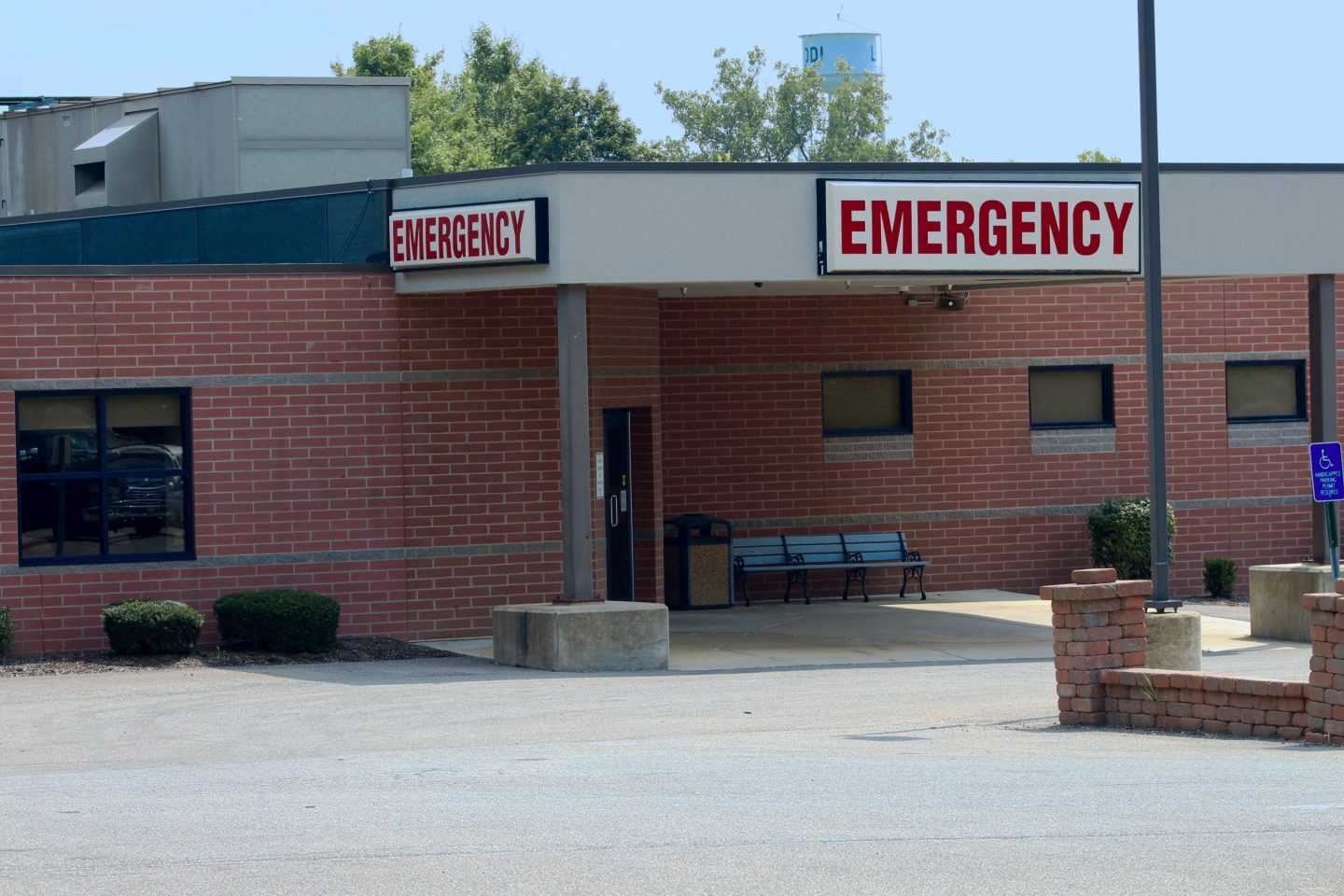
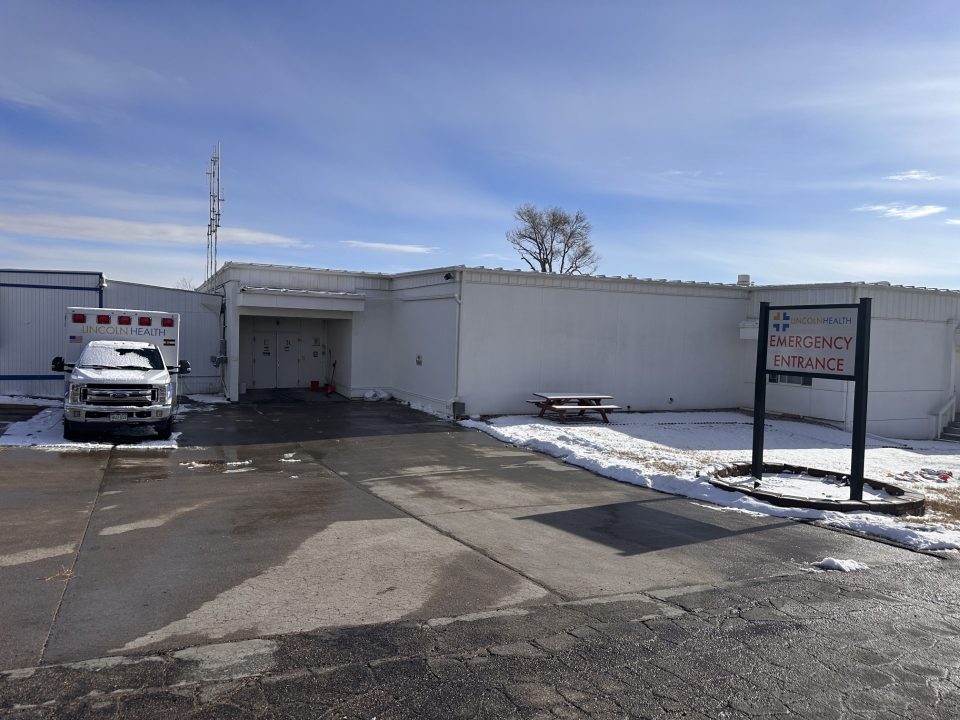
Kevin Stansbury, the CEO of Lincoln Community Hospital in the 800-person town of Hugo, Colorado, is facing a classic Catch-22: He could boost his rural hospital’s revenues by offering hip replacements and shoulder surgeries, but the 64-year-old hospital needs more money to be able to expand its operating room to do those procedures.
“I’ve got a surgeon that’s willing to do it. My facility isn’t big enough,” Stansbury said. “And urgent services like obstetrics I can’t do in my hospital, because my facility won’t meet code.”
Besides securing additional revenue for the hospital, such an expansion could keep locals from having to drive the 100 miles to Denver for orthopedic surgeries or to deliver babies.
Rural hospitals throughout the nation are facing a similar conundrum. An increase in costs amid lower payments from insurance plans makes it harder for small hospitals to fund large capital improvement projects. And high inflation and rising interest rates coming out of the pandemic are making it tougher for aging facilities to qualify for loans or other types of financing to upgrade their facilities to meet the ever-changing standards of medical care.
“Most of us are operating at very low margins, if any margin at all,” Stansbury said. “So, we’re struggling to find the money.”
Aging hospital infrastructure, particularly in rural areas, is a growing concern. Data on the age of hospitals is hard to come by, because hospitals expand, upgrade, and refurbish different parts of their facilities over time. A 2017 analysis by the American Society for Health Care Engineering, a part of the American Hospital Association, found that the average age of hospitals in the U.S. increased from 8.6 years in 1994 to 11.5 years in 2015. That number has likely grown, industry insiders say, as many hospitals delayed capital improvement projects, particularly during the pandemic.
Research published in 2021 by the capital planning firm Facility Health Inc., now called Brightly, found that U.S. health care facilities had deferred about 41% of their maintenance and would need $243 billion to complete the backlog.
Rural hospitals don’t have the resources of larger hospitals, particularly those in hospital chains, to fund billion-dollar expansions.
Most of today’s rural hospitals were opened with funding from the Hill-Burton Act, passed by Congress in 1946. That program was rolled into the Public Health Service Act in the 1970s and, by 1997, had funded the construction of nearly 7,000 hospitals and clinics. Now, many of those buildings, particularly those in rural areas, are in dire need of improvements.
Stansbury, who is also board chair of the Colorado Hospital Association, said at least a half-dozen rural hospitals in the state need significant capital investment.
Harold Miller, president and CEO of the Center for Healthcare Quality and Payment Reform, a think tank in Pittsburgh, said the major problem for small rural hospitals is that private insurance is no longer covering the full cost of providing care. Medicare Advantage, a program under which Medicare pays private plans to provide coverage for seniors and people with disabilities, is a major contributor to the problem, he said.
“You’re basically taking patients away from what may be the best payer that the small hospital has, and pushing those patients onto a private insurance plan, which doesn’t pay the same way that traditional Medicare pays and ends up also using a variety of techniques to deny claims,” Miller said.
Rural hospitals also must staff their emergency rooms with physicians round-the-clock, but the hospitals get paid only if someone comes in.
Meanwhile, labor costs coming out of the pandemic have increased, and inflation has driven up the cost of supplies. Those financial headwinds will likely push more rural hospitals out of business. Hospital closures dropped during the pandemic, from a record 18 closures in 2020 to a combined eight closures in 2021 and 2022, according to the Cecil G. Sheps Center for Health Services Research at the University of North Carolina-Chapel Hill, as emergency relief funds kept them open. But that life support has ended, and at least nine more closed in 2023. Miller said closures are reverting to pre-pandemic rates.
That raises concerns that some hospitals might invest in new facilities and end up shutting down anyway. Miller said only a small portion of rural hospitals might be able to make a meaningful difference to their bottom lines by adding new services.
Lawmakers have tried to help. California, for example, has loan programs charging low to no interest that rural hospitals can participate in, and hospital representatives are urging Colorado legislators to approve similar support.
At the federal level, Rep. Yadira Caraveo, a Colorado Democrat, has introduced the bipartisan Rural Health Care Facilities Revitalization Act, which would help rural hospitals get more funding for capital projects through the U.S. Department of Agriculture. The USDA has been one of the largest funders of rural development through its Community Facilities Programs, providing over $3 billion in loans a year. In 2019, half of the more than $10 billion in outstanding loans through the program helped health care facilities.
“Otherwise, facilities would have to go to private lenders,” said Carrie Cochran-McClain, chief policy officer for the National Rural Health Association.
Rural hospitals might not be very attractive to private lenders because of their financial constraints, and thus may have to pay higher interest rates or meet additional requirements to get those loans, she said.
Caraveo’s bill would also allow hospitals that already have loans to refinance at lower interest rates, and would cover more categories of medical equipment, such as devices and technology used for telehealth.
“We need to keep these places open, even not just for emergencies, but to deliver babies, to have your cardiology appointment,” said Caraveo, who is also a pediatrician. “You shouldn’t have to drive two, three hours to get it.”
Kristin Juliar, a capital resources consultant for the National Organization of State Offices of Rural Health, has been studying the challenges rural hospitals face in borrowing money and planning big projects.
“They’re trying to do this while they’re doing their regular jobs running a hospital,” Juliar said. “A lot of times when there are funding opportunities, for example, the timing may be just too tight for them to put together a project.”
Some funding is contingent on the hospital raising matching funds, which may be difficult in distressed rural communities. And most projects require hospitals to cobble together funding from multiple sources, adding complexity. And since these projects often take a long time to put together, rural hospital CEOs or board members sometimes leave before they come to fruition.
“You get going at something and then key people disappear, and then you feel like you’re starting all over again,” she said.
The hospital in Hugo opened in 1959 after soldiers coming back from World War II decided that Lincoln County on the eastern Colorado plains needed a hospital. They donated money, materials, land, and labor to build it. The hospital has added four family practice clinics, an attached skilled nursing facility, and an off-site assisted living center. It brings in specialists from Denver and Colorado Springs.
Stansbury would like to build a new hospital roughly double the size of the current 45,000-square-foot facility. With inflation easing and interest rates likely to go down this year, Stansbury hopes to get financing lined up in 2024 and to break ground in 2025.
“The problem is, every day I wake up, it gets more expensive,” Stansbury said.
When hospital officials first contemplated building a new hospital three years ago, they estimated a total project cost of about $65 million. But inflation skyrocketed and now interest rates have gone up, pushing the total cost to $75 million.
“If we have to wait another couple of years, we may be pushing up closer to $80 million,” Stansbury said. “But we’ve got to do it. I can’t wait five years and think the costs of construction are going to go down.”
KFF Health News, formerly known as Kaiser Health News (KHN), is a national newsroom that produces in-depth journalism about health issues and is one of the core operating programs at KFF — the independent source for health policy research, polling, and journalism.