• Home
  • Latest
  • Fortune 500
  • Finance
  • Tech
  • Leadership
  • Lifestyle
  • Rankings
  • Multimedia
Lifestylemindfulness

The secret American history of yoga began at Henry David Thoreau’s Walden Pond: ‘Even I am a yogin’

By
Jeremy David Engels
Jeremy David Engels
and
The Conversation
The Conversation
Down Arrow Button Icon
By
Jeremy David Engels
Jeremy David Engels
and
The Conversation
The Conversation
Down Arrow Button Icon
June 21, 2023, 10:43 AM ET
Henry David Thoreau
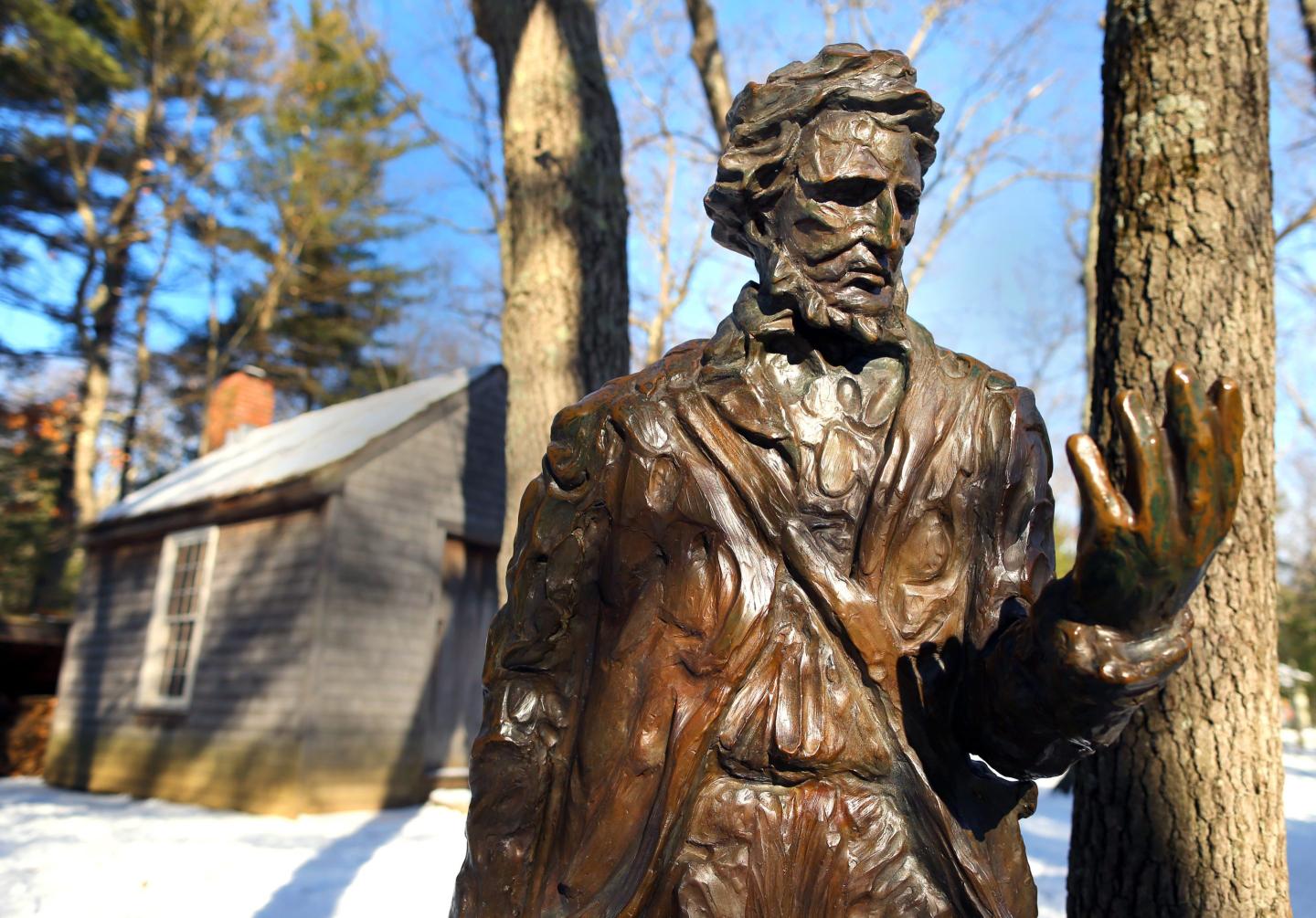
A statue of Henry David Thoreau in front of a reproduction of his cabin at the Walden Pond Reservation in Concord, Mass. on Jan. 20, 2016.John Tlumacki—The Boston Globe/Getty Images

International Yoga Day, dedicated to celebrating yoga as part of the “intangible cultural heritage of humanity,” has proved controversial since its inception in 2015.

Recommended Video

To celebrate the day on June 21, yoga gatherings are held in many parts of the world, but there are also devoted yogis who refuse to participate, saying the holiday is designed to covertly promote a right-wing Hindu fundamentalist agenda.

Some also protest the crass commercialism of the holiday and contemporary yoga culture more generally.

I am a scholar who studies communication, yoga and meditation, and I mark this day each year by taking the opportunity to learn more about the long and complex global history of yoga. A 19th-century thinker I often study on this day is Henry David Thoreau.

Thoreau and yoga at Walden Pond

Thoreau was member of the cadre of 19th-century American essayists, poets and social activists known as the Transcendentalists. The Transcendentalists were famous, in their time, for their interest in Indian and other forms of non-Western thought.

As I explain in my recent book “The Ethics of Oneness: Emerson, Whitman, and the Bhagavad-Gita,” the Transcendentalists were active participants in a cultural conversation that struggled to understand how philosophies of yoga might apply to an individualistic nation like the United States.

From 1845 to 1847, Thoreau spent two years living in a cabin he built at Walden Pond in Concord, Massachusetts. While living off the land and working on his first book, he also spent significant time contemplating yoga philosophy. In fact, when he returned from the woods, he reported to an admirer: “To some extent, and at rare intervals, even I am a yogin.”

According to the religious studies scholar Richard Davis, “Thoreau was likely the first American to entertain seriously the possibility of identifying himself as a yogi.”

Thoreau did not practice asana or the physical postures of yoga, as millions of people do today, but he was a serious student of yoga philosophy. Contemporary students of yoga might find Thoreau’s thoughts on the philosophy of yoga, and in particular karma yoga, the yoga of selfless action, worthy of consideration.

The Bhagavad-Gita on yoga and duty

Thoreau approached the Bhagavad-Gita, a central episode in the ancient Indian epic Mahabharata, as a book of philosophy and ethics that addressed deep and abiding questions about how to live a good life.

The Mahabharata describes a devastating conflict over succession. The Bhagavad-Gita begins when, right on the cusp of war, the greatest warrior of the age, Arjuna, throws down his weapons on the battlefield, refusing to fight his own relations. His charioteer Krishna, who eventually reveals himself to be God, attempts to convince Arjuna to fight by teaching him three types of yoga: bhakti yoga, the yoga of devotion; jnana yoga, the yoga of sacred knowledge; and karma yoga, the yoga of selfless action. It was the last concept that preoccupied Thoreau.

According to Krishna in the Bhagavad-Gita, practicing karma yoga entails acting without consideration for the personal benefits, or “fruits,” of an action. It means doing one’s duty steadfastly, without fear or shame or remorse. It also means letting go of concern for the consequences of one’s actions on others or the natural world.

Krishna contends that Arjuna’s duty is determined for him by his membership in the warrior caste. Arjuna’s practice of karma yoga means embracing his duty to fight for the good of the kingdom, though to do this he will have to kill his friends and family. Embrace his duty, Krishna concludes, and there is no need to panic.

Thoreau on the Bhagavad-Gita

Thoreau borrowed fellow Transcendentalist Ralph Waldo Emerson’s copy of the Bhagavad-Gita – the 1785 Charles Wilkins translation – and reported reading it each morning during his time living at Walden Pond.

Thoreau admired the Bhagavad-Gita. However, he pronounced Krishna’s central argument about karma yoga “unconvincing.” Thoreau writes: “Kreeshna’s argument, it must be allowed, is defective. No sufficient reason is given why Arjoon should fight. Arjoon may be convinced, but the reader is not.”

Krishna asserts that it is Arjuna’s duty to fight, but Thoreau concludes that “the duty of which he speaks is an arbitrary one.” By arbitrary, he means it is based on a model of society designed to benefit some people at the expense of others.

Learning from Thoreau on karma yoga

Thoreau models a way of reading yoga philosophy that is concerned, first and foremost, with its practical utility for the time and place we live.

Inspired by Thoreau, whenever I encounter a presentation of yoga, I ask: Is this yoga serving the creation and maintenance of the type of world I want to live in, a world that I honestly consider to be good?

In this spirit, Thoreau challenges individuals to question arguments about duty, like the one Krishna makes in the Bhagavad-Gita, by asking whose interest such arguments serve – and to consider what duty actually means to us.

Yoga is ancient, but it is not timeless. As scholars have shown, there is no one “authentic” yoga, because there are, and have always been, many ways to practice yoga, both in India and abroad. Yoga is a practice of global and religious diversity – there are Hindu, Buddhist and Jain yogas, as well as yogas that are “spiritual but not religious” and also atheistic.

And that is what the United Nations calls on us to celebrate: yoga as part of humanity’s global heritage. In celebrating this heritage, it is worthwhile to heed a lesson from the first American yogi and continue asking questions.

Jeremy David Engels is Professor of Communication Arts and Sciences, Penn State.

This article is republished from The Conversation under a Creative Commons license. Read the original article.

Join us at the Fortune Workplace Innovation Summit May 19–20, 2026, in Atlanta. The next era of workplace innovation is here—and the old playbook is being rewritten. At this exclusive, high-energy event, the world’s most innovative leaders will convene to explore how AI, humanity, and strategy converge to redefine, again, the future of work. Register now.
About the Authors
By Jeremy David Engels
See full bioRight Arrow Button Icon
By The Conversation
See full bioRight Arrow Button Icon

Latest in Lifestyle

Finance
Lorem ipsum dolor sit amet, consectetur adipiscing elit, sed do eiusmod tempor incididunt ut labore et dolore magna aliqua. Ut enim ad minim veniam
By Fortune Editors
October 20, 2025
Finance
Lorem ipsum dolor sit amet, consectetur adipiscing elit, sed do eiusmod tempor incididunt ut labore et dolore magna aliqua. Ut enim ad minim veniam
By Fortune Editors
October 20, 2025
Finance
Lorem ipsum dolor sit amet, consectetur adipiscing elit, sed do eiusmod tempor incididunt ut labore et dolore magna aliqua. Ut enim ad minim veniam
By Fortune Editors
October 20, 2025
Finance
Lorem ipsum dolor sit amet, consectetur adipiscing elit, sed do eiusmod tempor incididunt ut labore et dolore magna aliqua. Ut enim ad minim veniam
By Fortune Editors
October 20, 2025
Finance
Lorem ipsum dolor sit amet, consectetur adipiscing elit, sed do eiusmod tempor incididunt ut labore et dolore magna aliqua. Ut enim ad minim veniam
By Fortune Editors
October 20, 2025
Finance
Lorem ipsum dolor sit amet, consectetur adipiscing elit, sed do eiusmod tempor incididunt ut labore et dolore magna aliqua. Ut enim ad minim veniam
By Fortune Editors
October 20, 2025

Most Popular

Finance
Lorem ipsum dolor sit amet, consectetur adipiscing elit, sed do eiusmod tempor incididunt ut labore et dolore magna aliqua. Ut enim ad minim veniam
By Fortune Editors
October 20, 2025
Finance
Lorem ipsum dolor sit amet, consectetur adipiscing elit, sed do eiusmod tempor incididunt ut labore et dolore magna aliqua. Ut enim ad minim veniam
By Fortune Editors
October 20, 2025
Finance
Lorem ipsum dolor sit amet, consectetur adipiscing elit, sed do eiusmod tempor incididunt ut labore et dolore magna aliqua. Ut enim ad minim veniam
By Fortune Editors
October 20, 2025
Finance
Lorem ipsum dolor sit amet, consectetur adipiscing elit, sed do eiusmod tempor incididunt ut labore et dolore magna aliqua. Ut enim ad minim veniam
By Fortune Editors
October 20, 2025
Finance
Lorem ipsum dolor sit amet, consectetur adipiscing elit, sed do eiusmod tempor incididunt ut labore et dolore magna aliqua. Ut enim ad minim veniam
By Fortune Editors
October 20, 2025
Finance
Lorem ipsum dolor sit amet, consectetur adipiscing elit, sed do eiusmod tempor incididunt ut labore et dolore magna aliqua. Ut enim ad minim veniam
By Fortune Editors
October 20, 2025
Fortune Secondary Logo
Rankings
  • 100 Best Companies
  • Fortune 500
  • Global 500
  • Fortune 500 Europe
  • Most Powerful Women
  • World's Most Admired Companies
  • See All Rankings
  • Lists Calendar
Sections
  • Finance
  • Fortune Crypto
  • Features
  • Leadership
  • Health
  • Commentary
  • Success
  • Retail
  • Mpw
  • Tech
  • Lifestyle
  • CEO Initiative
  • Asia
  • Politics
  • Conferences
  • Europe
  • Newsletters
  • Personal Finance
  • Environment
  • Magazine
  • Education
Customer Support
  • Frequently Asked Questions
  • Customer Service Portal
  • Privacy Policy
  • Terms Of Use
  • Single Issues For Purchase
  • International Print
Commercial Services
  • Advertising
  • Fortune Brand Studio
  • Fortune Analytics
  • Fortune Conferences
  • Business Development
  • Group Subscriptions
About Us
  • About Us
  • Press Center
  • Work At Fortune
  • Terms And Conditions
  • Site Map
  • About Us
  • Press Center
  • Work At Fortune
  • Terms And Conditions
  • Site Map
  • Facebook icon
  • Twitter icon
  • LinkedIn icon
  • Instagram icon
  • Pinterest icon

© 2026 Fortune Media IP Limited. All Rights Reserved. Use of this site constitutes acceptance of our Terms of Use and Privacy Policy | CA Notice at Collection and Privacy Notice | Do Not Sell/Share My Personal Information
FORTUNE is a trademark of Fortune Media IP Limited, registered in the U.S. and other countries. FORTUNE may receive compensation for some links to products and services on this website. Offers may be subject to change without notice.


Latest in Lifestyle

raw milk
Politicsmilk
Risk of paralysis, bacteria, even death is no match for Americans’ thirst for raw milk
By Laura Ungar, Jonel Aleccia and The Associated PressApril 29, 2026
12 hours ago
Hilton CEO Christopher Nassetta
EconomyHospitality
Hilton’s CEO says the economy is actually C-shaped to the benefit of the middle class. Most of his competitors disagree
By Tristan BoveApril 29, 2026
12 hours ago
The Best Protein Shakes of 2026: Tasted and Approved by Nutrition Experts
HealthDietary Supplements
The Best Protein Shakes of 2026: Tasted and Approved by Nutrition Experts
By Christina SnyderApril 29, 2026
18 hours ago
aging
HealthLongevity
We’re the CEOs of Peloton and the Hospital for Special Surgery. Living longer isn’t enough, we need to live better, too
By Bryan T. Kelly and Peter SternApril 29, 2026
19 hours ago
AI is changing who gets to be an expert. Are your colleagues ready to become ‘directors of intelligence’?
AIProductivity
AI is changing who gets to be an expert. Are your colleagues ready to become ‘directors of intelligence’?
By Bruce BroussardApril 29, 2026
22 hours ago
Robert F. Kennedy Jr. sits at a cafeteria table with schoolchildren.
EconomyEducation
More than two-thirds of U.S. schools say they’re unable to afford the cost of student free lunch—and MAHA’s dietary guidelines may make it worse
By Sasha RogelbergApril 29, 2026
22 hours ago

Most Popular

Apple cofounder Ronald Wayne—whose stake would be worth up to $400 billion had he not sold it in 1976—says that at 91, he has no regrets
Success
Apple cofounder Ronald Wayne—whose stake would be worth up to $400 billion had he not sold it in 1976—says that at 91, he has no regrets
By Preston ForeApril 27, 2026
3 days ago
‘Take the money and run’: Johns Hopkins economist Steve Hanke on why the UAE quit OPEC
Energy
‘Take the money and run’: Johns Hopkins economist Steve Hanke on why the UAE quit OPEC
By Shawn TullyApril 29, 2026
1 day ago
‘The cost of compute is far beyond the costs of the employees’: Nvidia executive says right now AI is more expensive than paying human workers
AI
‘The cost of compute is far beyond the costs of the employees’: Nvidia executive says right now AI is more expensive than paying human workers
By Sasha RogelbergApril 28, 2026
2 days ago
Jamie Dimon gets candid about national debt: ‘There will be a bond crisis, and then we’ll have to deal with it’
Economy
Jamie Dimon gets candid about national debt: ‘There will be a bond crisis, and then we’ll have to deal with it’
By Eleanor PringleApril 29, 2026
21 hours ago
‘They left me no choice’: Powell isn’t going anywhere—blocking Trump from another Fed appointee
Banking
‘They left me no choice’: Powell isn’t going anywhere—blocking Trump from another Fed appointee
By Eva RoytburgApril 29, 2026
12 hours ago
More than two-thirds of U.S. schools say they’re unable to afford the cost of student free lunch—and MAHA’s dietary guidelines may make it worse
Economy
More than two-thirds of U.S. schools say they’re unable to afford the cost of student free lunch—and MAHA’s dietary guidelines may make it worse
By Sasha RogelbergApril 29, 2026
22 hours ago