• Home
  • Latest
  • Fortune 500
  • Finance
  • Tech
  • Leadership
  • Lifestyle
  • Rankings
  • Multimedia
HealthCoronavirus

A doctor explains how centuries of trauma and inequality led up to Native American life expectancy dropping by 6.5 years during COVID pandemic

By
Allison Kelliher
Allison Kelliher
and
The Conversation
The Conversation
Down Arrow Button Icon
By
Allison Kelliher
Allison Kelliher
and
The Conversation
The Conversation
Down Arrow Button Icon
February 3, 2023, 3:05 PM ET
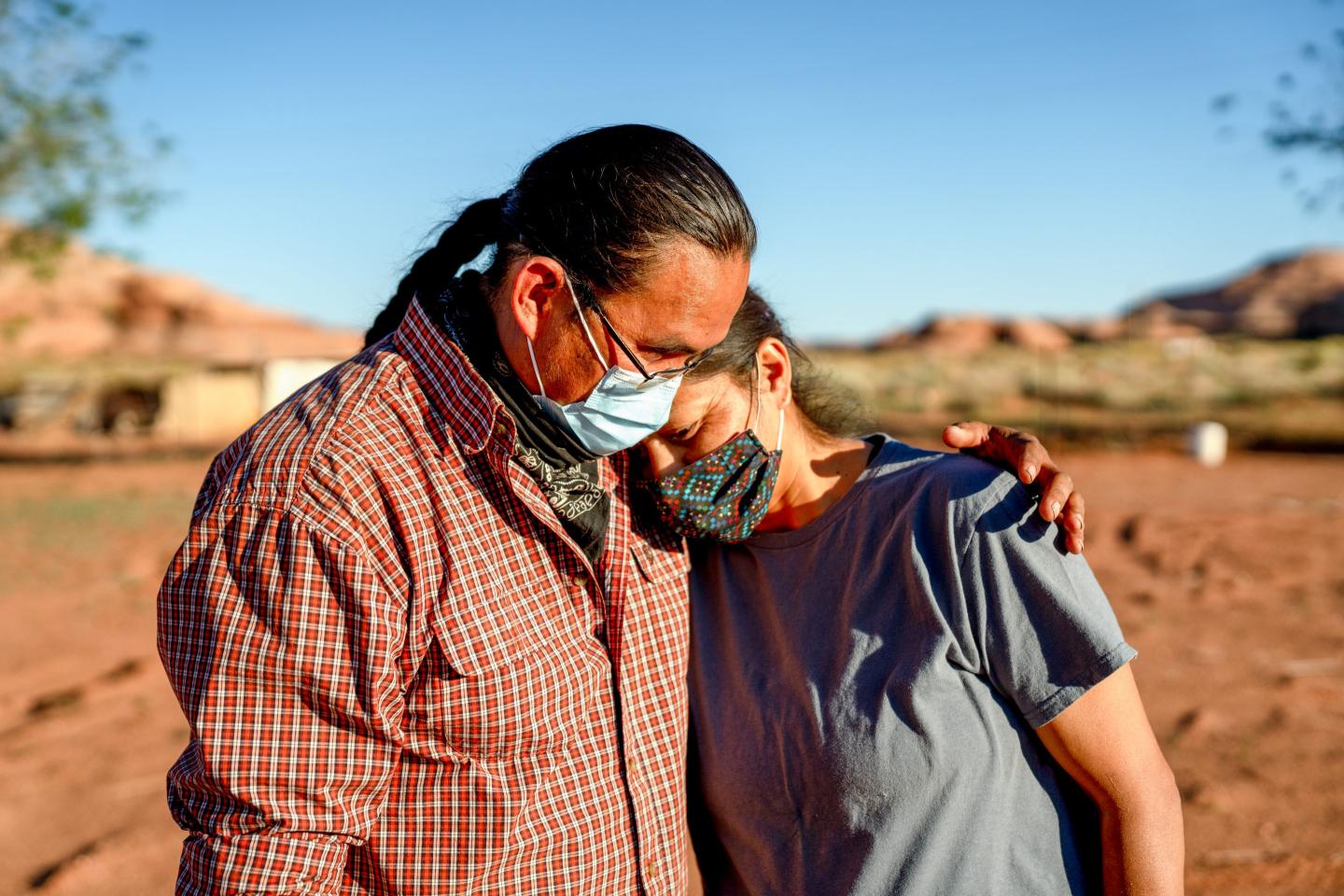
A husband comforts his wife.
A Navajo husband and wife encourage one another because of the Coronavirus curfew by the Tribal Council in Arizonagrandriver—Getty Images

Six and one-half years.

That’s the decline in life expectancy that the COVID-19 pandemic wrought upon American Indians and Alaska Natives, based on an August 2022 report from the National Center for Health Statistics.

This astounding figure translates to an overall drop in average living years from 71.8 years in 2019 to 65.2 by the end of 2021.

Although the pandemic is a major reason for this decline, it’s not the whole story. Even before COVID-19 emerged, life expectancy for Indigenous men was already five years lower than for non-Hispanic white men in the United States.

The grim reality

As a Native American physician and board-certified M.D., I am all too familiar with the health challenges that Indigenous Americans face.

Growing up in remote rural Alaska as a member of the Koyukon Athabascan tribe, I heard stories of how infectious diseases like flu, smallpox and tuberculosis threatened our survival. My cultural group descends from three families that survived the 1918 flu pandemic.

This history inspired me to become a traditional healer. Along with my training in Western medicine, I have also studied plant-based medicine and earth-based science, which was taught to me by my elders – practitioners who passed down thousands of years of accumulated knowledge to me.

Through both my medical and traditional practices, I have learned there are many reasons for the decline in life expectancy and the divide between Indigenous and non-Indigenous health outcomes. But this gap – if the government and the medical system will act – can be narrowed.

Poverty, unemployment and lack of health care

American Indians and Alaska Natives die from diabetes at more than twice the rate of non-Indigenous populations. A report from the Centers for Disease Control and Prevention shows Native Americans have significantly higher rates of obesity, high blood pressure, cancers and general poor health status than other Americans. The suicide rate in Indigenous communities is about 43% higher than that of non-Indigenous communities. And Native American women experience sexual violence far more often than non-Hispanic white women.

There are many reasons for these disparities. For starters: Native Americans have the highest poverty rate among all minority groups, perhaps as high as 25%.

Unemployment among American Indians and Alaska Natives in November 2022 was 6.2%, compared to 3.7% in the general population. Many Indigenous people, working only seasonally, are also woefully underemployed.

American Indians and Alaska Natives are also underserved in the U.S. health care system. The Indian Health Service – the federal agency that provides medical care to Indigenous Americans – is funded at about US$6 billion per year. That translated to only $4,078 per person in 2021.

The result is that there are fewer physicians, nurses and therapists seeing Indigenous patients, particularly those who live in rural areas. Those providing care have fewer technologies available to them, such as MRI and ultrasound machines, to help diagnose and treat disease earlier. Such shortages mean less access to either primary or emergency care, which contributes to lower life expectancy.

Historical trauma

A shaky health care system is only part of the problem. Adverse childhood experiences, social marginalization  and toxic, relentless stress also contribute to shorter lives.

Then there are the effects of unresolved historical trauma – the cumulative emotional and psychological trauma within a specific group that spans generations.

This kind of collective trauma cannot be overstated. A growing body of evidence is documenting its effects on Indigenous people. Historical trauma can produce physiological stress, striking not just individual people, but entire families. There is recent evidence to suggest that the body’s stress response has caused epigenetic changes – meaning changes in gene expression caused by the environment – in Native Americans that can affect one’s health even before birth.

To this day, the U.S. government has consistently created policies that sanctioned inequality – actions that have likely contributed to the historical trauma and health disparities present today. American Indian and Alaska Native communities have suffered from disease, war, internment and starvation for centuries.

Not only were Indigenous people displaced from the lands that were once our home, the U.S. government even made it illegal for us to practice their traditions. Throughout most of the 20th century, the U.S. government placed Indigenous children into boarding schools that separated them from their families.

Breaking the cycle

It’s clear that Indigenous communities need new or upgraded hospitals and clinics, more and better diagnostic technology, more specialty services in dental care, obstetrics, pediatrics and oncology, and more alcohol and substance abuse treatment programs.

There is some good news: The Biden administration’s 2022 infrastructure bill makes $13 billion available to address some of these needs for Native American tribes. And an additional $20 billion appropriation for COVID-19 relief will also provide help for some of the most immediate challenges.

But even with this aid, there is still a funding gap. The National Indian Health Board, a nonprofit advocacy group representing federally recognized tribes, recommends a commitment of $48 billion for the 2024 fiscal year to fully fund the health needs of Indigenous people. The current budget, $9.3 billion, is less than one-fifth of that.

The recent increases in funding are certainly a step in the right direction. But the factors contributing to the shorter lives of Native Americans started generations ago, and they are still reverberating among the youngest of us today.

Both from a professional standpoint – as well as one that is very personal to me and my ancestors – more work in this area cannot come soon enough.

Allison Kelliher is a assistant professor with the Department of Family & Community Medicine at the University of North Dakota

Learn how to navigate and strengthen trust in your business with The Trust Factor, a weekly newsletter examining what leaders need to succeed. Sign up here.
About the Authors
By Allison Kelliher
See full bioRight Arrow Button Icon
By The Conversation
See full bioRight Arrow Button Icon

Latest in Health

Finance
Lorem ipsum dolor sit amet, consectetur adipiscing elit, sed do eiusmod tempor incididunt ut labore et dolore magna aliqua. Ut enim ad minim veniam
By Fortune Editors
October 20, 2025
Finance
Lorem ipsum dolor sit amet, consectetur adipiscing elit, sed do eiusmod tempor incididunt ut labore et dolore magna aliqua. Ut enim ad minim veniam
By Fortune Editors
October 20, 2025
Finance
Lorem ipsum dolor sit amet, consectetur adipiscing elit, sed do eiusmod tempor incididunt ut labore et dolore magna aliqua. Ut enim ad minim veniam
By Fortune Editors
October 20, 2025
Finance
Lorem ipsum dolor sit amet, consectetur adipiscing elit, sed do eiusmod tempor incididunt ut labore et dolore magna aliqua. Ut enim ad minim veniam
By Fortune Editors
October 20, 2025
Finance
Lorem ipsum dolor sit amet, consectetur adipiscing elit, sed do eiusmod tempor incididunt ut labore et dolore magna aliqua. Ut enim ad minim veniam
By Fortune Editors
October 20, 2025
Finance
Lorem ipsum dolor sit amet, consectetur adipiscing elit, sed do eiusmod tempor incididunt ut labore et dolore magna aliqua. Ut enim ad minim veniam
By Fortune Editors
October 20, 2025

Most Popular

Finance
Lorem ipsum dolor sit amet, consectetur adipiscing elit, sed do eiusmod tempor incididunt ut labore et dolore magna aliqua. Ut enim ad minim veniam
By Fortune Editors
October 20, 2025
Finance
Lorem ipsum dolor sit amet, consectetur adipiscing elit, sed do eiusmod tempor incididunt ut labore et dolore magna aliqua. Ut enim ad minim veniam
By Fortune Editors
October 20, 2025
Finance
Lorem ipsum dolor sit amet, consectetur adipiscing elit, sed do eiusmod tempor incididunt ut labore et dolore magna aliqua. Ut enim ad minim veniam
By Fortune Editors
October 20, 2025
Finance
Lorem ipsum dolor sit amet, consectetur adipiscing elit, sed do eiusmod tempor incididunt ut labore et dolore magna aliqua. Ut enim ad minim veniam
By Fortune Editors
October 20, 2025
Finance
Lorem ipsum dolor sit amet, consectetur adipiscing elit, sed do eiusmod tempor incididunt ut labore et dolore magna aliqua. Ut enim ad minim veniam
By Fortune Editors
October 20, 2025
Finance
Lorem ipsum dolor sit amet, consectetur adipiscing elit, sed do eiusmod tempor incididunt ut labore et dolore magna aliqua. Ut enim ad minim veniam
By Fortune Editors
October 20, 2025
Fortune Secondary Logo
Rankings
  • 100 Best Companies
  • Fortune 500
  • Global 500
  • Fortune 500 Europe
  • Most Powerful Women
  • World's Most Admired Companies
  • See All Rankings
  • Lists Calendar
Sections
  • Finance
  • Fortune Crypto
  • Features
  • Leadership
  • Health
  • Commentary
  • Success
  • Retail
  • Mpw
  • Tech
  • Lifestyle
  • CEO Initiative
  • Asia
  • Politics
  • Conferences
  • Europe
  • Newsletters
  • Personal Finance
  • Environment
  • Magazine
  • Education
Customer Support
  • Frequently Asked Questions
  • Customer Service Portal
  • Privacy Policy
  • Terms Of Use
  • Single Issues For Purchase
  • International Print
Commercial Services
  • Advertising
  • Fortune Brand Studio
  • Fortune Analytics
  • Fortune Conferences
  • Business Development
  • Group Subscriptions
About Us
  • About Us
  • Press Center
  • Work At Fortune
  • Terms And Conditions
  • Site Map
  • About Us
  • Press Center
  • Work At Fortune
  • Terms And Conditions
  • Site Map
  • Facebook icon
  • Twitter icon
  • LinkedIn icon
  • Instagram icon
  • Pinterest icon

Latest in Health

Simple App Review (2026): Expert Tested and Reviewed
Healthmeal delivery
Simple App Review (2026): Expert Tested and Reviewed
By Emily PharesApril 30, 2026
13 hours ago
Premium card perks are ‘designed to create a win-win-win for everyone’ but customers are paying with heavy annual fees and data
Personal FinancePersonal Finance Evergreen
Premium card perks are ‘designed to create a win-win-win for everyone’ but customers are paying with heavy annual fees and data
By Catherina GioinoApril 30, 2026
14 hours ago
hoskins
Commentaryoffices
Gensler Co-Chair: Hot-desking was supposed to save money. It may be costing you your culture
By Diane HoskinsApril 30, 2026
20 hours ago
raw milk
Politicsmilk
Risk of paralysis, bacteria, even death is no match for Americans’ thirst for raw milk
By Laura Ungar, Jonel Aleccia and The Associated PressApril 29, 2026
1 day ago
The Best Protein Shakes of 2026: Tasted and Approved by Nutrition Experts
HealthDietary Supplements
The Best Protein Shakes of 2026: Tasted and Approved by Nutrition Experts
By Christina SnyderApril 29, 2026
2 days ago
aging
HealthLongevity
We’re the CEOs of Peloton and the Hospital for Special Surgery. Living longer isn’t enough, we need to live better, too
By Bryan T. Kelly and Peter SternApril 29, 2026
2 days ago

Most Popular

Apple cofounder Ronald Wayne—whose stake would be worth up to $400 billion had he not sold it in 1976—says that at 91, he has no regrets
Success
Apple cofounder Ronald Wayne—whose stake would be worth up to $400 billion had he not sold it in 1976—says that at 91, he has no regrets
By Preston ForeApril 27, 2026
4 days ago
Google Cloud revenue is now 18% of Alphabet's business. Is this the beginning of the end of Google's search identity?
Big Tech
Google Cloud revenue is now 18% of Alphabet's business. Is this the beginning of the end of Google's search identity?
By Alexei OreskovicApril 29, 2026
1 day ago
China dominates the world's lithium supply. The U.S. just found 328 years' worth in its own backyard
North America
China dominates the world's lithium supply. The U.S. just found 328 years' worth in its own backyard
By Jake AngeloApril 30, 2026
12 hours ago
With no end in sight, Trump considers new options in Iran war—including the ‘Dark Eagle’ hypersonic missile
Big Tech
With no end in sight, Trump considers new options in Iran war—including the ‘Dark Eagle’ hypersonic missile
By Jim EdwardsApril 30, 2026
20 hours ago
‘The cost of compute is far beyond the costs of the employees’: Nvidia executive says right now AI is more expensive than paying human workers
AI
‘The cost of compute is far beyond the costs of the employees’: Nvidia executive says right now AI is more expensive than paying human workers
By Sasha RogelbergApril 28, 2026
3 days ago
Accenture's Julie Sweet blew up 50 years of company history. She says the hardest part is still ahead
Conferences
Accenture's Julie Sweet blew up 50 years of company history. She says the hardest part is still ahead
By Nick LichtenbergApril 29, 2026
2 days ago

© 2026 Fortune Media IP Limited. All Rights Reserved. Use of this site constitutes acceptance of our Terms of Use and Privacy Policy | CA Notice at Collection and Privacy Notice | Do Not Sell/Share My Personal Information
FORTUNE is a trademark of Fortune Media IP Limited, registered in the U.S. and other countries. FORTUNE may receive compensation for some links to products and services on this website. Offers may be subject to change without notice.