How this Minor League Baseball team rebounded after the pandemic forced them to throw out the playbook
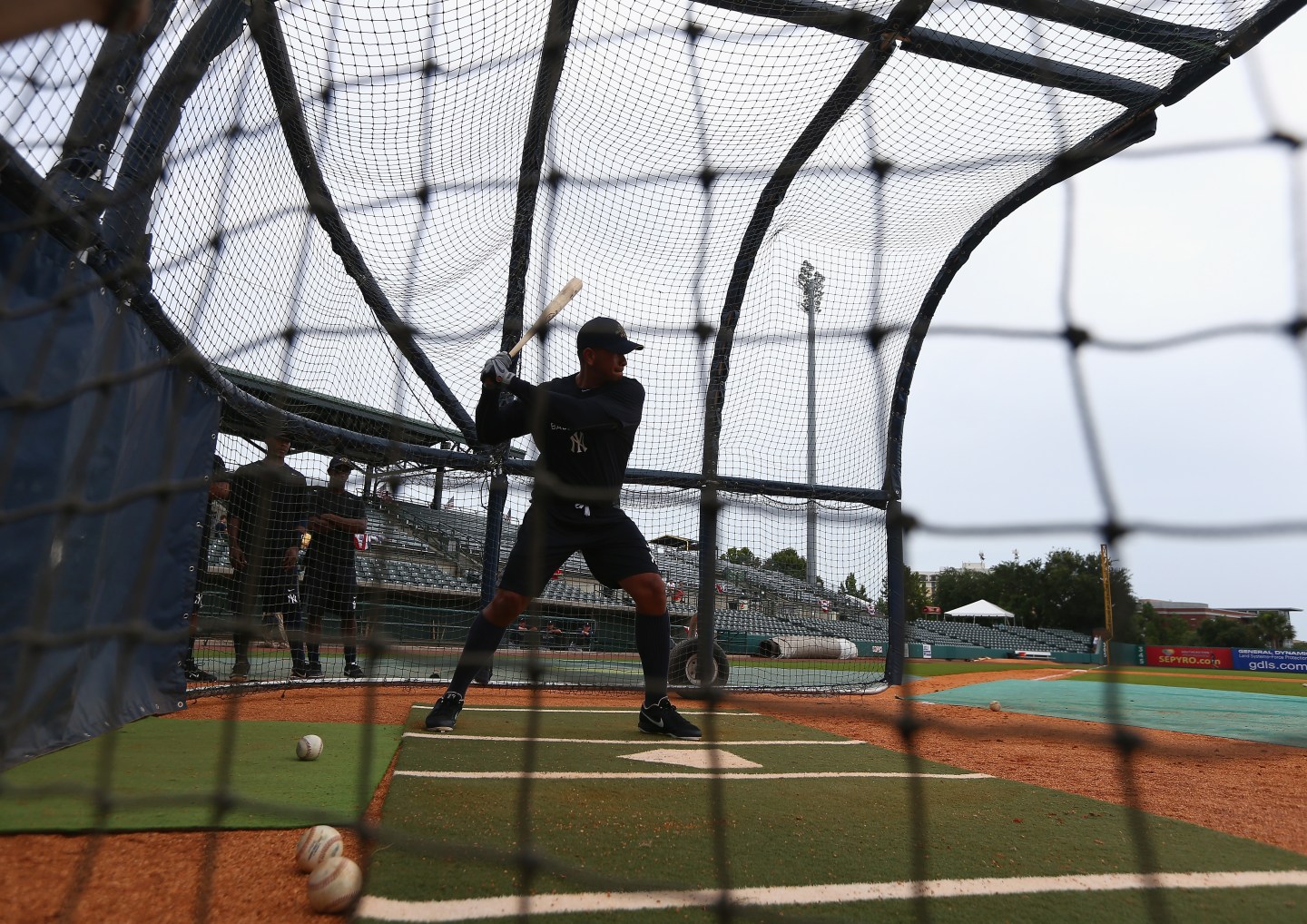
The Charleston (S.C.) RiverDogs were just 15 days from their scheduled home opener when the city issued stay-at-home orders last spring. Not long after that, Minor League Baseball postponed the season. And a couple months later, word came from the organization that there would be no season at all.
It was devastating, if not unsurprising, news for minor league teams all over the country, but it had a special impact in Charleston, where the RiverDogs are tightly woven into the fabric of the community—and a night at the park is as much a part of summer as a trip to the beach or kayaking through one of the city’s many creeks.
Minor League teams, typically, operate on razor thin margins. Seasons only last five months, giving teams a short window to generate the vast majority of their annual income.
But even if the words “play ball” were never uttered behind home plate, the RiverDogs managed to maintain—and maybe even strengthen—the team’s ties to the Low Country as the pandemic raged.
Planning for an alternate strategy started as the seriousness of the situation became apparent in February and early March. General Manager Dave Echols, principal owner Marv Goldklang, executive advisor and marketing guru Mike Veeck, and others began to discuss ideas on how to be proactive and aggressively show the community that it was looking out for their safety, but also committed to offering them some sort of entertaining distraction from the bleakness of the news.
“We changed our focus to a really engaging social media strategy,” says Echols. “I felt really good about how we reacted to things, but that doesn’t take away from the fact that it’s been a very trying year and very limited revenue coming in.”
As if juggling the financial and public facing problems of a pandemic weren’t enough, the team faced another notable challenge at the end of the year, when the New York Yankees organization ended its 16-year affiliation with the Class-A team.
The RiverDogs have a bit of a leg up on other minor league teams when it comes to creativity, though. While several teams in the league have a “Director of Fun” on their staff, the person who holds that role in Charleston is Bill Murray, the acting legend who’s a resident of the city and also a co-owner of the team.
“Those that know him, know he’s not Carl Spackler (Murray’s iconic groundskeeper in Caddyshack),” says Echols. “He’s a pretty bright guy when it comes to business and nuances of how things impact our business. He has a lot of ideas that he relays from what he sees in his world travels that certainly help us. And that’s everything from pre-pandemic through the pandemic.”
Preparing for games that were never played
It’s hard to remember now, but just nine months ago, there was real hope that normal life would resume by mid-summer. And while the RiverDogs knew a full season wasn’t going to happen, the team began planning about how to handle crowds should it get the green light to resume play.
Managers conferred with the Medical University of South Carolina (MUSC), the Centers for Disease Control and Prevention, and state and local officials to determine the best practices for the venue.
“We took the best of what we gathered to create the COVID protocol,” says Echols.
Among the changes in the five-page document were the implementation of a cashless payment system, socially distant seating, possible ionizers/disinfectant foggers in parts of the ballpark, electronic ticketing and prohibiting players from tossing foul balls to fans or signing autographs. Select ticket windows would be closed—and physical tickets would be replaced by eTickets. Concourses would be divided into two lanes. And, in the event of rain, the team said it would “expand access to covered areas to ensure proper distancing.”
When Minor League Baseball officially cancelled the season, thought was given to special events—“independent baseball,” as Echols calls it—that could still allow for games to be played at The Joe (the city’s affectionate nickname for Joseph P. Riley, Jr. Park).
Before long, though, it became clear that even that was too ambitious.
“It was a punch in the gut even though we could see it coming,” says Echols. “You just never thought you’d be having a whole summer with no baseball. I don’t know that I’ve come to grips with it yet.”
That led to the next pivot.
Helping out in the early days
Like many organizations, the RiverDogs staff has gotten noticeably smaller in the past nine months, dropping from 29 full-time employees to just 13. But that core group quickly dedicated itself to ensuring the RiverDogs continued to be part of the conversation throughout the city.
“Usually, we’re out in the community 24/7, whether it’s schools, non-profits, teaching baseball in the community, so I was trying to figure out which of those things can we still do,” says Chris Singleton, director of community outreach. “When you’re trying to serve people and you may not be able to be face to face with them, you definitely have to get creative.”
Before venturing into something new, the team focused on immediate needs. For years, it has been working with the local Meals on Wheels program. But with stay-at-home orders and social distancing concerns, the number of people volunteering to deliver those meals declined precipitously.
“Once the pandemic hit, they were really, really short on volunteers, but they weren’t short on people who needed the meals delivered to them,” says Singleton. “We want to be a leader in the community not just in games, but off the field as well, so we said we’ll be those people and picked up hundreds of meals and delivered them across Charleston.”
The team also donated meals it made to first responders and healthcare workers.
As spring became summer, things began to open up slightly—and Charleston County made the decision to allow summer camps to proceed. Typically, the RiverDogs offer just one three- to five-day baseball camp each summer. But the team decided to offer five last year, ensuring that the kids who attended stayed safe.
Singleton, in many ways, became the face of the RiverDogs throughout town, rather than players or popular mascot Charlie T RiverDog (since it’s hard to keep kids from rushing the costumed performer and giving him a hug).
It was an unusual position for Singleton, but not an entirely unfamiliar one.
“Whenever we would do volunteer events or partner up with players in the past, they would always ask if I was a player,” he says. “I’m washed up, so the answer would be no, I played for a little while, but I couldn’t hit a slider, so I’m done. But this past year was just me doing my job.”
Ballpark food—minus the ballpark
Baseball wasn’t the only camp the team offered. For the first time, the RiverDogs launched a culinary camp, with chef and vice president of food and beverage Josh Shea, welcoming 15 kids into the team’s expansive kitchen to learn cooking skills and the joy of experimenting with foods, along with essential kitchen skills like station set-up and clean-up.
“I, personally, thought it was really fun,” says Mackenzie Short, a 12-year-old who attended culinary camp. “I got to go there with my friends, so at least I got some company, but because it was a small group, we were pretty well distanced. There were four kids at each table. What I liked about the hot dogs and burgers were we got to make our own ideas. We got to make anything we wanted. My group made a breakfast burger, with egg, cheese and bacon. It was really good.“
Ballpark food might seem like an odd focus for a culinary camp, but the RiverDogs are a lot more than hot dogs and Cracker Jacks. Every season, the team rolls out recipes that are more suitable to a foodie town like Charleston. In the 2019 season, for instance, the offerings included a chicken and waffle bowl, Mediterranean Healthy Nachos (hummus, guacamole, pico de gallo, olives, and feta cheese on blue corn chips all served in a RiverDogs souvenir helmet), and a fried green tomato and pimento grilled cheese. Previous years’ offerings have included duck wing ramen, smoked pork and collard greens and gator meat sausages.
Local enthusiasm for food from the stadium was strong enough that, in the early days of the pandemic, the team decided to launch “Take Out From The Joe,” a program where fans could come grab their favorites to go—and get at least a hint of a night at the park. The program ran for two or three months.
“We did that in the early part when restaurants were shut down and there was a lot of confusion and uncertainty about how to operate restaurants with the virus,” says Echols. “Being known for some of our food at the ballpark fare. doing that was a relatively easy executable exercise for us. Once there was a better understanding of how to run a restaurant during a pandemic and others opened up, the demand diminished.”
That led to another transition: Adult cooking classes, for small groups typically of just six to eight people, held in the Segra Club, a climate-controlled luxury venue that sits atop the stadium—and normally can accommodate up to 214 guests.
Even today, in the offseason, die-hard RiverDogs fans can order food from the team on DoorDash, with menu items including a Blackened Salmon Sandwich, a brisket plate, and herb fries—as well as popcorn, of course.
The Segra Club is also available for private event rentals.
“Even if it’s a little bit of revenue coming in, every bit helps,” says Echols. “Doing events did bring in some revenue, which helped us stay current on bills. It helped keep the 13 of us with payroll. It helped keep us fresh and top of mind with the community.”
Switching teams
As if the financial challenges of a pandemic weren’t enough, the RiverDogs also learned last year that their long-standing affiliation with the New York Yankees would be coming to an end, something that came as a surprise to the RiverDogs management.
“I didn’t personally have any warning that what has happened was going to happen,” says Echols. “In my mind, we were going to roll over with the Yankees for another X number of years.”
But as Major League Baseball and Minor League Baseball renewed their agreement, MLB pushed for a restructuring and revamping of the minor league system. Among their asks: Move Minor League teams closer to their parent teams, to assist with travel and geographical fan strategies.
That meant the end of one long-standing relationship, but the resumption of another. When the Joe was built in 1997, the team began an eight-year affiliation with the Tampa Bay Rays. In late 2020, that relationship was resumed, perhaps not through choice or negotiation, but not begrudgingly.
In some areas, the end of a relationship with a team as high profile as the Yankees could be damaging to attendance and sales, but RiverDogs management says they don’t expect it to hurt at all.
“Being a Yankee affiliate was certainly a positive, but not being a Yankee affiliate won’t be a negative at all,” says Echols. “In the grand scheme of things, we’re promoting the RiverDog brand and RiverDog business plan of ‘fun is good’. When we were with the Yankees, we’d have fans say ‘I’m only coming to five games because I’m a Red Sox fan or a Braves fan. I hate the Yankees, but I love the RiverDogs.’ At the end of the day, we’re saying we’re the Charleston RiverDogs and that’s what our community is attaching to.”
Looking forward
It’s coming up now on the one-year anniversary of stay-at-home orders and the abrupt change of life we all experienced last year. And another season of minor league baseball is once again deep in the planning stages in Charleston.
Games are scheduled to begin on April 21, though there’s a good chance that will be delayed. But the team is resolute that baseball will be played at The Joe this year, thanks to advances in education, the release of several vaccines and increased awareness and acceptance of precautions by people throughout the city.
But navigating the team through the first season of a pandemic has also taught the RiverDogs management a few new lessons about ways to engage with fans. For instance, several of the initiatives that were made in desperation could now become regular events.
Baseball camps and clinics, for example, will no longer be a once-a-year event. Cooking camp will also likely be back. And the team has brought catering at the Segra Club in-house after partnering for years with a local restaurant group.
“We’re the escape place,” says Echols. “I would venture to say there are a large percentage of our fans that don’t care about what our win/loss record is. They’re coming out because we’re a fun, safe, affordable entertainment option, whether you want to watch a baseball game, you want to people watch, you want a cheap beer, you want dinner. There are so many reasons people come out for a game, but we want the community to know we’re here for them. It’s a shared loved affair for sure.”