There is an elephant in the room of the 2024 edition of the Fortune 500 Europe. It’s not a crisis-riddled company or scandal-hit CEO. Rather, it’s the whole German economy.
For most of the 21st century, economists and neighboring countries have looked to Germany with admiration and envy as it managed to weather economic storms with relative ease, capitalizing on trade with growing economies and expanding the power of its industrial giants in the process.
However, a shifting world order has pulled the carpet out from underneath Germany. The industrial quirks that once helped it outgrow its European peers are fast becoming a burden, and crisis after crisis has exposed a lack of planning at the top of government.
As the Fortune 500 Europe shows Germany yet again dominating the list of Europe’s biggest companies, many are left with a difficult question: What is going wrong in Germany?
Germany in the Fortune 500 Europe
Today, in terms of both representation and revenue, Germany is the undisputed champion of the Fortune 500 Europe. There are 80 German companies on this year’s list, which collectively racked up $3.2 trillion in revenues last year, a fifth of the total.
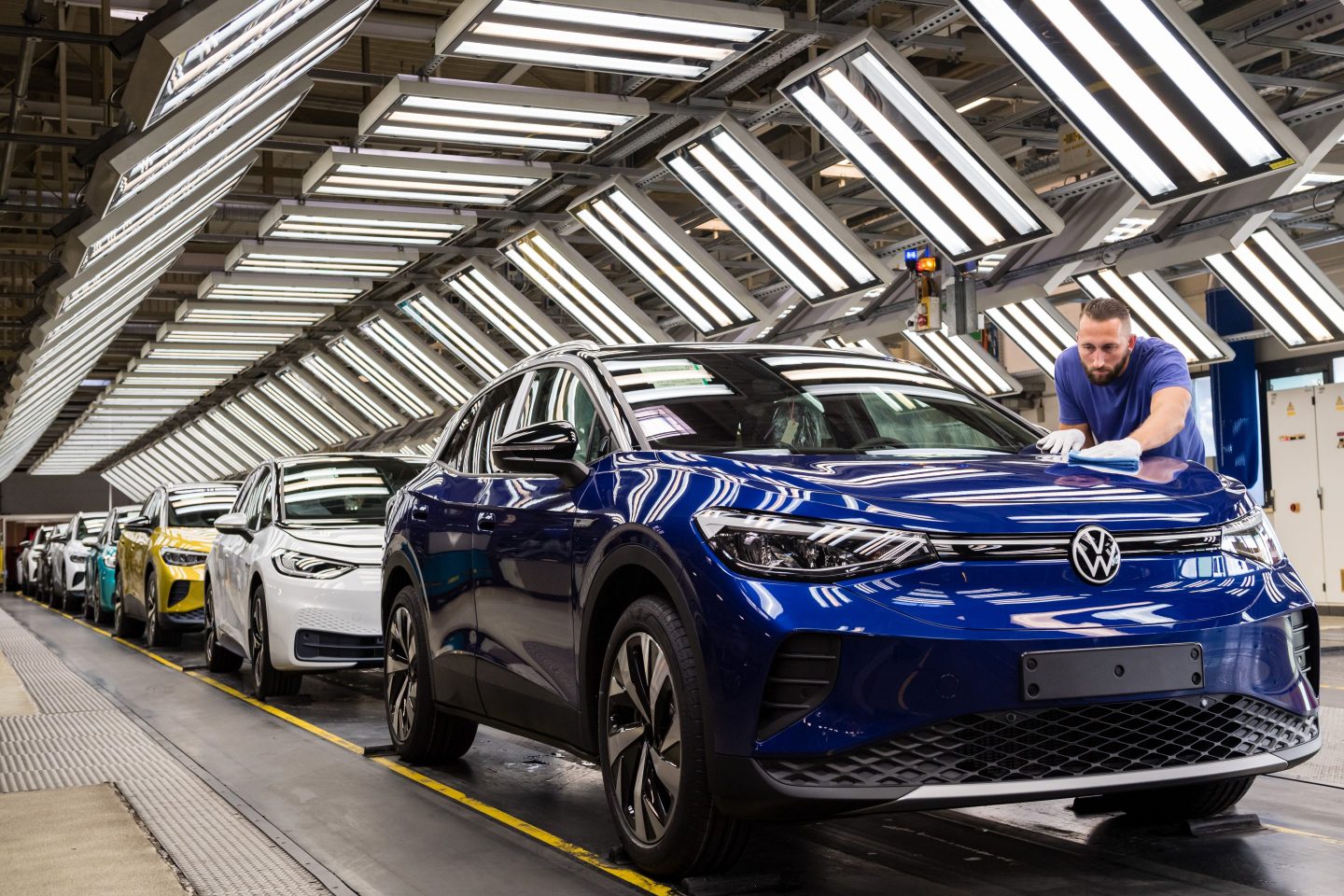
On the surface, the latest Fortune 500 Europe list would suggest Germany has solidified its grip on Europe’s economic engine. Volkswagen was the largest company in Europe by revenue in 2023, overtaking British oil and gas giant Shell. Not far behind in the top 10 are BMW and Mercedes-Benz.
However, any reader of the list with even a cursory knowledge of the European economic landscape will view the figures with skepticism, with the Fortune 500 Europe measuring companies’ revenues from 2023. That’s because Germany, as well as the companies that drive its economic engine, is in peril.
The country’s government expects the German economy to contract by 0.2% in 2024, following a 0.3% decline in 2023. The economic pinch was felt in German companies’ top line last year.
“Everything that could go wrong went wrong, or is going wrong.”
Carsten Brzeski, global head of macro for ING Research
Despite revenue for the Fortune 500 Europe growing as a whole by 5.2% in 2023, cumulative revenue for German companies on the list contracted by 2.6%.
Red signals are flashing all over the country’s economic indicators. Exports to its main trading partner, China, have fallen, while energy imports following Russia’s invasion of Ukraine have tanked.
Germany’s challenges span the structural and cyclical, domestic and geopolitical, creating a perfect storm for the country’s economy that most economists see little way out of in the short run.
As Carsten Brzeski, global head of macro for ING Research, summarized to Fortune: “Everything that could go wrong went wrong, or is going wrong.”
The problem with Germany
Understanding the scale of Germany’s challenges requires a careful look at its strengths, or more appropriately, how it built them.
Manufacturing makes up 18.4% of Germany’s economy. For context, neighboring France’s share is 9.5%, while the U.K.’s is 8.4%. Most economies move away from manufacturing as they mature, but Germany has been an outlier—defying that trend to great economic success.
The country began to shake its post-reunification tagline as the “sick man of Europe” at the turn of the century, as its manufacturing-heavy economy struck gold after China joined the World Trade Organization (WTO) in 1995. Also in 1995, Germany exported $7.5 billion worth of goods to China. At its peak in 2021, this figure stood at $124 billion.
Around half of Germany’s GDP is drawn from exports, well above other European nations. In the century’s first 20 years of global expansion, that has proved a gold mine for Germany.
However, exports from Germany have shrunk since, owing to weakening consumer sentiment in China and the rise of homegrown Chinese rivals.
Protectionism is also on the rise, with the U.S. and China engaging in tit-for-tat tariffs that have spilled over into Europe.
Jens Eisenschmidt, Morgan Stanley’s chief Europe economist, pointed out external demand had always been a key driver of Germany’s economy, but the current global trading environment was less conducive to growth.
“We could describe the world that we are now in, or have awoken into, as being less collaborative,” Eisenschmidt told Fortune.
Then there’s the question of how Germany powers its increasingly exposed manufacturing sector.
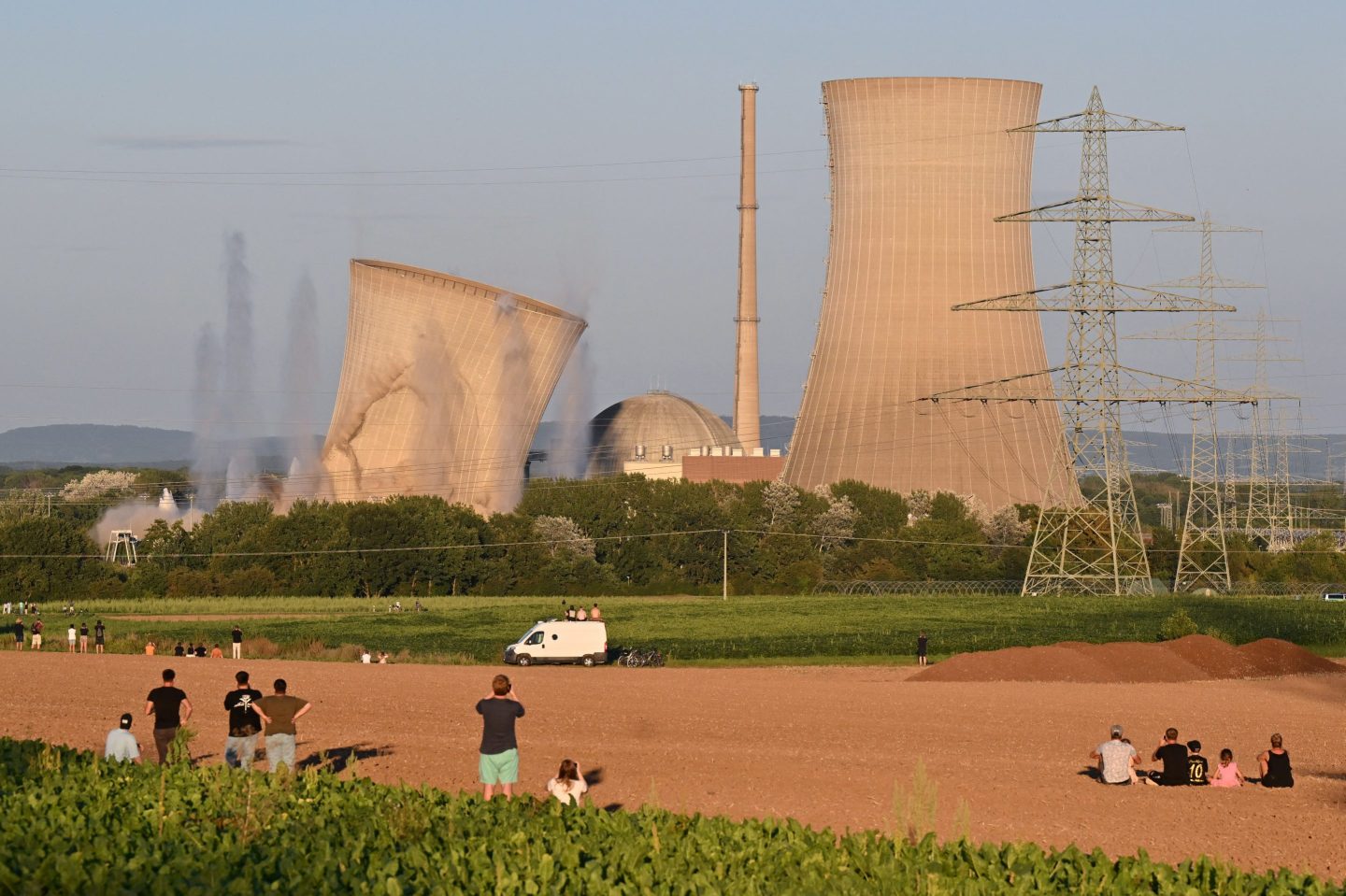
Germany voted to end the rollout of nuclear power at the turn of the century, ending years of debate over safety fears, which were confirmed in the minds of many German policymakers by the Fukushima nuclear disaster in Japan in 2011. This shift left the country beholden to cheap Russian oil and gas to power its manufacturing while the country waited for alternative renewable sources to advance.
Then, in February 2022, that uncomfortable coalition came crashing down with Russia’s invasion of Ukraine. The cost of doing business skyrocketed in Germany after the West slapped sanctions on Russian energy.
The result has been a manufacturing sector stuck in recession for more than two and a half years. The country’s production PMI, a monthly survey of manufacturing executives, has been in contraction territory since early 2022.
Germany is just getting to deindustrialization a bit later than its peers, says Capital Economics’ chief Europe economist Andrew Kenningham.
ING’s Brzeski is more blunt.
“The German economy has simply missed the train to innovate and modernize. For too long it’s been a combination of being too arrogant, too naive, too complacent—they just thought there would be no challengers to its own strong corporate world,” Brzeski says.
“If you just look at the last four or five years, Germany starts looking like it’s on track to get a lost decade.”
Jens Eisenschmidt, Morgan Stanley’s chief Europe economist
The problem for Germany is that it doesn’t have a competitive advantage in other high-value sectors, for example, something comparable to the U.K.’s strong financial sector. Ditto for any kind of burgeoning tech sector.
“If you look at a lot of surveys of Germany’s adoption of digital technologies, the number of people using various kinds of modern technology, Germany scores very, very poorly in that respect,” said Capital Economics’ Kenningham.
Germany ranked sixth in IMD’s World Competitiveness Ranking in 2014. By 2023, it had dropped to 22nd in a reflection of that contraction.
At the same time as it tackles structural issues in its economy, Germany is also facing the existential pressure of a shrinking working-age population.
Combined, these factors point to a consensus among economists that German GDP will grow at a rate of 0.5% per year in the medium term, well below the pre-COVID trend of 1.3%.
Morgan Stanley’s Eisenschmidt sees comparisons with growth issues faced by Italy before the pandemic, experiencing two “lost decades” of growth.
“If you just look at the last four or five years, Germany starts looking like it’s on track to get a lost decade, too,” Eisenschmidt told Fortune.
Jewel in the crown?
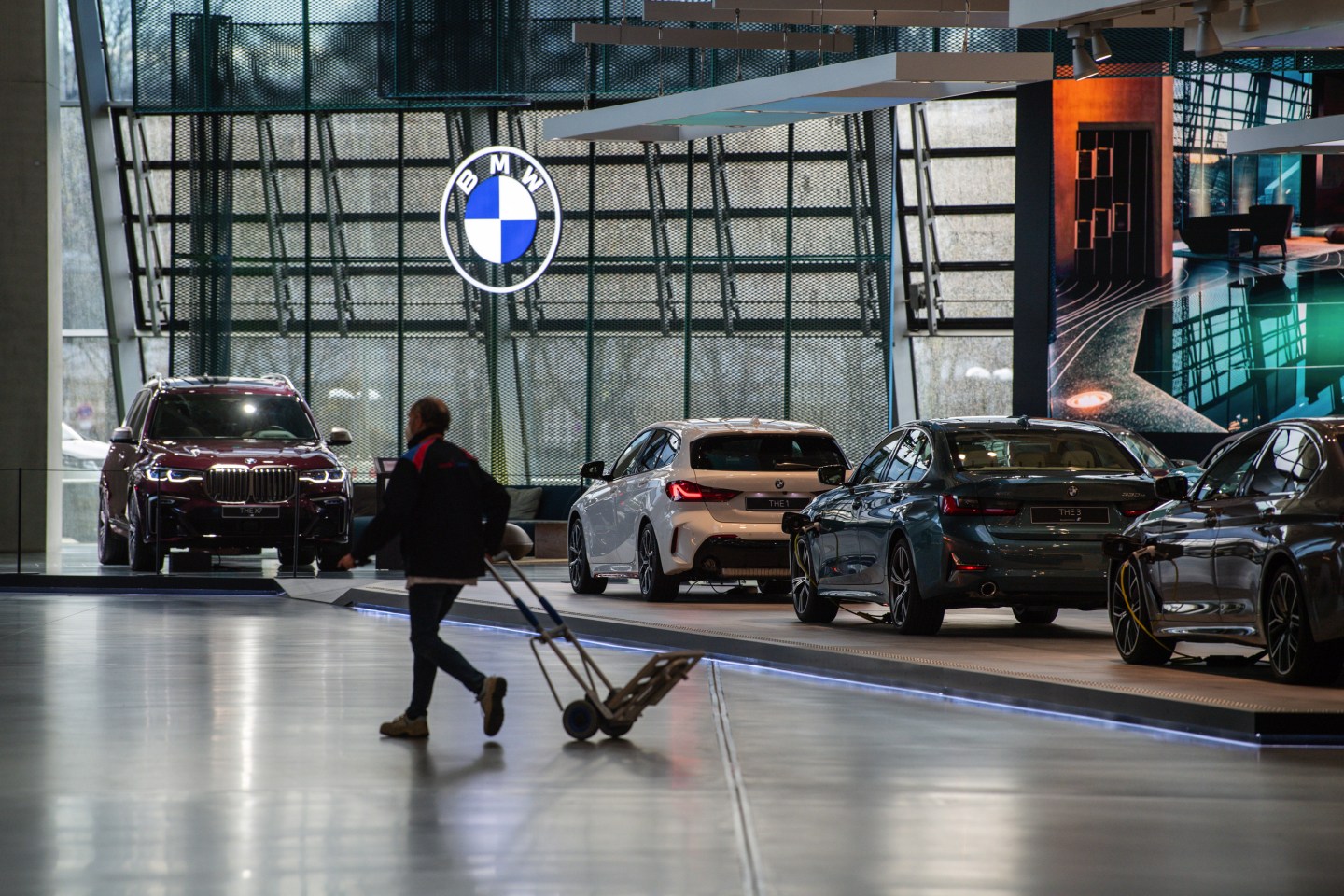
Underpinning the narrative of a stagnating German industrial engine is its precarious automotive market. The sector accounts for 4% of Germany’s economy, but it’s effectively 6% when factoring in the other companies in the supply chain.
The automotive sector has been the jewel in Germany’s economic crown for several years and has historically ridden out previous globalization headwinds. Automotive companies make up an eighth of German companies represented on the Fortune 500 Europe in 2024 as a result.
But again, a change of fortune in China is blunting Germany’s economic edge. Vehicles remain the main driver of Germany’s exports to China, but those exports are increasingly under threat.
China has caught the Western world off guard with its offering of bargain electric vehicles, with BYD leading the charge on the continent while gaining market share quickly in its native land.
The European Commission is set to launch expanded tariffs that would see some Chinese suppliers slapped with fees close to 50% following an investigation into anticompetitive subsidies from the Chinese government. Germany opposed these fresh tariffs amid fears of retaliation from a key export market for the country.
BMW cut its 2024 profit guidance in September, citing a costly braking system recall and slowing demand in China. Mercedes-Benz shares fell when it announced a similar guidance cut in the same month, also mentioning falling demand in China.
Germany’s automakers, however, are in a more serious bind: People are losing interest in their cars. German carmakers bet big on the EV revolution, if later than competitors, and have been left puzzled by slowing growth after initial widespread uptake.
The solution for Volkswagen, Europe’s biggest company by revenue (it’s at the top of this year’s Fortune 500 Europe) and Germany’s biggest employer, is to dig into its cost base.
Volkswagen promised €10 billion in cost cuts in December last year, paving the way for a grisly battle with its powerful works council and threats of its first-ever German plant closure.
That could filter back into the German economy in the shape of job cuts.
“China has become a nightmare for Germany,” Felipe Munoz, global analyst at JATO Dynamics, told Fortune.
Munoz thinks Germany’s strong unions will probably minimize job cuts at Volkswagen. But this could point to a new reality for Germany’s workers.
Capital Economics’ Kenningham said: “The fear of losing your job will always be there, and I think there’s less benefits associated with them.”
How do they fix it?
There are few easy options for Germany to climb out of its structural and cyclical holes and hold on to its spot as Europe’s biggest economy.
Structural reforms are a necessity, but as the de facto leader of the EU, overhauling trade or introducing widespread subsidies is unlikely. The country has made changes to introduce high-skill immigration from outside the EU, but sweeping reforms here are unlikely in a hot political environment.
“There is a high risk that Germany wakes up too late.”
Carsten Brzeski, global head of macro for ING Research
Finding new export partners is another urgency for Germany. However, ING’s Brzeski doesn’t predict another country will expand like China did 20 years ago. Downside risks are more likely, including the potential for major import tariffs if Donald Trump is reelected as U.S. president this November.
Germany’s three-pronged coalition government is not well suited to enacting sweeping reforms owing to the dueling interests of the governing parties. The country has also seen growing popularity for parties on the left and right of the political spectrum.
While it’s unlikely a far-right or far-left government will rise to power, their increasing vote share will make it harder for the ruling coalition parties to enact changes, particularly to things like innovation.
Germany can take solace in the fact that despite its current troubles, it’s still the biggest economy in Europe. And while revenues for Fortune 500 Europe companies declined last year, profits for businesses on the list increased by 12.2%.
“Germany has shown in the past that it can survive a crisis and structural reforms,” says Brzeski.
“There is a high risk that Germany wakes up too late, but it remains the largest economy in Europe. There is still relatively good infrastructure, so it still has the potential to be stronger 10 years from now than it is right now.”