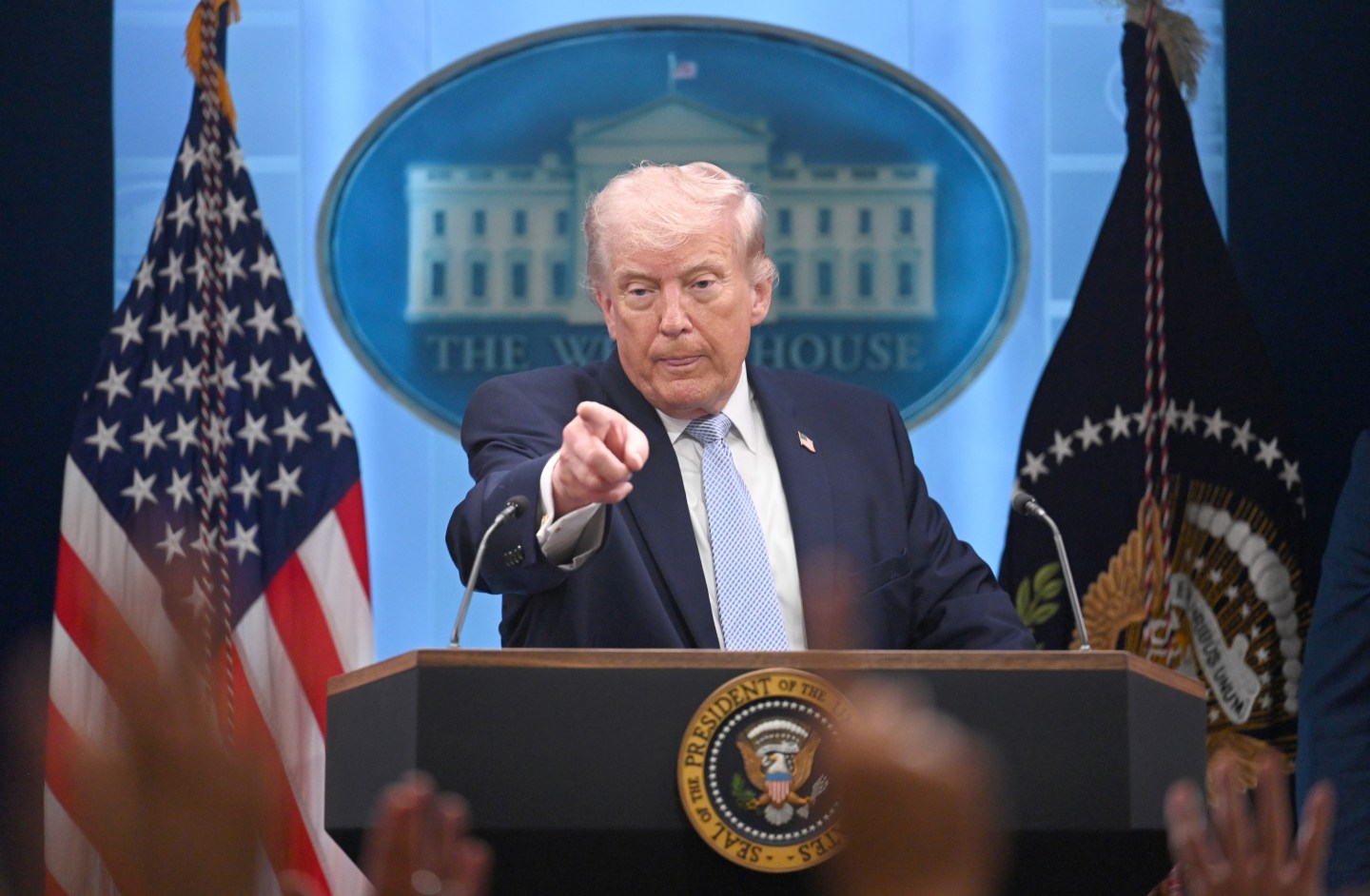
Despite facing legal peril, Donald Trump has reportedly summoned his top economic advisors to discuss imposing massive new tariffs on imports if elected in 2024. There is no reason to doubt his intentions. Trump actually did some of this, selectively, when he was president. He imposed tariffs on imports of steel and aluminum, claiming it was a national security issue. The additional tariffs indiscriminately hit products from America’s allies and rivals alike. Our allies were shocked. The European Union retaliated with tariffs on U.S. exports. Unsurprisingly, the move by the U.S. was condemned by an international panel at the World Trade Organization (WTO). The Trump tariffs have been rolled back by the current administration, with some ceilings on imports left in place. Trade peace was restored, at least for now.
Trump also imposed 25% tariffs on a broad range of products from China. China retaliated in kind with tariffs of its own. This set of tariffs remains largely in place. Both the U.S. action and the Chinese response were condemned at the WTO. By imposing the tariffs on goods from China, the idea was to get China to buy more U.S. goods and change trade policies that displeased the U.S. There is no evidence that China did either.
There was a time when nations competed in imposing high tariffs on each other’s goods. It did not end well. That was almost a century ago, so the memory of those terrible policy mistakes is not exactly fresh.
In 1930, Congress, which under the Constitution has the power over U.S. commerce, decided to jack up the tariff levels to around an average of 40%. The U.S. was not alone in this foolish endeavor. Other major trading countries raised their tariff walls as well. The tariff-raising competition deepened and lengthened the Great Depression, with unemployment hitting 25% in the U.S. This economic warfare helped bring on the Second World War, as Germany turned to fascism and aggression in a bid to return to economic growth.
It has taken much of the last century to return to lower tariffs. The average U.S. tariff is now under 3% and U.S. unemployment is down to 3.5%. But it would be all too easy to reverse that progress.
America needs allies. Recently, the prime ministers of Japan and South Korea were hosted at Camp David by President Joe Biden. They are necessary to U.S. defense in the Pacific. Across the Atlantic, the U.S. is working with the EU, the U.K., and other allies to push back against Russian aggression in Ukraine. Slapping universal tariffs on all foreign goods based on the notion that all other countries are somehow competing unfairly would strain America’s alliances to their breaking point. Other governments have domestic politics too. They would be forced to retaliate.
We need to trade with other countries. Some 20% of U.S. farm products depend on export markets. Entire industries—and a lot of good jobs—are heavily dependent on exports, including transportation equipment, chemicals, machinery, computer and electronic products, petroleum and coal products, primary metals, and medical equipment. And trade is not just about exports. Absent imports, there will be no transition to electric vehicles and no access to vast quantities of personal protective equipment for frontline emergency personnel when a pandemic strikes.
The expansion of trade since the Second World War has supported enormous global economic growth, in which the U.S. has shared. By value, trade has grown almost 400 times since 1950. In 2022, $32 trillion worth of trade coursed through the arteries of the global economy, setting a new record.
True, there are still foreign practices that adversely affect U.S. workers and the companies they work for. Since Franklin Roosevelt, the answer has been to negotiate trade agreements that address foreign barriers and trade distortions. In fact, this is precisely what the Trump administration did with respect to trade with our immediate neighbors. It negotiated an agreement that preserved free trade in North America, updating the decades-old North American Free Trade Agreement (NAFTA), with overwhelming bipartisan support from Congress.
What Trump won’t tell you is that a tariff is a tax. Someone has to pay it, whether it’s an American company that needs a part or a chemical, or a consumer who needs a product from abroad. And if the answer is that there will be exceptions made, that adds a whole new layer of government at the taxpayers’ expense. Even in 1773, the good citizens of Boston understood that it was not the British who would bear the tax on tea.
The announcement of a new American great tariff wall may sound like strength, but it would be a retreat from the world and only signal a lack of confidence in American competitiveness.
Alan Wm. Wolff is a Distinguished Visiting Fellow at the Peterson Institute for International Economics and the author of Revitalizing the World Trading System.
The opinions expressed in Fortune.com commentary pieces are solely the views of their authors and do not necessarily reflect the opinions and beliefs of Fortune.