
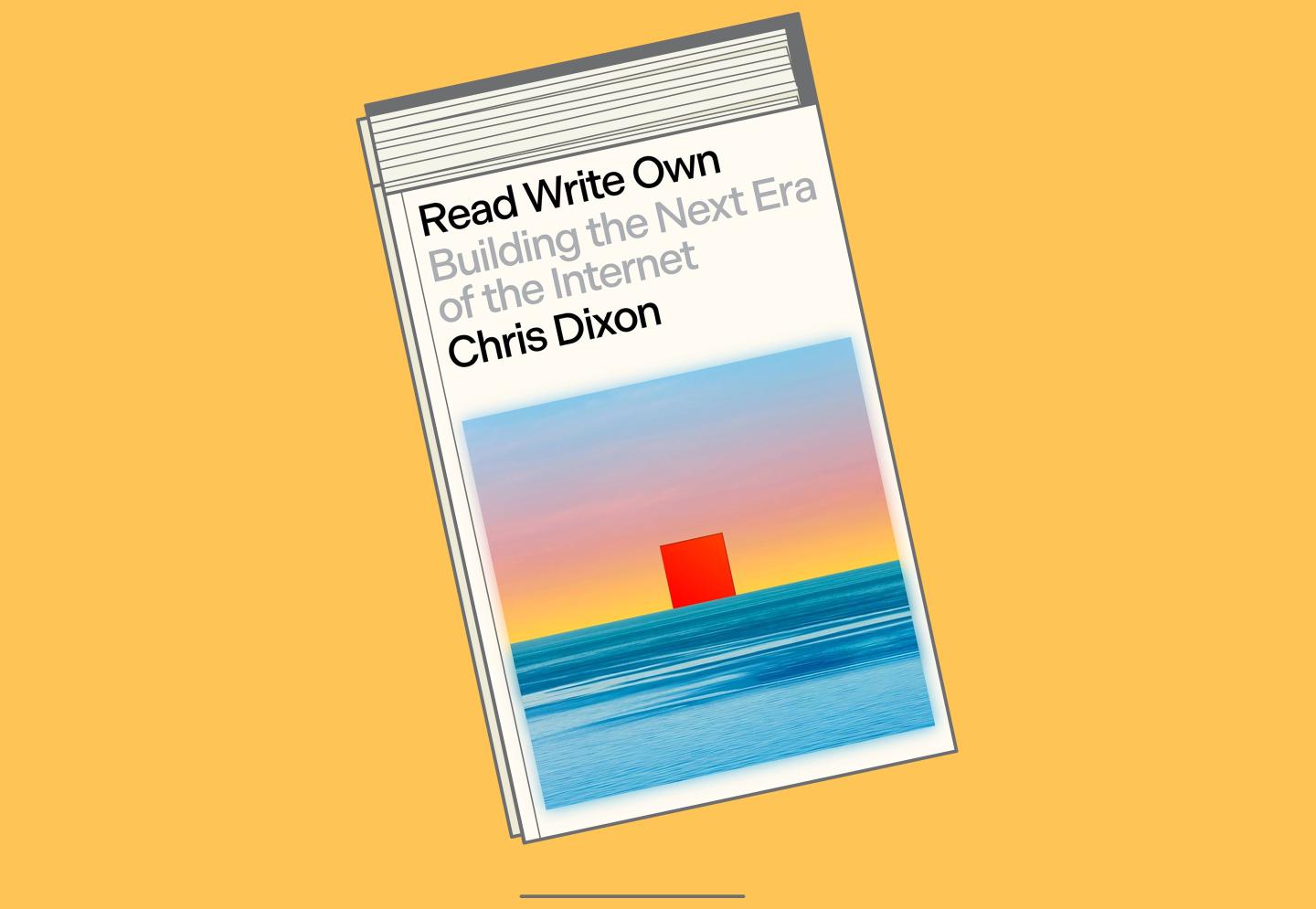
The past year has brought a torrent of new books on cryptocurrency, and few of them have been kind. Works like Number Go Up and Going Infinite used the arc of FTX’s Sam Bankman-Fried, who went from financial wunderkind to convicted fraudster, to mercilessly ridicule the crypto industry and invite readers to dance on its grave.
This is hardly surprising given the mind-boggling number of scams and cartoonlike villains the industry has spawned. Yet the crypto industry persists and so does blockchain, the technology underlying Bitcoin that still has the support of influential advocates.
Those advocates include Chris Dixon, who is well known in Silicon Valley circles as an entrepreneur turned venture capitalist whose firm made early bets on companies like Facebook and Twitter—and, yes, a large number of crypto companies. A longtime blogger, Dixon’s debut title, Read Write Own: Building the Next Era of the Internet, offers a concise history of how the web evolved and makes an impassioned case for blockchain as its logical future.
Whatever your views on blockchain and crypto, it’s hard to disagree with Dixon’s premise that something has gone wrong with today’s internet. For proof, you can look to examples from the book, such as the fact the 10 most popular apps on our phones are all a decade or more old. Or you can just reflect on your own experience—you’ve probably noticed Google’s increasingly lousy search results or watched young people develop crippling anxiety from toxic social media algorithms.
To explain how we got here, Dixon says, requires understanding the power of networks and who controls them. In the early days of the consumer internet, the web was an open place thanks to protocols like http (for web pages) and SMTP (for email) that were created by academics and designed to be free for anyone to use and beyond the control of any corporate gatekeeper.
This early Read era of the internet was limited but free. Contrast that with the Write era that came next, which made it easy for anyone to publish messages and photos, including on social media. This made the internet a more interesting place, but it came at a cost as corporate networks came to dominate. Giant platforms emerged that made it easy for consumers to participate in their version of the town square—but at the price of gobbling their data and refusing to let them bring their content and social connections to another venue.
Our current era of digital monopolists has produced a stultifying experience for consumers in recent years, but has also led to a drought in innovation. As Dixon explains, companies like Facebook and Google built their empires on the open protocols of the early web—but then refused to carry on that culture of openness. A series of startups like Zynga and Vine found out the hard way that what they build atop corporate platforms could be yanked away in an instant, and so today no one bothers to try.
The solution to this predicament, says Dixon, requires a new technical architecture based around the third verb of his title, Own, that lets anyone build on a network and control the data they produce. blockchain, in other words.
Dixon makes the case that blockchains can replicate the most popular features of the existing web—social media, gaming, finance, and so on—but without relying on the overlords of Big Tech. He points to Ethereum, which has emerged as a massive public computer that allows anyone to build applications, and where users control their username, social connections, and more.
The key element of all this is tokens—the digital assets reviled by critics as magical beans sold by charlatans and bought by idiots. Dixon offers a different perspective, explaining how tokens bestow a form of ownership that creates new incentive structures and gives users a greater say in how the internet is run. In this token-based version of the internet, people get paid fairly for their work and Big Tech is finally brought to heel. In Dixon’s words:
“Token incentives for developers have multiple benefits. First, anyone in the world can contribute, widening both the talent funnel and the base of network stakeholders. As contributors earn tokens and become partial owners, they have an incentive to help the network succeed, by building software, creating content, or helping the network in other ways. Second, token incentives create competition for each task, which means users get to choose from multiple software options, the way they get to choose from multiple web browsers and email clients. Third, the tokens can be disbursed transparently and programmatically, unlike corporate stock, in a way that’s fairer, more open, and more frictionless than analog systems.”
These are not new ideas. Variations of them appear in earlier books like The Age of Cryptocurrency and Blockchain Revolution, both from 2016. But Dixon makes the best case for blockchain, thanks to his crisp explanations of Silicon Valley economics and concepts like “take rates.” The latter phrase describes the fat margins—or tax, if you prefer—that monopolists like Apple and Facebook collect from other businesses and consumers, and underscores how these companies’ control of networks lets them extract the economic value created by others.
Read Write Own is the most elegant and sophisticated argument for blockchain to date, but the book falls short when it comes to the addressing the numerous—and often well-founded—criticisms of the crypto industry. Dixon makes a few passing acknowledgements of the skeptics and decries the “casino” ethos that grips much of the ecosystem but fails to answer, or even raise, some hard questions: If blockchain is such an obvious solution, why is it taking so long to catch on? Why have so many high-profile blockchain projects failed to deliver or devolved into outright scams? And so on.
Meanwhile, Dixon fails to discuss his own role in backing high-profile crypto failures. These include Dfinity, a “world computer” that raised nearly $170 million and has little to show for it, and the odious BitClout ($200 million), which took people’s name and likeness without permission and invited people to buy and sell them like stocks on a social media site. And in a spit-out-your-coffee moment, Dixon casts a tokens-for-Wi-Fi scheme called Helium—which has been exposed as a colossal boondoggle—as a success while conveniently failing to identify his firm, Andreessen Horowitz, as the project’s main investor.
In the same vein, the book doesn’t mention the controversy in the crypto world surrounding Andreessen Horowitz and other venture capital firms. Critics accuse these firms of exploiting their power and influence—the same way a Big Tech firm might—to dump batches of tokens from new blockchain projects on the market before retail investors can do the same. The accusations of self-dealing and hypocrisy may or not be fair, but Dixon declines to raise them at all. His book would have been stronger had he done so.
Despite these shortcomings, Read Write Own is very much worth reading. The book is not only the most articulate overview of blockchain to date, but it shines as a history of computing and the internet. Dixon deftly situates the rise of blockchain as part of an ongoing tug of war between closed corporate networks and public goods like open-source software, and he has a knack for helpful analogies—for instance, comparing the gas fees paid by Ethereum users to the long-ago practice of paying for time on a mainframe computer.
The book is also elegantly written and benefits from Dixon’s background as a philosophy major, which lets him effortlessly sprinkle in references such as “the tyranny of structurelessness,” a concept from feminist author Jo Freeman. This is a welcome change from the empty rah-rah management speak that seeps into other pro-blockchain books. And at 230 pages, Read Write Own will be appreciated for its concision.
Even the most strident crypto critics will be hard-pressed to dismiss Dixon’s many ideas outright. His book comes at a time when our current version of the web feels like it’s deteriorating by the day, and his calls for blockchain offer at least a potential solution. Read Write Own is likely to become the next standard-bearer for crypto enthusiasts and find a place on computer science and economics syllabi for years to come.