• Home
  • Latest
  • Fortune 500
  • Finance
  • Tech
  • Leadership
  • Lifestyle
  • Rankings
  • Multimedia
Some Fortune Crypto pricing data is provided by Binance.
CommentaryCryptocurrency

3 keys to ensuring the U.S. maintains dollar primacy in the age of digital money

By
J. Christopher Giancarlo
and
Daniel Gorfine
Daniel Gorfine
Down Arrow Button Icon
By
J. Christopher Giancarlo
and
Daniel Gorfine
Daniel Gorfine
Down Arrow Button Icon
August 22, 2023, 5:30 AM ET
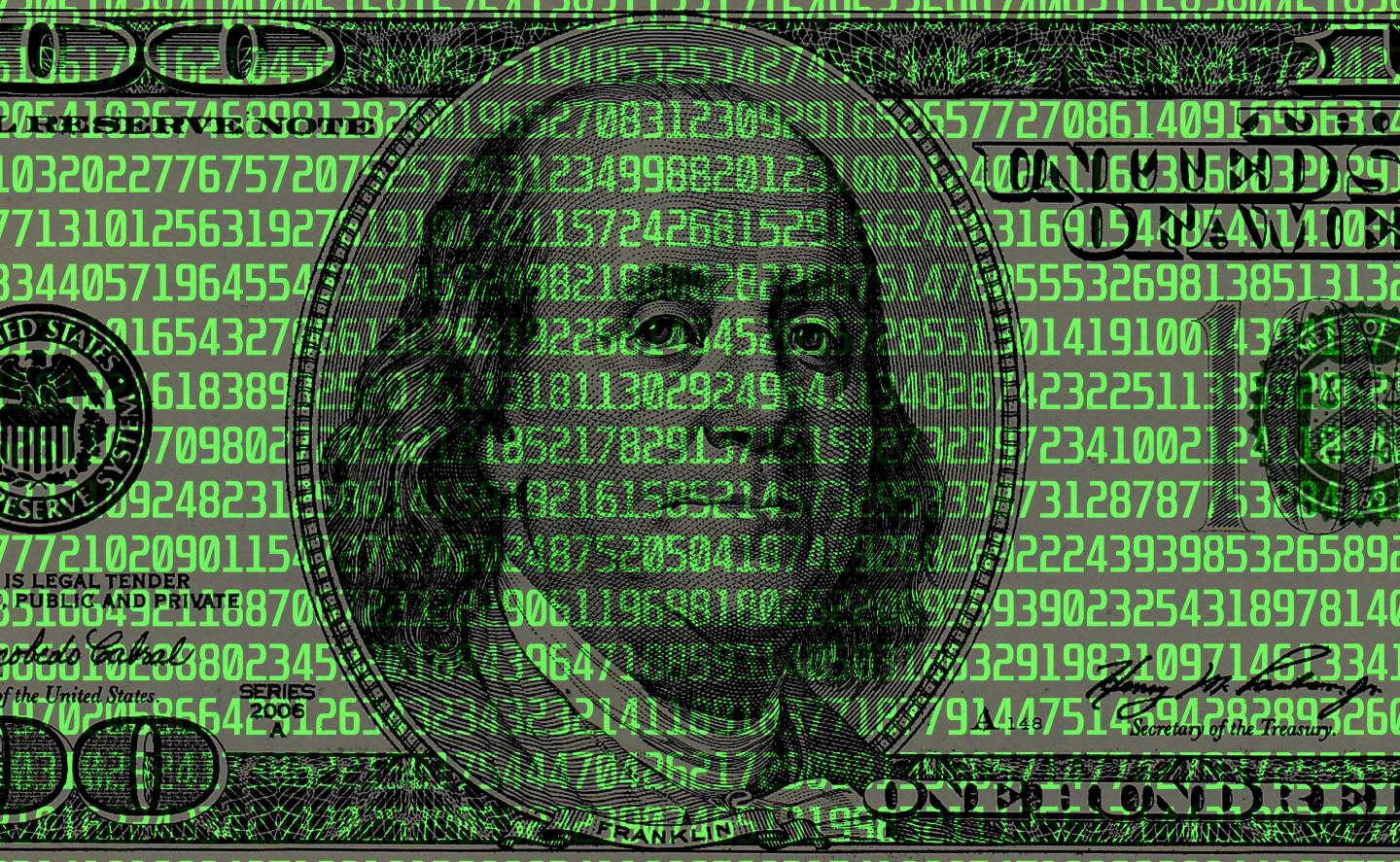
Digital code on the background of a 100 US dollar bill.
The U.S. is lagging behind several other nations when it comes to CBDCs.Anton Petrus—Getty Images

The 15th BRICS summit is set to begin Tuesday in South Africa. According to reports, Brazil, Russia, India, China, and South Africa, and possibly more participants, are exploring a new joint currency, possibly backed by physical commodities such as gold. This comes as 10 countries, including China, already have launched some form of a central bank digital currency, which potentially has profound implications for the future of national security, dollar preeminence, sanctions avoidance, economic competitiveness, and individual privacy.

Nearly four years ago, we issued a call to action to explore a U.S. CBDC—a “digital dollar.” We warned of the risks of eroding the dollar’s preeminent role in international trade and the avoidance of sanctions as foreign states adopt digital currencies that operate outside a U.S.-led world-currency regime. We urged the gathering of “a team of the brightest minds” to “future proof” the dollar for a world of digital networks, while remaining true to American norms and values. Thanks to public sector efforts, including Federal Reserve banks and private sector initiatives, some progress has been made. But more needs to be done, with bipartisan purpose and clear-eyed determination.

The Atlantic Council reports that 130 countries are now exploring CBDCs, up from 35 in 2020. A Bank for International Settlements survey suggests that by 2030 there could be 15 retail CBDCs intended for everyday transactions and nine wholesale CBDCs used for transactions between financial institutions. These include a number of U.S. economic competitors looking to develop alternative international payments and wholesale currency settlement systems to bypass the dollar and its underlying rails.

Among G7 countries, the U.S. is the least advanced in exploring CBDCs, especially for retail use. Nevertheless, the past four years offer insights into how the U.S. can seek to preserve the role of the dollar in a digitally networked future that’s centered on key U.S. democratic norms and values like free markets and individual privacy. To this end, a number of key issues, especially privacy, have been flagged and should be considered and appropriately addressed through policy discussion and design choices. Here are some observations that can inform the U.S. as it moves into the next phase of digital dollar exploration.

First, access to central bank-backed public money—the most risk-free form of money—has always been necessary to support and stabilize bank deposits and all other forms of private money. Simply put, individuals have confidence in the safety of their commercial bank deposits, in part, because they know that in a crisis they can convert them into physical cash backed by the government and its central bank. In the coming digital future of declining cash usage, governments are coming to recognize the importance of making public money available in a digital format to support the stability of non-public forms of digital money, whether that’s stablecoins, commercial bank deposits, or other private forms of payment.

Second, it is clear that private sector payment technologies, partnerships, and distribution must be welcomed by the U.S. government to maximize the benefits of digital money. So far, the U.S. private sector has led the world in exploring decentralized finance, digital wallets, and smart contracts along with stablecoin and digital payment innovations to create faster, more efficient, and more inclusive transactions. It’s time for the government to partner with these innovators and the broader private sector, including well-governed payment providers, banks, software developers, and fintechs, to explore a digital dollar system that’s broadly interoperable with networks of the future. The Fed should play a large role, but not a dispositive one, given the many stakeholders who should determine national policy.

Third, individual economic privacy and censorship resistance should be a key design feature and competitive advantage of a digital dollar. In fact, the development of a U.S. CBDC is an opportunity to reconsider and reform the increasing risk to privacy posed by the status quo of large-scale, centralized platforms. With thoughtful design, a digital dollar could run on systems that are operationally transparent and provide the public with independent assurances about technical function, security, and resistance to impermissible monitoring, data mining, and other exploitation, whether by governmental or commercial actors.

Such a design approach will only work, however, if the U.S. is willing to invest in and embrace new digital technologies and regulatory approaches for satisfying legitimate national security and law enforcement objectives. Brilliant minds in this country are developing privacy-enhancing technologies such as zero-knowledge proofs, homomorphic encryption, and multi-party computation that enable parties to prove an encrypted proposition is true without revealing underlying private information. Combining these PET technologies with big data analysis, pattern recognition, and other algorithmic methods will allow law enforcement to protect privacy by identifying wrongdoing when it actually takes place, rather than invading people’s privacy in case it someday might. By encoding individual economic privacy into its very architecture, a digital dollar could serve as the desired instrument for Americans, and people the world over, who aspire to financial autonomy and inclusion consistent with basic human rights and democratic values.

It is an easy temptation to confuse financial stability with preserving the status quo. Yet, technological change will not wait, and a digitally networked future of alternate currency-blocks of finance is dawning.  Holding on to the past will jeopardize the American future. Today, a new phase is at hand, an Internet of value, payments, and money itself. The choice is clear: Lead, follow, or get left behind.

J. Christopher Giancarlo, senior counsel to the international law firm Willkie Farr & Gallagher and the 13th chairman of the Commodity Futures Trading Commission, is cofounder and executive chairman of the Digital Dollar Project. Daniel Gorfine, a cofounder of the Digital Dollar Project, is CEO of Gattaca Horizons LLC, former chief innovation officer of the CFTC, and an adjunct professor at the Georgetown University Law Center. The opinions expressed in Fortune.com commentary pieces are solely the views of their authors and do not necessarily reflect the opinions and beliefs of Fortune.

Join us at the Fortune Workplace Innovation Summit May 19–20, 2026, in Atlanta. The next era of workplace innovation is here—and the old playbook is being rewritten. At this exclusive, high-energy event, the world’s most innovative leaders will convene to explore how AI, humanity, and strategy converge to redefine, again, the future of work. Register now.
About the Authors
By J. Christopher Giancarlo
See full bioRight Arrow Button Icon
By Daniel Gorfine
See full bioRight Arrow Button Icon

Latest in Commentary

Finance
Lorem ipsum dolor sit amet, consectetur adipiscing elit, sed do eiusmod tempor incididunt ut labore et dolore magna aliqua. Ut enim ad minim veniam
By Fortune Editors
October 20, 2025
Finance
Lorem ipsum dolor sit amet, consectetur adipiscing elit, sed do eiusmod tempor incididunt ut labore et dolore magna aliqua. Ut enim ad minim veniam
By Fortune Editors
October 20, 2025
Finance
Lorem ipsum dolor sit amet, consectetur adipiscing elit, sed do eiusmod tempor incididunt ut labore et dolore magna aliqua. Ut enim ad minim veniam
By Fortune Editors
October 20, 2025
Finance
Lorem ipsum dolor sit amet, consectetur adipiscing elit, sed do eiusmod tempor incididunt ut labore et dolore magna aliqua. Ut enim ad minim veniam
By Fortune Editors
October 20, 2025
Finance
Lorem ipsum dolor sit amet, consectetur adipiscing elit, sed do eiusmod tempor incididunt ut labore et dolore magna aliqua. Ut enim ad minim veniam
By Fortune Editors
October 20, 2025
Finance
Lorem ipsum dolor sit amet, consectetur adipiscing elit, sed do eiusmod tempor incididunt ut labore et dolore magna aliqua. Ut enim ad minim veniam
By Fortune Editors
October 20, 2025

Most Popular

Finance
Lorem ipsum dolor sit amet, consectetur adipiscing elit, sed do eiusmod tempor incididunt ut labore et dolore magna aliqua. Ut enim ad minim veniam
By Fortune Editors
October 20, 2025
Finance
Lorem ipsum dolor sit amet, consectetur adipiscing elit, sed do eiusmod tempor incididunt ut labore et dolore magna aliqua. Ut enim ad minim veniam
By Fortune Editors
October 20, 2025
Finance
Lorem ipsum dolor sit amet, consectetur adipiscing elit, sed do eiusmod tempor incididunt ut labore et dolore magna aliqua. Ut enim ad minim veniam
By Fortune Editors
October 20, 2025
Finance
Lorem ipsum dolor sit amet, consectetur adipiscing elit, sed do eiusmod tempor incididunt ut labore et dolore magna aliqua. Ut enim ad minim veniam
By Fortune Editors
October 20, 2025
Finance
Lorem ipsum dolor sit amet, consectetur adipiscing elit, sed do eiusmod tempor incididunt ut labore et dolore magna aliqua. Ut enim ad minim veniam
By Fortune Editors
October 20, 2025
Finance
Lorem ipsum dolor sit amet, consectetur adipiscing elit, sed do eiusmod tempor incididunt ut labore et dolore magna aliqua. Ut enim ad minim veniam
By Fortune Editors
October 20, 2025
Fortune Secondary Logo
Rankings
  • 100 Best Companies
  • Fortune 500
  • Global 500
  • Fortune 500 Europe
  • Most Powerful Women
  • World's Most Admired Companies
  • See All Rankings
  • Lists Calendar
Sections
  • Finance
  • Fortune Crypto
  • Features
  • Leadership
  • Health
  • Commentary
  • Success
  • Retail
  • Mpw
  • Tech
  • Lifestyle
  • CEO Initiative
  • Asia
  • Politics
  • Conferences
  • Europe
  • Newsletters
  • Personal Finance
  • Environment
  • Magazine
  • Education
Customer Support
  • Frequently Asked Questions
  • Customer Service Portal
  • Privacy Policy
  • Terms Of Use
  • Single Issues For Purchase
  • International Print
Commercial Services
  • Advertising
  • Fortune Brand Studio
  • Fortune Analytics
  • Fortune Conferences
  • Business Development
  • Group Subscriptions
About Us
  • About Us
  • Press Center
  • Work At Fortune
  • Terms And Conditions
  • Site Map
  • About Us
  • Press Center
  • Work At Fortune
  • Terms And Conditions
  • Site Map
  • Facebook icon
  • Twitter icon
  • LinkedIn icon
  • Instagram icon
  • Pinterest icon

Latest in Commentary

Hong Kong is the hub for China’s AI IPOs. It can be so much more than that
CommentaryHong Kong
Hong Kong is the hub for China’s AI IPOs. It can be so much more than that
By Brian Wong and Tony ChanMay 3, 2026
16 hours ago
jason corso
Commentarydisruption
AI models are choking on junk data
By Jason CorsoMay 3, 2026
24 hours ago
blake
CommentaryHousing
I spent a decade selling homes to the ultra-wealthy. What I saw explains the housing market’s nepo problem
By Blake O'ShaughnessyMay 3, 2026
1 day ago
Can the ‘blue economy’ deliver on its promise? Investors are starting see the ocean as an asset worth protecting
CommentaryConservation
Can the ‘blue economy’ deliver on its promise? Investors are starting see the ocean as an asset worth protecting
By Natalie Sum Yue ChungMay 2, 2026
2 days ago
old
Commentaryaffordability
The American household just took an 81% margin cut. Wall Street hasn’t priced it in
By Katica RoyMay 2, 2026
2 days ago
dario
CommentaryAnthropic
Anthropic’s most powerful AI model just exposed a crisis in corporate governance. Here’s the framework every CEO needs.
By Jeffrey Sonnenfeld, Stephen Henriques, Dan Kent and Holden LeeMay 2, 2026
2 days ago

Most Popular

America got rich and got sad. A top economist says 2020 broke something that hasn't healed
Economy
America got rich and got sad. A top economist says 2020 broke something that hasn't healed
By Nick LichtenbergMay 3, 2026
1 day ago
Scott Bessent on financial literacy: 'it drives me crazy' to see young men in blue-collar construction jobs playing the lottery
Personal Finance
Scott Bessent on financial literacy: 'it drives me crazy' to see young men in blue-collar construction jobs playing the lottery
By Fatima Hussein and The Associated PressMay 1, 2026
3 days ago
Diary of a CEO founder says he hired someone with 'zero' work experience because she 'thanked the security guard by name' before the interview
Success
Diary of a CEO founder says he hired someone with 'zero' work experience because she 'thanked the security guard by name' before the interview
By Emma BurleighMay 3, 2026
1 day ago
As economic despair mounts, Russian official admits the country has had enough of Putin's war on Ukraine. 'We can’t even take one region'
Economy
As economic despair mounts, Russian official admits the country has had enough of Putin's war on Ukraine. 'We can’t even take one region'
By Jason MaMay 3, 2026
17 hours ago
I spent a decade selling homes to the ultra-wealthy. What I saw explains the housing market's nepo problem
Commentary
I spent a decade selling homes to the ultra-wealthy. What I saw explains the housing market's nepo problem
By Blake O'ShaughnessyMay 3, 2026
1 day ago
Sam Altman says the quiet part out loud, confirming some companies are ‘AI washing’ by blaming unrelated layoffs on the technology
AI
Sam Altman says the quiet part out loud, confirming some companies are ‘AI washing’ by blaming unrelated layoffs on the technology
By Sasha RogelbergMay 3, 2026
1 day ago

© 2026 Fortune Media IP Limited. All Rights Reserved. Use of this site constitutes acceptance of our Terms of Use and Privacy Policy | CA Notice at Collection and Privacy Notice | Do Not Sell/Share My Personal Information
FORTUNE is a trademark of Fortune Media IP Limited, registered in the U.S. and other countries. FORTUNE may receive compensation for some links to products and services on this website. Offers may be subject to change without notice.