
The world’s energy future depends on future engineers
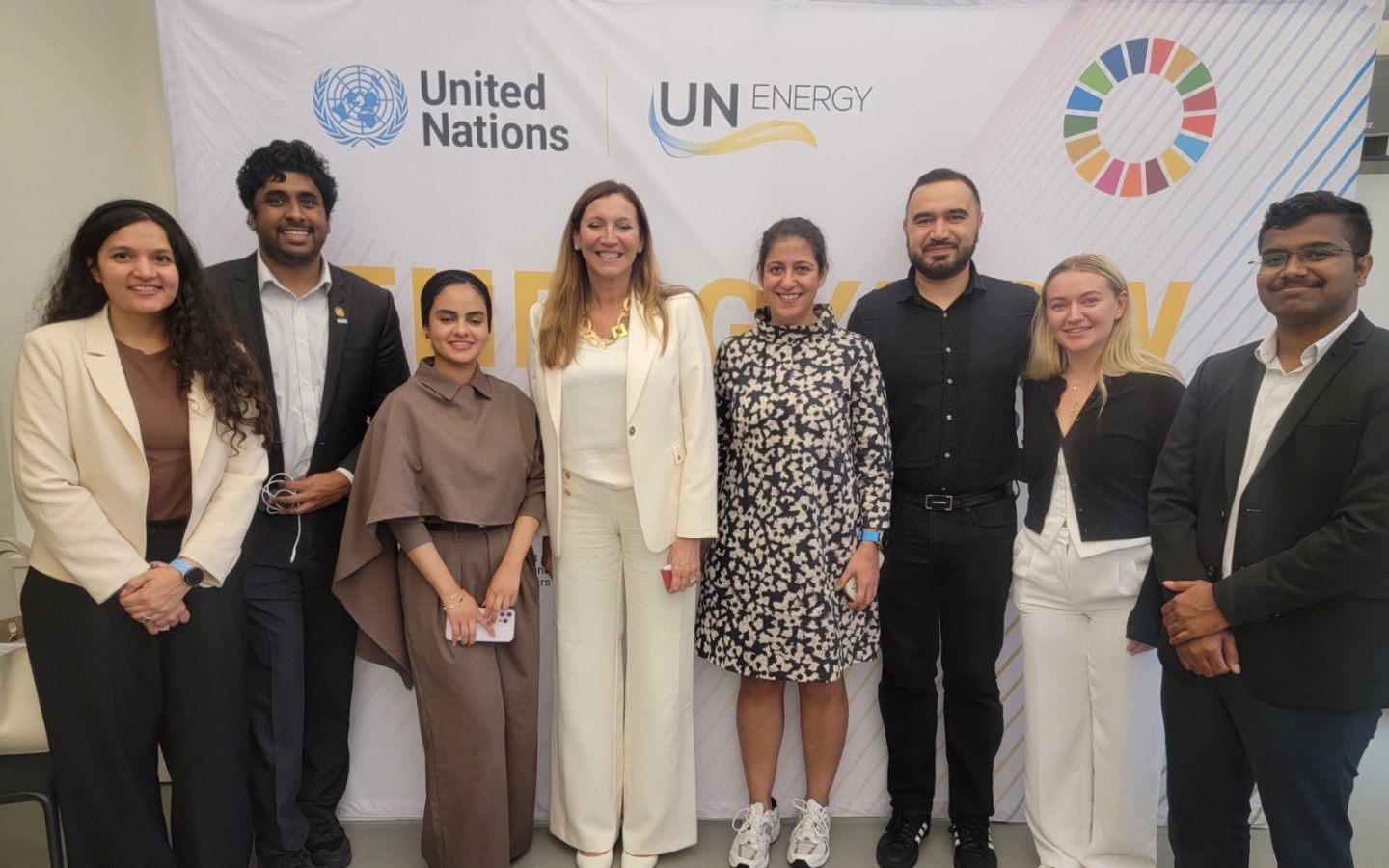
IEEE PES Young Professionals Advisory Council’s Sheida Bahramirad, Ph.D., and Sajith Wijesuriya, Ph.D., discuss why business leaders must empower rising engineers today to meet tomorrow’s challenges.
Across every industry and sector, from consumers to businesses, energy demand is rising faster than ever—quickly outpacing the capabilities of existing power systems and underscoring the need for transformation to keep pace with such historic growth. Adding to this challenge, extreme weather events are impacting the electric grid and requiring our infrastructure to meet higher sustainability and reliability standards. Put differently, we are in a unique, challenging, and historic moment in the world’s energy transformation.
In order to meet this moment, the world will need a new generation of young engineers to create, design, and operate increasingly advanced energy systems. In fact, estimates from a new study, The Future of the Energy Workforce, suggest that as many as 1.5 million more engineers will be needed to help build and design the energy future that billions of people will depend on. However, some young engineering professionals are stymied by a profession wedded to strict organizational structures that are less dynamic, less diverse, or have few opportunities to collaborate with more senior energy leaders.
To help build the next-generation workforce, one that attracts new talent and retains the talent it has, organizations across the energy space must invest in more breakthrough moments to appeal to tomorrow’s talent.
How can such breakthrough moments, ones that excite young professionals about the energy future, be created? One way is to replicate more events such as the one experienced by a group of early-career engineers from the IEEE Power and Energy Society (PES) Young Professionals program. These young engineers did what more across the profession should be encouraged to do: They participated in the UN General Assembly High-Level Week and New York City Climate Week 2025.
During these events, the group was exposed to and engaged with more than 100,000 member-state representatives, high-level decision-makers, leaders, and peers who touch the energy ecosystem. These events helped remind them that the future of energy will be built through deep, cross-sector collaboration. While engineers encompass the technical expertise required, they will depend on the support from businesses, financial institutions, and policymakers to help address climate change or implement cutting-edge advancements in grid resiliency.
The signature event of the week was the SDG7 Action Forum, a collaboration hosted by UN-Energy and supported by IEEE Regions 1 and 2 and IEEE Young Professionals to track progress toward net-zero emission goals. During this session, they heard from International Renewable Energy Agency (IRENA) director general Francesco La Camera, UN Development Program (UNDP) Sustainable Energy Hub director Riad Meddeb, and Maria Michela Morese from the Food and Agriculture Organization (FAO) on how energy demand impacts food and agricultural production. They also discussed how future uses of data can strengthen grid resilience in vulnerable communities around the world.
Most importantly, these young professionals were able to engage directly with policy experts and business leaders who genuinely listened to what they had to say. As a result, these rising engineers were no longer observing an abstract energy system from the outside. They became a part of it, bringing a deeper sense of shared responsibility and belief in their future role in shaping what’s next.

IEEE PES Young Professionals (PES YP) attend the SDG7 Action Forum with Francesco La Camera, director general of IRENA. From left to right: Alejandra Valdivia, Jaafar Abdulkadir, Sheida Bahramirad, Francesco La Camera, Emmanuella Doreen Kwofie, Haneen Aljuhani, Catherine Suttah
Make no mistake, the next generation of energy professionals that the world will depend on will be required to accelerate the global energy transition. For them, maybe more than any other generation of workers, the climate and resiliency impact on power and energy infrastructure is not just a policy issue but a defining reality.
While these professionals are clearly eager to help solve our greatest energy challenges, the energy industry needs stronger systems of support to help bring even more opportunities to even more young engineers. Going forward, businesses, utilities, and policymakers must prioritize these gatherings for their young professionals, not just for the impact they have on the next generation but because they are invaluable investments in their own future. These professional events will help young engineers build networks of knowledge to unlock the breakthroughs of tomorrow that will benefit their respective companies—and the world.
Looking ahead, opportunities for youth engagement, such as the General Assembly High-Level Week and New York City Climate Week, are powerful examples of how senior leaders can drive long-term, systemic impact by increasing intergenerational partnerships, bridging experience gaps, and checking blind spots, making our whole system stronger.
We owe it to the next generation, and the world, to do more to help these young people succeed. To that end, we are looking to you—business leaders, changemakers, and international organizers—to cocreate a better energy future by inspiring them about the profession so many of us senior leaders have dedicated our lives to. Through mentorship, real-world learning opportunities, career development, and local and global events, we can build a strong energy workforce that will build the energy future that generations will depend on.
Learn how engineers at IEEE PES are preparing for the global energy transition at ieee-pes.org/climate-change.
Note: This content was created by IEEE PES.