Nippon Steel’s deal to acquire U.S. Steel has proved controversial ever since it was announced last December. The monthslong saga may soon be ending, as the White House has reportedly decided to block the $14.9 billion takeover of the steel manufacturer based in Pittsburgh, Pa.
The Biden administration is set to deny approval for Nippon Steel based on national security concerns, multiple media outlets reported on Wednesday. The decision could be announced in a few days’ time.
A successful acquisition would have made Nippon Steel the world’s third-largest steelmaker, up from fourth-largest now.
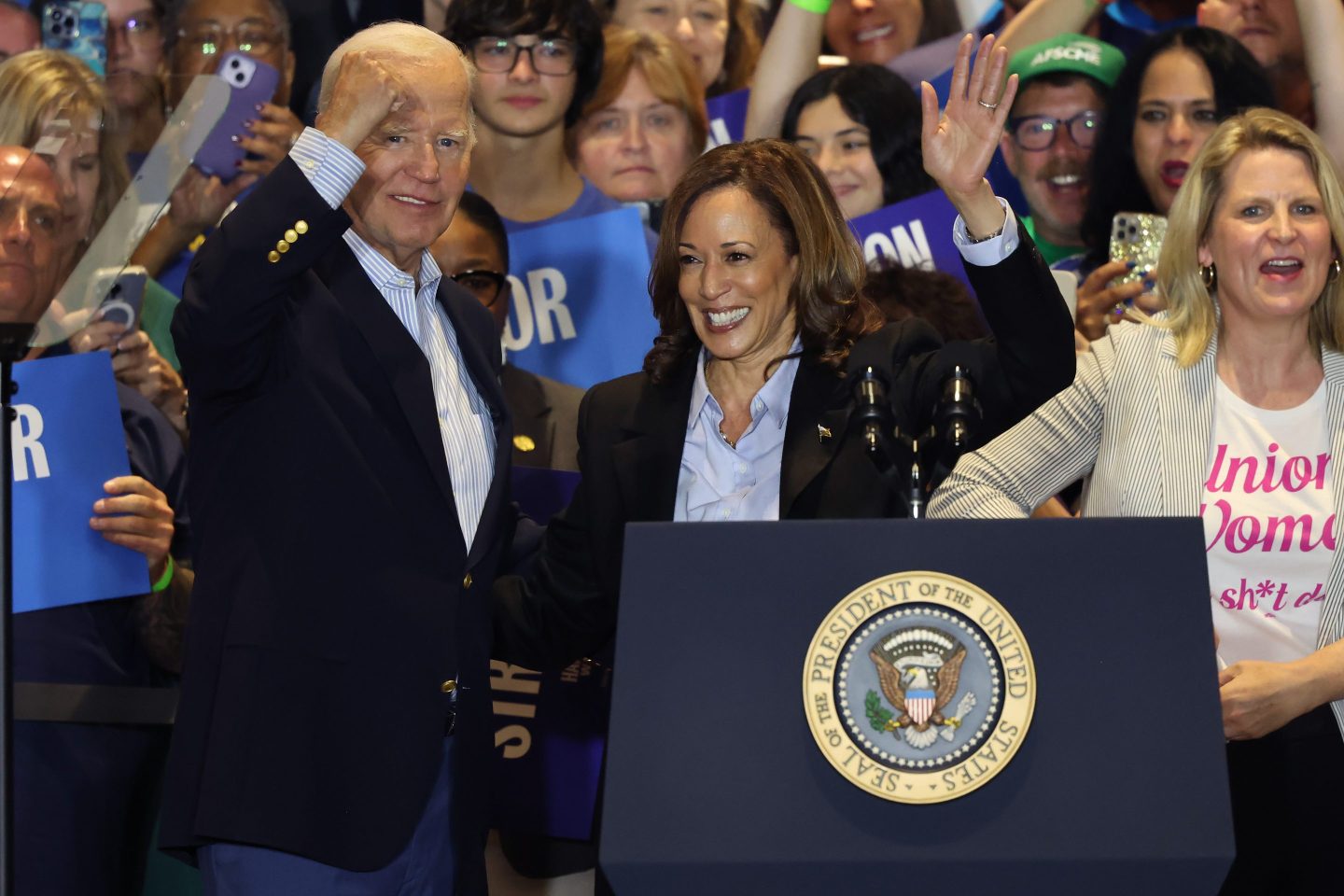
Both Republican and Democratic politicians, as well as labor unions, quickly criticized the deal. Former President Donald Trump pledged to block the deal, and the Biden administration also promised to examine the acquisition for national security issues. Earlier this week, Vice President and current Democratic presidential nominee Kamala Harris said U.S. Steel needs to stay American-owned during a rally in Pittsburgh, U.S. Steel’s hometown.
Nippon Steel executives have tried to play up the geopolitical benefits of the deal, allowing steelmakers in the “free-competition world” to compete with Chinese steel companies. Nippon Steel president Eiji Hashimoto said the deal would appeal to “an alliance that advances shared values between Washington and Tokyo.”
Jesper Koll, a longtime Japan observer, says Nippon Steel’s acquisition of U.S. Steel would have created a “trans-Pacific champion” that would be able to compete against producers in China.
Japan is a staunch U.S. ally—yet U.S. politicians continued to attack the deal as a threat to national security, given the importance of the steel industry.
“It’s 100% politics and 0% economics,” says Deborah Elms, head of trade policy at the Hinrich Foundation. “It would be less of a problem if the companies involved weren’t called Nippon Steel and U.S. Steel.” As a manufacturer based in the critical U.S. swing state of Pennsylvania, she notes, “it’s important a company with that name stays American-owned.”
The Committee on Foreign Investment in the U.S. (CFIUS), which screens foreign investments for national security threats, is currently evaluating the Nippon Steel–U.S. Steel deal.
Nippon Steel argues the transaction will enhance U.S. national security, as reinforcing U.S. Steel and its production capabilities will make the U.S. supply chain more resilient. The Japanese company has also promised to expand jobs in the U.S., as well as appoint U.S. citizens to key management positions and more than half the board seats.
On Wednesday, U.S. Steel warned thousands of jobs could be at risk if regulators blocked the Nippon Steel acquisition, and even said the company may move its headquarters from Pittsburgh.
Could U.S.-Japan relations be affected by a failed Nippon Steel–U.S. Steel deal?
A blocked deal could complicate U.S. relations with Japan, a major security ally. The “protectionist walls around America are getting higher, even for its most trusted partners,” says Koll.
In an interview with Bloomberg on Thursday, Kono Taro, Japan’s digital transformation minister and a prime ministerial hopeful, accused the U.S. of trying to secure labor union votes ahead of the presidential election.
While Kono accepted that “national security factors” could be a reason to block a foreign takeover, he said it was “a little questionable whether this U.S. Steel takeover case is an example of that.”
“Foreign investors have long memories. They’re not going to quickly forget the company came in with an over-the-average bid and was turned down after a long and protracted saga,” Elms says.
The U.S. and Japan have moved even closer as both worry about the rise of China. Both countries are members of the Quad, a security alliance that also includes Australia and India.
“If the U.S. draws up a friends and family list and Japan is not on that list, then I’d question [what country] would make that list,” Elms says.
Japan is home to several companies that manufacture chipmaking equipment. These firms play an important role in the semiconductor supply chain.
Japan and the Netherlands, another hub for chipmaking tools, have both imposed export controls on China. But Washington is reportedly pressuring Tokyo to expand those restrictions further.
“You’d only do that if you’re part of the friends and family program,” Elms says.
A role reversal between the U.S. and Japan
Foreign takeovers have long been difficult in Japan. The government has discouraged acquisitions, and corporate boards have often prized stability over shareholder value. Koll points to 2007, when Japan’s Bull-Dog Sauce successfully defended itself against a takeover by U.S. hedge fund Steel Partners.
But the saga over Nippon Steel comes as Japan faces its own foreign takeover saga involving a national icon: the 7-Eleven convenience store.
Canadian retailer Alimentation Couche-Tard, which operates the Circle K chain of convenience stores, has made a bid to buy Seven & i Holdings, the owner of the 7-Eleven convenience store chain.
Seven & i Holdings reportedly tried to secure special government protection that would require government approval for any foreign investor trying to acquire a stake in the company. The designation is used for sectors like semiconductors and nuclear technology.
Yet Tokyo may not be willing to consider the convenience store as vital to national security. The Japanese government has determined that Seven & i Holdings could not use national security reasons as a way to block a foreign takeover, Reuters reported Wednesday, citing an unnamed Japanese official—a development that Koll describes as reflecting “greater openness” on the part of policymakers.