• Home
  • Latest
  • Fortune 500
  • Finance
  • Tech
  • Leadership
  • Lifestyle
  • Rankings
  • Multimedia
TechChina
Asia

China is poised to dominate the market for legacy chips, and the U.S. may only have itself to blame

By
Lionel Lim
Lionel Lim
Asia Reporter
Down Arrow Button Icon
By
Lionel Lim
Lionel Lim
Asia Reporter
Down Arrow Button Icon
July 5, 2024, 5:00 PM ET
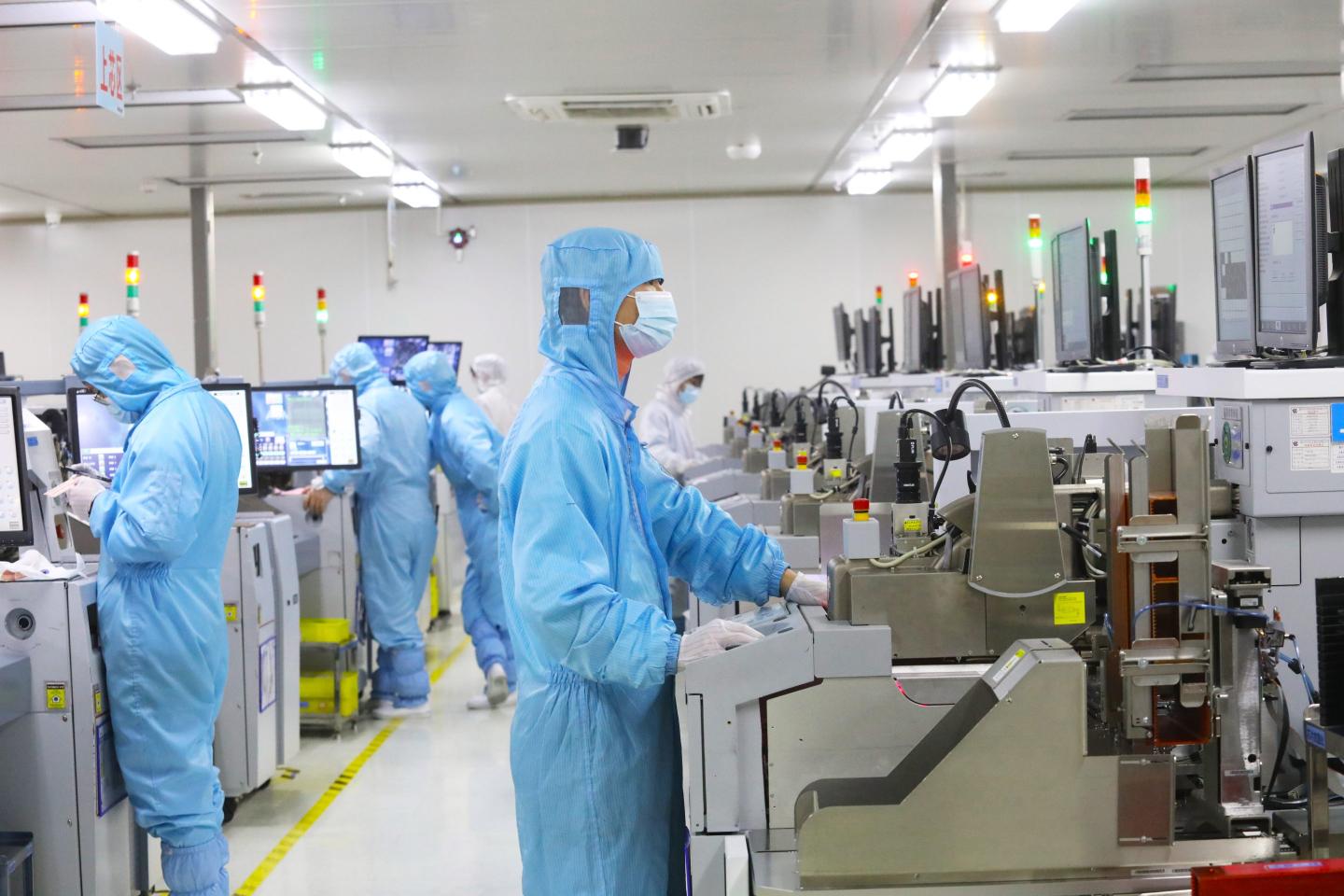
Workers observing the production of chips through an electronic display in Chongqing, China, on March 30, 2022.
Workers observing the production of chips through an electronic display in Chongqing, China, on March 30, 2022.NurPhoto/Getty Images

In April, U.S. Commerce Secretary Gina Raimondo took the stage in the Belgian city of Leuven with a warning: “About 60% of all new ‘legacy chips’ coming into the market in the next handful of years will be produced by China,” she told reporters. 

Recommended Video

The U.S. and its allies are controlling China’s access to advanced chips used to power cutting-edge applications like AI. But much of the industry makes so-called mature chips, less sophisticated products that power household appliances, electric vehicles, and other everyday products. 

And China—despite an increasing array of U.S. policies meant to constrain the country’s chip industry—could be set to dominate that market. Chinese chip production jumped 40% in the first quarter, according to government data. Mainland Chinese firms could be major players in the legacy chip market, behind Taiwan-based firms, and account for 33% of the market by 2027, predicts TrendForce, a market research firm. 

Western officials in recent months have delivered a steady drumbeat of concerns over Chinese “overcapacity,” alleging that China uses state subsidies to help industries like electric vehicles and solar panels undercut their foreign competition. 

But unlike EVs or renewable energy—industries that Beijing and private companies recognized as strategic opportunities early on—analysts suggest that China’s dominance of mature chips is instead a by-product of other policies. And they note U.S. pressure likely (and ironically) played a major role in fostering China’s potential success in legacy chips. 

China’s goal is to eventually produce the advanced chips that can power AI or 5G mobile technology. Yet Washington’s export restrictions are stopping Chinese chip manufacturers from getting the tools they need. That means Chinese chip manufacturers are turning to the less advanced chips they can still produce. 

“They have to start somewhere,” says Chim Lee, a senior Asia analyst at the Economist Intelligence Unit. “You have to start with the mature nodes … then scale up the market gradually.”

Why is China investing in legacy chips?

Legacy chips, also referred to as mature chips or mature nodes, are less advanced semiconductors used in a wide array of electronic devices, ranging from household appliances to electric vehicles. U.S. export controls define legacy chips as those larger than the “16- to 14-nanometer” generation. Chips of that size are slightly more than a decade old. By comparison, TSMC, the world’s leading contract chip manufacturer, is set to mass produce two-nanometer chips meant for high-end electronics like Apple’s smartphones or Nvidia’s processors next year.

Linghao Bao, a senior analyst at consulting firm Trivium China, suggests China’s increasing legacy chip production is a by-product of Beijing’s support for “sectors that are strategic for China.”

“They’re trying to secure their industrial supply chain,” he says.

China invested heavily in industries like clean energy and electric vehicles in a bid to become a world leader in those sectors. These industries require semiconductors, but not the most advanced ones used in high-end consumer electronics and AI. 

Chinese chip manufacturers are starting operations at 18 projects this year, according to U.S. trade group SEMI.

These incoming projects will almost certainly focus on mature chip production. Export controls from the U.S. and its allies bar companies like ASML from selling their most advanced chipmaking tools to China.

Yet sanctions (for now) don’t prevent Chinese companies from buying some older equipment. In fact, Chinese chip companies hoovered up chipmaking machinery last year, owing to fears that the U.S. can tighten the screws even further, explains Marco Mezger, chief operating officer of Neumonda, a European memory component firm.

Those worries may not be unfounded. Bloomberg in January, quoting unnamed sources, reported that ASML canceled some shipments bound for China late last year amid political pressure.

“The primary goal is to replace American equipment” in the chip supply chain, Bao says. 

What is China’s semiconductor policy?

Still, Beijing has strong opinions on where Chinese companies should get their chips from.

In May, China unveiled a $47.5 billion fund to further bolster the local semiconductor industry. The “Big Fund III” (as it’s colloquially called) is almost as large as Beijing’s previous two chip funds combined. 

The Big Fund hopes to wean China’s chip industry off foreign technology, and Beijing has had mixed success. While these programs led to some chip champions like Semiconductor Manufacturing International Corp. (SMIC), it also led to some high-profile corporate failures and corruption scandals. 

Beijing is also reportedly telling Chinese companies to stop using foreign-made chips in their products, which could close off access to foreign chipmakers. Beijing could leverage its vast EV market as well to promote local chips to the “detriment of European and Japanese suppliers,” according to a nonpublic European Commission report uncovered by Bloomberg. 

What happens next?

Non-Chinese companies may struggle to compete with Chinese legacy chip manufacturers. Chinese companies still lag the best legacy chip manufacturers when it comes to technological prowess, but “in terms of price, local competitors are already there,” Lee from the EIU notes.

The threat of “oversupply” has led some companies to worry about price wars, as foundries become desperate for customers. And some in the U.S. want controls to go even further to limit the use of Chinese chips. 

But new sanctions on mature chips could be a step too far for U.S. allies, who still sell to China’s chip industry. 

Netherlands-based ASML, in spite of U.S. controls, still shipped one chipmaking machine a day to China last year, according to Mezger. ASML’s sales to China surged last year, and the Chinese market was the second-biggest for the Dutch firm, making up a quarter of its 2023 sales. 

Japan, another U.S. ally that’s joined on to its chip controls, also exports chipmaking tools to China. Both Tokyo Electron and Canon, which both make less advanced chipmaking tools, expect China to contribute 40% of their sales this year. 

In the meantime, governments like that of the U.S. are also enticing chip manufacturers to invest in local manufacturing. Earlier this year, the Biden administration allotted $1.5 billion in CHIPS Act money to GlobalFoundries, in part to expand its production of mature chips. 

Mezger isn’t convinced these programs will be enough to make onshore legacy chip manufacturing sustainable. Margins are already low in the mature chip space—and Chinese competition will reduce those margins even further. Without subsidies, other regions won’t be as economically competitive as China, he says.

“This will end in tears,” he notes. “No company can just run on subsidies.”

Join us at the Fortune Workplace Innovation Summit May 19–20, 2026, in Atlanta. The next era of workplace innovation is here—and the old playbook is being rewritten. At this exclusive, high-energy event, the world’s most innovative leaders will convene to explore how AI, humanity, and strategy converge to redefine, again, the future of work. Register now.
About the Author
By Lionel LimAsia Reporter
LinkedIn icon

Lionel Lim is a Singapore-based reporter covering the Asia-Pacific region.

See full bioRight Arrow Button Icon

Latest in Tech

Finance
Lorem ipsum dolor sit amet, consectetur adipiscing elit, sed do eiusmod tempor incididunt ut labore et dolore magna aliqua. Ut enim ad minim veniam
By Fortune Editors
October 20, 2025
Finance
Lorem ipsum dolor sit amet, consectetur adipiscing elit, sed do eiusmod tempor incididunt ut labore et dolore magna aliqua. Ut enim ad minim veniam
By Fortune Editors
October 20, 2025
Finance
Lorem ipsum dolor sit amet, consectetur adipiscing elit, sed do eiusmod tempor incididunt ut labore et dolore magna aliqua. Ut enim ad minim veniam
By Fortune Editors
October 20, 2025
Finance
Lorem ipsum dolor sit amet, consectetur adipiscing elit, sed do eiusmod tempor incididunt ut labore et dolore magna aliqua. Ut enim ad minim veniam
By Fortune Editors
October 20, 2025
Finance
Lorem ipsum dolor sit amet, consectetur adipiscing elit, sed do eiusmod tempor incididunt ut labore et dolore magna aliqua. Ut enim ad minim veniam
By Fortune Editors
October 20, 2025
Finance
Lorem ipsum dolor sit amet, consectetur adipiscing elit, sed do eiusmod tempor incididunt ut labore et dolore magna aliqua. Ut enim ad minim veniam
By Fortune Editors
October 20, 2025

Most Popular

Finance
Lorem ipsum dolor sit amet, consectetur adipiscing elit, sed do eiusmod tempor incididunt ut labore et dolore magna aliqua. Ut enim ad minim veniam
By Fortune Editors
October 20, 2025
Finance
Lorem ipsum dolor sit amet, consectetur adipiscing elit, sed do eiusmod tempor incididunt ut labore et dolore magna aliqua. Ut enim ad minim veniam
By Fortune Editors
October 20, 2025
Finance
Lorem ipsum dolor sit amet, consectetur adipiscing elit, sed do eiusmod tempor incididunt ut labore et dolore magna aliqua. Ut enim ad minim veniam
By Fortune Editors
October 20, 2025
Finance
Lorem ipsum dolor sit amet, consectetur adipiscing elit, sed do eiusmod tempor incididunt ut labore et dolore magna aliqua. Ut enim ad minim veniam
By Fortune Editors
October 20, 2025
Finance
Lorem ipsum dolor sit amet, consectetur adipiscing elit, sed do eiusmod tempor incididunt ut labore et dolore magna aliqua. Ut enim ad minim veniam
By Fortune Editors
October 20, 2025
Finance
Lorem ipsum dolor sit amet, consectetur adipiscing elit, sed do eiusmod tempor incididunt ut labore et dolore magna aliqua. Ut enim ad minim veniam
By Fortune Editors
October 20, 2025
Fortune Secondary Logo
Rankings
  • 100 Best Companies
  • Fortune 500
  • Global 500
  • Fortune 500 Europe
  • Most Powerful Women
  • World's Most Admired Companies
  • See All Rankings
  • Lists Calendar
Sections
  • Finance
  • Fortune Crypto
  • Features
  • Leadership
  • Health
  • Commentary
  • Success
  • Retail
  • Mpw
  • Tech
  • Lifestyle
  • CEO Initiative
  • Asia
  • Politics
  • Conferences
  • Europe
  • Newsletters
  • Personal Finance
  • Environment
  • Magazine
  • Education
Customer Support
  • Frequently Asked Questions
  • Customer Service Portal
  • Privacy Policy
  • Terms Of Use
  • Single Issues For Purchase
  • International Print
Commercial Services
  • Advertising
  • Fortune Brand Studio
  • Fortune Analytics
  • Fortune Conferences
  • Business Development
  • Group Subscriptions
About Us
  • About Us
  • Press Center
  • Work At Fortune
  • Terms And Conditions
  • Site Map
  • About Us
  • Press Center
  • Work At Fortune
  • Terms And Conditions
  • Site Map
  • Facebook icon
  • Twitter icon
  • LinkedIn icon
  • Instagram icon
  • Pinterest icon

© 2026 Fortune Media IP Limited. All Rights Reserved. Use of this site constitutes acceptance of our Terms of Use and Privacy Policy | CA Notice at Collection and Privacy Notice | Do Not Sell/Share My Personal Information
FORTUNE is a trademark of Fortune Media IP Limited, registered in the U.S. and other countries. FORTUNE may receive compensation for some links to products and services on this website. Offers may be subject to change without notice.


Latest in Tech

Tim Cook reveals the advice he gave Apple’s next CEO: The most important decision he’ll make is ‘where he spends his time’
Big TechApple
Tim Cook reveals the advice he gave Apple’s next CEO: The most important decision he’ll make is ‘where he spends his time’
By Alexei OreskovicApril 30, 2026
2 hours ago
Meta’s threat to quit New Mexico ‘is showing the world how little it cares about child safety,’ AG says
LawMeta
Meta’s threat to quit New Mexico ‘is showing the world how little it cares about child safety,’ AG says
By Catherina GioinoApril 30, 2026
4 hours ago
Meta's Hyperion data-center site in Northeastern Louisiana.
NewslettersEye on AI
Big Tech will spend nearly $700 billion on AI this year. No one knows where the buildout ends
By Sharon GoldmanApril 30, 2026
8 hours ago
Financial analyst working at a computer
Personal FinancePersonal Finance Evergreen
AI’s entry-level hiring nightmare is another gift to boomers’ retirement plans
By Catherina GioinoApril 30, 2026
9 hours ago
TOPSHOT - Alphabet Inc. and Google CEO Sundar Pichai speaks during the inauguration of a Google Artificial Intelligence (AI) hub in Paris on February 15, 2024. (Photo by ALAIN JOCARD / AFP via Getty Images)
AIGoogle
Google and Amazon’s biggest profit driver last quarter was their Anthropic stakes—which they haven’t sold
By Eva RoytburgApril 30, 2026
9 hours ago
Elon Musk arrives at the courthouse during his trial against OpenAI
CryptoElon Musk
Elon Musk likes Bitcoin—but he just told a jury most crypto coins are scams
By Jack KubinecApril 30, 2026
11 hours ago

Most Popular

Apple cofounder Ronald Wayne—whose stake would be worth up to $400 billion had he not sold it in 1976—says that at 91, he has no regrets
Success
Apple cofounder Ronald Wayne—whose stake would be worth up to $400 billion had he not sold it in 1976—says that at 91, he has no regrets
By Preston ForeApril 27, 2026
3 days ago
Google Cloud revenue is now 18% of Alphabet's business. Is this the beginning of the end of Google's search identity?
Big Tech
Google Cloud revenue is now 18% of Alphabet's business. Is this the beginning of the end of Google's search identity?
By Alexei OreskovicApril 29, 2026
1 day ago
‘The cost of compute is far beyond the costs of the employees’: Nvidia executive says right now AI is more expensive than paying human workers
AI
‘The cost of compute is far beyond the costs of the employees’: Nvidia executive says right now AI is more expensive than paying human workers
By Sasha RogelbergApril 28, 2026
3 days ago
Jamie Dimon gets candid about national debt: ‘There will be a bond crisis, and then we’ll have to deal with it’
Economy
Jamie Dimon gets candid about national debt: ‘There will be a bond crisis, and then we’ll have to deal with it’
By Eleanor PringleApril 29, 2026
2 days ago
With no end in sight, Trump considers new options in Iran war—including the ‘Dark Eagle’ hypersonic missile
Big Tech
With no end in sight, Trump considers new options in Iran war—including the ‘Dark Eagle’ hypersonic missile
By Jim EdwardsApril 30, 2026
16 hours ago
No, tariffs are not strengthening the economy
Commentary
No, tariffs are not strengthening the economy
By Alex DuranteApril 29, 2026
2 days ago