• Home
  • Latest
  • Fortune 500
  • Finance
  • Tech
  • Leadership
  • Lifestyle
  • Rankings
  • Multimedia
Commentary
Asia

De-risking and friendshoring won’t get governments supply chain security. Putting their economic house in order will

By
Ken Heydon
Ken Heydon
Down Arrow Button Icon
By
Ken Heydon
Ken Heydon
Down Arrow Button Icon
February 24, 2024, 5:30 PM ET
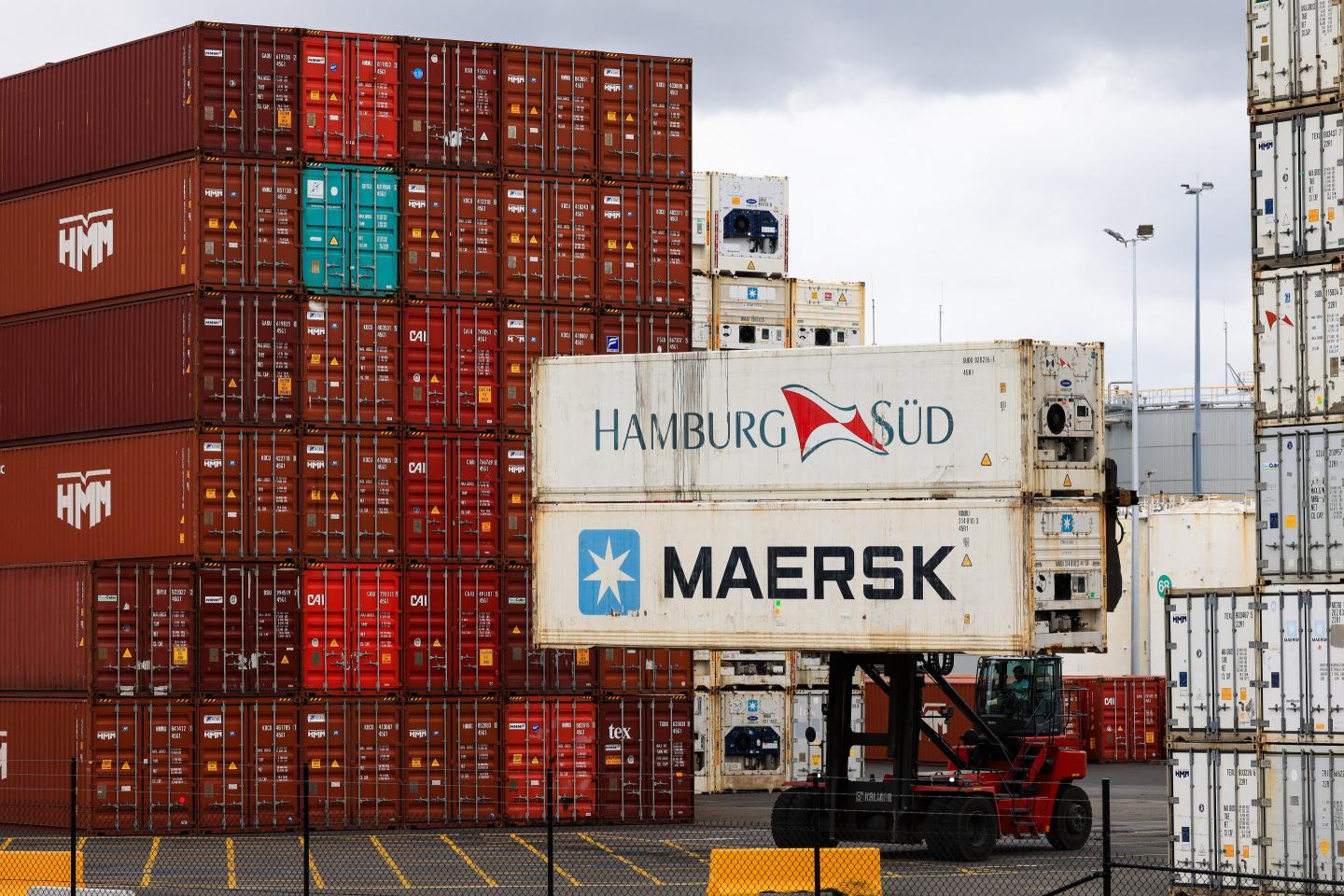
De-risking is in vogue—but it's not likely to give governments the supply chain security they want.
De-risking is in vogue—but it's not likely to give governments the supply chain security they want.Jenny Evans—Getty Images

De-risking is in vogue. At the recent World Economic Forum in Davos, both European Commission President Ursula von der Leyen and French President Emmanuel Macron spoke of the dangers of “overdependence” on global supply chains. Policymakers may now speak of de-risking rather than de-linkage, but the goal is unchanged—self-reliance within the global value chain (GVC).

A goal that may come at a price.

The pursuit of security within the supply chain is understandable, especially with geopolitical tensions, particularly the rivalry with China, and international supply chain disruptions stemming from the COVID-19 pandemic and the war in Ukraine.

The key is how it’s done. There’s a right way, and a wrong way—and most countries are choosing the latter.

The U.S.–and imminently Europe’s–decision to use tech export controls on China is clearly on the wrong path. They are self-defeating, perversely accelerating the development of China’s own technological capacity, starkly evident in the cutting-edge Kirin semiconductor used in Huawei’s latest smartphone. Such controls also deny U.S. firms, like Intel, the opportunity of growing through exports to China. And they force countries such as Indonesia, Thailand, and Vietnam to make the invidious choice between U.S.- and China-centric supply chains.

Massive state subsidies are just as problematic, distorting international competition at the expense of poorer developing countries. They disrupt the international trading system while running the risk of regulatory capture as the companies that benefit from subsidies become dependent on them.

Nor is friend-shoring a clear path forward. The ultimate logic of trading with friends, however defined, would split the world into rival trade blocs. Recent research from the International Monetary Fund and the World Trade Organization highlights that such a split would entail serious financial fragmentation and major losses in GDP, as high as 12% in some regions.

So what is the right path to dealing with supply chain disruption and vulnerability? There are two pointers.

The first is recognizing that the World Trade Organization, despite efforts by governments in the West and elsewhere to hobble it, is still the best place to tackle supply concerns over China’s practice of state capitalism. Within the auspices of the WTO, Beijing could agree to end subsidies for state-owned enterprises operating in overseas markets, in exchange for more tolerance for those supplying public services within China.

Countries can also build on the cooperation within the WTO negotiations on e-commerce, covering issues such as data protection, that brings together key players, including the U.S. and China, offering a welcome opportunity for constructive engagement between Washington and Beijing. (We might expect progress at the WTO’s ministerial conference, which starts Feb. 26)

The second and perhaps most critical pointer is the need for overall national policy frameworks that generate genuine resilience to shocks by fostering innovation and export diversification.

The scope to get domestic policies right can usefully be demonstrated by taking the countries engaged in the Supply Chain Resilience Initiative (SCRI), a trilateral endeavor by Japan, India, and Australia—and prospectively the United States—to secure supply chains and reduce dependence on China.

Rather than picking winners, the SCRI countries need to get the basics right. For Japan, this includes rebuilding fiscal space by increasing the consumption tax while improving productivity—lowest of all G7 economies—via enhanced corporate governance; for India, improving health and education infrastructure, modernizing labor laws to remove disincentives for firms to create jobs and further reducing restrictions to trade; for Australia, avoiding over rigid production systems based on the worst and most infrequent of predicted events; and for the United States, returning to more open policies of technological development, enabling it to “run faster” rather than seeking to hobble the opposition.

What these policies share is their focus—not narrow, in trying to defy comparative advantage through misplaced targeted trade-distorting interventions in the name of self-reliance, but broad, addressing economic fundamentals to foster genuine resilience.

In other words, countries seeking greater security within the global value chain should concentrate, above all, on putting their own economic house in order.

Ken Heydon is a former Australian government and OECD official and visiting fellow at the London School of Economics. He is the author of The Trade Weapon: How Weaponizing Trade Threatens Growth, Public Health and the Climate Transition.

The opinions expressed in Fortune.com commentary pieces are solely the views of their authors and do not necessarily reflect the opinions and beliefs of Fortune.

Join us at the Fortune Workplace Innovation Summit May 19–20, 2026, in Atlanta. The next era of workplace innovation is here—and the old playbook is being rewritten. At this exclusive, high-energy event, the world’s most innovative leaders will convene to explore how AI, humanity, and strategy converge to redefine, again, the future of work. Register now.
About the Author
By Ken Heydon
See full bioRight Arrow Button Icon

Latest in Commentary

Finance
Lorem ipsum dolor sit amet, consectetur adipiscing elit, sed do eiusmod tempor incididunt ut labore et dolore magna aliqua. Ut enim ad minim veniam
By Fortune Editors
October 20, 2025
Finance
Lorem ipsum dolor sit amet, consectetur adipiscing elit, sed do eiusmod tempor incididunt ut labore et dolore magna aliqua. Ut enim ad minim veniam
By Fortune Editors
October 20, 2025
Finance
Lorem ipsum dolor sit amet, consectetur adipiscing elit, sed do eiusmod tempor incididunt ut labore et dolore magna aliqua. Ut enim ad minim veniam
By Fortune Editors
October 20, 2025
Finance
Lorem ipsum dolor sit amet, consectetur adipiscing elit, sed do eiusmod tempor incididunt ut labore et dolore magna aliqua. Ut enim ad minim veniam
By Fortune Editors
October 20, 2025
Finance
Lorem ipsum dolor sit amet, consectetur adipiscing elit, sed do eiusmod tempor incididunt ut labore et dolore magna aliqua. Ut enim ad minim veniam
By Fortune Editors
October 20, 2025
Finance
Lorem ipsum dolor sit amet, consectetur adipiscing elit, sed do eiusmod tempor incididunt ut labore et dolore magna aliqua. Ut enim ad minim veniam
By Fortune Editors
October 20, 2025

Most Popular

Finance
Lorem ipsum dolor sit amet, consectetur adipiscing elit, sed do eiusmod tempor incididunt ut labore et dolore magna aliqua. Ut enim ad minim veniam
By Fortune Editors
October 20, 2025
Finance
Lorem ipsum dolor sit amet, consectetur adipiscing elit, sed do eiusmod tempor incididunt ut labore et dolore magna aliqua. Ut enim ad minim veniam
By Fortune Editors
October 20, 2025
Finance
Lorem ipsum dolor sit amet, consectetur adipiscing elit, sed do eiusmod tempor incididunt ut labore et dolore magna aliqua. Ut enim ad minim veniam
By Fortune Editors
October 20, 2025
Finance
Lorem ipsum dolor sit amet, consectetur adipiscing elit, sed do eiusmod tempor incididunt ut labore et dolore magna aliqua. Ut enim ad minim veniam
By Fortune Editors
October 20, 2025
Finance
Lorem ipsum dolor sit amet, consectetur adipiscing elit, sed do eiusmod tempor incididunt ut labore et dolore magna aliqua. Ut enim ad minim veniam
By Fortune Editors
October 20, 2025
Finance
Lorem ipsum dolor sit amet, consectetur adipiscing elit, sed do eiusmod tempor incididunt ut labore et dolore magna aliqua. Ut enim ad minim veniam
By Fortune Editors
October 20, 2025
Fortune Secondary Logo
Rankings
  • 100 Best Companies
  • Fortune 500
  • Global 500
  • Fortune 500 Europe
  • Most Powerful Women
  • World's Most Admired Companies
  • See All Rankings
  • Lists Calendar
Sections
  • Finance
  • Fortune Crypto
  • Features
  • Leadership
  • Health
  • Commentary
  • Success
  • Retail
  • Mpw
  • Tech
  • Lifestyle
  • CEO Initiative
  • Asia
  • Politics
  • Conferences
  • Europe
  • Newsletters
  • Personal Finance
  • Environment
  • Magazine
  • Education
Customer Support
  • Frequently Asked Questions
  • Customer Service Portal
  • Privacy Policy
  • Terms Of Use
  • Single Issues For Purchase
  • International Print
Commercial Services
  • Advertising
  • Fortune Brand Studio
  • Fortune Analytics
  • Fortune Conferences
  • Business Development
  • Group Subscriptions
About Us
  • About Us
  • Lists Calendar
  • Press Center
  • Work At Fortune
  • Terms And Conditions
  • Site Map
  • About Us
  • Lists Calendar
  • Press Center
  • Work At Fortune
  • Terms And Conditions
  • Site Map
  • Facebook icon
  • Twitter icon
  • LinkedIn icon
  • Instagram icon
  • Pinterest icon

© 2026 Fortune Media IP Limited. All Rights Reserved. Use of this site constitutes acceptance of our Terms of Use and Privacy Policy | CA Notice at Collection and Privacy Notice | Do Not Sell/Share My Personal Information
FORTUNE is a trademark of Fortune Media IP Limited, registered in the U.S. and other countries. FORTUNE may receive compensation for some links to products and services on this website. Offers may be subject to change without notice.


Latest in Commentary

cook
Commentarychief executive officer (CEO)
Tim Cook built Apple into a $4 trillion company. Then his greatest strength became his biggest liability
By Andrea PetroneApril 25, 2026
17 hours ago
mark
CommentaryJobs
I lost my job to AI. Here’s why mass layoffs won’t transform your company
By Mark QuinnApril 25, 2026
18 hours ago
Asia is turning to coal in the Iran crisis, but nuclear power will be the real endgame
CommentaryNuclear Energy
Asia is turning to coal in the Iran crisis, but nuclear power will be the real endgame
By Julius Cesar TrajanoApril 24, 2026
1 day ago
Gen Alpha can’t write emails to grandma without ChatGPT. It’s time for a ‘Digital Harm Tax’
CommentarySocial Media
Gen Alpha can’t write emails to grandma without ChatGPT. It’s time for a ‘Digital Harm Tax’
By Larz MayApril 24, 2026
2 days ago
dario
CommentaryAnthropic
Mythos access by Discord group reveals real danger of AI-powered hacking
By Stefanie SchappertApril 24, 2026
2 days ago
kiani
CommentaryHealth
We could cut 180,000 preventable hospital deaths a year. Here’s exactly why we haven’t
By Joe KianiApril 24, 2026
2 days ago

Most Popular

According to Warren Buffett's math the stock market is officially in 'playing with fire' territory. So when is the next crash coming?
Investing
According to Warren Buffett's math the stock market is officially in 'playing with fire' territory. So when is the next crash coming?
By Shawn TullyApril 25, 2026
22 hours ago
This CEO lived on canned soup and took just two days off for his daughter’s birth. Now he admits he lost sight of proper work-life balance
Success
This CEO lived on canned soup and took just two days off for his daughter’s birth. Now he admits he lost sight of proper work-life balance
By Preston ForeApril 25, 2026
22 hours ago
Despite nearing their 60s, nearly four in 10 Americans heading towards the end of their careers don’t even have a retirement account
Success
Despite nearing their 60s, nearly four in 10 Americans heading towards the end of their careers don’t even have a retirement account
By Emma BurleighApril 23, 2026
3 days ago
The U.S. military may have already used up half of its most expensive missiles, and it could take up to 4 years to rebuild its stockpiles
Politics
The U.S. military may have already used up half of its most expensive missiles, and it could take up to 4 years to rebuild its stockpiles
By Sasha RogelbergApril 24, 2026
2 days ago
This is a ‘come to Jesus moment’: Ford CEO says American carmakers are battling a perfect storm
C-Suite
This is a ‘come to Jesus moment’: Ford CEO says American carmakers are battling a perfect storm
By Marco Quiroz-GutierrezApril 24, 2026
1 day ago
Tim Cook built Apple into a $4 trillion company. Then his greatest strength became his biggest liability
Commentary
Tim Cook built Apple into a $4 trillion company. Then his greatest strength became his biggest liability
By Andrea PetroneApril 25, 2026
17 hours ago