
Over-the-counter food sensitivity tests claim to help people identify food intolerances. So, for those in high-performance roles who need to maximize energy and focus, food sensitivity tests may be appealing.
The idea of being able to pinpoint problematic foods and tweak your diet so you feel and perform better is alluring. But it’s worth mentioning that these tests aren’t strongly backed by the currently available scientific evidence—so while they can be interesting to take, whether the information is reliable is another question.
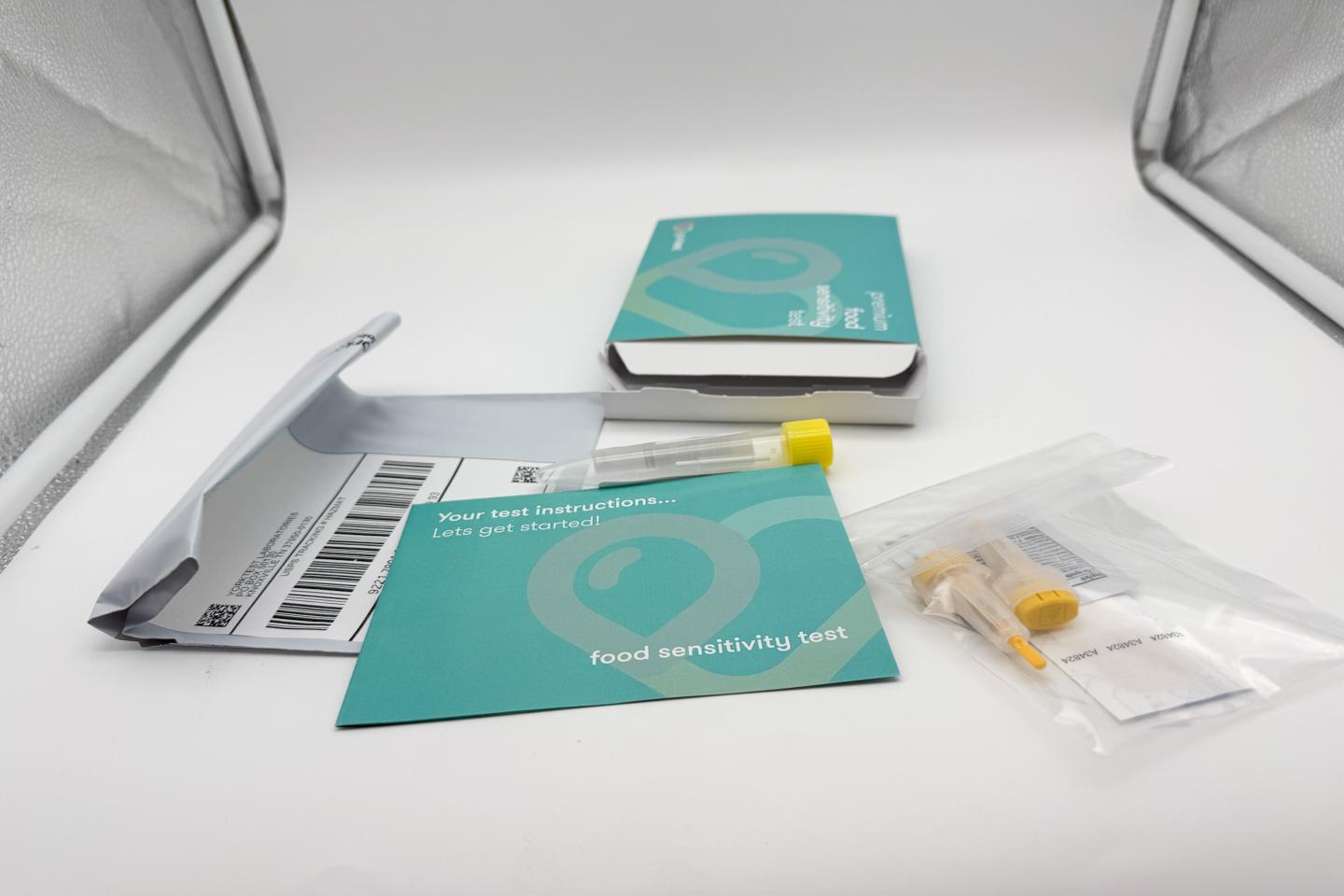
That said, we were curious to try a food sensitivity test for ourselves. A member of our testing team, Sophia, used the YorkTest Premium Food Sensitivity Test and reported on the first part of that experience—receiving the kit, collecting the sample, and shipping it to the lab. We’ll update this review once she receives her results.
YorkTest Food Sensitivity Test

- Our thoughts: A comprehensive food intolerance test that requires just a quick blood draw
- Who it’s for: People experiencing various symptoms who suspect it might be linked to diet, and high achievers looking to optimize their food and beverage intake
- What makes it different: The test includes 200 foods and beverages
YorkTest Food Sensitivity Test Specs
Our Experience with YorkTest Food Sensitivity Test
YorkTest offers an at-home Premium Food Sensitivity Test that assesses IgG reactivity to 200 different foods and drinks. Users send a blood sample (obtained via finger prick) to an accredited lab, and results arrive online within one week. The company claims that this kind of testing can help users get answers about what might be causing various symptoms like digestive upset, headaches, fatigue, and bloating.

Our tester, Sophia, took the test and shared her experience. Here’s what she liked, and what she thought could be improved.
What We Liked
Here’s what Sophia liked about the experience.
- Instructions (4.5 out of 5): According to Sophia, “The directions were very detailed and easy to follow. Each little step was written out, from registration to collection to sending the kit out to the lab.”
- Ease of sample collection (4 out of 5): Sophia said, “This kit came with a little wand that you use to soak up your blood,” adding, “The wand is almost helping apply pressure and stopping the bleeding.” While it was a mostly positive experience, Sophia said she had to use both lancets in the kit because the wand tended to stop the bleeding.
- Return convenience (4 out of 5): “There was a prepaid shipping label already placed on an envelope,” noted Sophia, adding that the shipping method and carrier were USPS ground shipping.
What We Would Change
Sophia said there was one drawback to using this food sensitivity test.
- Physical comfort level (3 out of 5): As Sohpia explained, “I didn’t like how I had to poke myself two times to get enough blood.” However, she added, “It didn’t hurt too badly and felt like a small pinch.”

Who It’s For & Who It’s Not For
YorkTest Food Sensitivity Test isn’t necessarily a good fit for everyone. We also recommend talking to a healthcare provider to determine if this test might be useful for you.
Why Food Sensitivity Tests Matter to Professionals
If you’re experiencing digestive upset or other issues that might be caused by food sensitivities, that can drastically affect how you function at work, whether it’s needing to take frequent bathroom breaks, having to avoid group lunches, or lacking focus and energy. If you can pinpoint the cause of your symptoms, though, you can then take steps to feel better—at least, that’s the hypothetical value of food sensitivity tests. There isn’t robust science to back them up, however, so proceed with some degree of skepticism if you decide to take one, and talk to a healthcare provider first to rule out any serious medical issues or food allergies.

Comparing YorkTest Food Sensitivity Test to Other Tests

Fortune’s Final Thoughts
YorkTest’s Premium Food Sensitivity Test might be worth considering if you’re experiencing certain symptoms and willing to try an elimination diet to see if it has any impact—with the approval of your healthcare provider, of course.
It’s ideal for those who are curious, have realistic expectations, have consulted with a healthcare provider to rule out serious food allergies, and are comfortable spending money on something that isn’t clinically validated and may or may not give you a substantial amount of meaningful information.
Frequently asked questions
How does the YorkTest food intolerance test work?
First, you order a test kit online, and the company will mail it to your home. After you receive it and read the instructions carefully, you collect the blood sample, which is two to three drops of blood. You’ll then mail the sample to the company’s accredited laboratory by dropping it off at a USPS location.
Do food sensitivity tests actually work?
According to the American Academy of Allergy, Asthma, and Immunology, tests that report IgG responses to multiple foods and claim that eliminating foods resulting in high IgG levels can help with various symptoms are not scientifically proven. More specifically, the organization says, “The presence of IgG is likely a normal response of the immune system to exposure to food. In fact, higher levels of IgG4 to foods may simply be associated with tolerance to those foods.”
What autoimmune disease causes food sensitivities?
One of the most common conditions associated with food sensitivities is Celiac Disease, an autoimmune disorder in which eating gluten—a protein commonly found in wheat, barley, and rye—prompts the immune system to attack the body’s own healthy cells, according to the Global Autoimmune Institute. People with Celiac Disease may experience fatigue, cognitive problems, headaches, and digestive issues like bloating, diarrhea, abdominal pain, and more.