
• Home
  • Latest
  • Fortune 500
  • Finance
  • Tech
  • Leadership
  • Lifestyle
  • Rankings
  • Multimedia
Commentary

The U.S. trade deficit: It’s time to dump do-it-yourself economics and go back to basics

By
Steve H. Hanke
Steve H. Hanke
and
Caleb Hofmann
Caleb Hofmann
Down Arrow Button Icon
By
Steve H. Hanke
Steve H. Hanke
and
Caleb Hofmann
Caleb Hofmann
Down Arrow Button Icon
April 18, 2025, 11:44 AM ET
Container ships loading up in China.
Container ships loading up in China.CFOTO/Future Publishing via Getty Images

Since President Trump’s inauguration on Jan. 20, it seems that many people—particularly the chattering classes—have suddenly become experts in international trade. Mr. Trump’s tariffs have spawned a litany of what economist David Henderson termed “do-it-yourself economics.” These are economic ideas that reflect the intuitive notions of laypeople and owe nothing to the ideas generated by trained economists and the economics profession. Not surprisingly, Henderson concluded that the gap between the notions of do-it-yourself economics and orthodox economics is widest in the sphere of international trade.

This gap is evident in the current brouhaha over trade and tariffs, particularly in the two opposing camps: those responsible for formulating the administration’s trade agenda (Mr. Trump and his cabinet) and those critiquing it (primarily commentators and journalists). The result of this dynamic is not only that the Trump administration has enacted wrongheaded trade policies, but also that the opposition to these policies is largely ineffective or irrelevant. Both camps are engaged in do-it-yourself economics.

The misconceptions emanating from both camps stem from one common oversight: Neither Mr. Trump nor his detractors have familiarized themselves with the savings-investment identity, a basic yet crucial mechanism that governs the magnitude of a country’s trade balance. Indeed, by definition, a country’s trade balance is governed entirely by the gap between its domestic saving and domestic investment. If a country’s domestic saving is greater than its domestic investment, like China’s, it will register a trade surplus. Likewise, if a country has a savings deficiency, like the United States, it will register a trade deficit. The United States’ negative trade balance, which the country has registered every year starting in 1975, is “made in the USA,” a result of its savings deficiency. To view the trade balance correctly, the focus should be on the domestic economy.

As it turns out, one of us, Hanke, analyzed the United States’ large and persistent trade deficits and found that they are primarily driven by its large and persistent fiscal deficits at the federal, state, and local government levels. In other words, in the aggregate, there is a savings deficiency in the United States, and this savings deficiency comes from the public sector—the U.S. private sector actually generates a savings surplus. This aggregate gap between savings and investment is filled by foreign imports of goods and services, resulting in an easy-to-finance capital inflow surplus and a trade deficit.

Armed with the basic truth of the savings-investment identity, we now turn to Mr. Trump’s camp. Mr. Trump and his advisors believe that the United States’ trade deficit is the result of foreigners ripping off and taking advantage of the United States. Indeed, Uncle Sam is characterized as being a victim of unfair trade practices. This characterization is clearly wrong on two counts. First, the trade deficit is not caused by foreigners; rather, it is homegrown, the result of choices made by Americans (in the aggregate) to invest beyond what they save.

Second, the trade deficit is not necessarily harmful. It instead appears to be a privilege extended to Americans by foreigners willing to invest in U.S. assets. This is a symbiotic relationship: Americans get cheap access to capital, while foreign governments and institutions get a safe place to park their money and earn a return.

When it comes to trade policy, the Trump administration’s detractors are just as lost as the White House. A recent high-profile article in the New York Times—“‘Totally Silly.’ Trump’s Focus on Trade Deficit Bewilders Economists,” contains an indicative summary of what journalists and commentators have to say about trade deficits. There’s just one little problem with the article and its respondents: No one ever explicitly mentions the true source of the trade deficit, which is elucidated by one of the most basic identities in economics. The identity tells us that if savings are less than investment, the gap must be filled by a trade deficit.

Both Mr. Trump’s cabinet and those criticizing his policies have a fundamental misunderstanding of what drives the U.S. trade deficit. As a result, the trade debate has turned into a futile filibuster, highlighting the dangers of do-it-yourself economics. It’s time to go back to the basics.

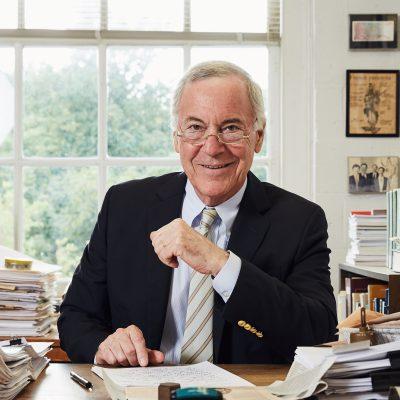
Steve H. Hanke is a professor of applied economics at the Johns Hopkins University and the author, with Leland Yeager, of Capital, Interest, and Waiting. Caleb Hofmann is a research scholar at the Johns Hopkins Institute for Applied Economics, Global Health, and the Study of Business Enterprise.

The opinions expressed in Fortune.com commentary pieces are solely the views of their authors and do not necessarily reflect the opinions and beliefs of Fortune.

Read more:

  • How to restore confidence in the U.S. dollar—and why it’s faltering in the first place
  • Trump’s tariffs are not ‘common sense’—and they’re putting America’s credibility and ‘exorbitant privilege’ at risk
  • USA Brands CEO: Where tariffs hurt small businesses the most
  • The pursuit of ‘lean’ operations has left companies mercilessly exposed to the tariffs chaos—and facing an existential threat
Join us at the Fortune Workplace Innovation Summit May 19–20, 2026, in Atlanta. The next era of workplace innovation is here—and the old playbook is being rewritten. At this exclusive, high-energy event, the world’s most innovative leaders will convene to explore how AI, humanity, and strategy converge to redefine, again, the future of work. Register now.
About the Authors
Steve H. Hanke
By Steve H. Hanke
Twitter icon
See full bioRight Arrow Button Icon
By Caleb Hofmann
See full bioRight Arrow Button Icon

Latest in Commentary

Finance
Lorem ipsum dolor sit amet, consectetur adipiscing elit, sed do eiusmod tempor incididunt ut labore et dolore magna aliqua. Ut enim ad minim veniam
By Fortune Editors
October 20, 2025
Finance
Lorem ipsum dolor sit amet, consectetur adipiscing elit, sed do eiusmod tempor incididunt ut labore et dolore magna aliqua. Ut enim ad minim veniam
By Fortune Editors
October 20, 2025
Finance
Lorem ipsum dolor sit amet, consectetur adipiscing elit, sed do eiusmod tempor incididunt ut labore et dolore magna aliqua. Ut enim ad minim veniam
By Fortune Editors
October 20, 2025
Finance
Lorem ipsum dolor sit amet, consectetur adipiscing elit, sed do eiusmod tempor incididunt ut labore et dolore magna aliqua. Ut enim ad minim veniam
By Fortune Editors
October 20, 2025
Finance
Lorem ipsum dolor sit amet, consectetur adipiscing elit, sed do eiusmod tempor incididunt ut labore et dolore magna aliqua. Ut enim ad minim veniam
By Fortune Editors
October 20, 2025
Finance
Lorem ipsum dolor sit amet, consectetur adipiscing elit, sed do eiusmod tempor incididunt ut labore et dolore magna aliqua. Ut enim ad minim veniam
By Fortune Editors
October 20, 2025

Most Popular

Finance
Lorem ipsum dolor sit amet, consectetur adipiscing elit, sed do eiusmod tempor incididunt ut labore et dolore magna aliqua. Ut enim ad minim veniam
By Fortune Editors
October 20, 2025
Finance
Lorem ipsum dolor sit amet, consectetur adipiscing elit, sed do eiusmod tempor incididunt ut labore et dolore magna aliqua. Ut enim ad minim veniam
By Fortune Editors
October 20, 2025
Finance
Lorem ipsum dolor sit amet, consectetur adipiscing elit, sed do eiusmod tempor incididunt ut labore et dolore magna aliqua. Ut enim ad minim veniam
By Fortune Editors
October 20, 2025
Finance
Lorem ipsum dolor sit amet, consectetur adipiscing elit, sed do eiusmod tempor incididunt ut labore et dolore magna aliqua. Ut enim ad minim veniam
By Fortune Editors
October 20, 2025
Finance
Lorem ipsum dolor sit amet, consectetur adipiscing elit, sed do eiusmod tempor incididunt ut labore et dolore magna aliqua. Ut enim ad minim veniam
By Fortune Editors
October 20, 2025
Finance
Lorem ipsum dolor sit amet, consectetur adipiscing elit, sed do eiusmod tempor incididunt ut labore et dolore magna aliqua. Ut enim ad minim veniam
By Fortune Editors
October 20, 2025
Fortune Secondary Logo
Rankings
  • 100 Best Companies
  • Fortune 500
  • Global 500
  • Fortune 500 Europe
  • Most Powerful Women
  • World's Most Admired Companies
  • See All Rankings
  • Lists Calendar
Sections
  • Finance
  • Fortune Crypto
  • Features
  • Leadership
  • Health
  • Commentary
  • Success
  • Retail
  • Mpw
  • Tech
  • Lifestyle
  • CEO Initiative
  • Asia
  • Politics
  • Conferences
  • Europe
  • Newsletters
  • Personal Finance
  • Environment
  • Magazine
  • Education
Customer Support
  • Frequently Asked Questions
  • Customer Service Portal
  • Privacy Policy
  • Terms Of Use
  • Single Issues For Purchase
  • International Print
Commercial Services
  • Advertising
  • Fortune Brand Studio
  • Fortune Analytics
  • Fortune Conferences
  • Business Development
  • Group Subscriptions
About Us
  • About Us
  • Press Center
  • Work At Fortune
  • Terms And Conditions
  • Site Map
  • About Us
  • Press Center
  • Work At Fortune
  • Terms And Conditions
  • Site Map
  • Facebook icon
  • Twitter icon
  • LinkedIn icon
  • Instagram icon
  • Pinterest icon

Latest in Commentary

hollywood
CommentaryMarketing
I spent 20 years learning to navigate an industry. Then I built a campaign for the man who’s dismantling it
By Matti YahavApril 29, 2026
8 hours ago
aging
HealthLongevity
We’re the CEOs of Peloton and the Hospital for Special Surgery. Living longer isn’t enough, we need to live better, too
By Bryan T. Kelly and Peter SternApril 29, 2026
9 hours ago
gen z
Commentarydisruption
AI won’t kill your job — it will kill the path to your first one
By Jeffrey Sonnenfeld, Stephen Henriques, Johan Griesel, Andrew Alam-Nist and Peter YuApril 29, 2026
9 hours ago
greer
CommentaryTariffs
No, tariffs are not strengthening the economy
By Alex DuranteApril 29, 2026
10 hours ago
AI is changing who gets to be an expert. Are your colleagues ready to become ‘directors of intelligence’?
AIProductivity
AI is changing who gets to be an expert. Are your colleagues ready to become ‘directors of intelligence’?
By Bruce BroussardApril 29, 2026
12 hours ago
gen z
CommentaryEducation
Gen Z has the wrong idea about college. Your career doesn’t start after you graduate 
By Ashley BigdaApril 29, 2026
12 hours ago

Most Popular

Apple cofounder Ronald Wayne—whose stake would be worth up to $400 billion had he not sold it in 1976—says that at 91, he has no regrets
Success
Apple cofounder Ronald Wayne—whose stake would be worth up to $400 billion had he not sold it in 1976—says that at 91, he has no regrets
By Preston ForeApril 27, 2026
2 days ago
‘The cost of compute is far beyond the costs of the employees’: Nvidia executive says right now AI is more expensive than paying human workers
AI
‘The cost of compute is far beyond the costs of the employees’: Nvidia executive says right now AI is more expensive than paying human workers
By Sasha RogelbergApril 28, 2026
2 days ago
‘Take the money and run’: Johns Hopkins economist Steve Hanke on why the UAE quit OPEC
Energy
‘Take the money and run’: Johns Hopkins economist Steve Hanke on why the UAE quit OPEC
By Shawn TullyApril 29, 2026
14 hours ago
Current price of gold as of April 28, 2026
Personal Finance
Current price of gold as of April 28, 2026
By Danny BakstApril 28, 2026
1 day ago
The U.S. military may have already used up half of its most expensive missiles, and it could take up to 4 years to rebuild its stockpiles
Politics
The U.S. military may have already used up half of its most expensive missiles, and it could take up to 4 years to rebuild its stockpiles
By Sasha RogelbergApril 24, 2026
5 days ago
More than two-thirds of U.S. schools say they’re unable to afford the cost of student free lunch—and MAHA’s dietary guidelines may make it worse
Economy
More than two-thirds of U.S. schools say they’re unable to afford the cost of student free lunch—and MAHA’s dietary guidelines may make it worse
By Sasha RogelbergApril 29, 2026
12 hours ago

© 2026 Fortune Media IP Limited. All Rights Reserved. Use of this site constitutes acceptance of our Terms of Use and Privacy Policy | CA Notice at Collection and Privacy Notice | Do Not Sell/Share My Personal Information
FORTUNE is a trademark of Fortune Media IP Limited, registered in the U.S. and other countries. FORTUNE may receive compensation for some links to products and services on this website. Offers may be subject to change without notice.