• Home
  • Latest
  • Fortune 500
  • Finance
  • Tech
  • Leadership
  • Lifestyle
  • Rankings
  • Multimedia
CommentaryFinance

Ending the U.S. trade deficit with tariffs is impossible, and it risks eliminating two longstanding U.S. surpluses

By
Steve H. Hanke
Steve H. Hanke
and
Caleb Hofmann
Caleb Hofmann
Down Arrow Button Icon
By
Steve H. Hanke
Steve H. Hanke
and
Caleb Hofmann
Caleb Hofmann
Down Arrow Button Icon
April 28, 2025, 12:05 PM ET
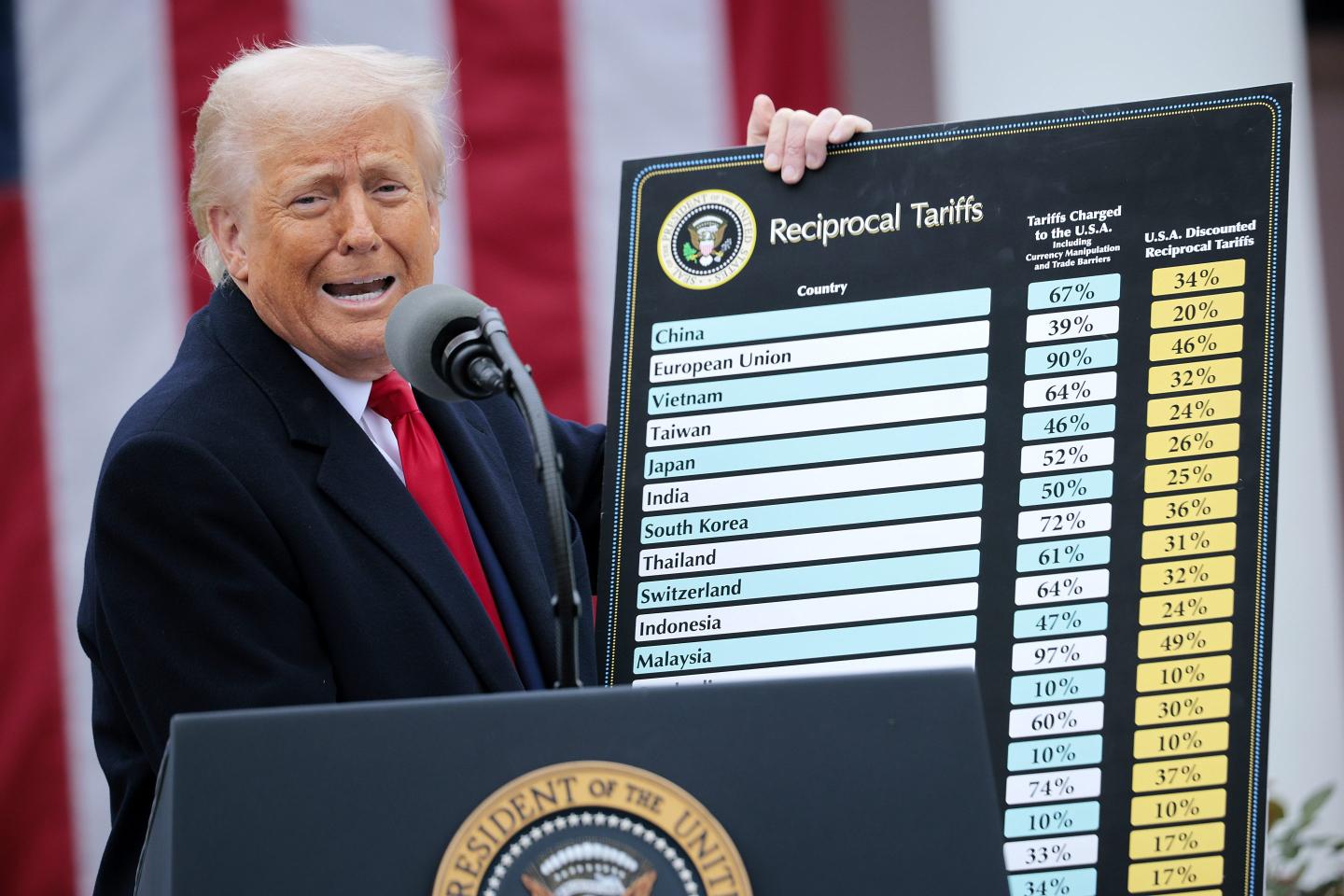
President Donald Trump talks tariffs and trade on "Liberation Day."
President Donald Trump talks tariffs and trade on "Liberation Day." Chip Somodevilla/Getty Images

The Trump administration has chosen the elimination of the U.S. trade deficit as its chief economic policy objective. This is misguided. In almost all cases, the magnitude of a country’s trade deficit should not be viewed as a policy variable.

President Trump’s tariffs were implemented to supposedly combat the United States’ large and persistent trade deficits. The Trump administration believes these deficits are the result of foreigners taking advantage of the United States through unfair trading practices. As we wrote two weeks ago, the administration is wrong on both counts. The U.S. trade deficit is homegrown, and it is easy to finance due to the privilege of Americans’ access to cheap capital.

Now that tariffs have been implemented, with the threat of more to come, on the basis of a misguided conception of trade deficits, they risk attenuating two great United States surpluses: its trade surplus in services and the large capital surplus resulting from the United States’ trade deficit. Not surprisingly, President Trump’s lips are sealed with regard to those surpluses.

A trade surplus

The Trump administration has deep-sixed the services story because the U.S. consistently runs a large trade surplus in its services sector. In fact, in 2023, the U.S. imported about $750 billion in foreign services and exported over $1 trillion in domestic services. This resulted in a services surplus of $250 billion. The story was much the same in 2024, when the U.S. ran a trade surplus in services of nearly $300 billion. This year, in the first two months of 2025, the United States has run a services surplus of $50 billion, indicating that it is again on track for an annual surplus of $300 billion. 

Where does this services surplus come from? The largest component of the U.S. services surplus was in financial services, an industry that generated a $130 billion trade surplus in 2024. American banks span the globe, particularly when it comes to providing fee-generating investment banking advisory services to foreign companies. Indeed, in 2024, the top five spots for global investment banking revenue were occupied by none other than Goldman Sachs, J.P. Morgan, Morgan Stanley, Bank of America, and Citigroup.

Tariffs threaten this services surplus because they create uncertainty, and uncertainty hits investment banking revenues hard. Every year, there are a finite number of companies in the market for advisory services on mergers, acquisitions, or debt or equity financing—a “fixed pie,” if you will. Each bank competes for a bigger and bigger slice of that pie. When a healthy dose of uncertainty is injected into earnings, companies find it harder to make the long-term plans necessary for a merger or a new round of financing. Thus, the fixed pie shrinks, investment banking revenues shrink, and the U.S. services surplus shrinks. We are already watching this mechanism work out in slow motion. For example, since “Liberation Day” on April 2, when the White House announced new tariffs, companies such as American Airlines, Delta, Southwest, Diageo, and Logitech have already stopped releasing forward guidance. At the same time, dealmaking activity has ground to a halt.

A capital surplus

Tariffs have put the United States’ capital surplus at risk, too. Nobelist Milton Friedman once remarked in an interview that “the trade deficit is not a deficit. In another sense, it’s a capital surplus.” Indeed, the trade deficit and the capital surplus are two sides of the same coin. When the United States runs a deficit in its trade of goods and services (the current account), the balance of payments identity dictates that it must be offset by a deficit in the United States’ financial account. The U.S. financial account registers a negative balance when foreigners’ purchases of U.S. assets are greater than the United States’ purchases of foreign assets. This is, in fact, a net capital surplus. And, as it turns out, the United States has registered a net capital surplus nearly every quarter since 1982.

Any policy to reduce a bilateral imbalance is likely to reduce the absolute volume of trade and the level of economic well-being in all countries. Unsurprisingly, tariffs have both lowered growth prospects in the United States and have incited talks of targeted foreign retaliation against U.S. companies. This makes U.S. equities less attractive to foreign portfolio managers. China has already added more U.S. companies to its Export Control List and Unreliable Entity List, and the European Union has threatened to implement stricter regulations on U.S. tech companies. Tariffs have also generated interest rate volatility in the Treasury market, damaging Treasury securities’ safe-haven status and making the $9 trillion government agency mortgage-backed securities market relatively less attractive to international investors.

President Trump wants to end the U.S. trade deficit with tariffs. This is impossible—the only way to reduce the U.S. trade deficit is to bring U.S. savings in line with U.S. investment, which would occur, for example, if policies were enacted to balance federal, state, and local government deficits. So, not only are tariffs a futile avenue towards reducing the U.S. trade deficit, they risk eliminating two longstanding U.S. surpluses—its services and capital surpluses. In this trade war, any victory for the U.S. would be a Pyrrhic victory.

Steve H. Hanke is a professor of applied economics at the Johns Hopkins University and the author, with Leland Yeager, of Capital, Interest, and Waiting. Caleb Hofmann is a research scholar at the Johns Hopkins Institute for Applied Economics, Global Health, and the Study of Business Enterprise.

The opinions expressed in Fortune.com commentary pieces are solely the views of their authors and do not necessarily reflect the opinions and beliefs of Fortune.

Read more:

  • Trump’s tariffs are not ‘common sense’—and they’re putting America’s credibility and ‘exorbitant privilege’ at risk
  • Trump’s tariffs program is based on flawed assumptions about the trade deficit
  • Tariffs won’t make America great again: Export-Import Bank’s former chairman and president
Join us at the Fortune Workplace Innovation Summit May 19–20, 2026, in Atlanta. The next era of workplace innovation is here—and the old playbook is being rewritten. At this exclusive, high-energy event, the world’s most innovative leaders will convene to explore how AI, humanity, and strategy converge to redefine, again, the future of work. Register now.
About the Authors
Steve H. Hanke
By Steve H. Hanke
Twitter icon
See full bioRight Arrow Button Icon
By Caleb Hofmann
See full bioRight Arrow Button Icon

Latest in Commentary

Finance
Lorem ipsum dolor sit amet, consectetur adipiscing elit, sed do eiusmod tempor incididunt ut labore et dolore magna aliqua. Ut enim ad minim veniam
By Fortune Editors
October 20, 2025
Finance
Lorem ipsum dolor sit amet, consectetur adipiscing elit, sed do eiusmod tempor incididunt ut labore et dolore magna aliqua. Ut enim ad minim veniam
By Fortune Editors
October 20, 2025
Finance
Lorem ipsum dolor sit amet, consectetur adipiscing elit, sed do eiusmod tempor incididunt ut labore et dolore magna aliqua. Ut enim ad minim veniam
By Fortune Editors
October 20, 2025
Finance
Lorem ipsum dolor sit amet, consectetur adipiscing elit, sed do eiusmod tempor incididunt ut labore et dolore magna aliqua. Ut enim ad minim veniam
By Fortune Editors
October 20, 2025
Finance
Lorem ipsum dolor sit amet, consectetur adipiscing elit, sed do eiusmod tempor incididunt ut labore et dolore magna aliqua. Ut enim ad minim veniam
By Fortune Editors
October 20, 2025
Finance
Lorem ipsum dolor sit amet, consectetur adipiscing elit, sed do eiusmod tempor incididunt ut labore et dolore magna aliqua. Ut enim ad minim veniam
By Fortune Editors
October 20, 2025

Most Popular

Finance
Lorem ipsum dolor sit amet, consectetur adipiscing elit, sed do eiusmod tempor incididunt ut labore et dolore magna aliqua. Ut enim ad minim veniam
By Fortune Editors
October 20, 2025
Finance
Lorem ipsum dolor sit amet, consectetur adipiscing elit, sed do eiusmod tempor incididunt ut labore et dolore magna aliqua. Ut enim ad minim veniam
By Fortune Editors
October 20, 2025
Finance
Lorem ipsum dolor sit amet, consectetur adipiscing elit, sed do eiusmod tempor incididunt ut labore et dolore magna aliqua. Ut enim ad minim veniam
By Fortune Editors
October 20, 2025
Finance
Lorem ipsum dolor sit amet, consectetur adipiscing elit, sed do eiusmod tempor incididunt ut labore et dolore magna aliqua. Ut enim ad minim veniam
By Fortune Editors
October 20, 2025
Finance
Lorem ipsum dolor sit amet, consectetur adipiscing elit, sed do eiusmod tempor incididunt ut labore et dolore magna aliqua. Ut enim ad minim veniam
By Fortune Editors
October 20, 2025
Finance
Lorem ipsum dolor sit amet, consectetur adipiscing elit, sed do eiusmod tempor incididunt ut labore et dolore magna aliqua. Ut enim ad minim veniam
By Fortune Editors
October 20, 2025
Fortune Secondary Logo
Rankings
  • 100 Best Companies
  • Fortune 500
  • Global 500
  • Fortune 500 Europe
  • Most Powerful Women
  • World's Most Admired Companies
  • See All Rankings
  • Lists Calendar
Sections
  • Finance
  • Fortune Crypto
  • Features
  • Leadership
  • Health
  • Commentary
  • Success
  • Retail
  • Mpw
  • Tech
  • Lifestyle
  • CEO Initiative
  • Asia
  • Politics
  • Conferences
  • Europe
  • Newsletters
  • Personal Finance
  • Environment
  • Magazine
  • Education
Customer Support
  • Frequently Asked Questions
  • Customer Service Portal
  • Privacy Policy
  • Terms Of Use
  • Single Issues For Purchase
  • International Print
Commercial Services
  • Advertising
  • Fortune Brand Studio
  • Fortune Analytics
  • Fortune Conferences
  • Business Development
  • Group Subscriptions
About Us
  • About Us
  • Press Center
  • Work At Fortune
  • Terms And Conditions
  • Site Map
  • About Us
  • Press Center
  • Work At Fortune
  • Terms And Conditions
  • Site Map
  • Facebook icon
  • Twitter icon
  • LinkedIn icon
  • Instagram icon
  • Pinterest icon

© 2026 Fortune Media IP Limited. All Rights Reserved. Use of this site constitutes acceptance of our Terms of Use and Privacy Policy | CA Notice at Collection and Privacy Notice | Do Not Sell/Share My Personal Information
FORTUNE is a trademark of Fortune Media IP Limited, registered in the U.S. and other countries. FORTUNE may receive compensation for some links to products and services on this website. Offers may be subject to change without notice.


Latest in Commentary

hollywood
CommentaryMarketing
I spent 20 years learning to navigate an industry. Then I built a campaign for the man who’s dismantling it
By Matti YahavApril 29, 2026
10 hours ago
aging
HealthLongevity
We’re the CEOs of Peloton and the Hospital for Special Surgery. Living longer isn’t enough, we need to live better, too
By Bryan T. Kelly and Peter SternApril 29, 2026
11 hours ago
gen z
Commentarydisruption
AI won’t kill your job — it will kill the path to your first one
By Jeffrey Sonnenfeld, Stephen Henriques, Johan Griesel, Andrew Alam-Nist and Peter YuApril 29, 2026
12 hours ago
greer
CommentaryTariffs
No, tariffs are not strengthening the economy
By Alex DuranteApril 29, 2026
13 hours ago
AI is changing who gets to be an expert. Are your colleagues ready to become ‘directors of intelligence’?
AIProductivity
AI is changing who gets to be an expert. Are your colleagues ready to become ‘directors of intelligence’?
By Bruce BroussardApril 29, 2026
15 hours ago
gen z
CommentaryEducation
Gen Z has the wrong idea about college. Your career doesn’t start after you graduate 
By Ashley BigdaApril 29, 2026
15 hours ago

Most Popular

Apple cofounder Ronald Wayne—whose stake would be worth up to $400 billion had he not sold it in 1976—says that at 91, he has no regrets
Success
Apple cofounder Ronald Wayne—whose stake would be worth up to $400 billion had he not sold it in 1976—says that at 91, he has no regrets
By Preston ForeApril 27, 2026
2 days ago
‘The cost of compute is far beyond the costs of the employees’: Nvidia executive says right now AI is more expensive than paying human workers
AI
‘The cost of compute is far beyond the costs of the employees’: Nvidia executive says right now AI is more expensive than paying human workers
By Sasha RogelbergApril 28, 2026
2 days ago
‘Take the money and run’: Johns Hopkins economist Steve Hanke on why the UAE quit OPEC
Energy
‘Take the money and run’: Johns Hopkins economist Steve Hanke on why the UAE quit OPEC
By Shawn TullyApril 29, 2026
17 hours ago
Current price of gold as of April 28, 2026
Personal Finance
Current price of gold as of April 28, 2026
By Danny BakstApril 28, 2026
1 day ago
Jamie Dimon gets candid about national debt: ‘There will be a bond crisis, and then we’ll have to deal with it’
Economy
Jamie Dimon gets candid about national debt: ‘There will be a bond crisis, and then we’ll have to deal with it’
By Eleanor PringleApril 29, 2026
13 hours ago
More than two-thirds of U.S. schools say they’re unable to afford the cost of student free lunch—and MAHA’s dietary guidelines may make it worse
Economy
More than two-thirds of U.S. schools say they’re unable to afford the cost of student free lunch—and MAHA’s dietary guidelines may make it worse
By Sasha RogelbergApril 29, 2026
15 hours ago